

Invertebrates "Parts of" Book Bundle
 Rooted in Neurodevelopment
-

See the Guided Lesson Plan
 High quality materials
 Eco-Happy
 Fun & Engaging Activities
Ages/Stages
Common Core
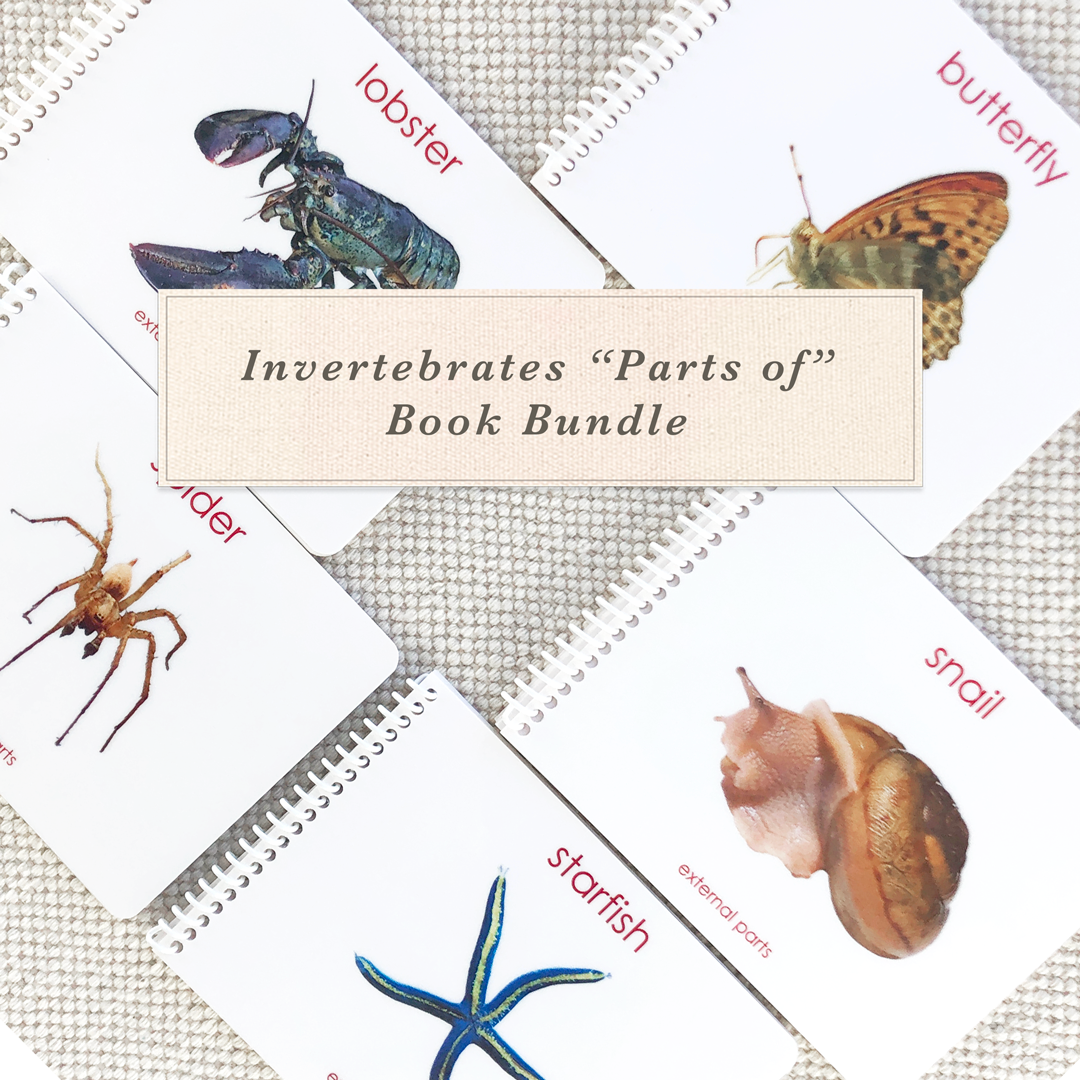
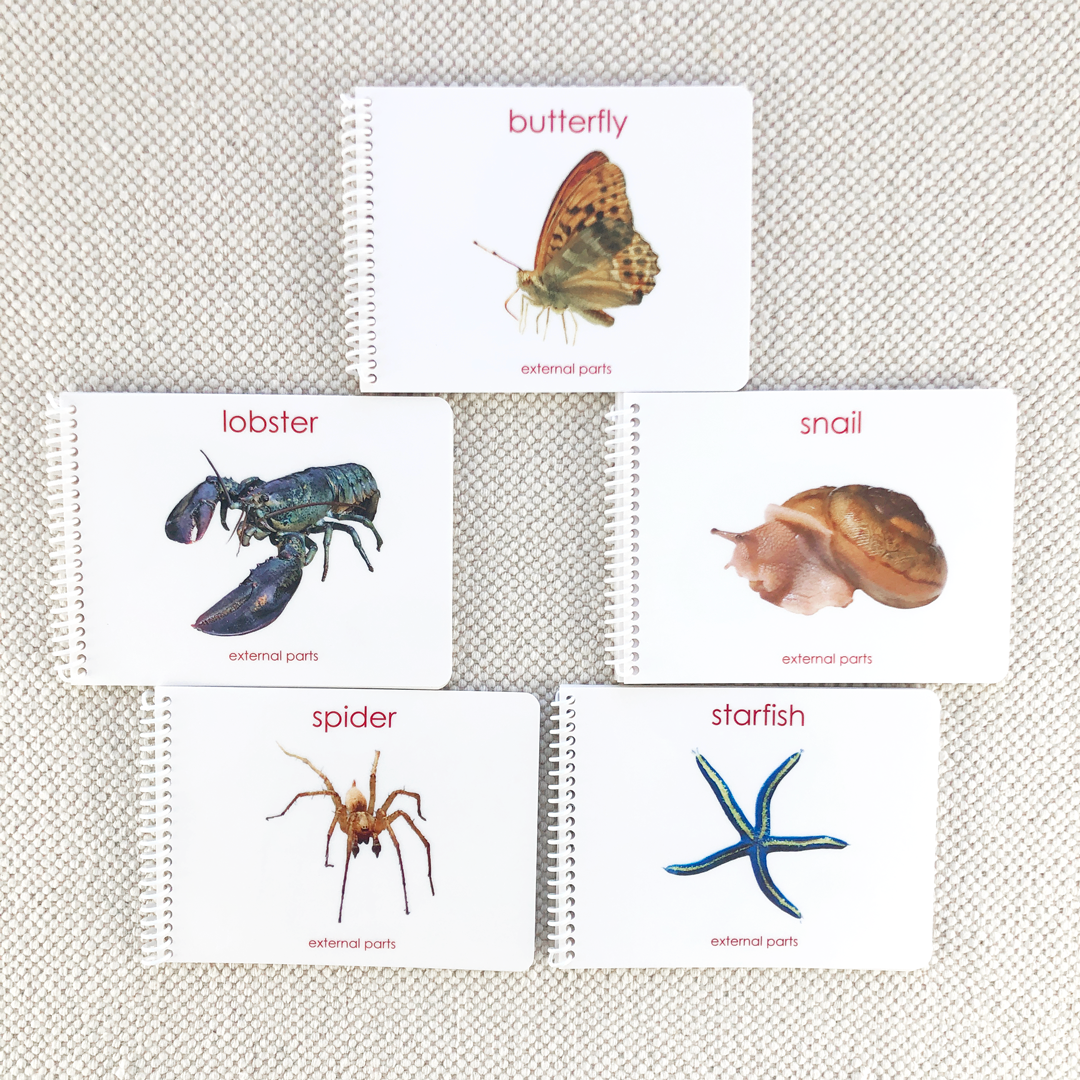
The Invertebrates "Parts of" Book Bundle brings together five nomenclature books, one for each of five major invertebrate groups: insects (butterfly), crustaceans (lobster), mollusks (snail), arachnids (spider), and echinoderms (sea star). Each book pairs real photographs with definitions for the whole animal and its key external parts. In each photo, the featured part is shown in full color while the rest of the image fades to muted gray, so students know exactly where to look. Each right page gives the definition with the defined term in red.
Laying the five books side by side helps students see how differently invertebrate bodies can be built. A spider and a lobster both have a cephalothorax, where the head and thorax are joined, while a snail has a soft body inside its shell and a sea star's arms meet at a central disk. The bundle costs less than buying the five books separately.
What's included
- Parts of the Butterfly Book (insect)
- Parts of the Lobster Book (crustacean)
- Parts of the Snail Book (mollusk)
- Parts of the Spider Book (arachnid)
- Parts of the Sea Star Book (echinoderm)
- Each book is approx. 4¼" x 5¼", fully laminated, and tightly spiral bound to lie flat on the workspace
- Eco-laminated with a food-grade laminate and rounded corners
- Lesson plan included
Add the matching cards with our Invertebrates "Parts of" 3-Part Set and Invertebrates Definition Card Set, or get everything together in our Invertebrates "Parts of" Book & Card Bundle.
Created by a Montessori teacher and a zoologist. Eco-printed in our rural New England office.
Made in the USA. CPSIA compliant.
Note: Photos may change from those pictured.
Why do these books matter for literacy?
Background knowledge and vocabulary are core strands of reading comprehension (Scarborough, 2001). A student can decode a word perfectly and still not understand a passage if they don't know what "cephalothorax" or "pedipalps" means or looks like. Nomenclature books like these build that knowledge directly.
How do you use these books?
Follow the student's interest. Start with whichever animal students are most curious about, or the one they've seen most recently in a garden, tide pool, or field. Use each book to extend what students already know from the natural world or from Vocabulary Cards or 3-Part Cards. Set the context first, then read each page together, pausing to discuss as needed. With older students, discuss the definition itself: How did they think it would be defined? Does it sound right to them? When they're able, invite students to take turns reading with you, then with each other or alone.
Once students know several books, lay them side by side and discuss what is the same and what is different. Each book also acts as the control of error for its matching definition cards in build-a-book activities.
Are there more invertebrate books?
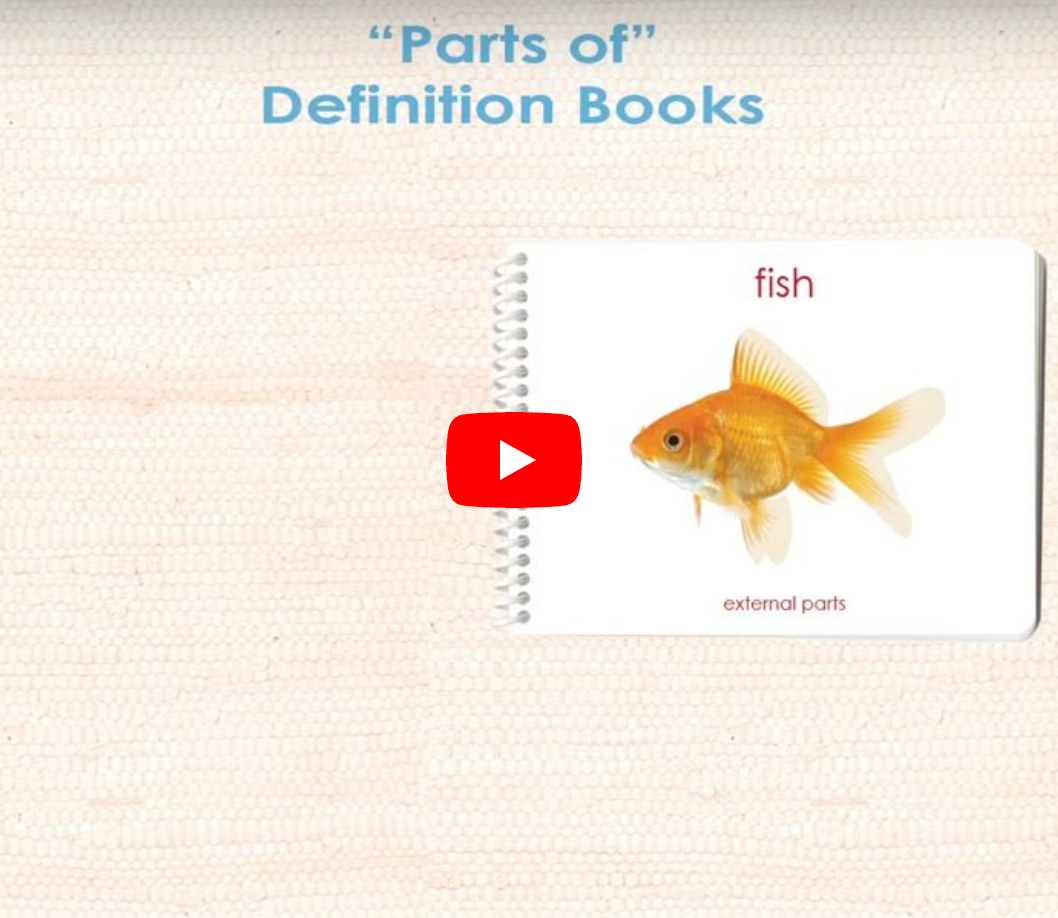
Yes. For more insects, add our Parts of the Ant Book and Parts of the Katydid (Grasshopper) Book. All seven invertebrate books are also part of our Complete Book Bundle.
What ages is this for?
Read these books aloud to students of any age who are interested in bugs, ocean animals, or garden creatures (typically PreK–3). Invite students to read the books on their own as they are able.
Choose options
Included In This Bundle


Knowledge Bank
Recommended Articles
Download a PDF of our materials

Follow Us