"Parts of" Cards

















More Information:
"Parts of" Cards

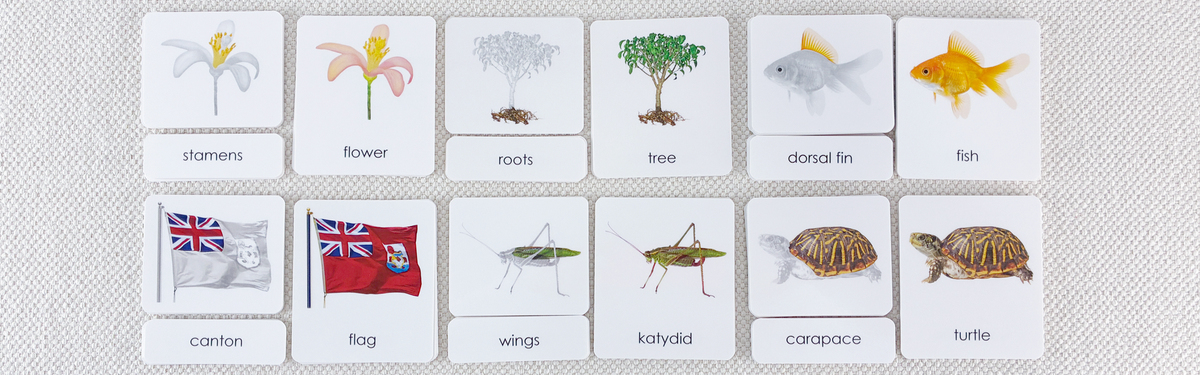
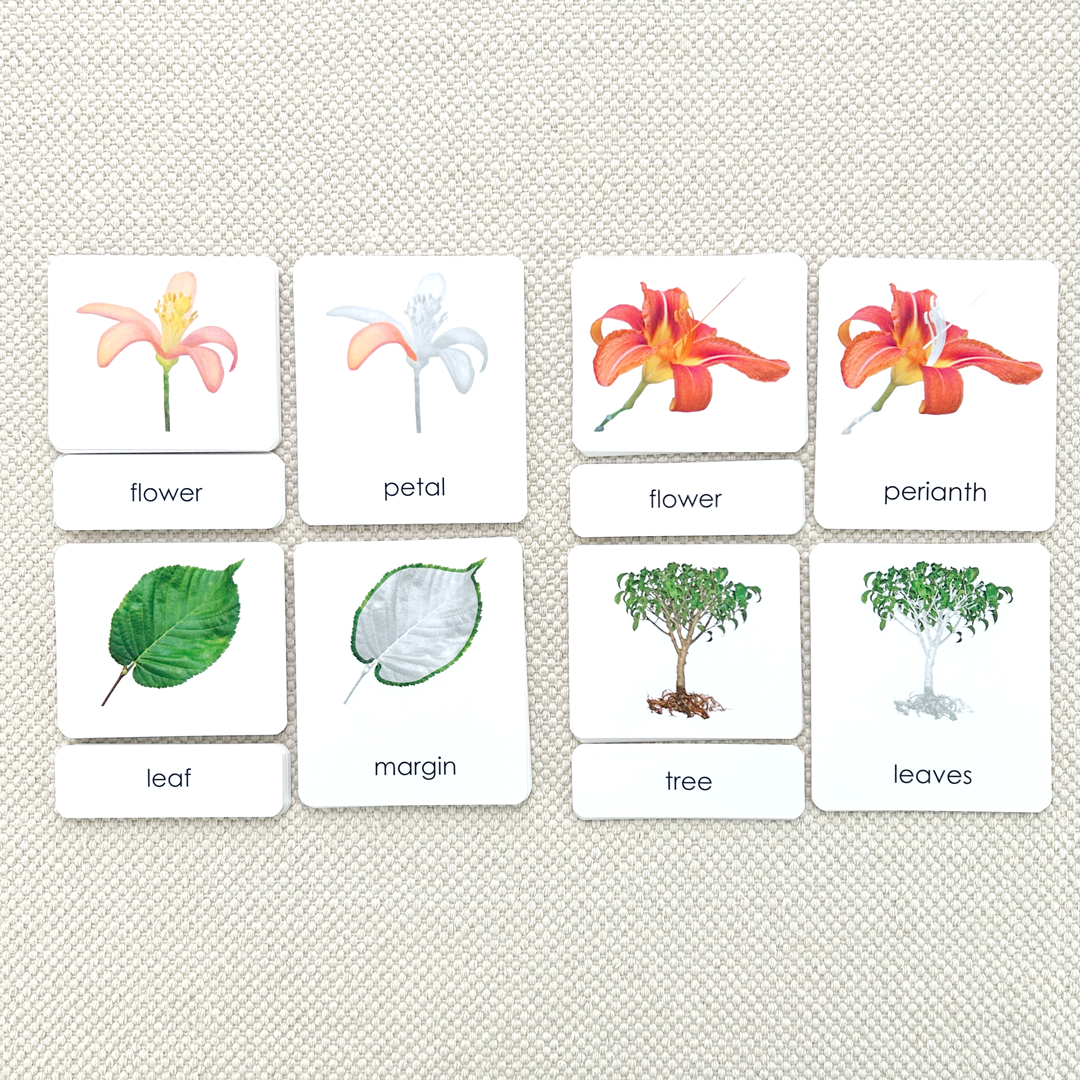
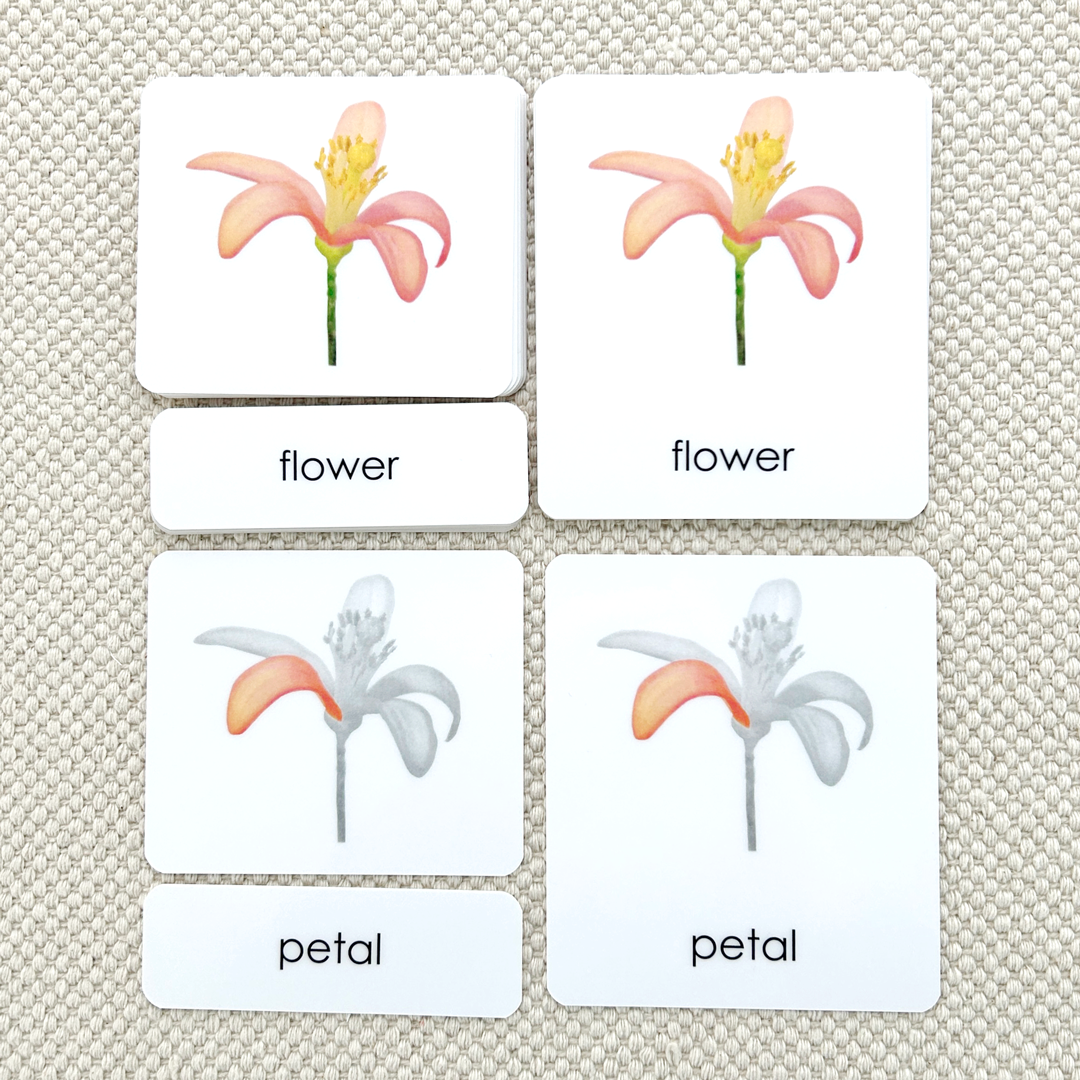
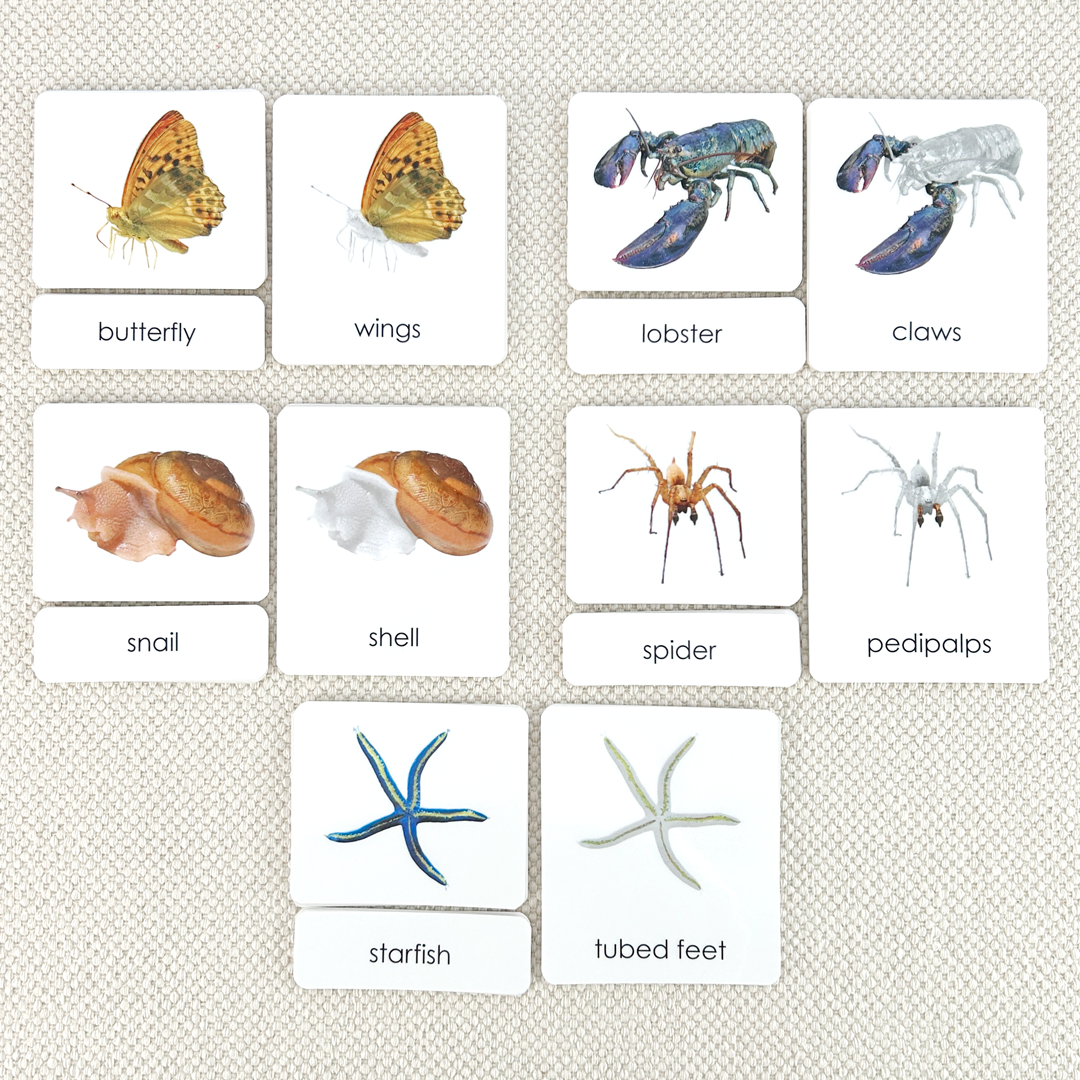
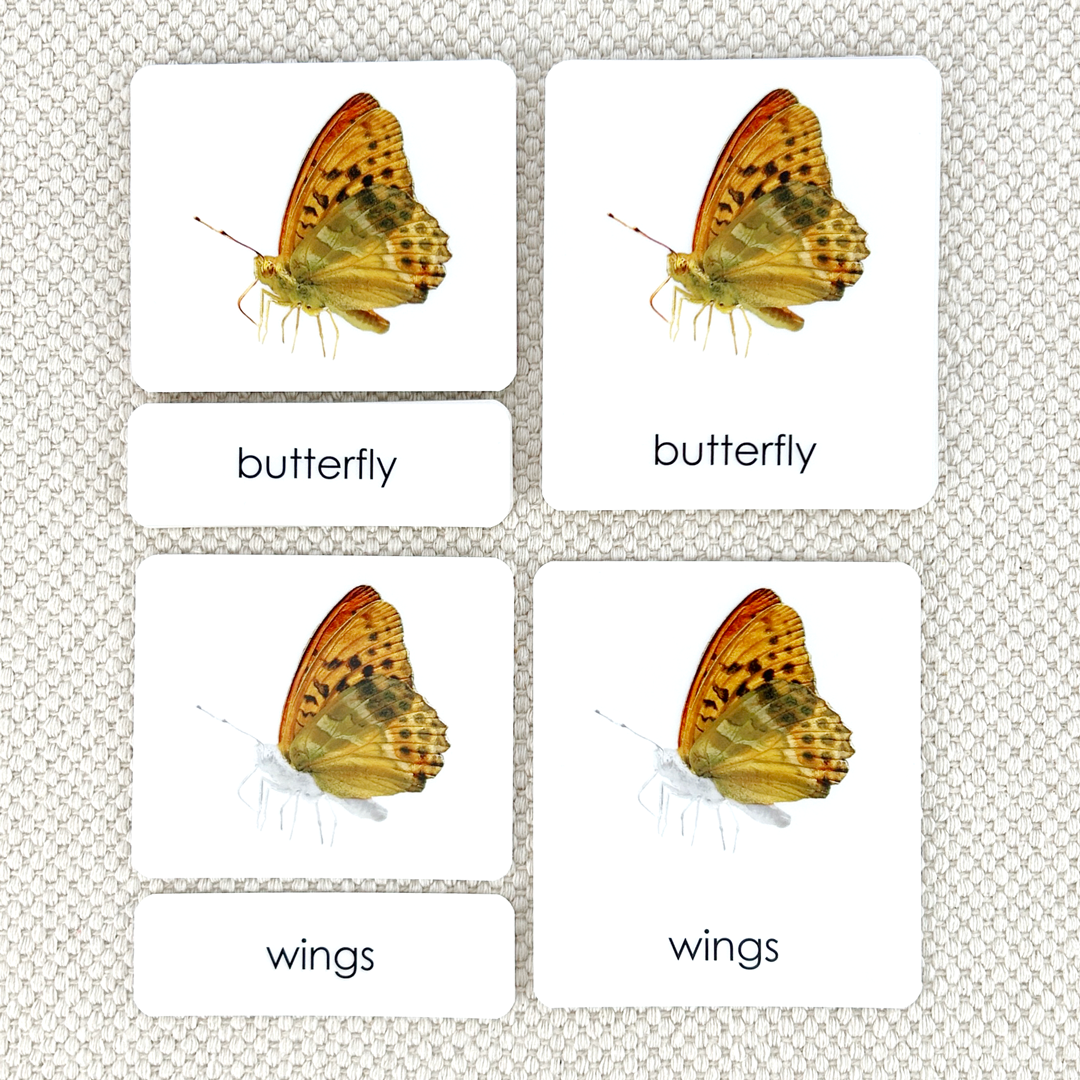
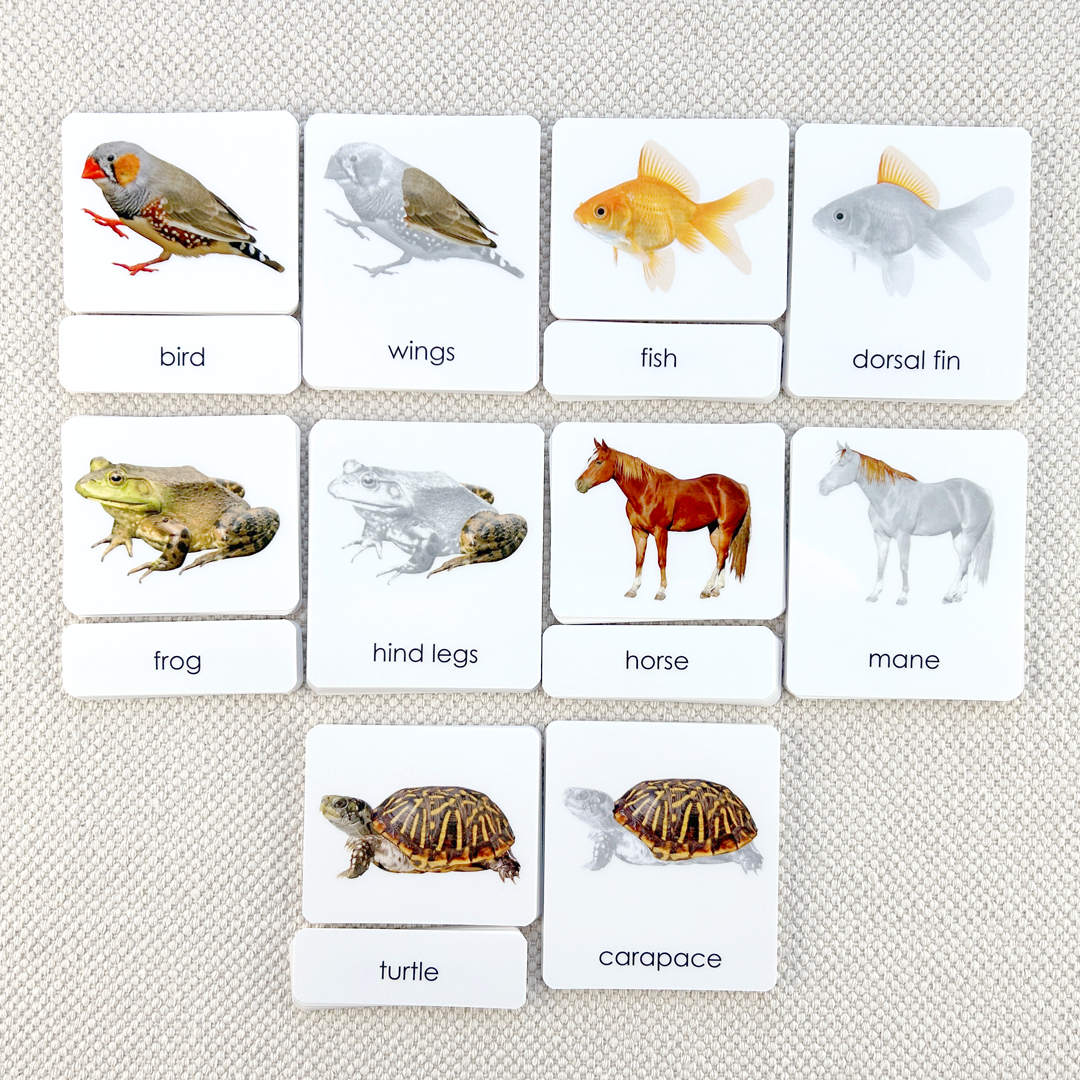
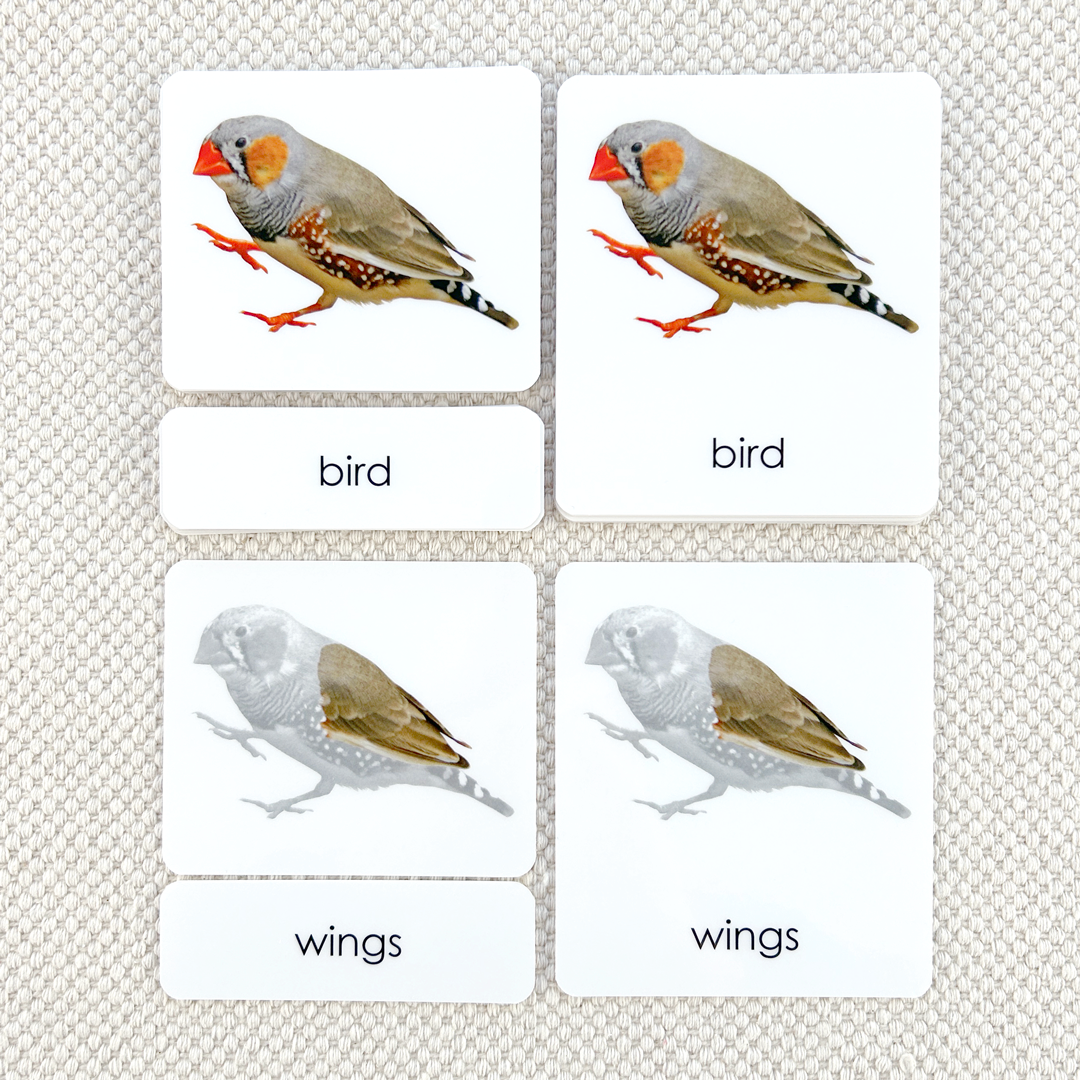
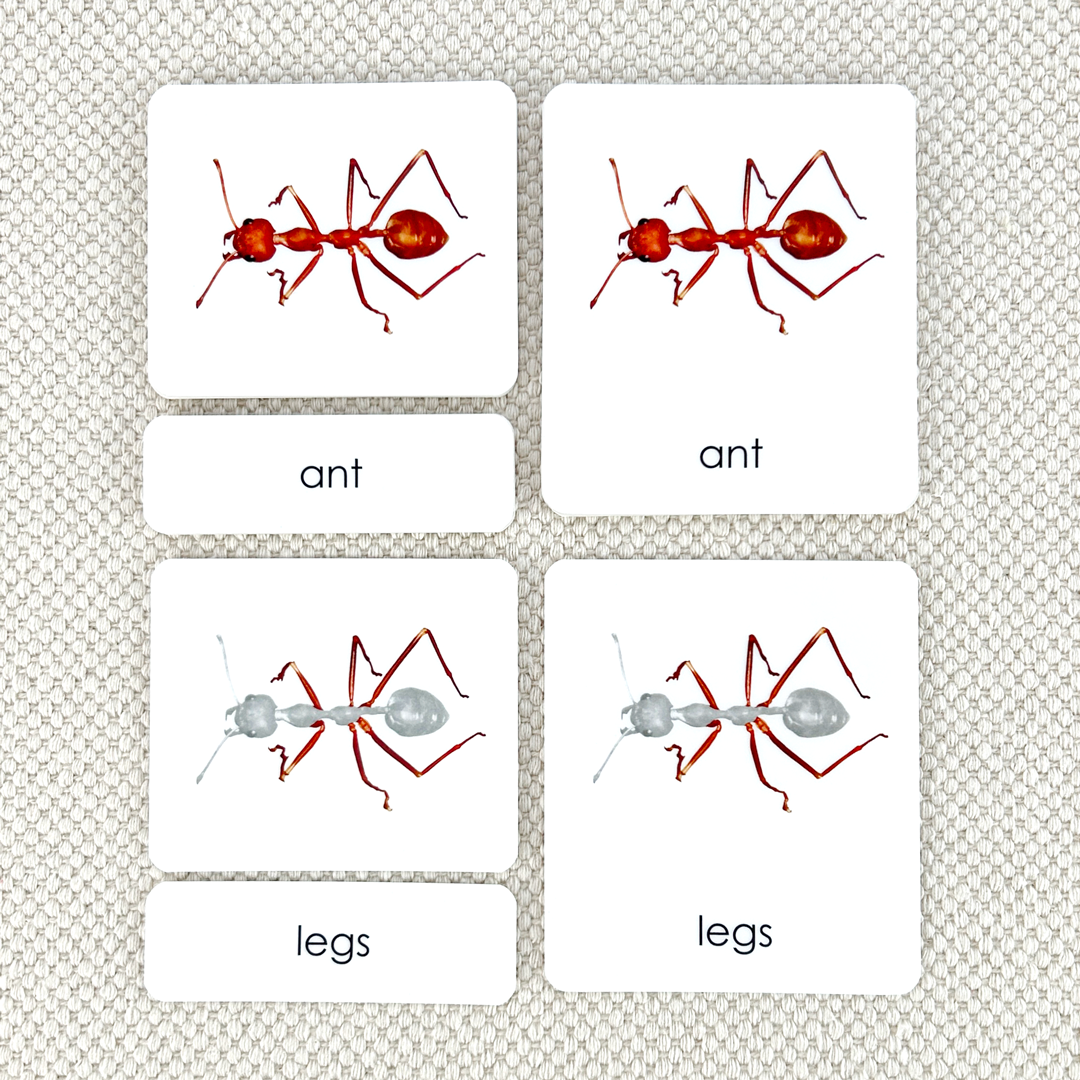
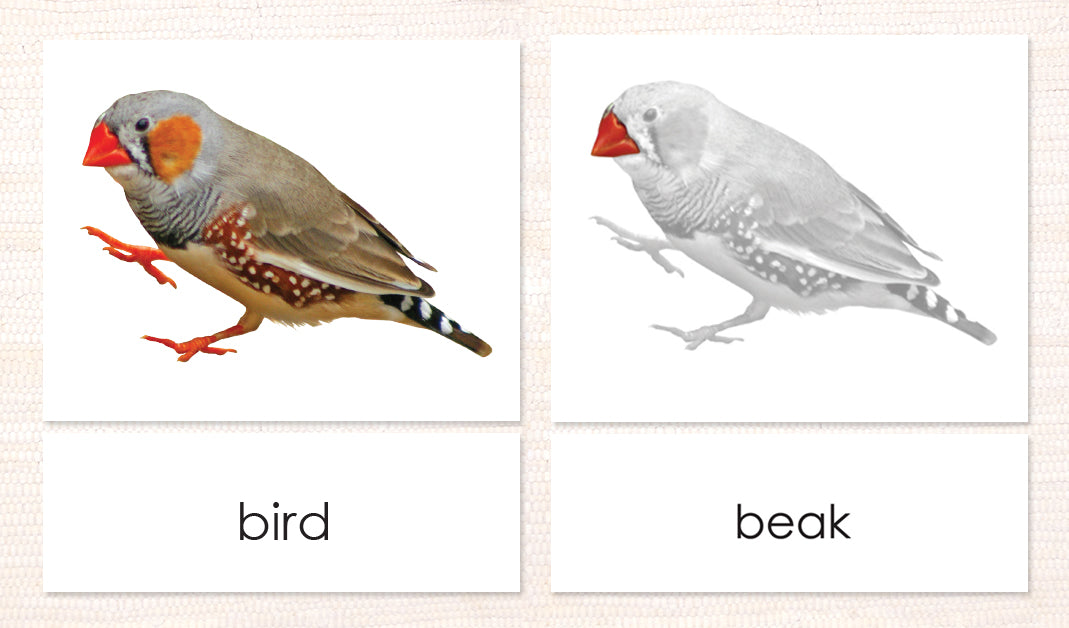
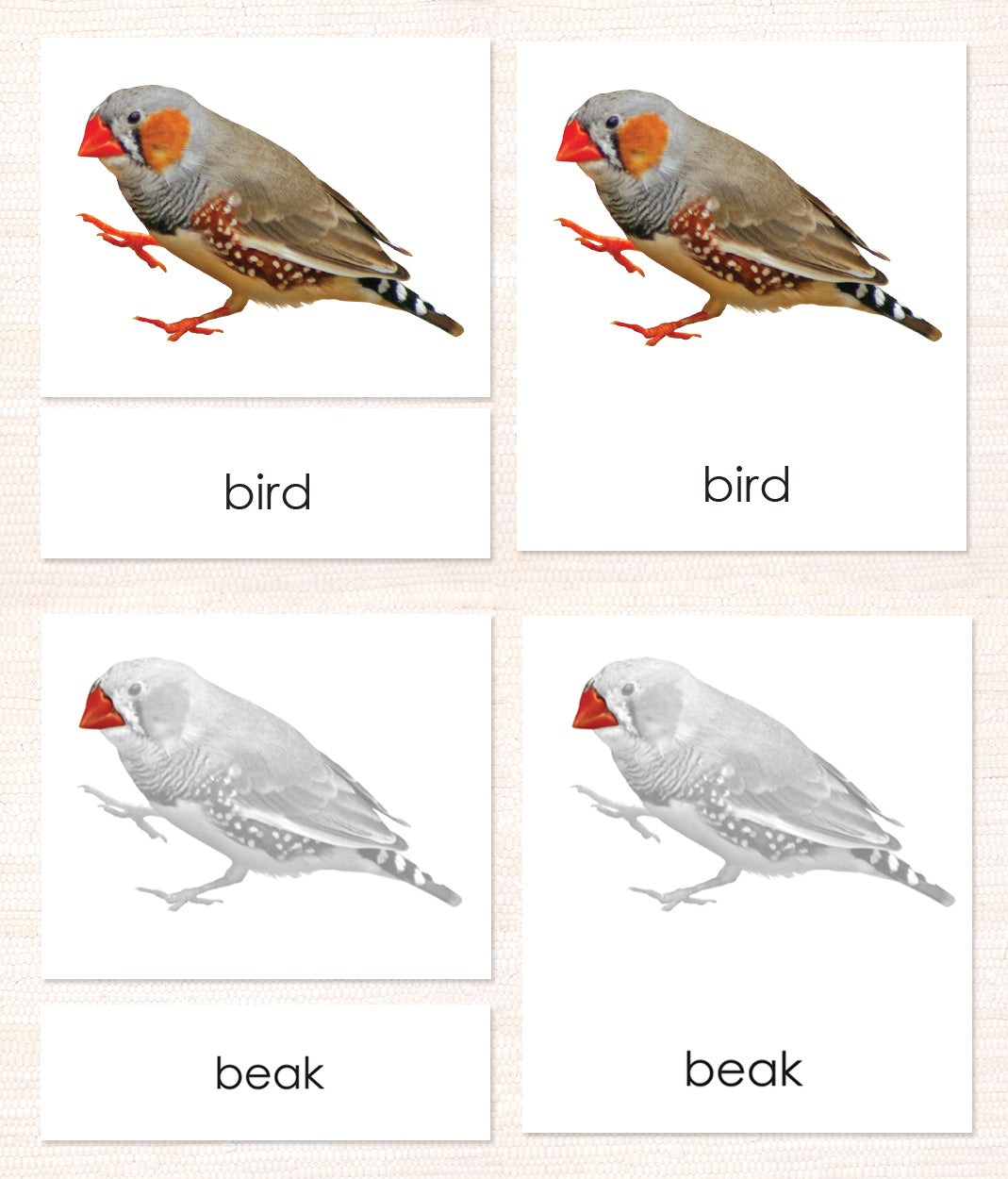
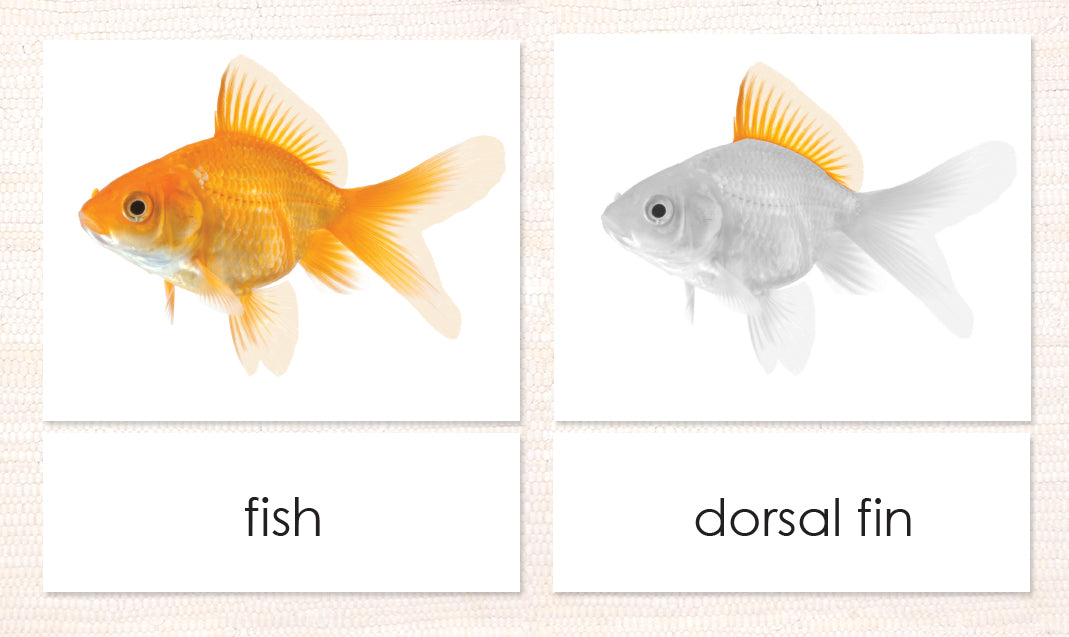
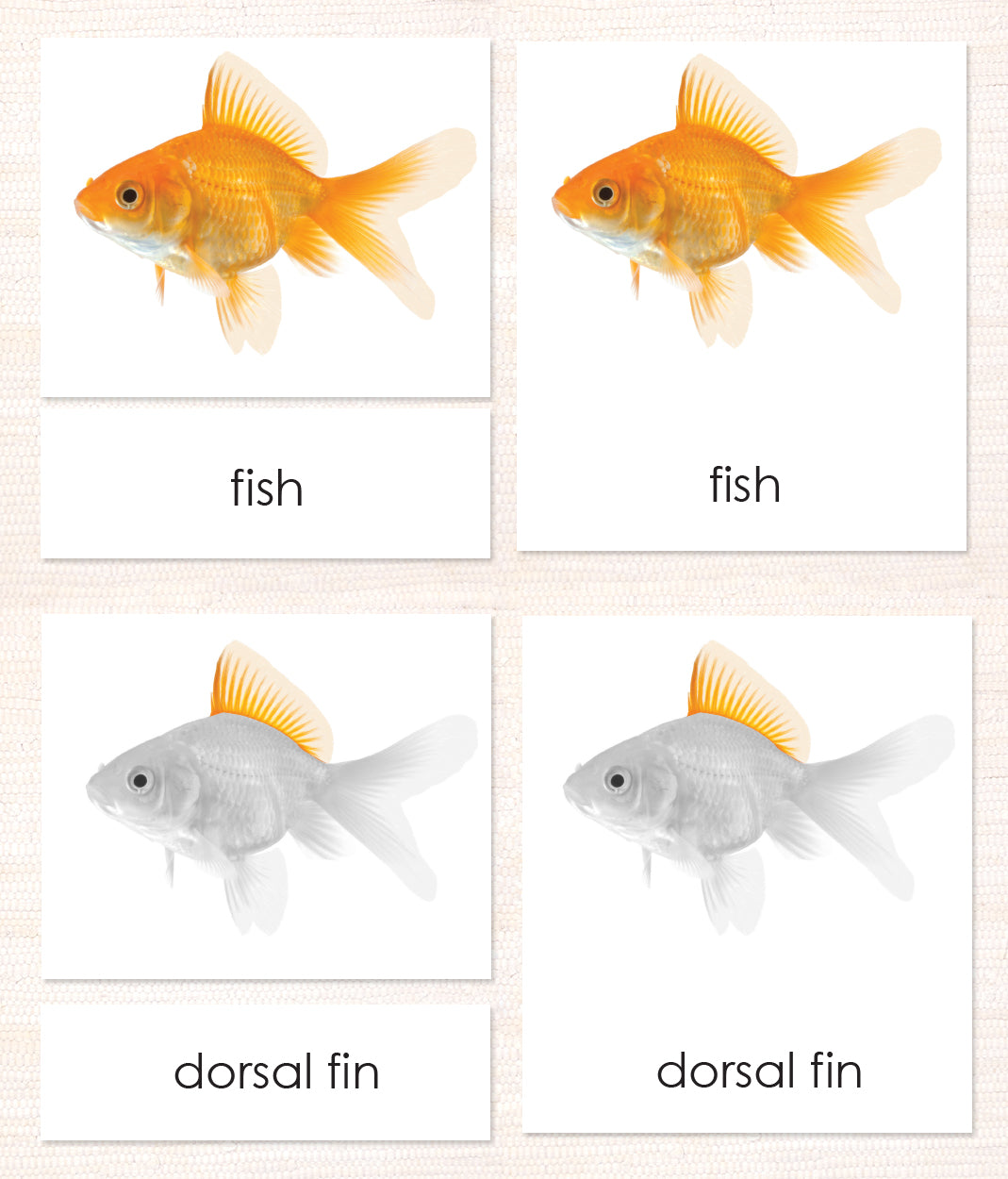
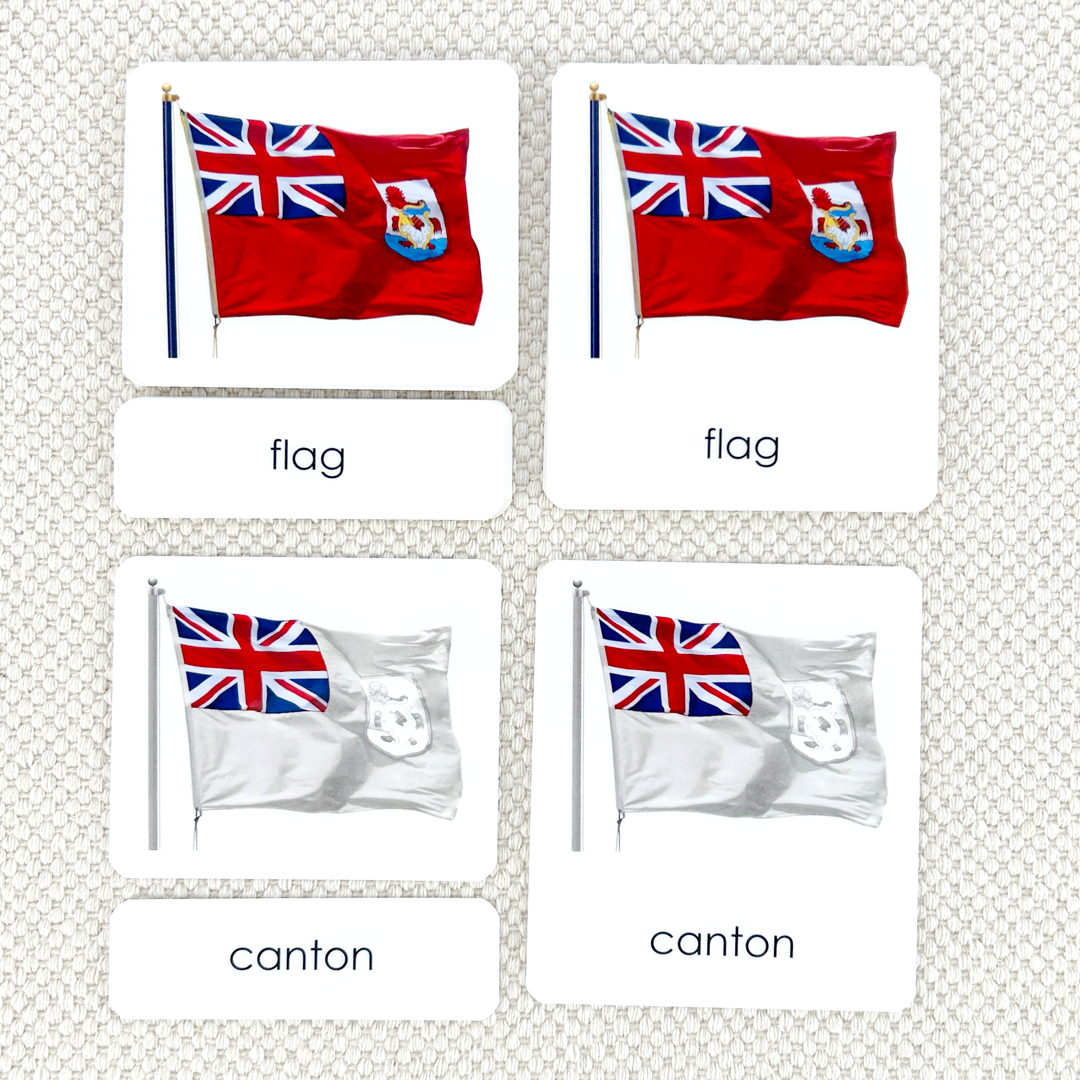
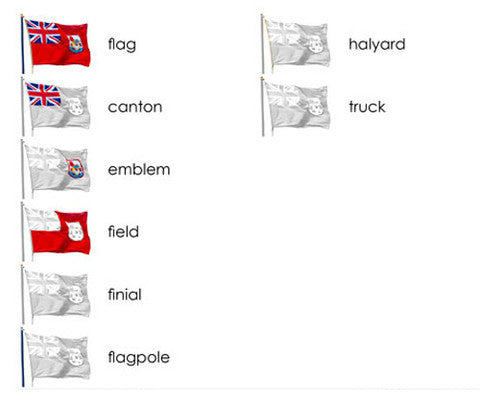
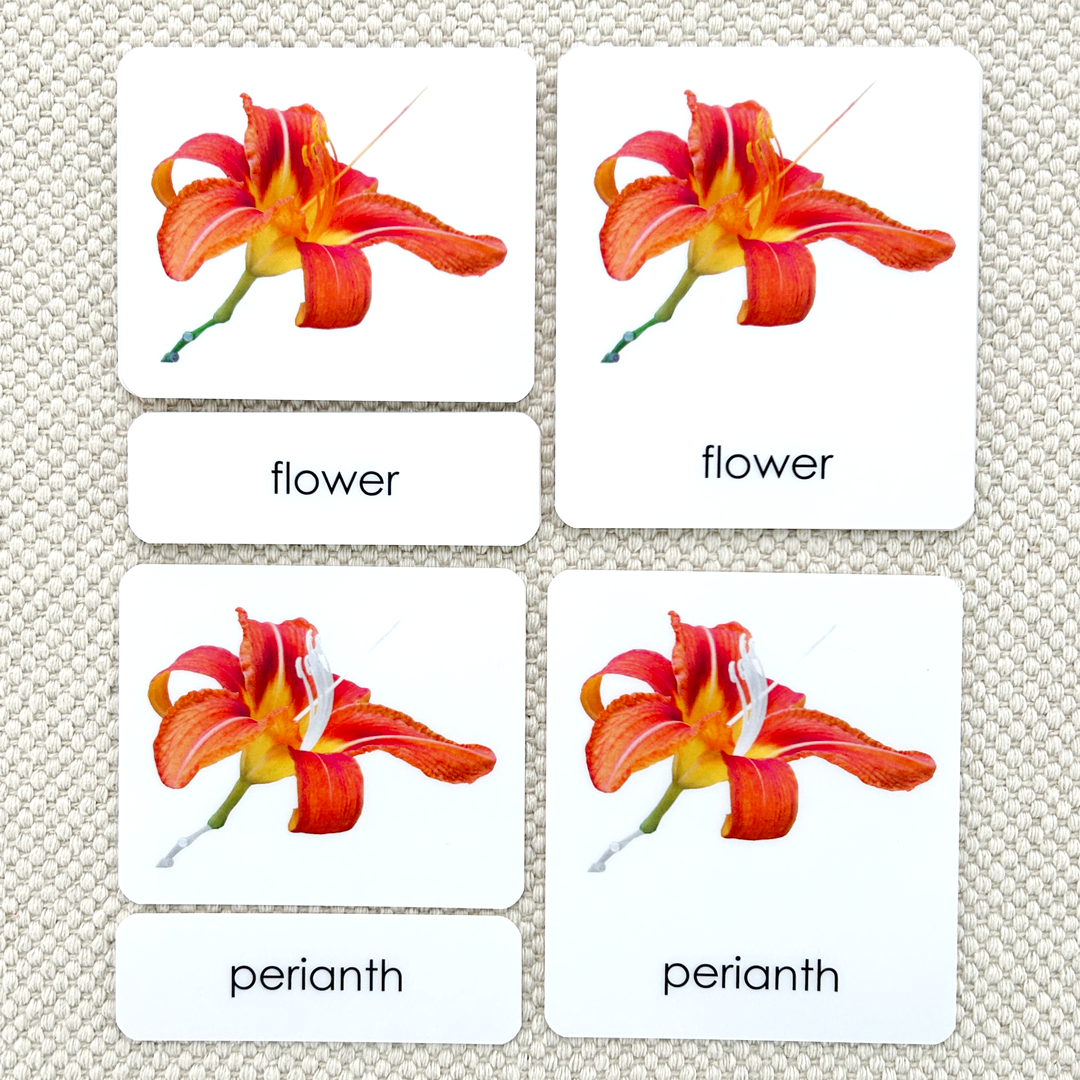
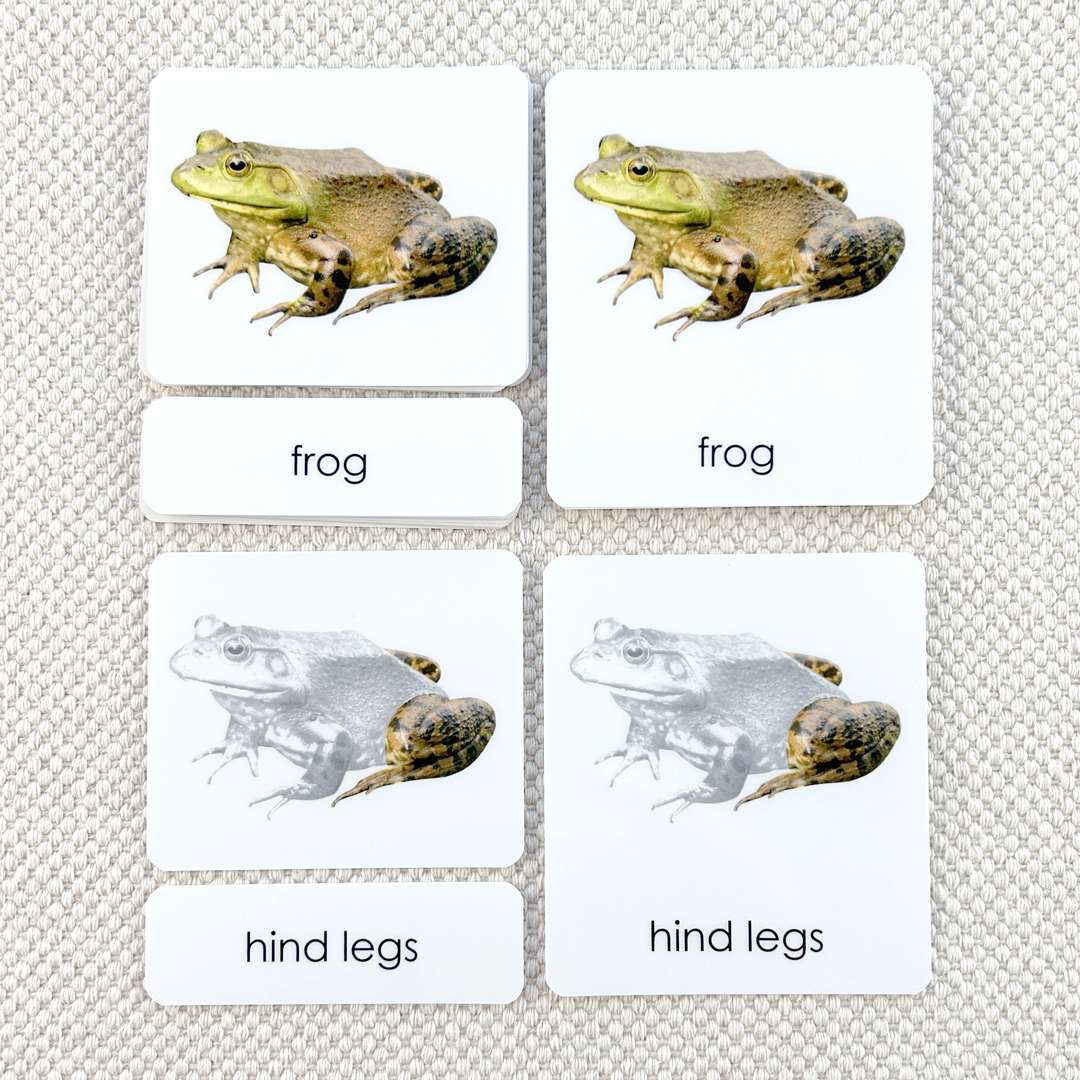
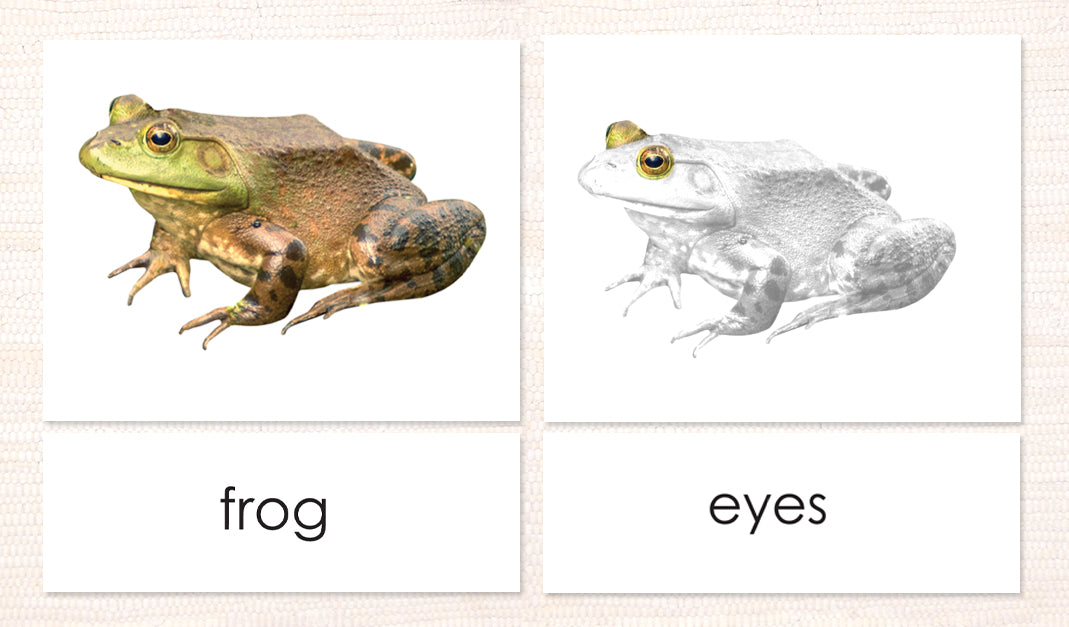
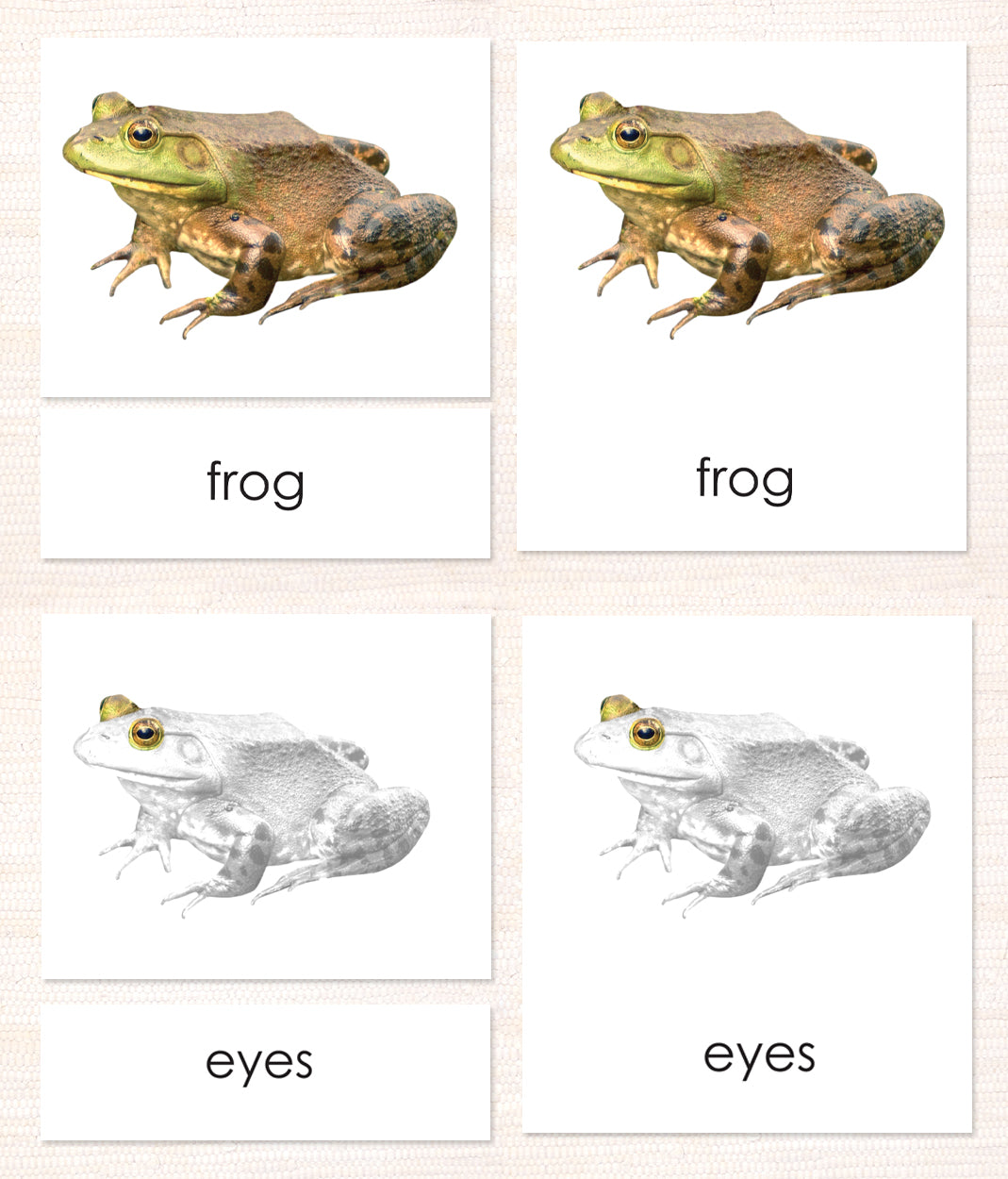
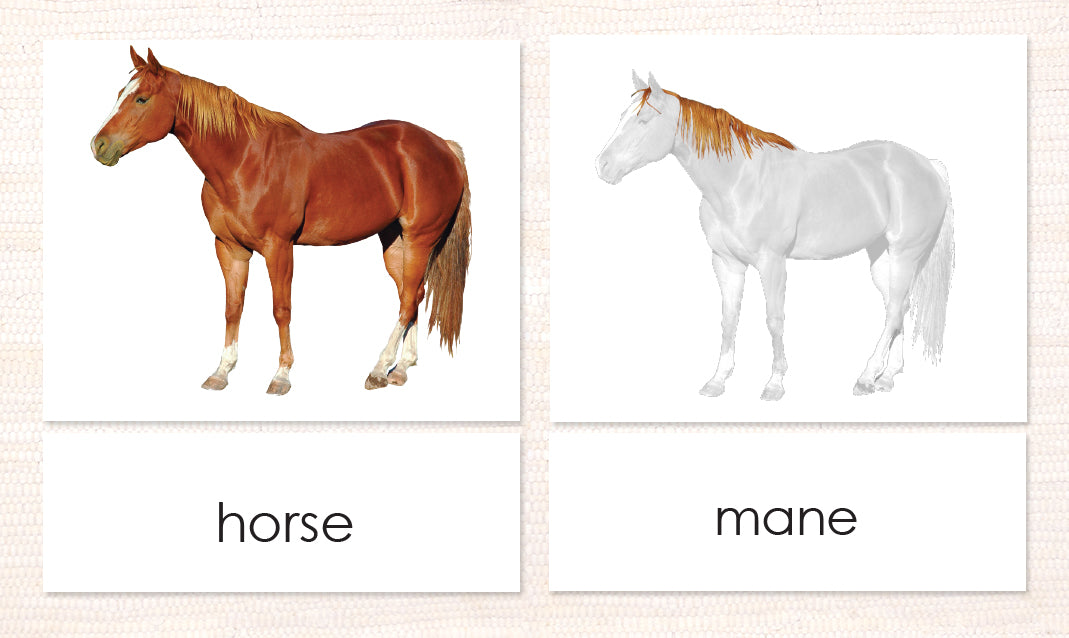
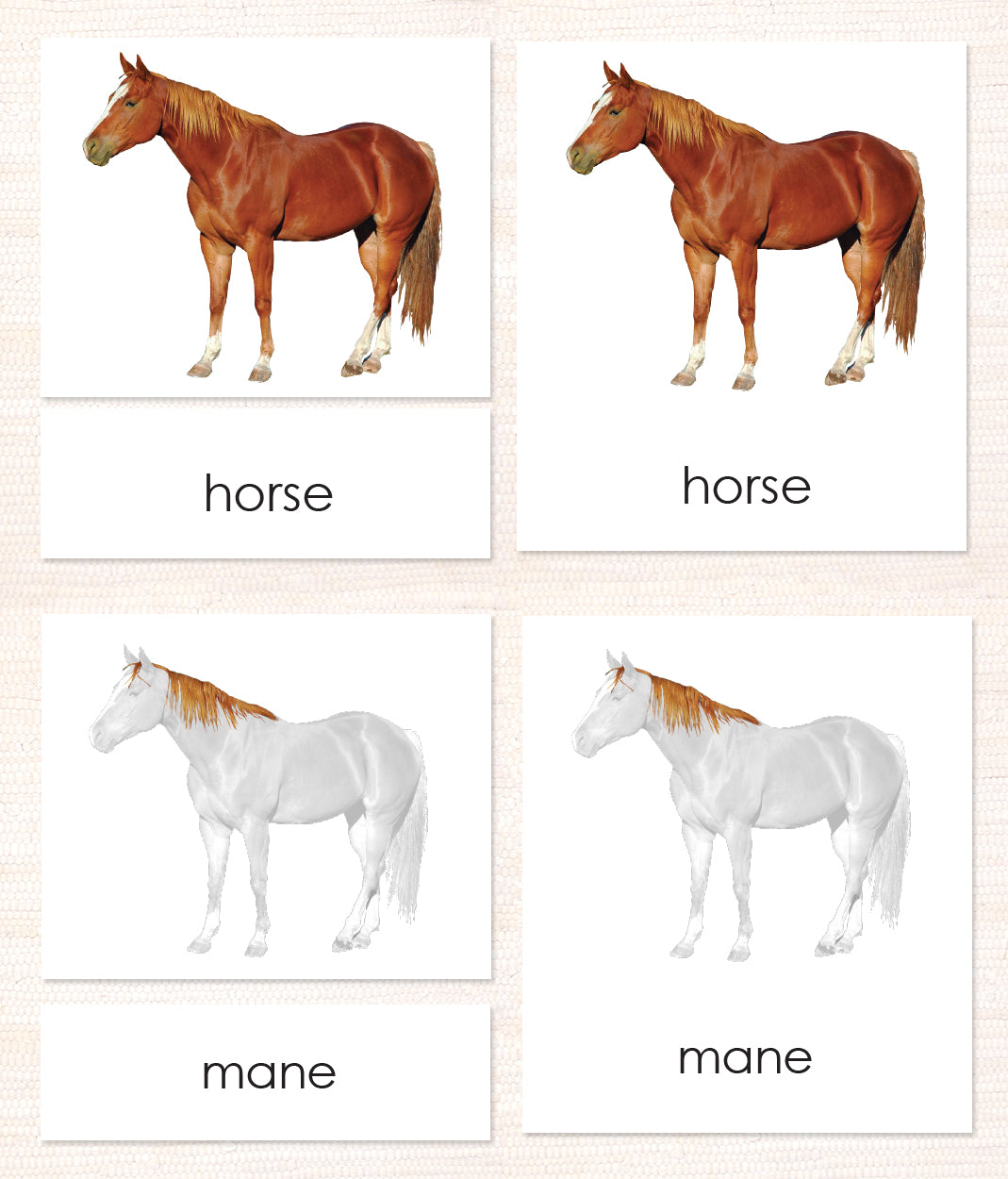
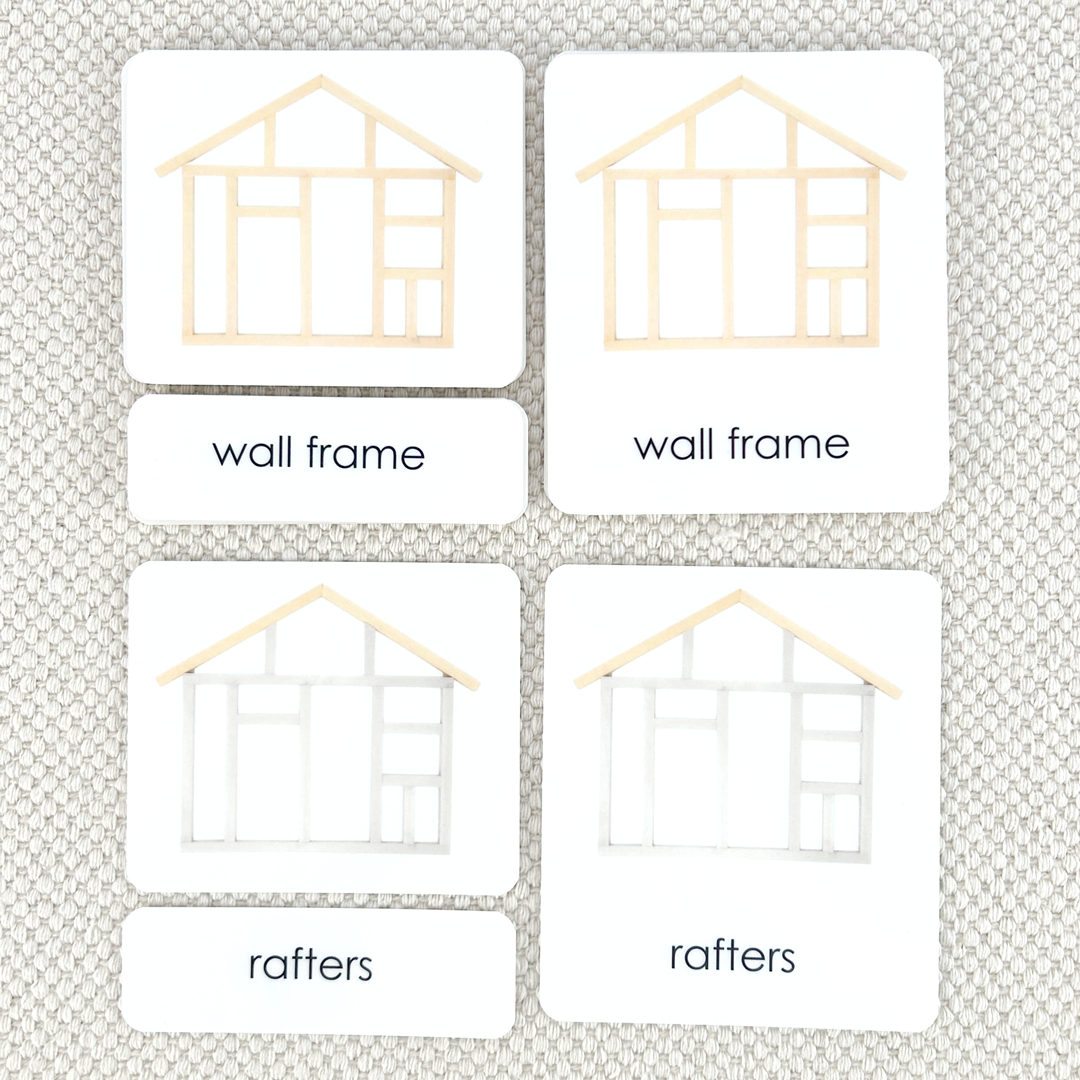
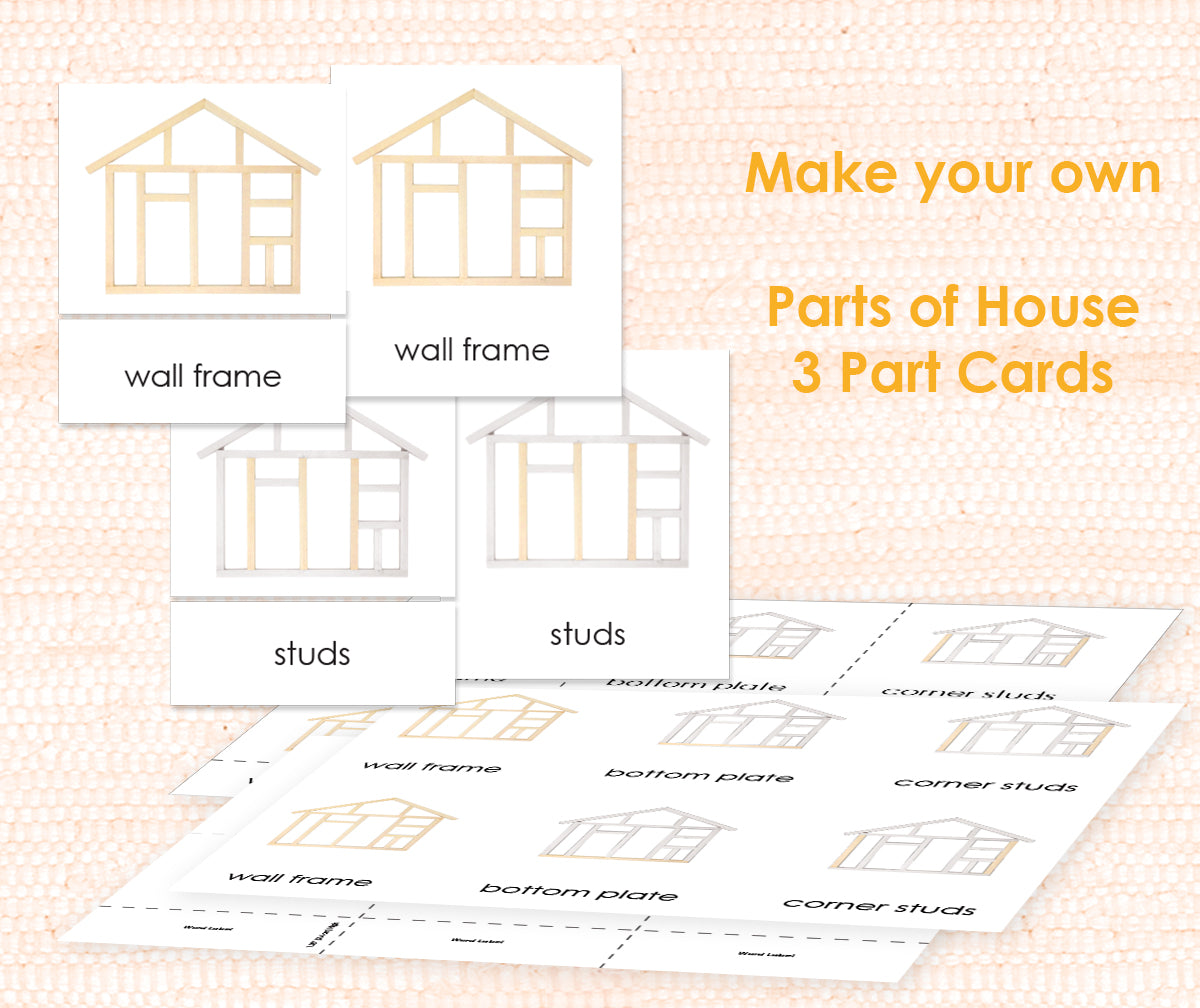
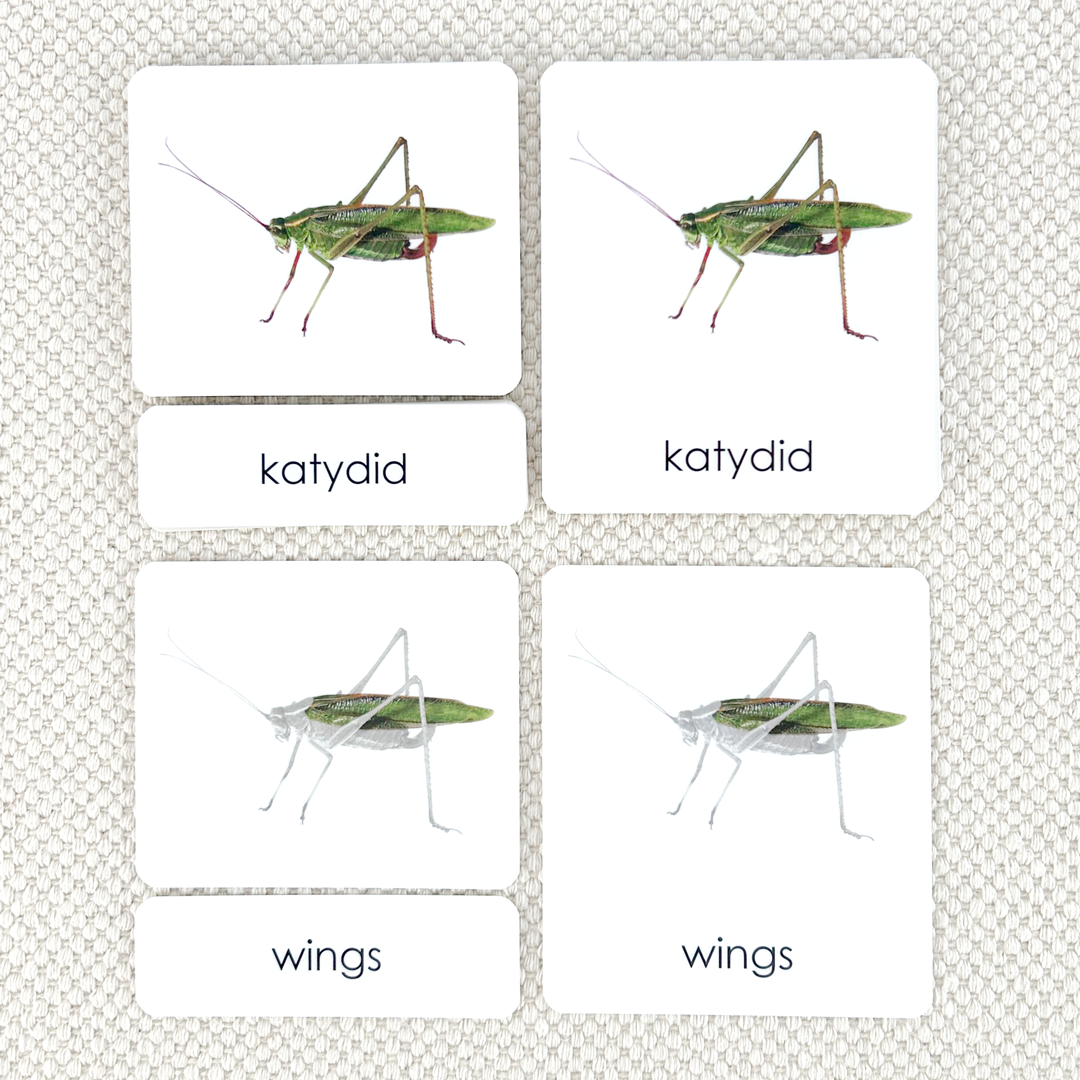
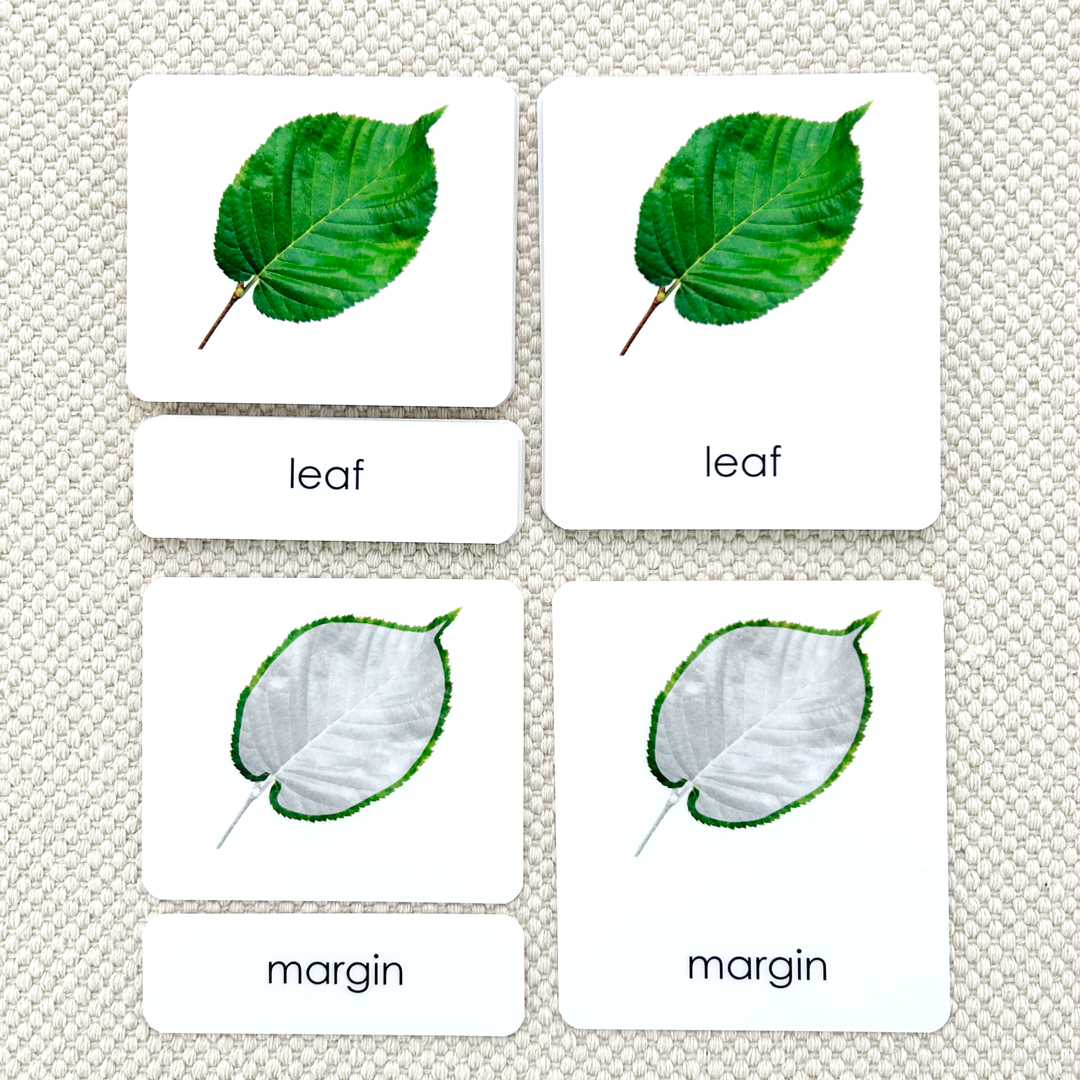
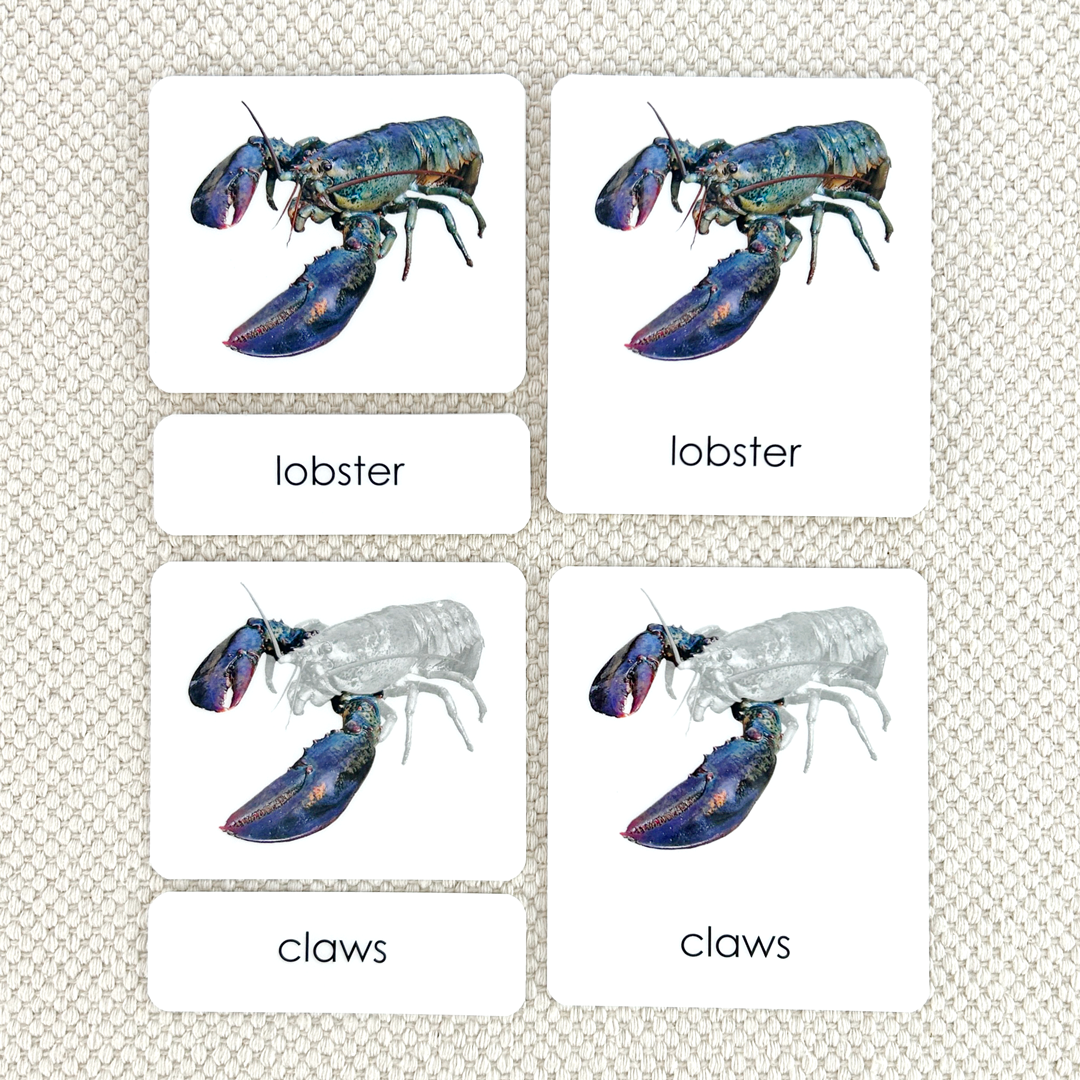
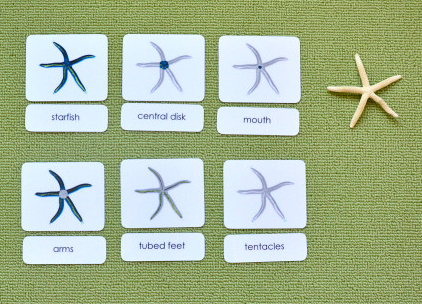
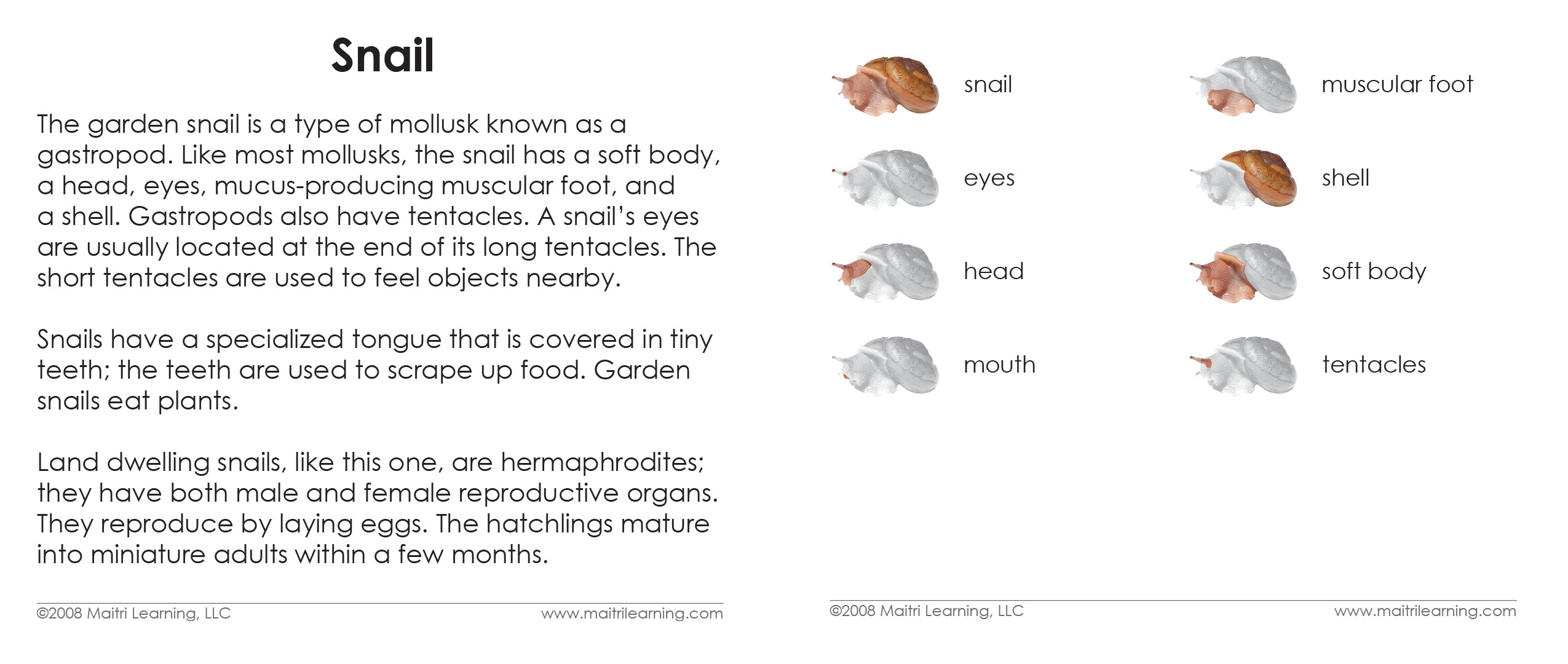
"Parts of" cards are Montessori 3-part cards that teach the external parts of animals, plants, and everyday objects. Each packet starts with one card showing the whole subject in full color. Then there's one card for each key part, where only that part is in color and the rest of the photo recedes to gray. For example, the turtle packet names the entire turtle and its head, tympanum, eyes, nostrils, jaw, neck, carapace, plastron, forelegs, hind legs, clawed feet, and tail.
Because the photos are real, students learn the parts as they actually look, not as a stylized drawing. Students practice reading scientific words like carapace and petiole while building knowledge they'll use in science for years.
What's in this collection
- Vertebrates: Bird, Fish, Frog, Horse, and Turtle
- Invertebrates: Ant, Butterfly, Katydid, Lobster, Sea Star, Snail, and Spider
- Botany: Flower (Dicot), Flower (Monocot), Leaf, and Tree
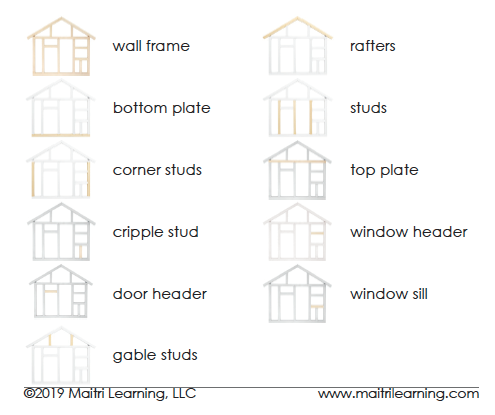
- Beyond biology: Flag and House Frame
- Sets: Vertebrates, Invertebrates, and Botany sets, plus "Parts of" 3-Part Card Bundles
Add our 3-pocket foldover cloth pouches for an elegant, student-accessible display.
Why "Parts of" cards matter for reading
Interest drives learning. Montessori is a student-centered approach: the teacher observes what each student is curious about and offers materials that match. A student fascinated by horses or butterflies will choose those cards again and again. Each time is more practice naming, reading, and discussing the parts.
That practice builds the words students will need for science. In Scarborough's (2001) reading rope, vocabulary and background knowledge are core strands of language comprehension, and "Parts of" cards build both. A student who has matched plastron to the underside of a turtle shell will recognize the word, and the idea, when they meet it in a book.
The design helps too. Highlighting one part in color on a gray photo shows the student exactly what is being named. Nothing else on the card competes for attention.
Reference
Scarborough, H. S. (2001). Connecting early language and literacy to later reading (dis)abilities: Evidence, theory, and practice. In S. B. Neuman & D. K. Dickinson (Eds.), Handbook of early literacy research (pp. 97–110). Guilford Press.
Free resources
Download our free "Parts of" lesson plan. Curious why we don't offer black-line outlines with these cards? Read this article from the Public School Montessorian.
What comes next
Most of our "parts of" packet are also available as a definition book and as definition cards. Our build-a-book sets combine them for a complete learning experience.
"How delighted I am with your language materials, both for the toddlers and for the 3-6 year olds. It's so refreshing, for example, to see a real leaf with highlighted parts, rather than the stylized leaf so many of us have grown up with. How wonderful to have both options! I think your images would be great for toddlers as well - not the labels, just the images. I appreciate your commitment to excellence and standards. Thanks," - Judi Orion, AMI Teacher Trainer
How do you use "Parts of" cards?
- Start with the whole. Make sure the student knows the animal or plant, ideally from a real specimen, a nature walk, and/or our zoology cards.
- Use the photo cards to teach the names of the parts with the three-period lesson, a few at a time. If you have the matching Montessori botany or zoology puzzle, use it alongside the cards.
- When the student is reading, lay out the photo cards, read the word labels, and match them to the photos.
- Place each control card next to its photo and word pair to check for accuracy independently. No teacher help is required.
- Move on to the matching definition book and definition cards.
What ages is this for?
The photo cards work as vocabulary lessons for students typically ages 4 and up. The full 3-part reading activity is typically for Kindergarten (ages 5–6) and above. Students of any age can benefit if they:
- Can read phonetically
- Are interested in the animal or plant
- Need reading practice
- Prefer self-correcting activities to teacher correction
What's the difference between the laminated and cardstock versions?
Our standard packets are eco-laminated with a food-grade laminate and rounded corners, made to last through years of classroom use. The cardstock versions of Bird, Fish, Frog, and Horse have the same content printed on cardstock, not laminated, at a lower price.
How should I store and display "Parts of" cards?
We recommend putting several titles out at one time to meet the interest of the entire room. We like to organize and display these in our 3-pocket foldover cloth pouches. (Note that each packet comes in a sturdy, clear reclosable bag that is for teacher storage only, not student use.) As students lose interest in the topics on the shelf, swap them out for different "Parts of" cards. You can use the same pouches in the same shelf location.
Download a PDF of our materials

Follow Us