Matching Cards
23 colors available
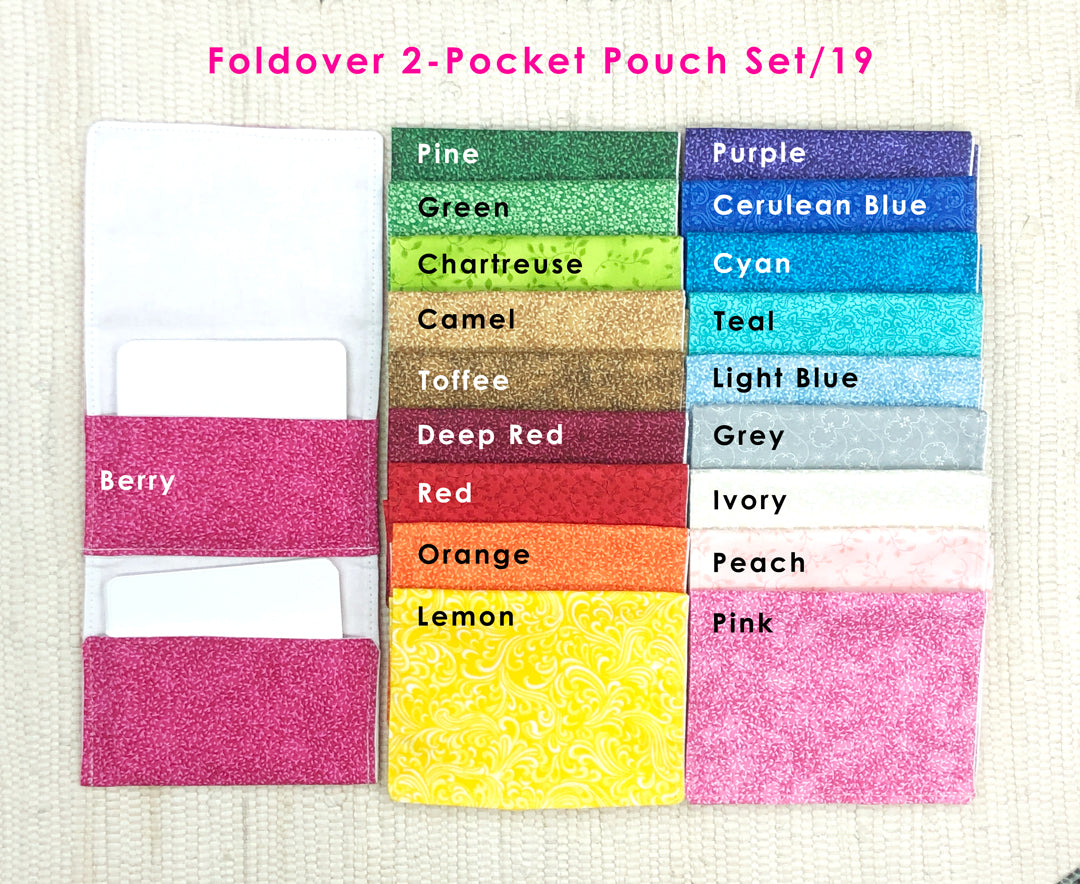
22 colors available


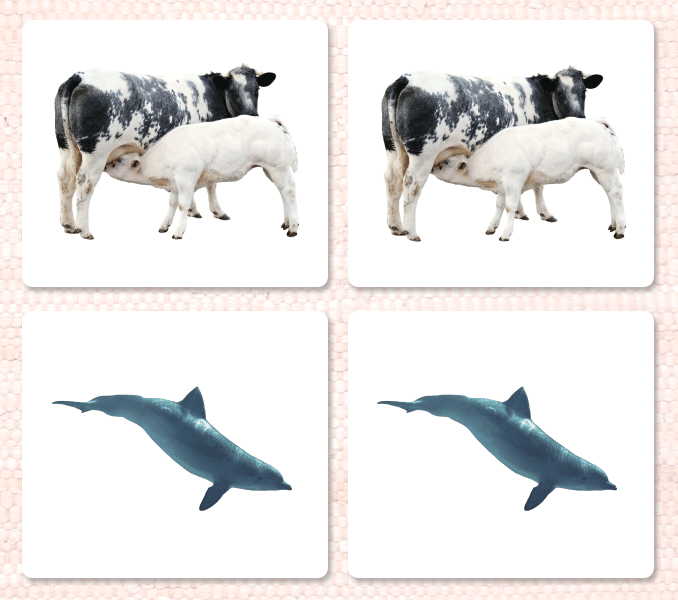
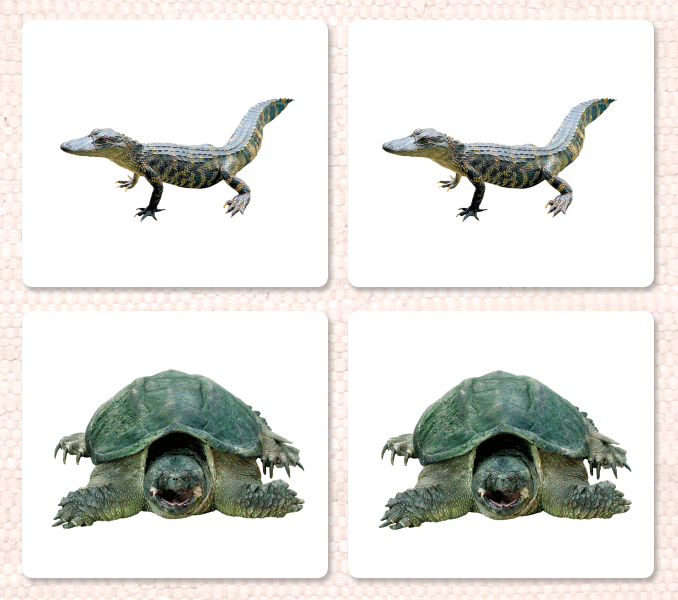
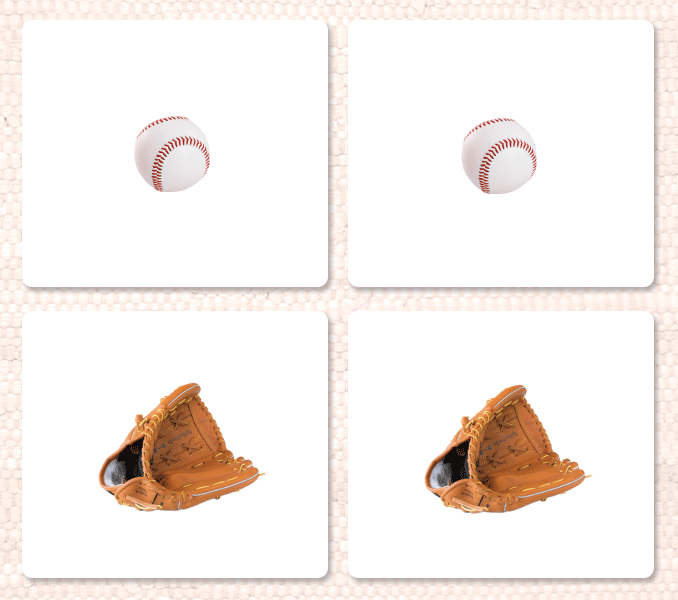
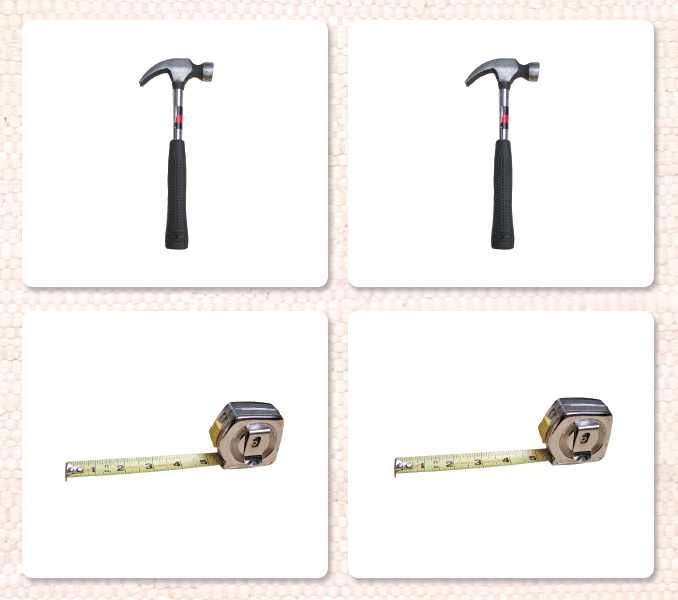
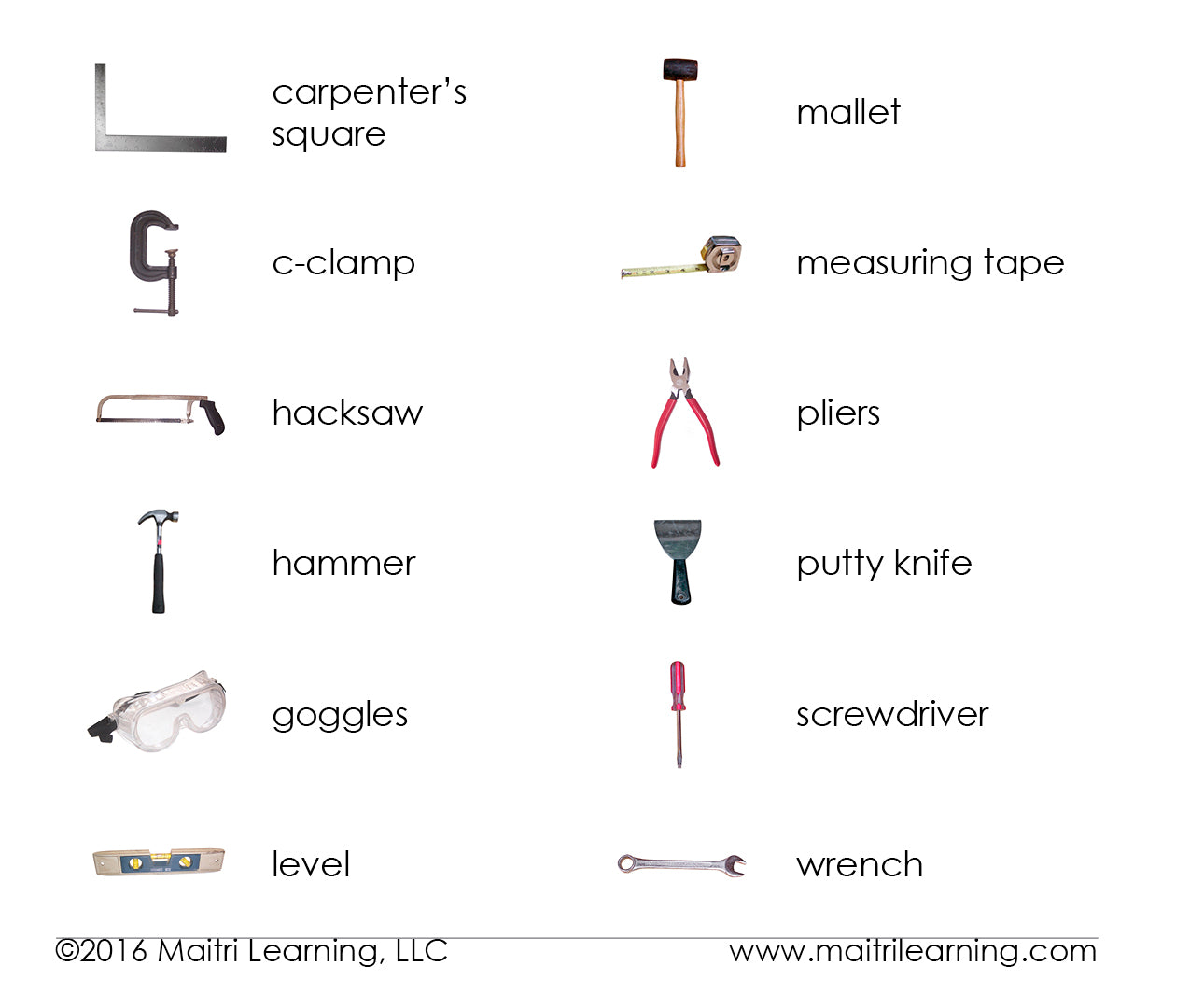
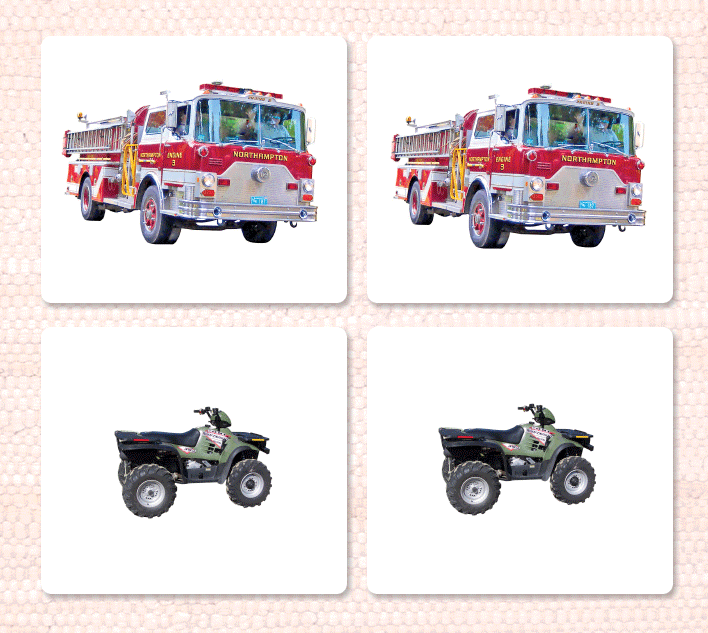
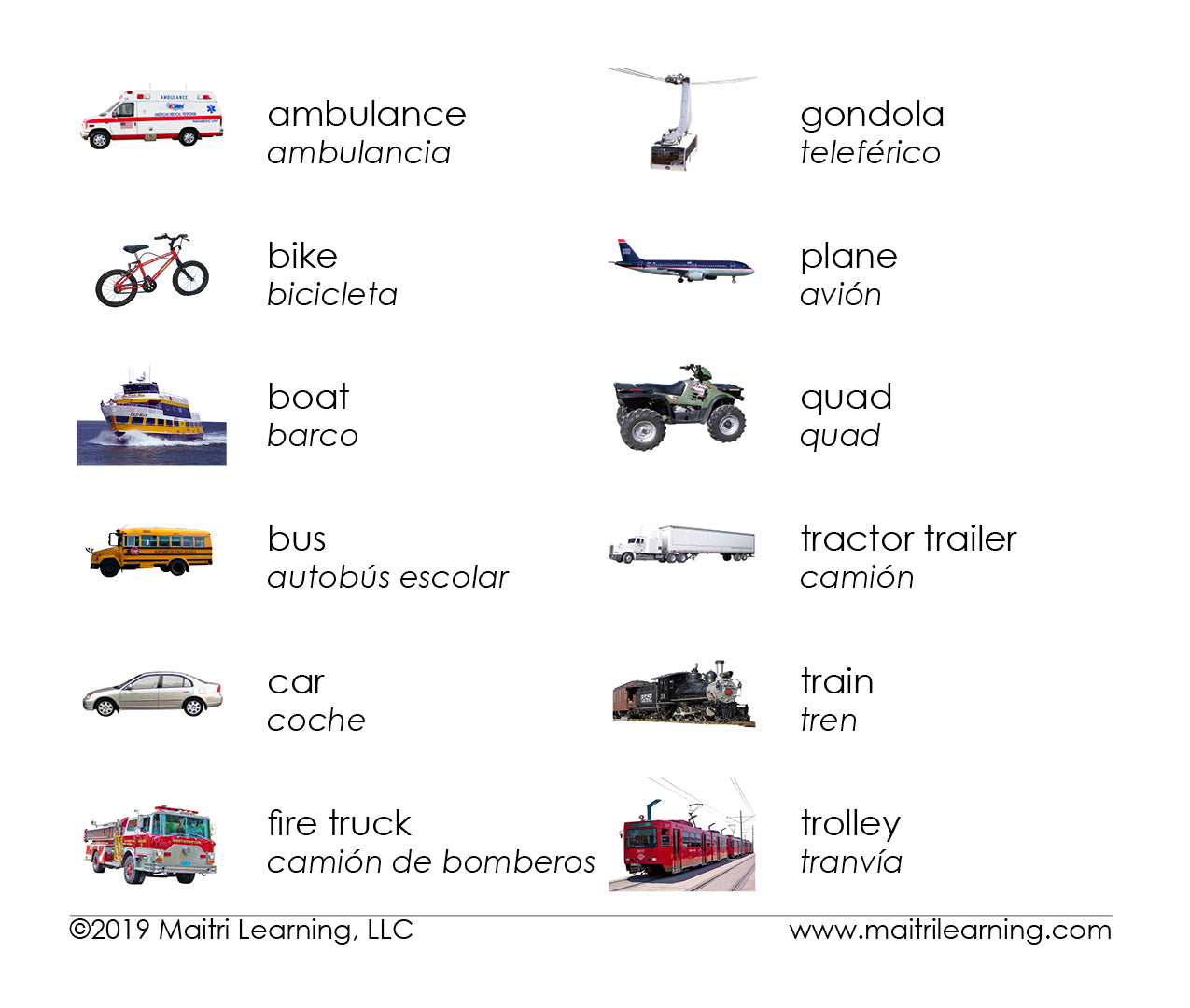
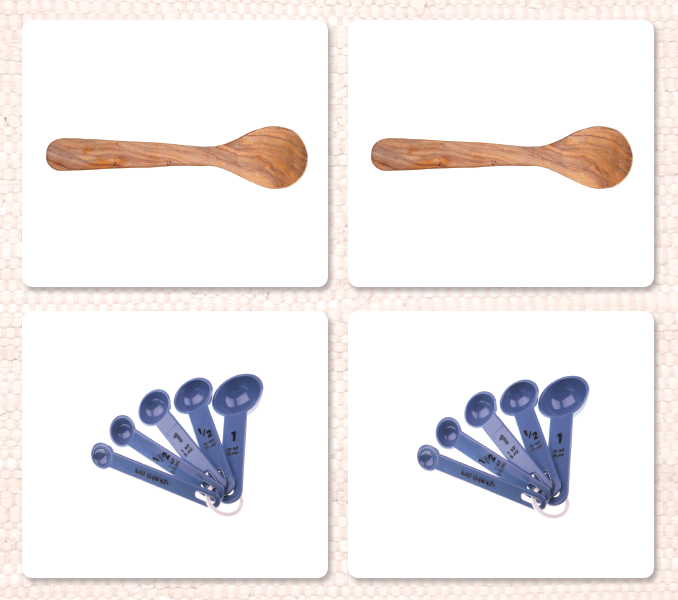
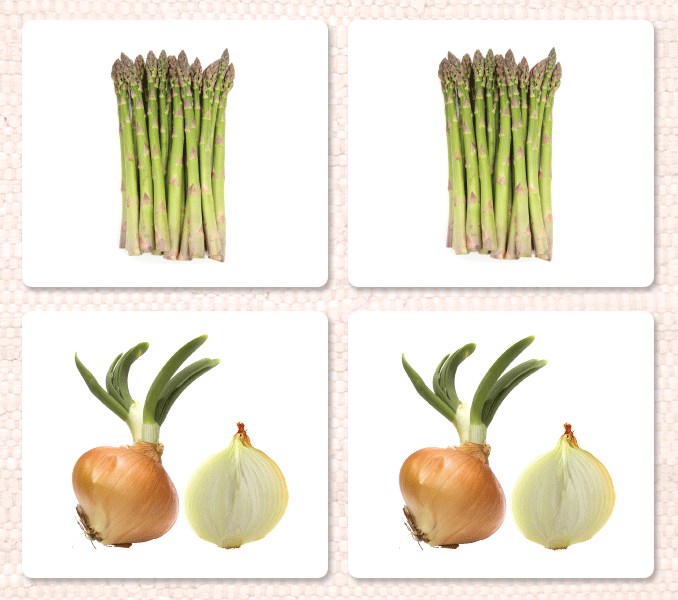
More Information:
Matching Cards

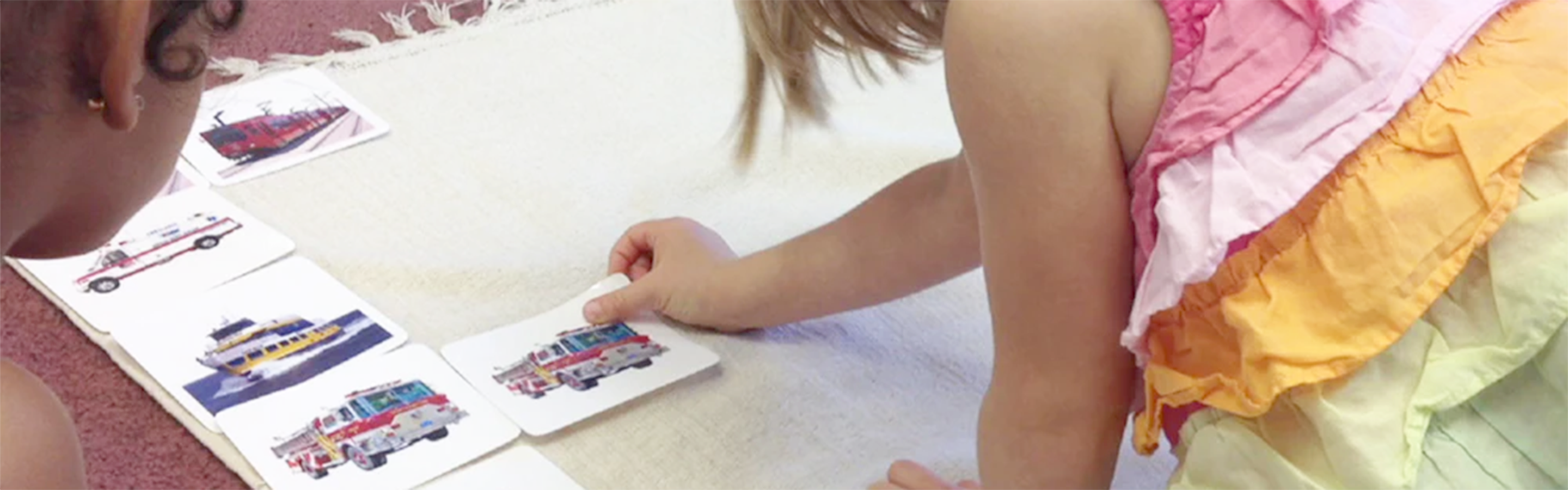
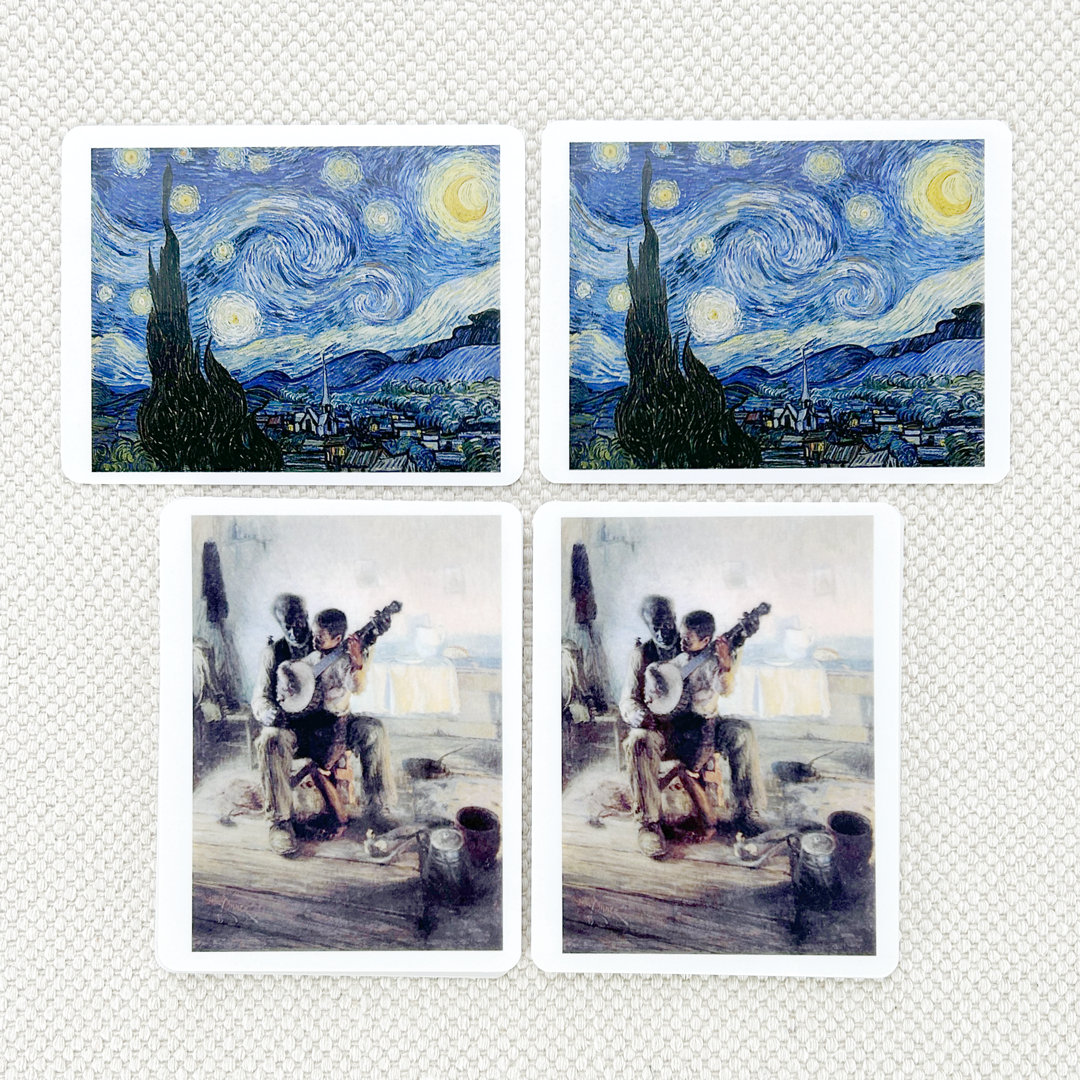
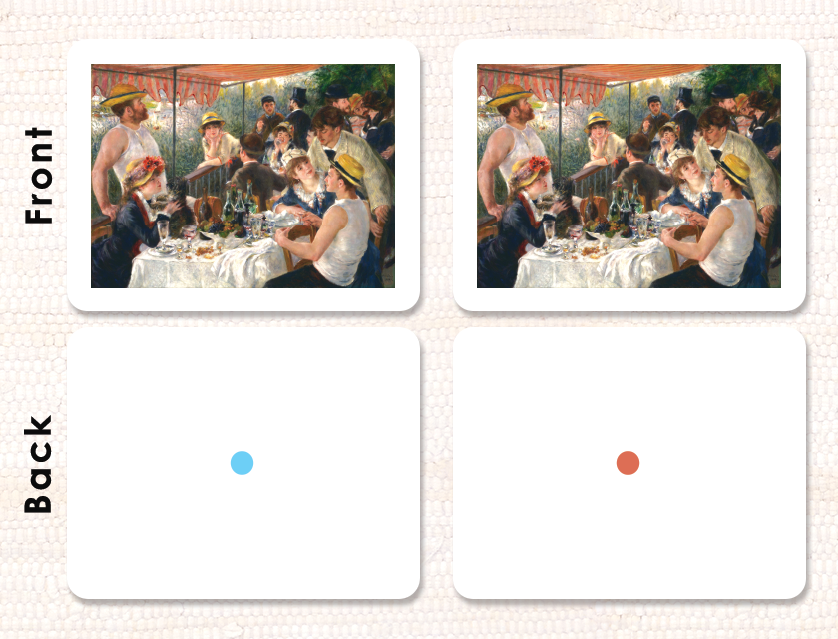
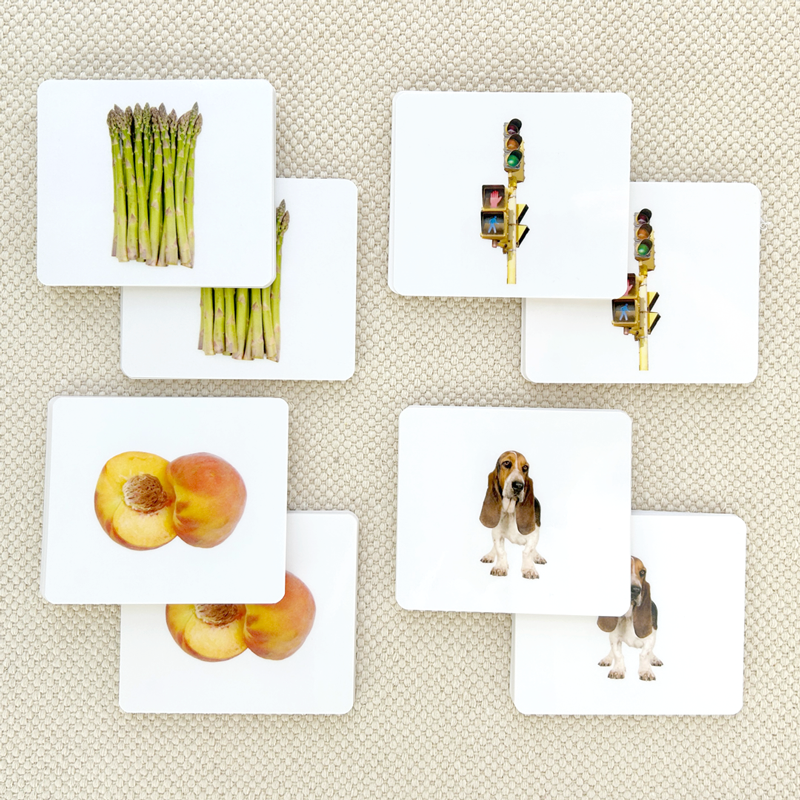
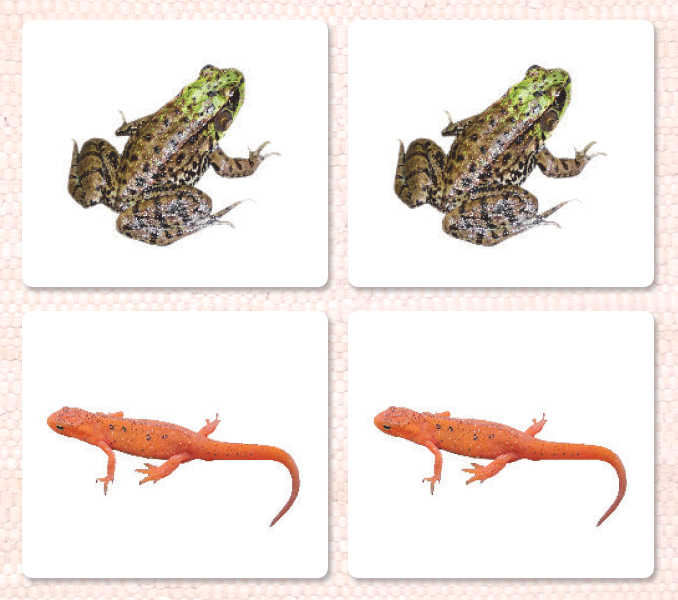
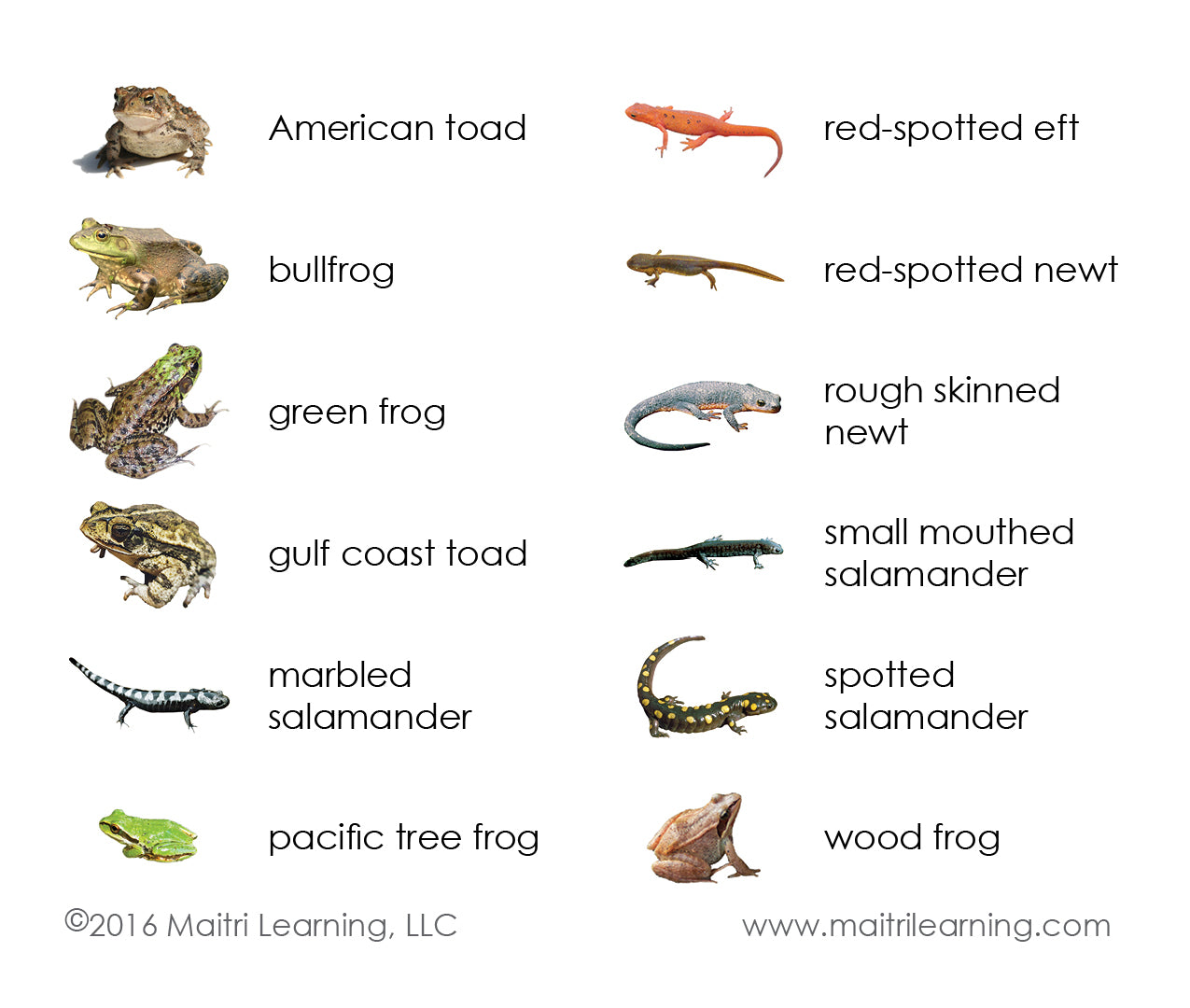
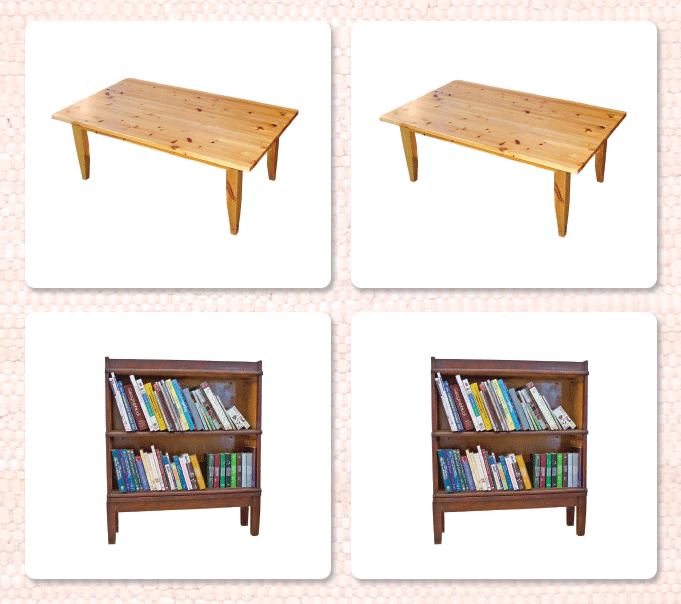
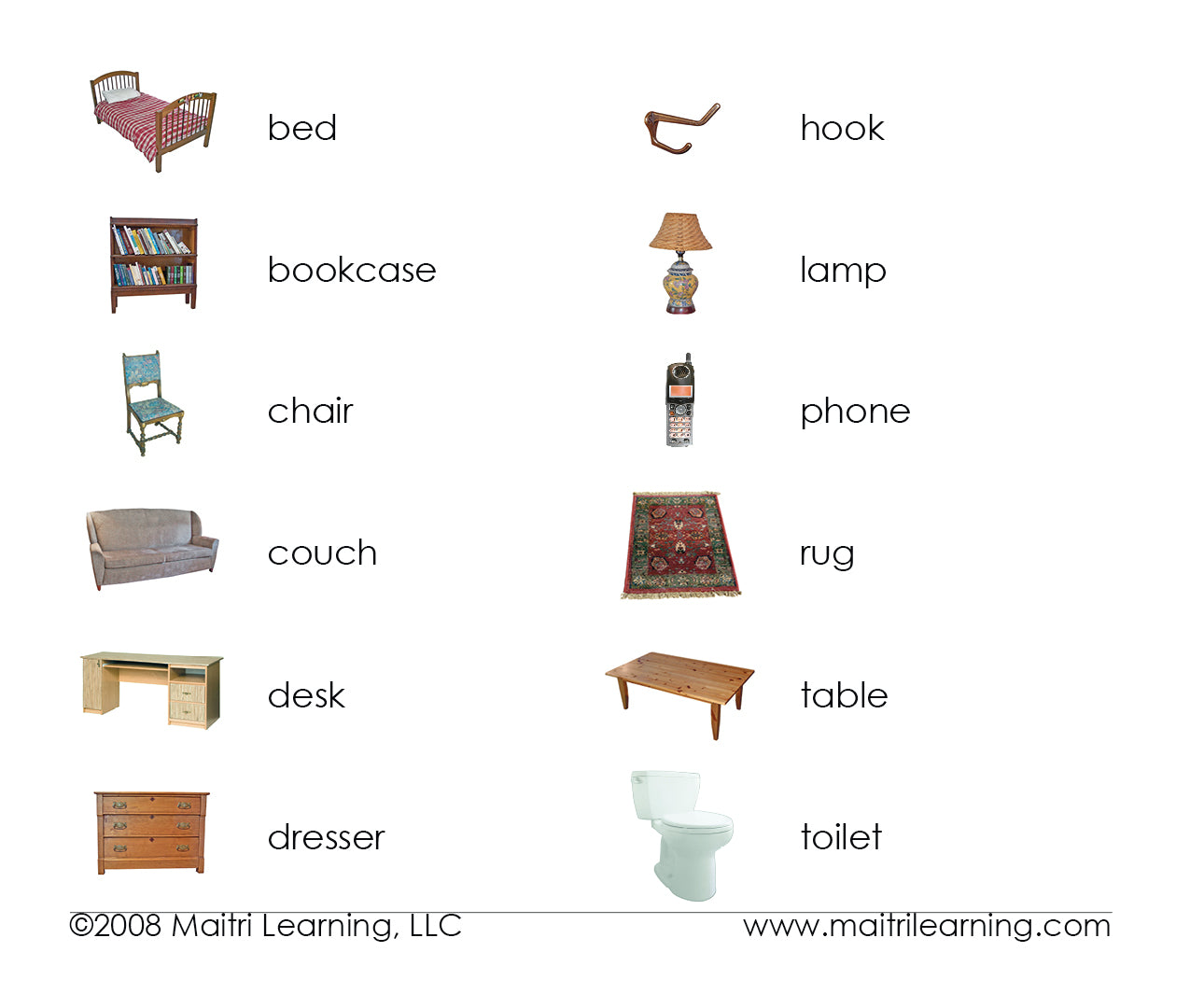
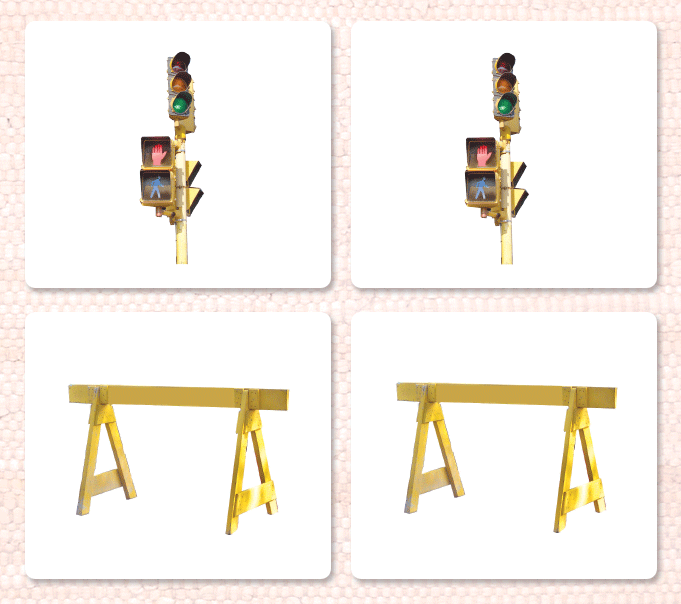
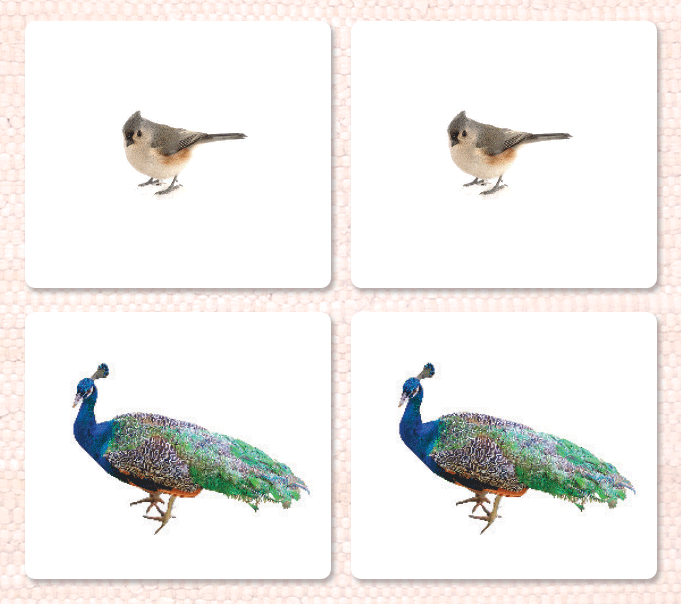
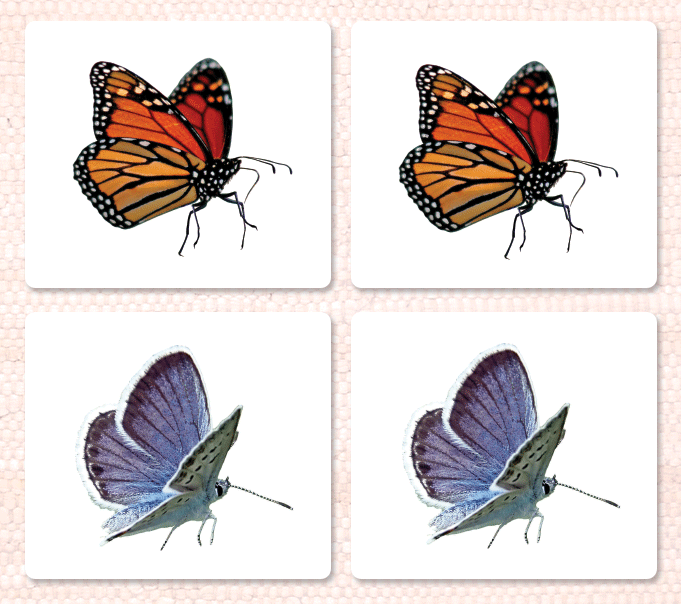
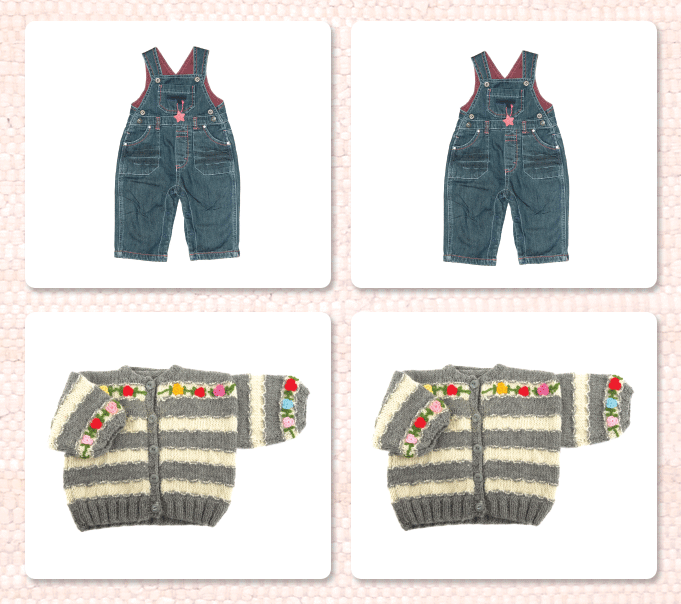
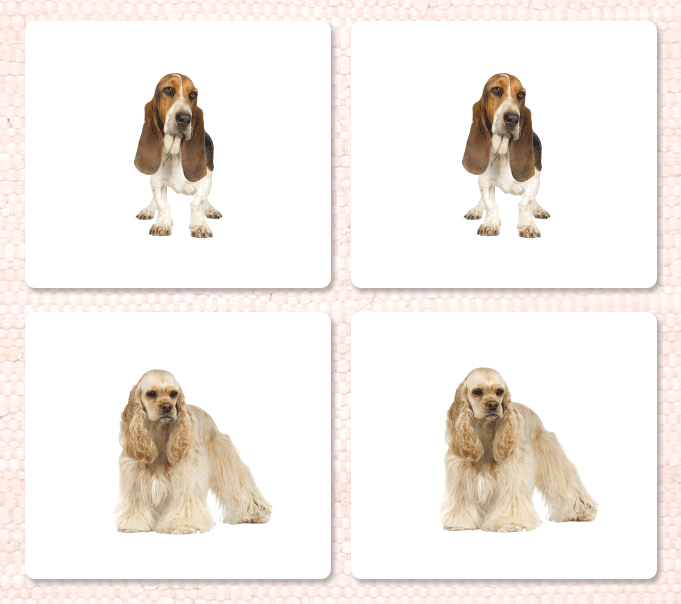
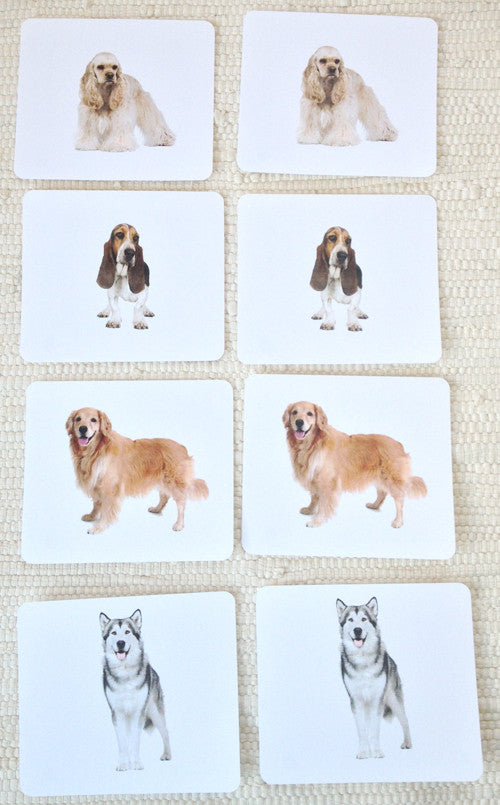
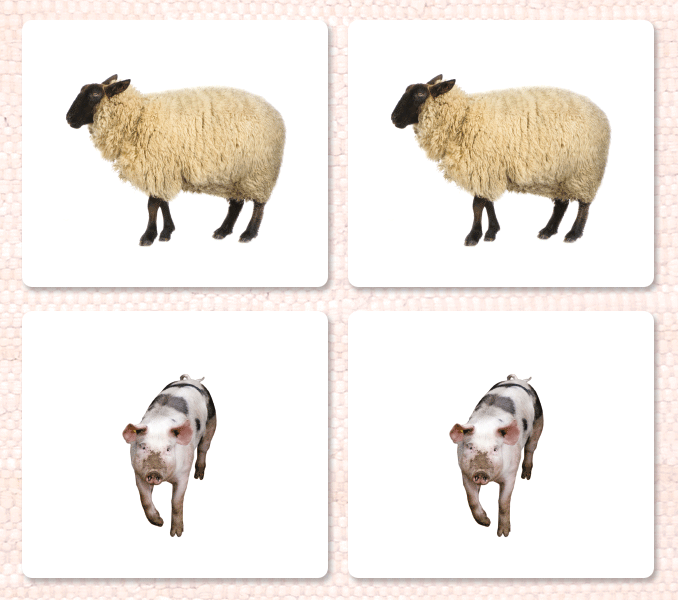
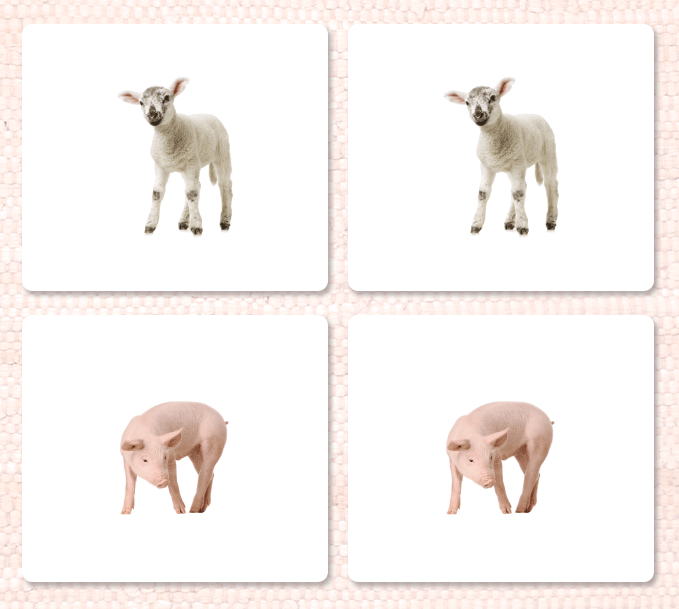
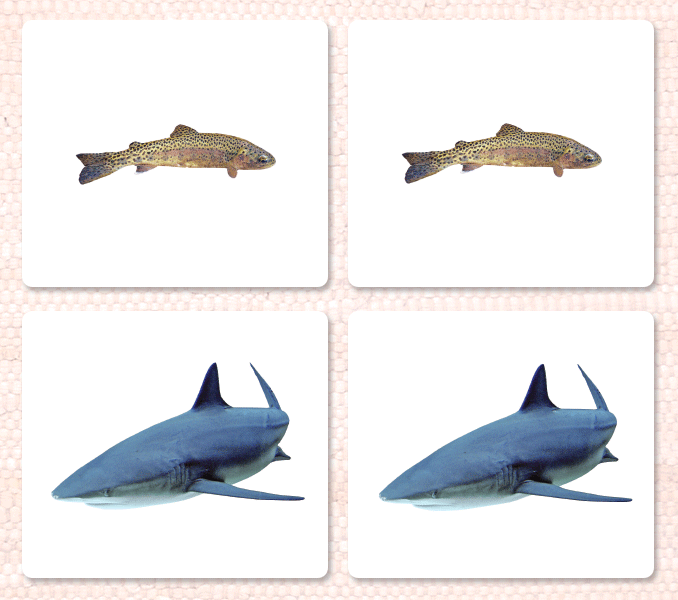
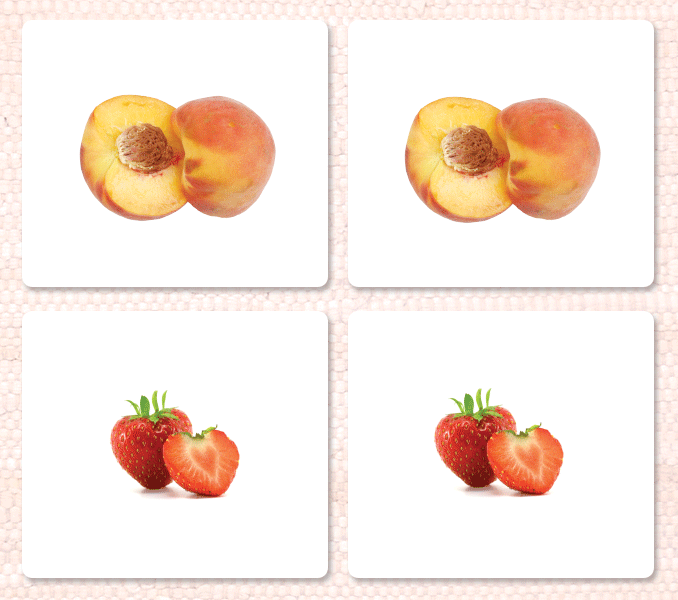
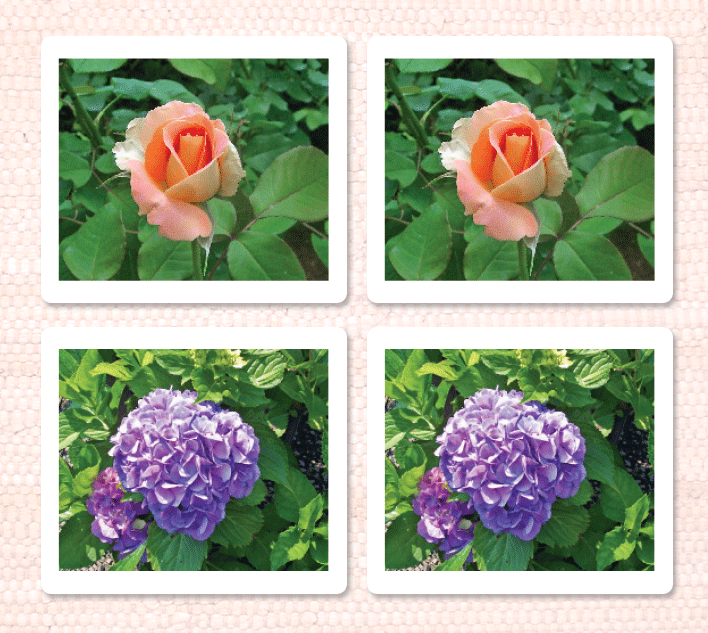
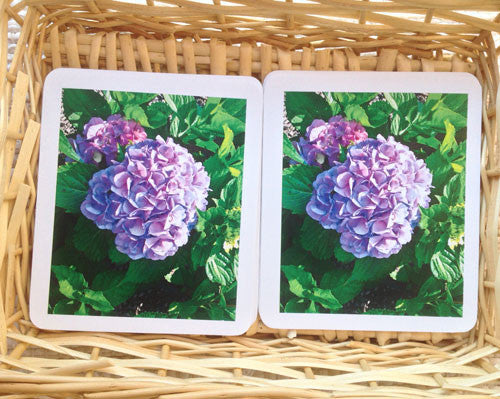
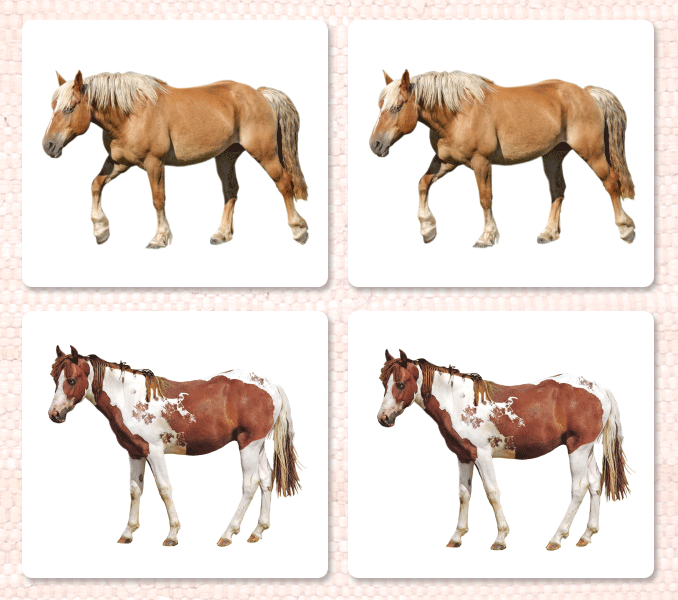
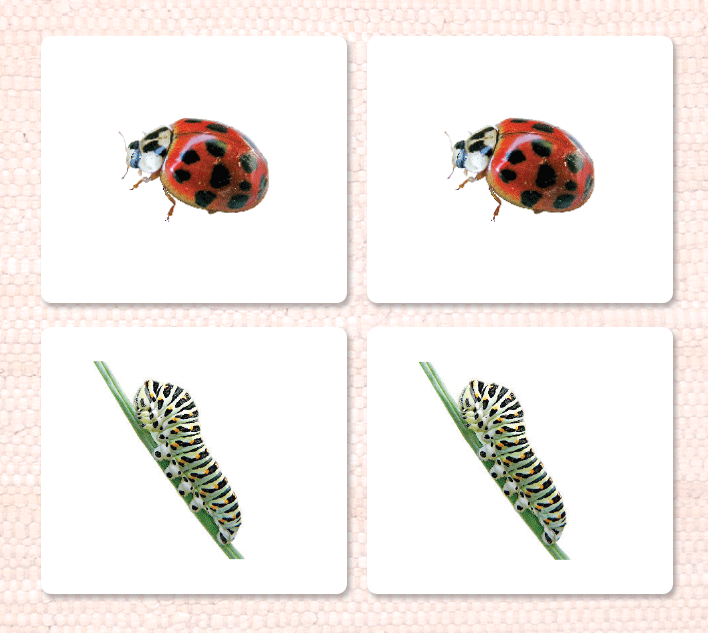
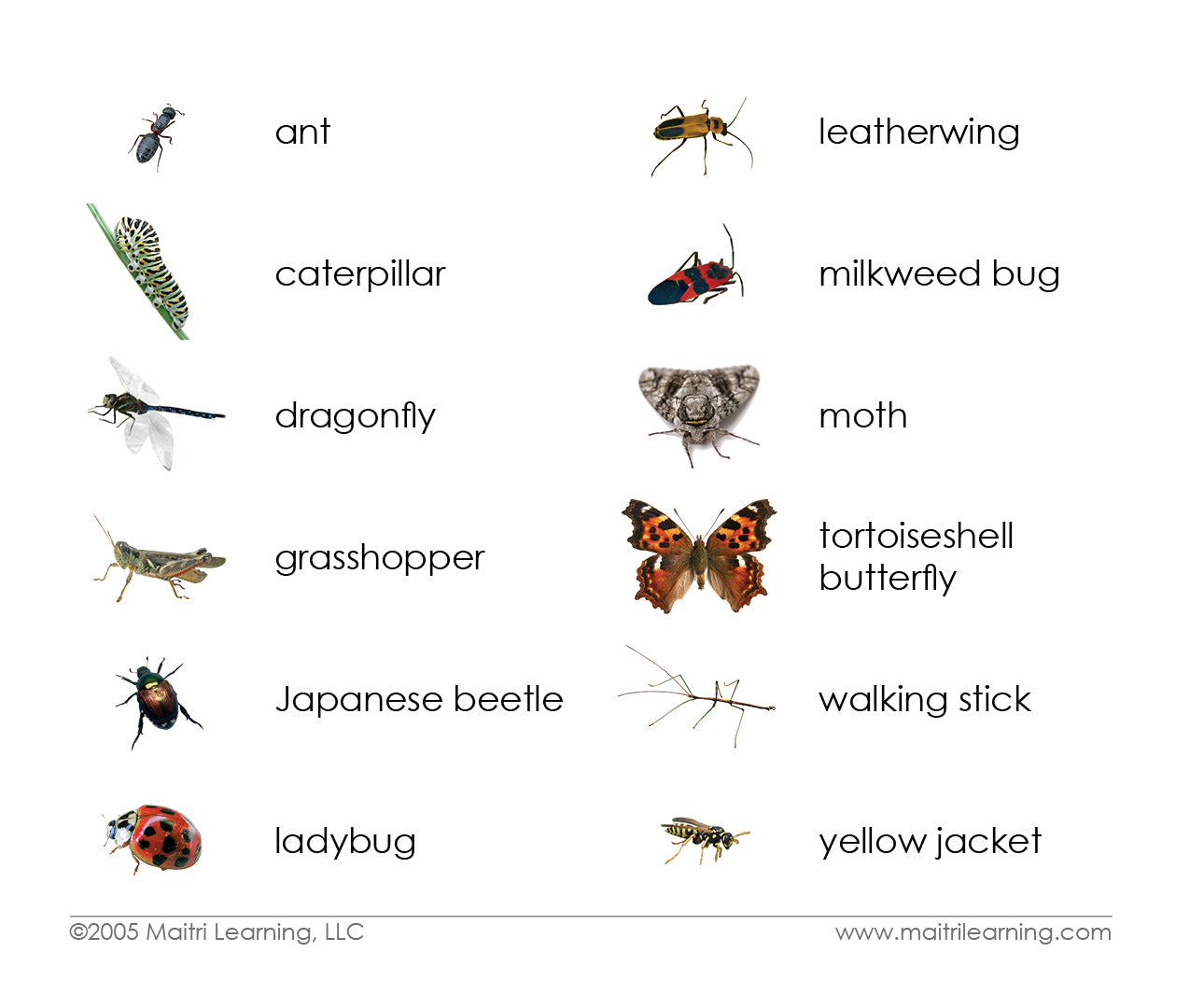
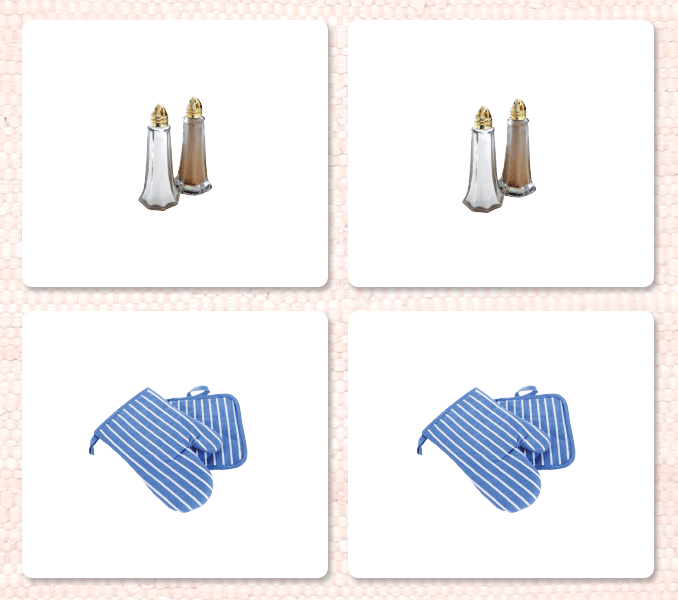
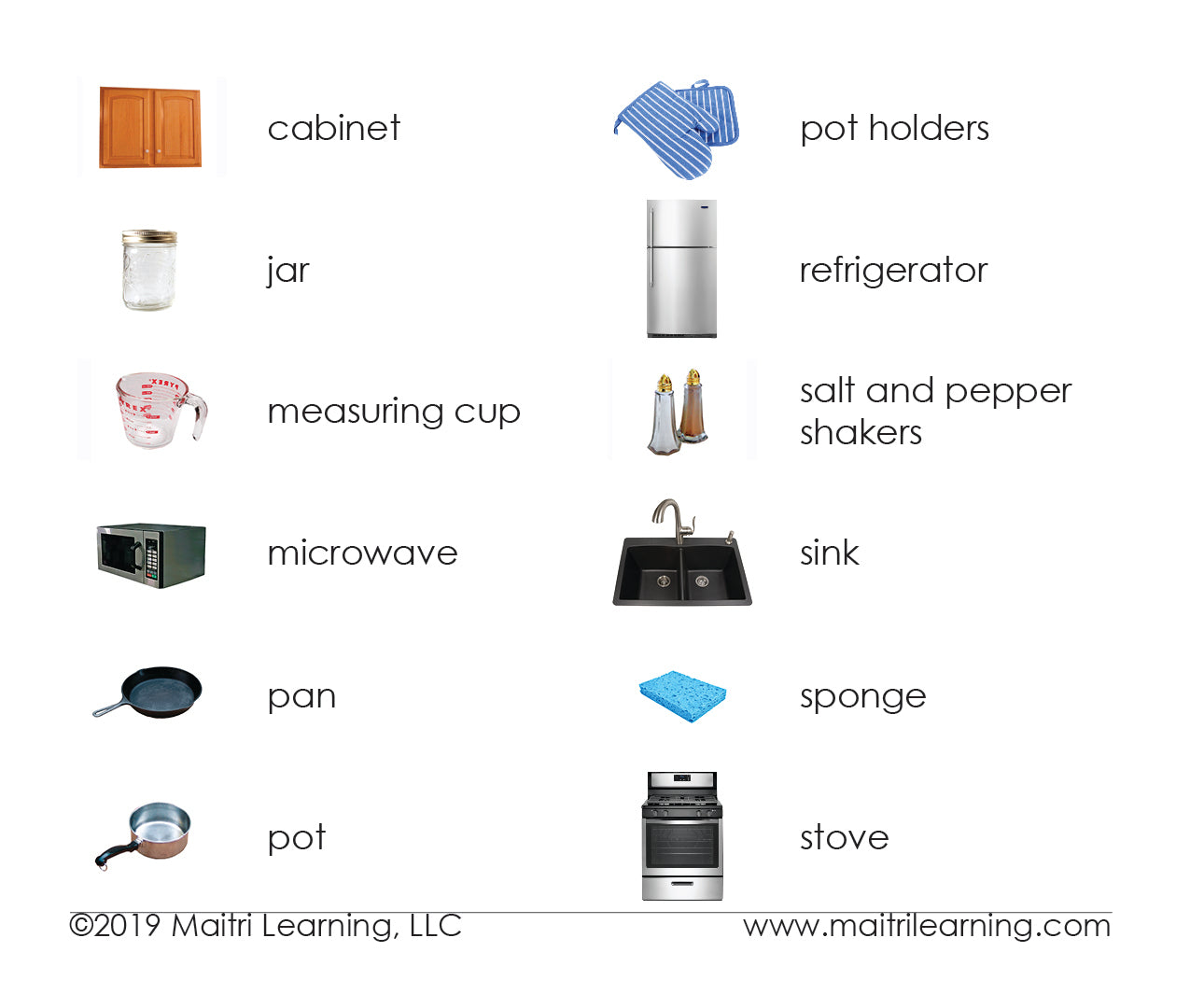
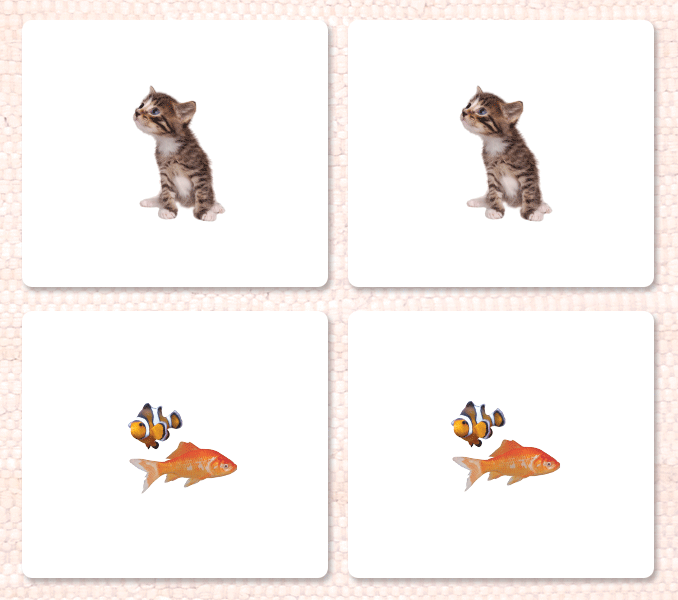
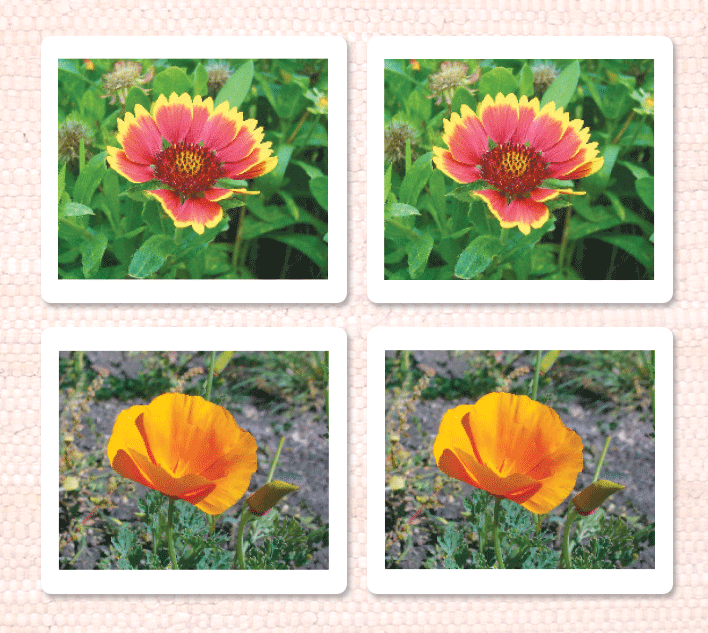
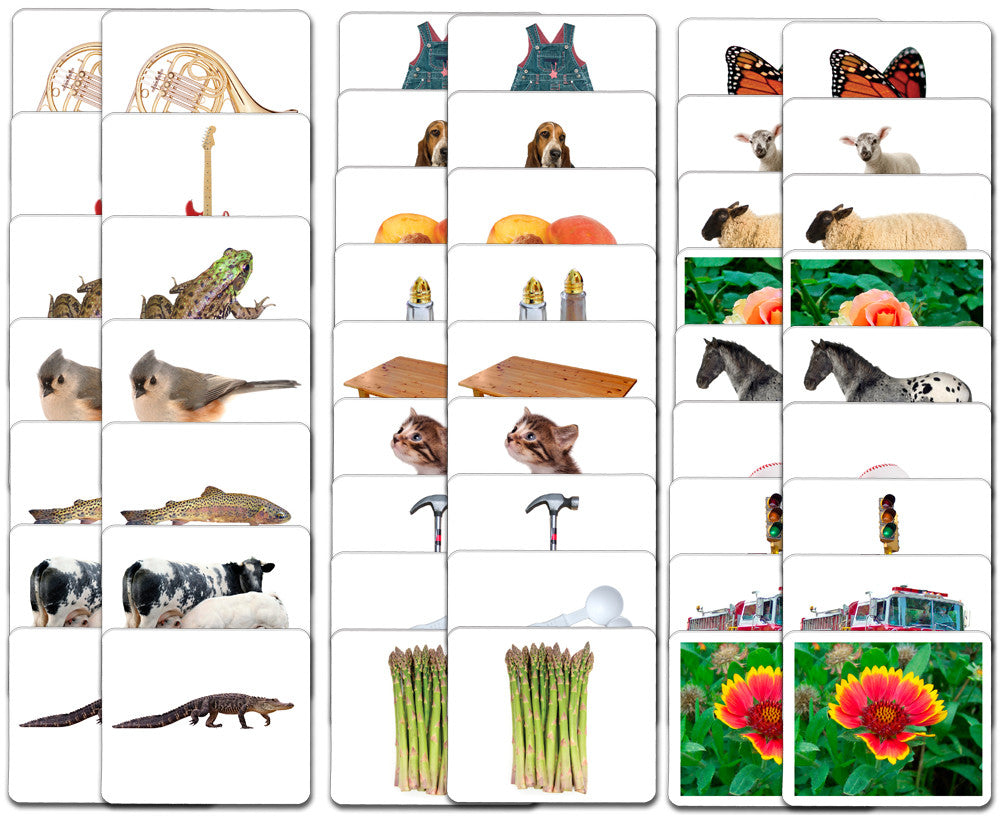
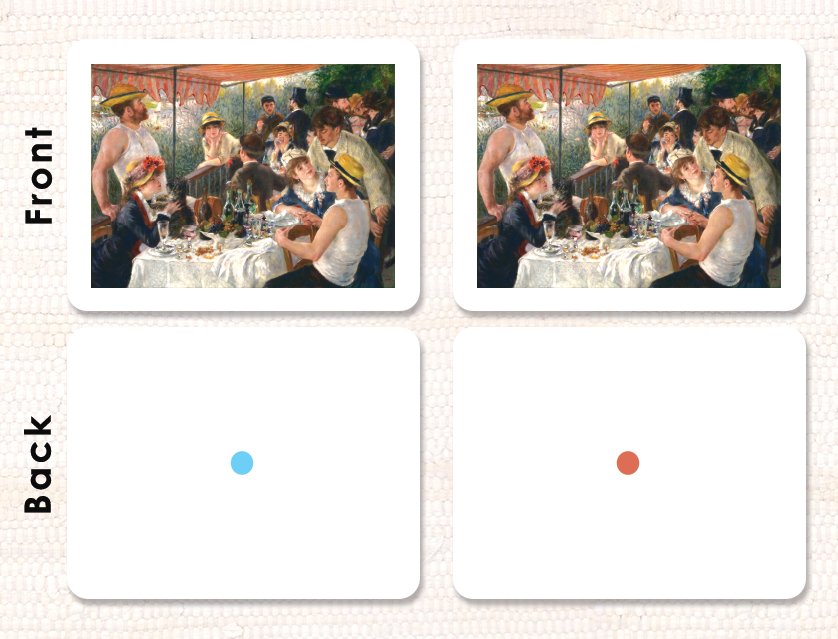
Montessori matching cards are packets of two identical sets of real-photo picture cards. Students find each picture's twin and name it as they go. Matching gives students many more chances to use the words they first learned in a vocabulary lesson, so each new word gets practiced again and again.
What's in this collection
Individual matching packets are organized by topic, so you can follow each student's interests:
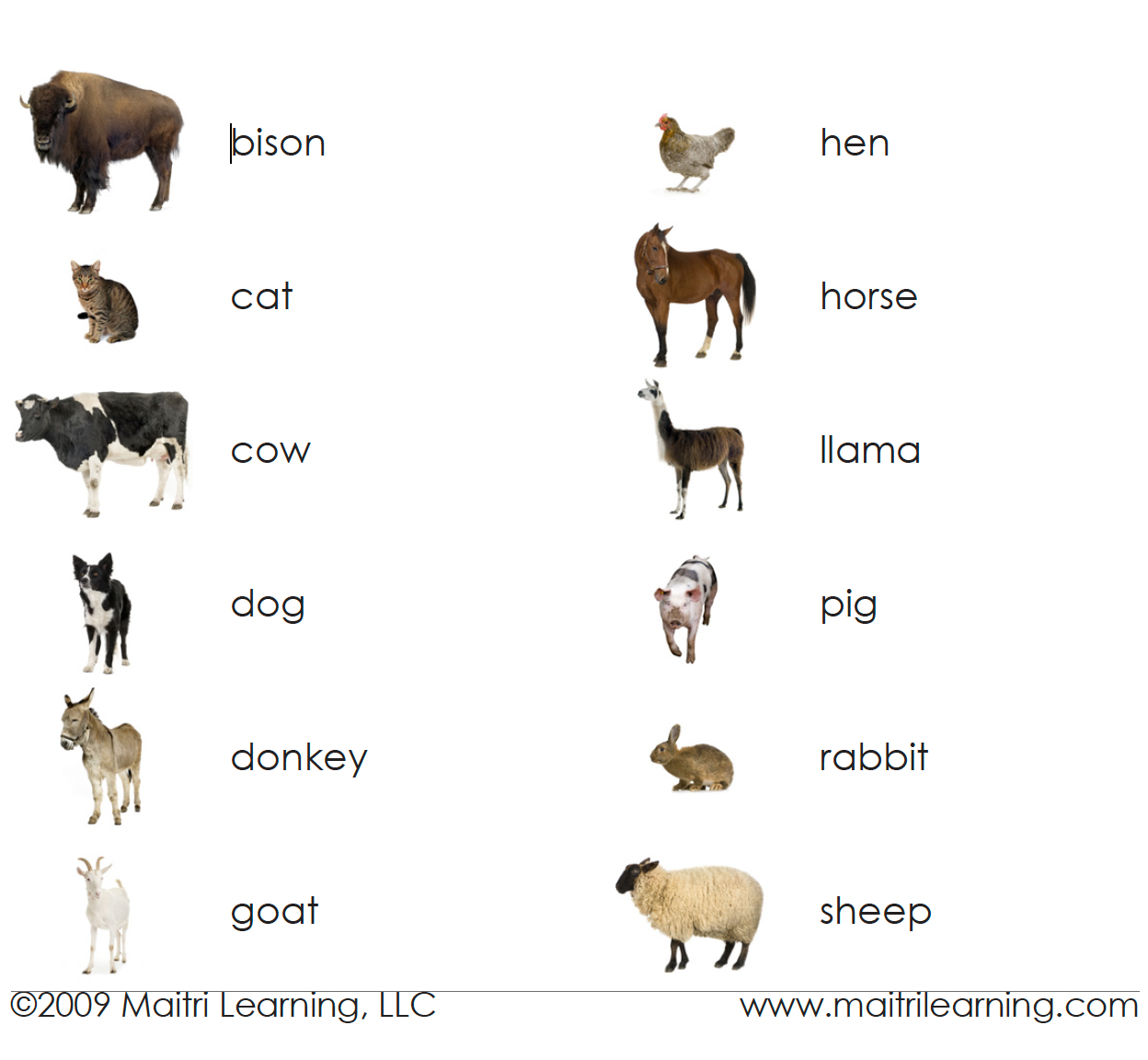
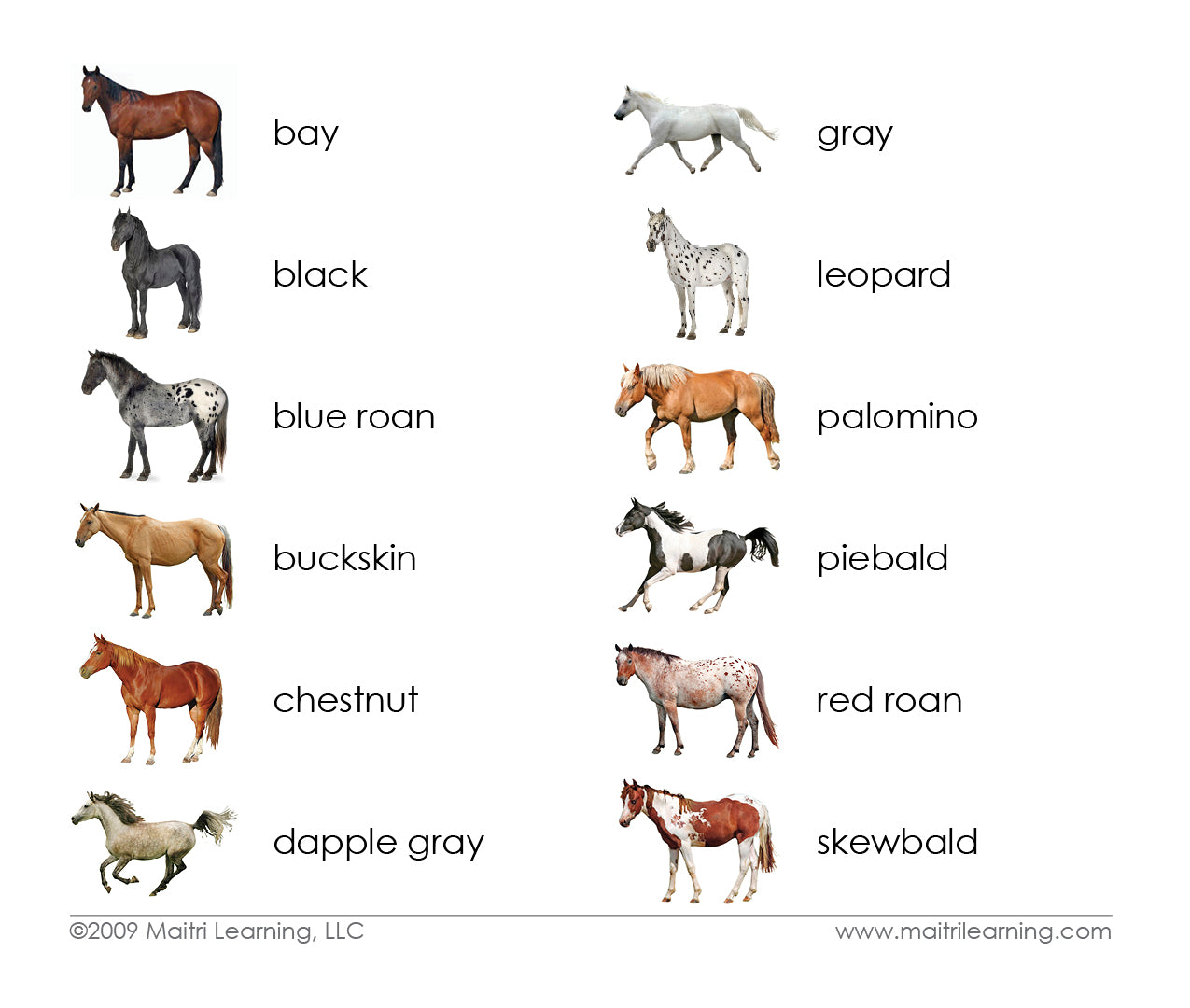
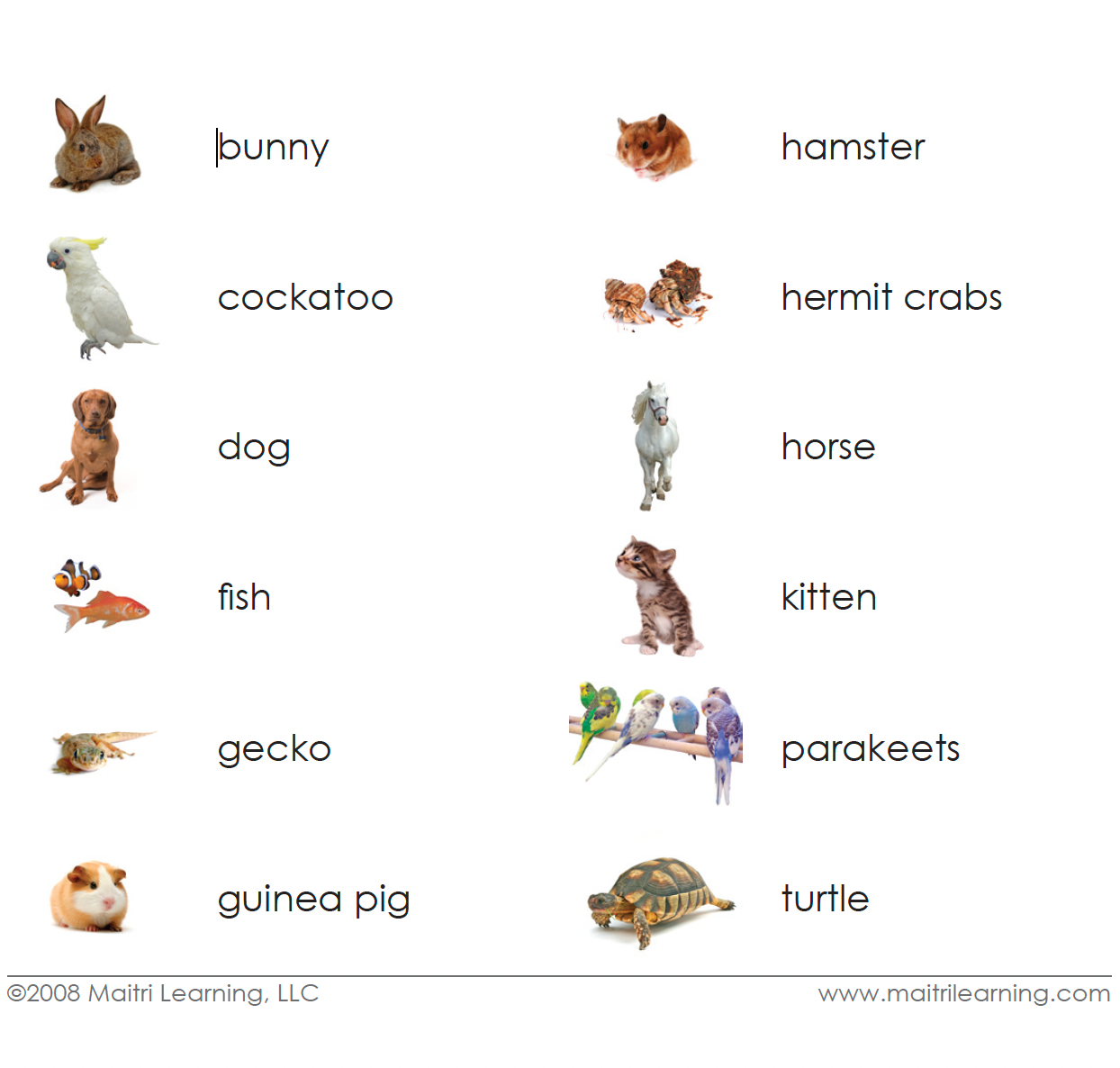
- Animals: dogs, pets, farm animals (adults and juveniles), and horses (coat colors)
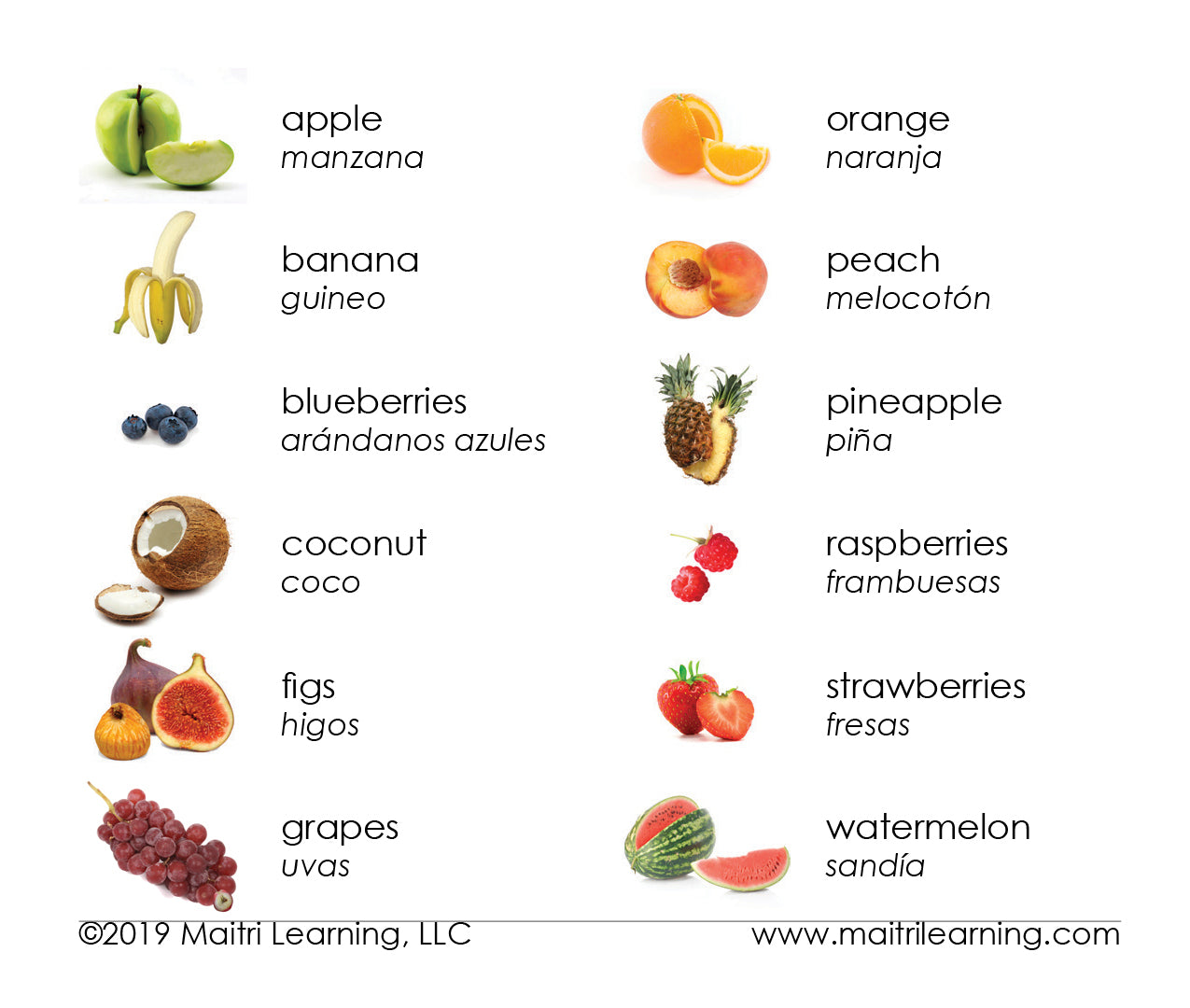
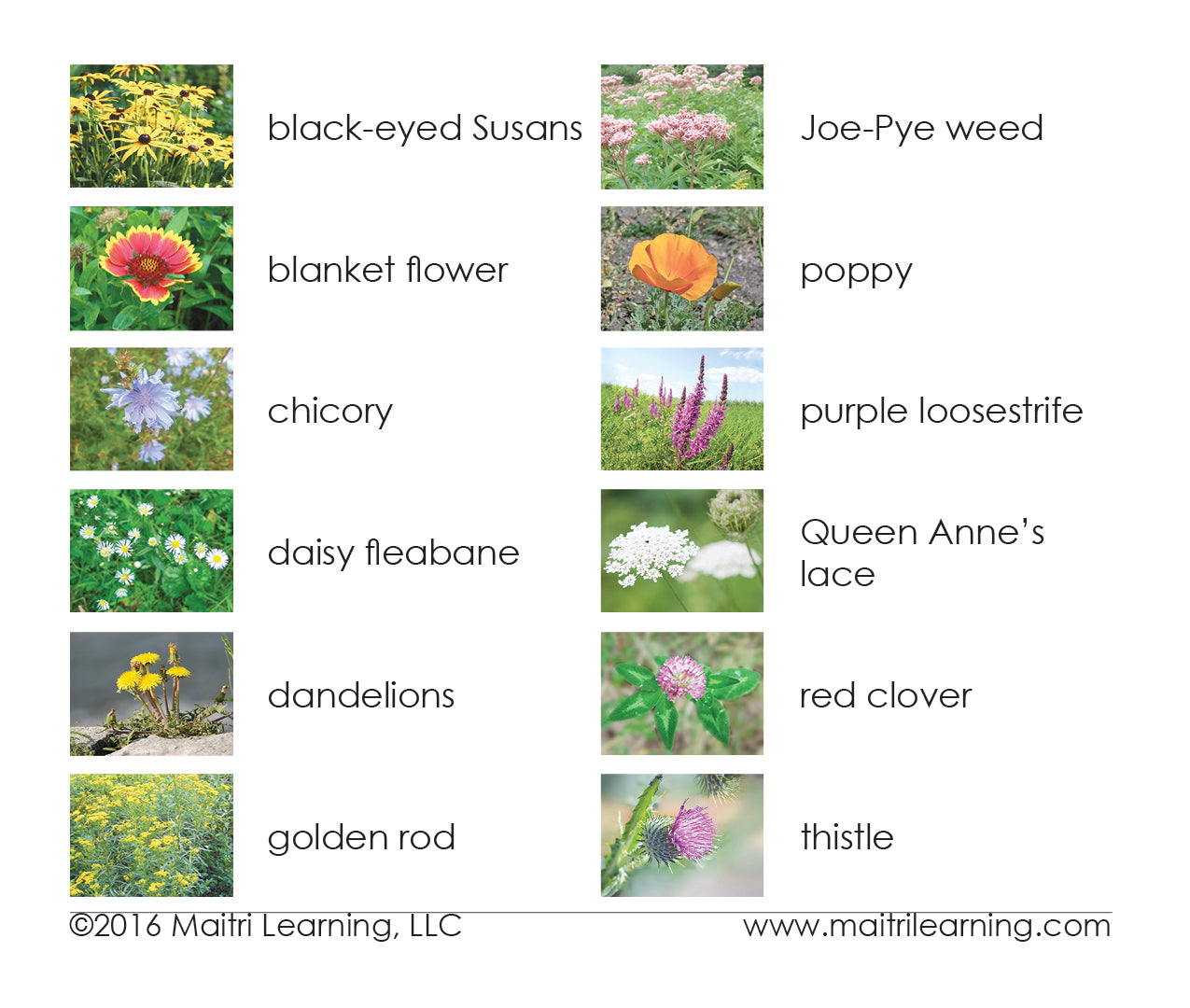
- Plants and food: fruit, vegetables, garden flowers, and wildflowers
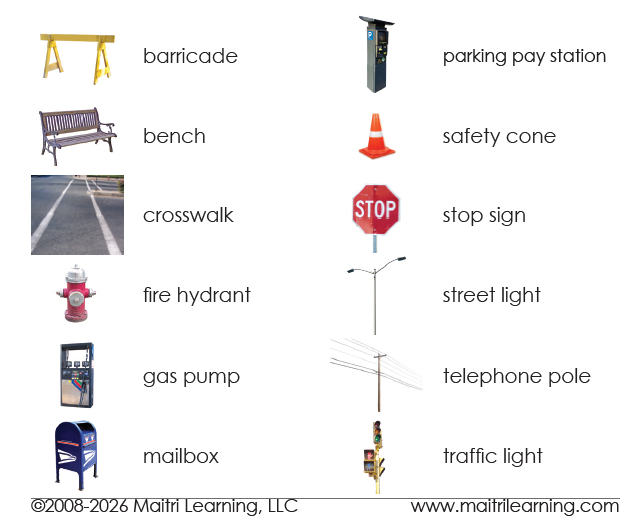
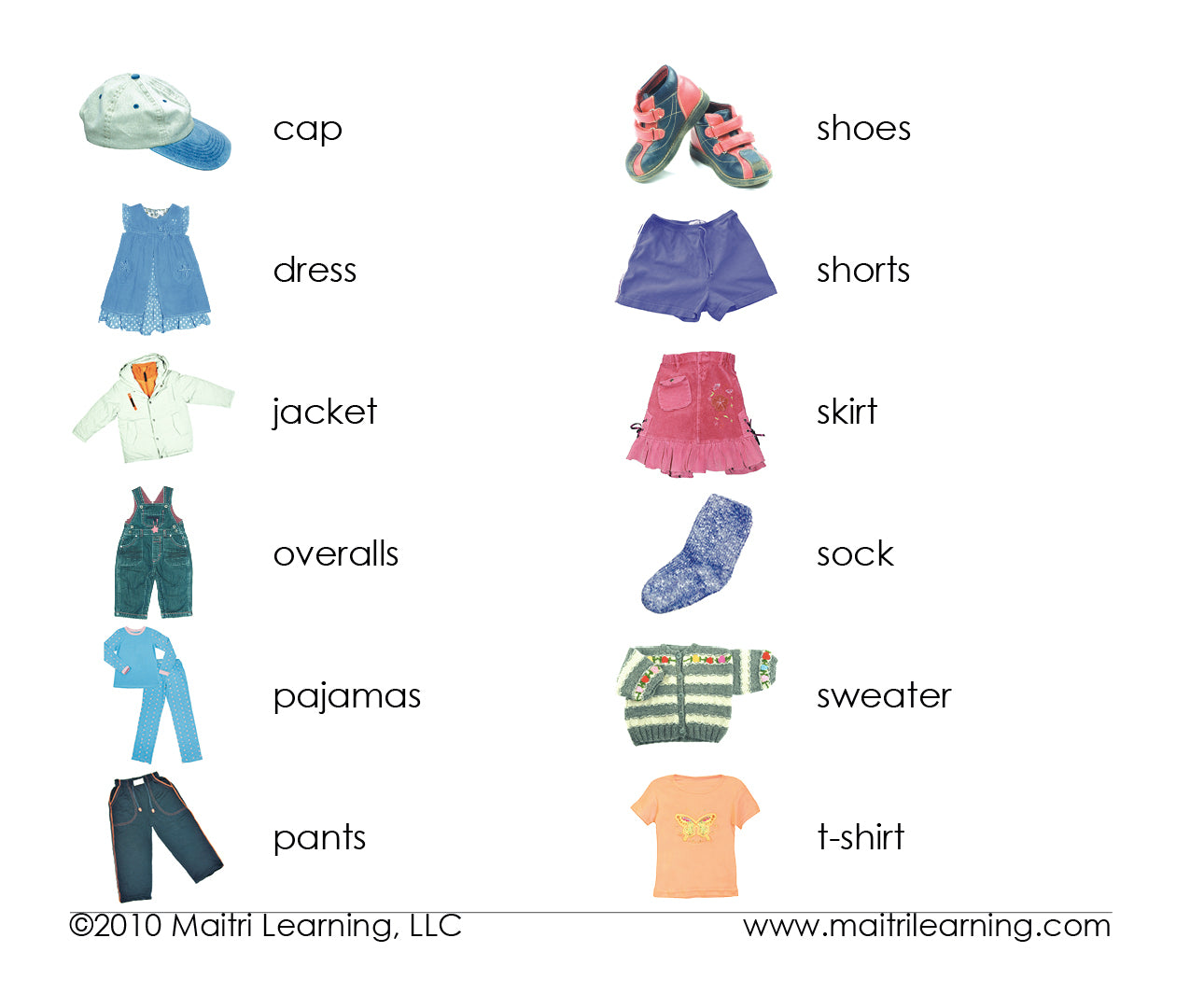
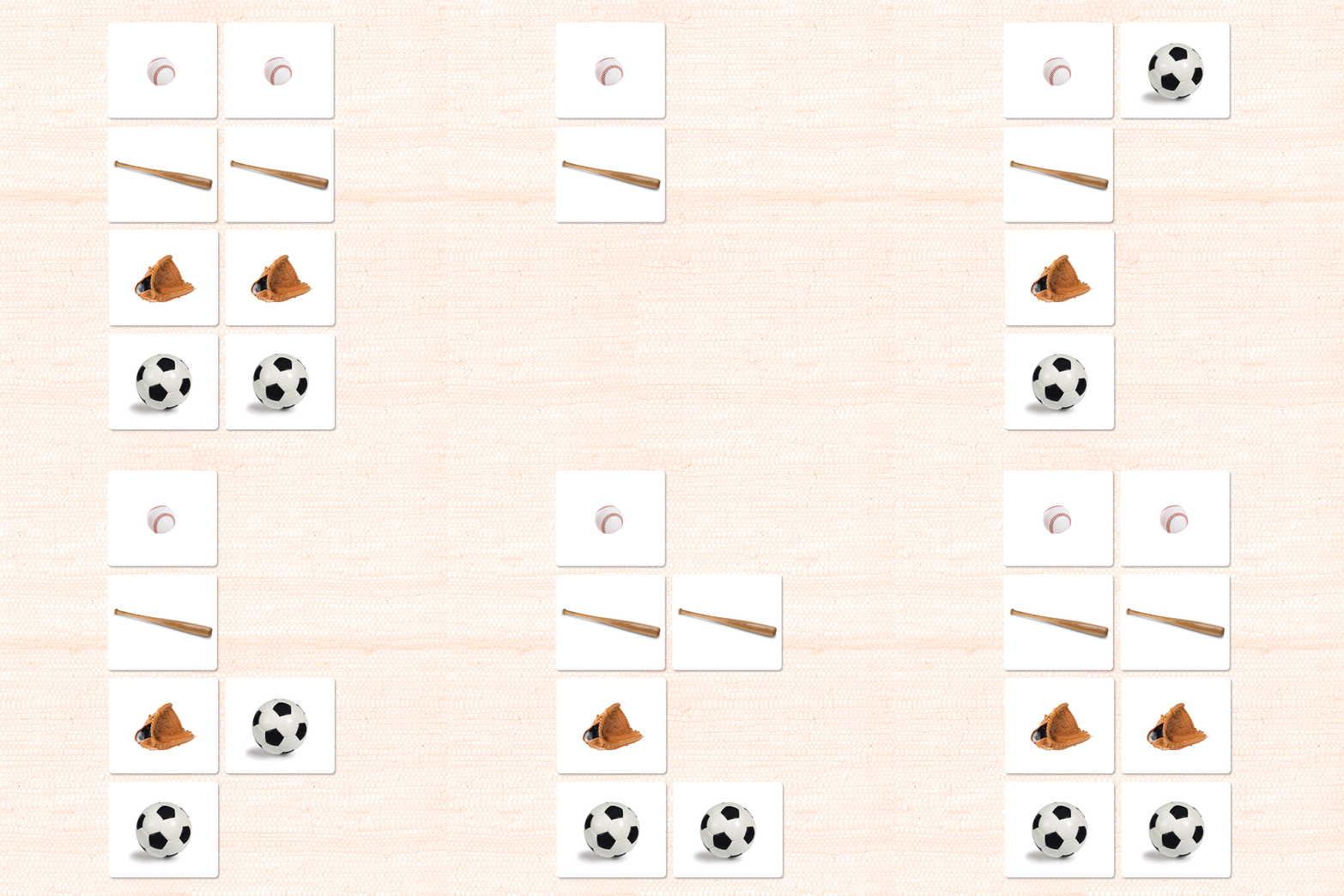
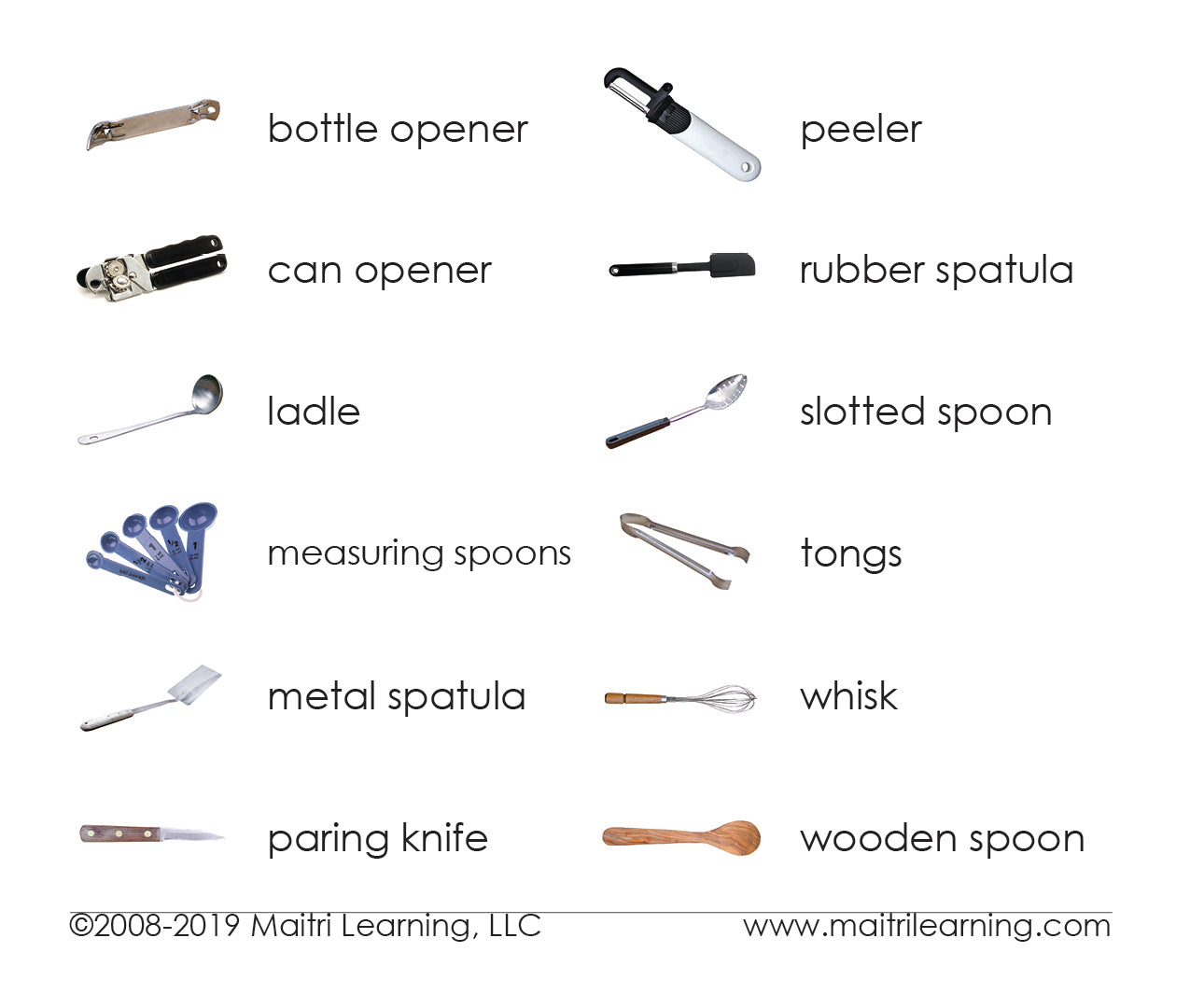
- Everyday life: around the house, around town, in the kitchen, clothing, tools, utensils, sports equipment, and transportation
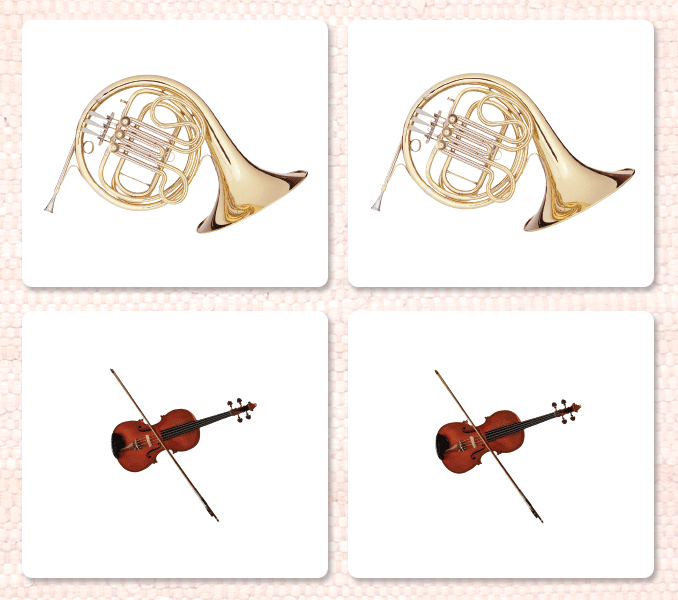
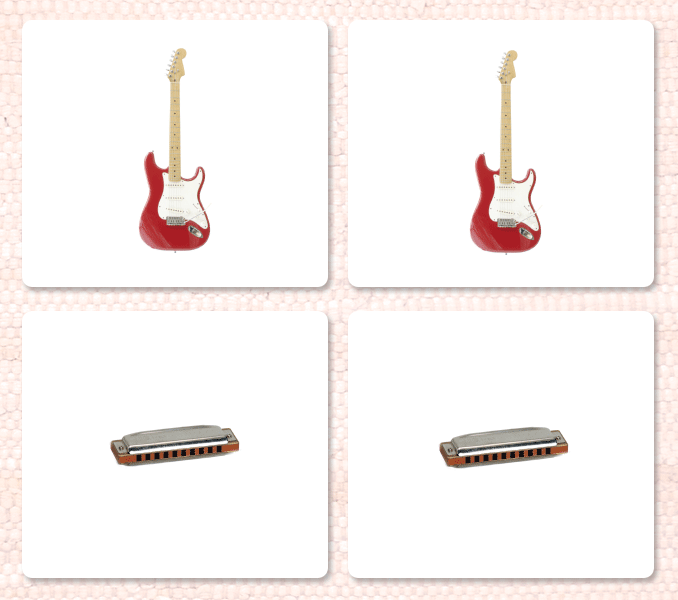
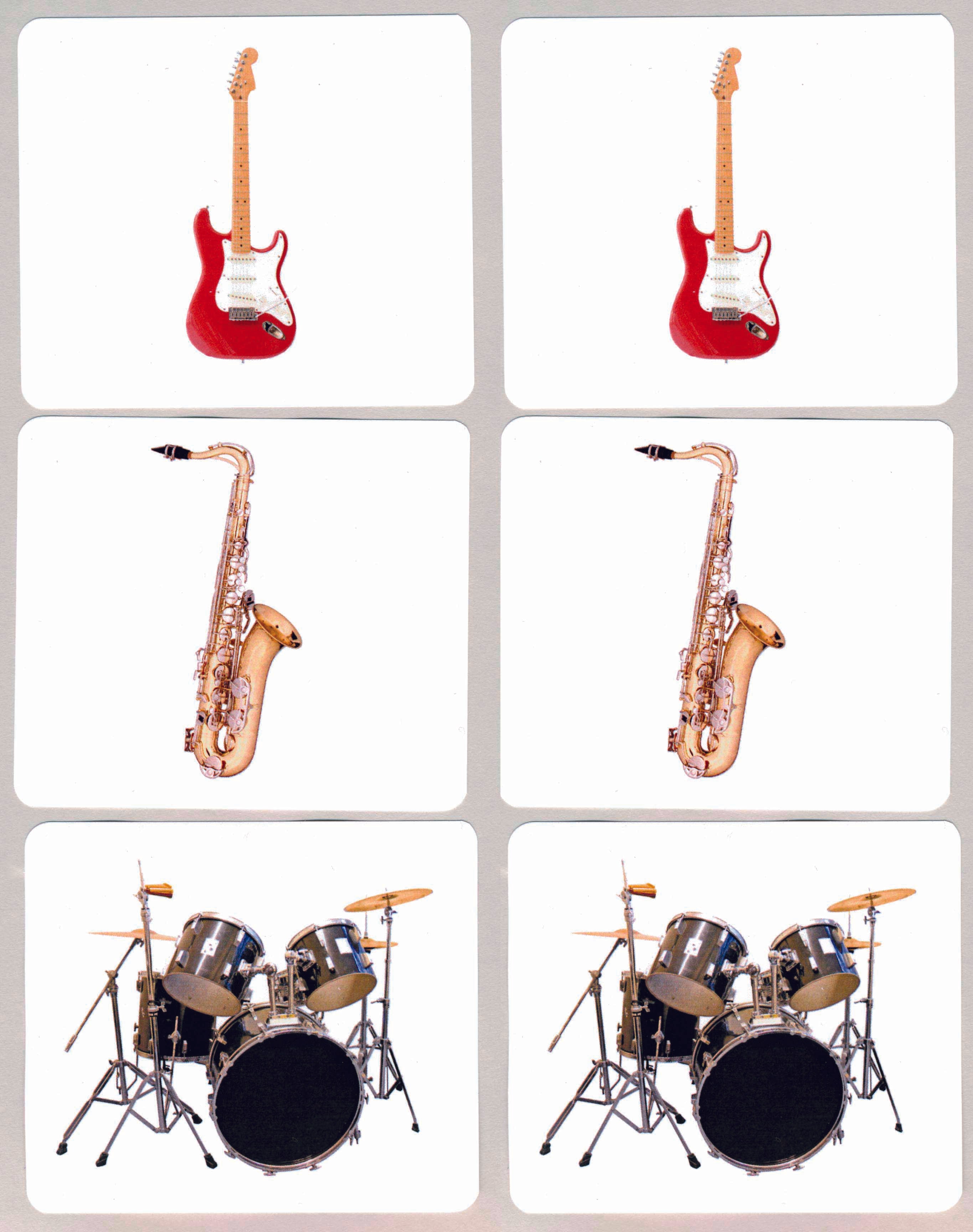
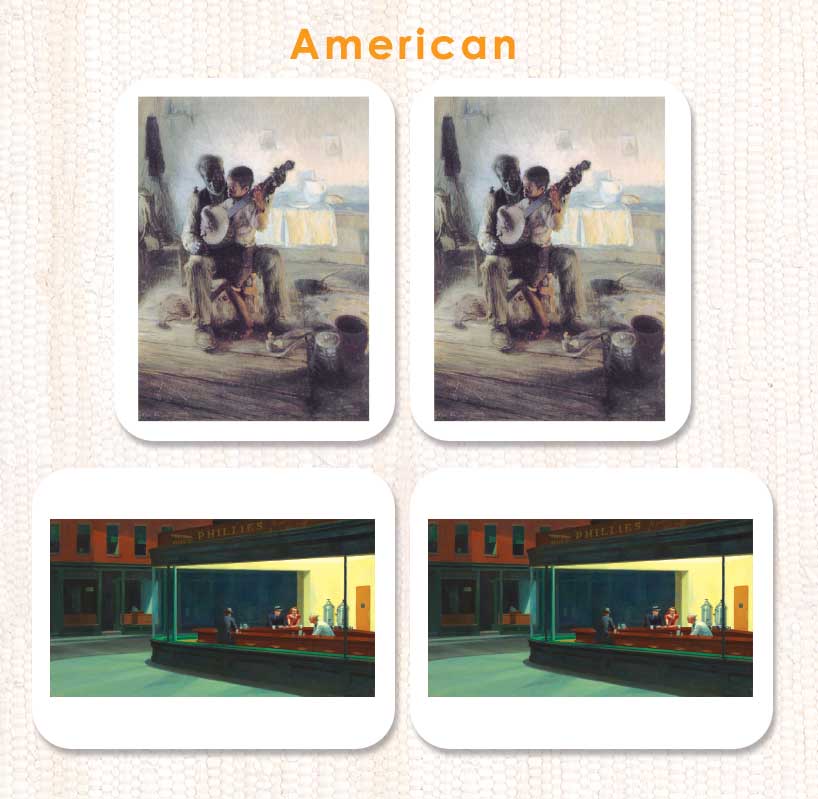
- Music and art: orchestral and popular musical instruments, plus fine art
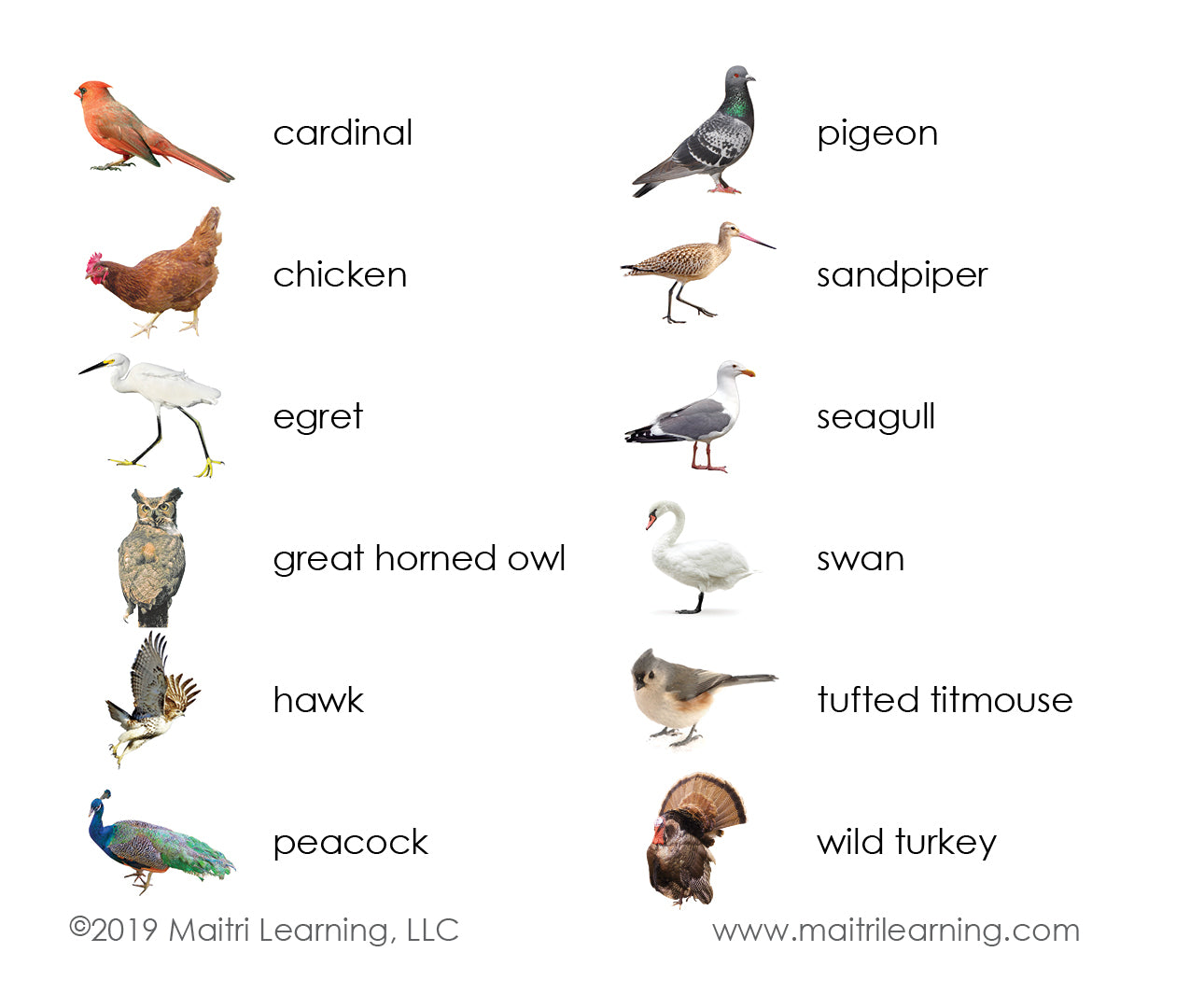
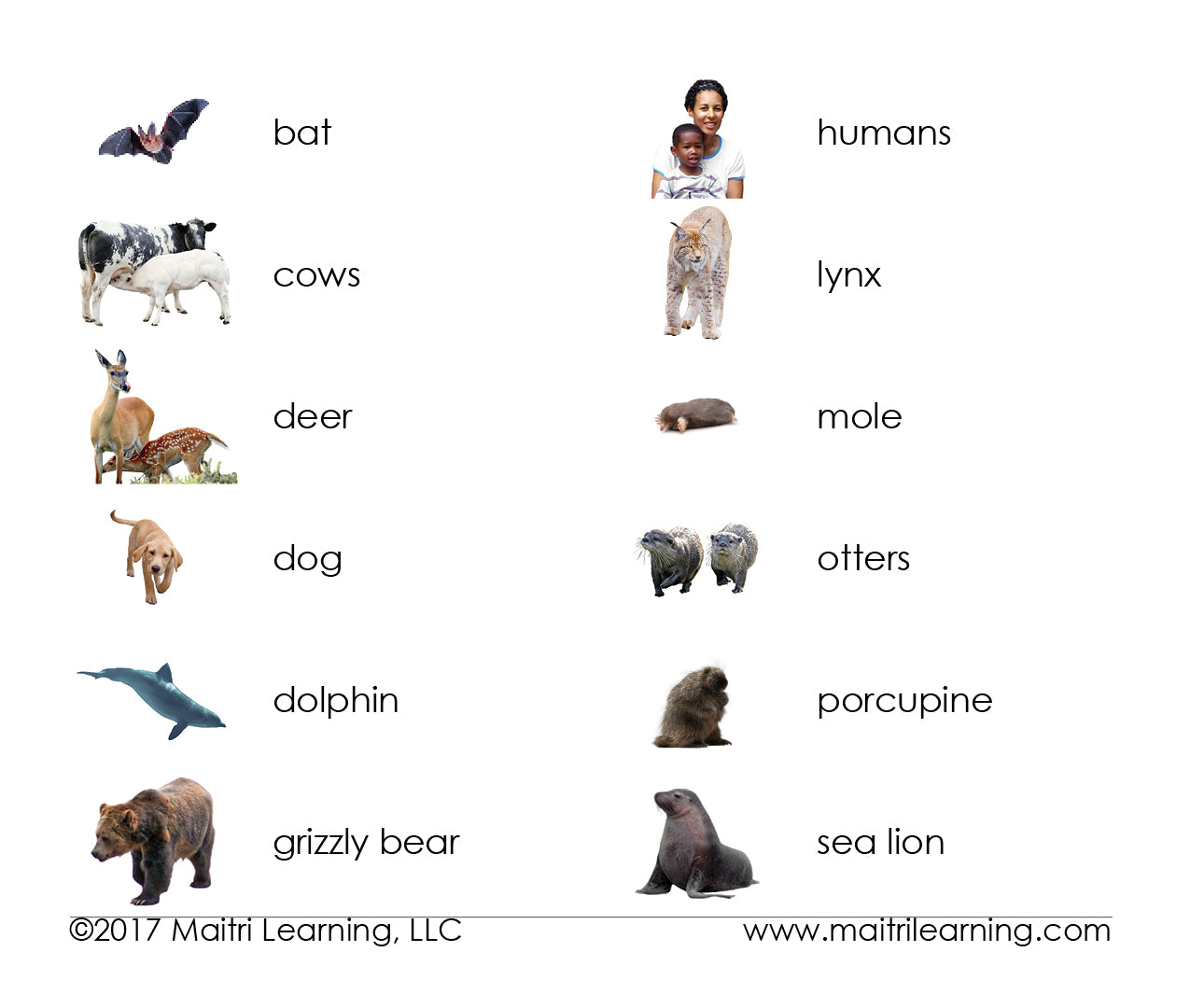
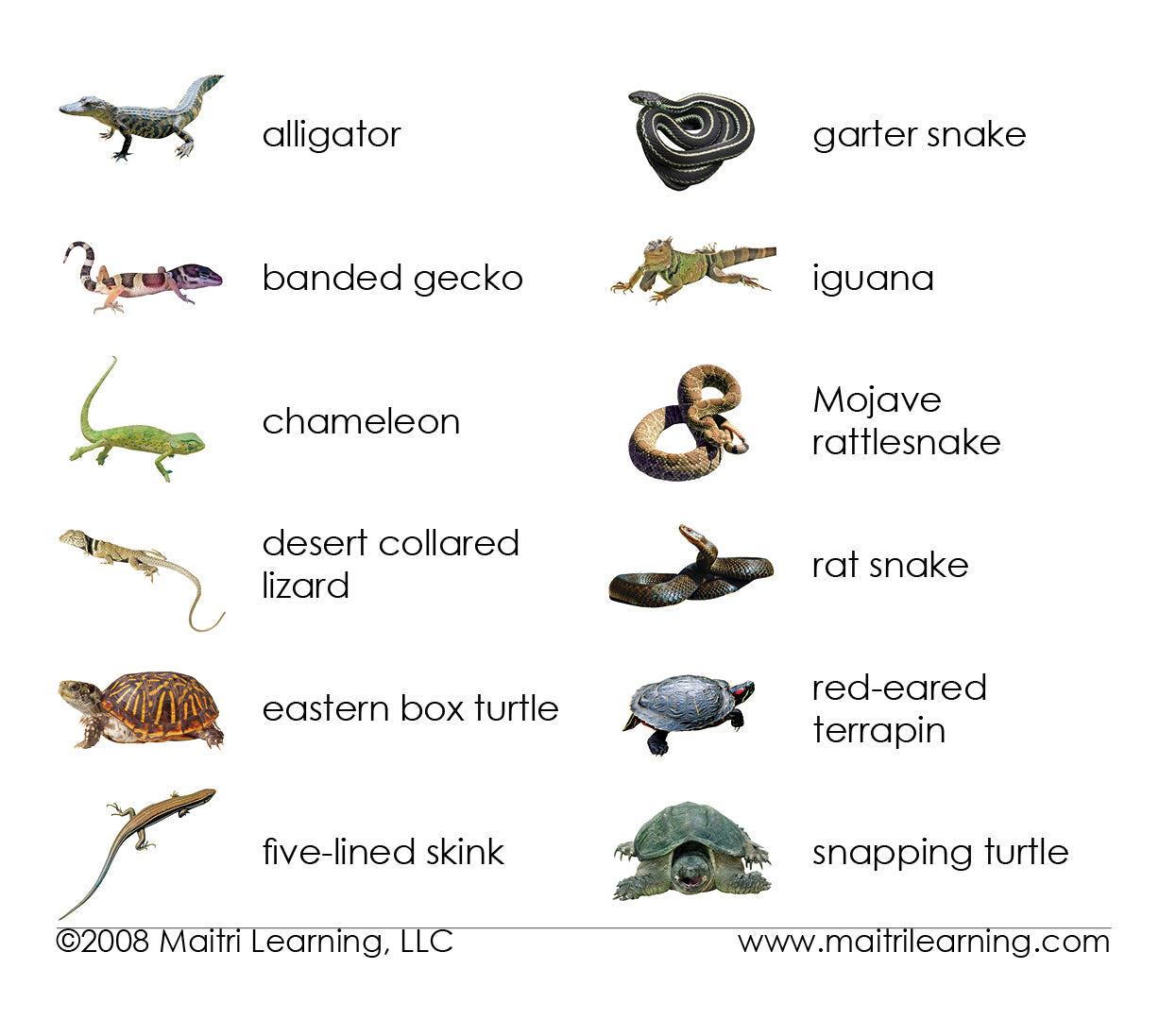
- Zoology: amphibians, birds, butterflies, fish, insects, mammals, and reptiles
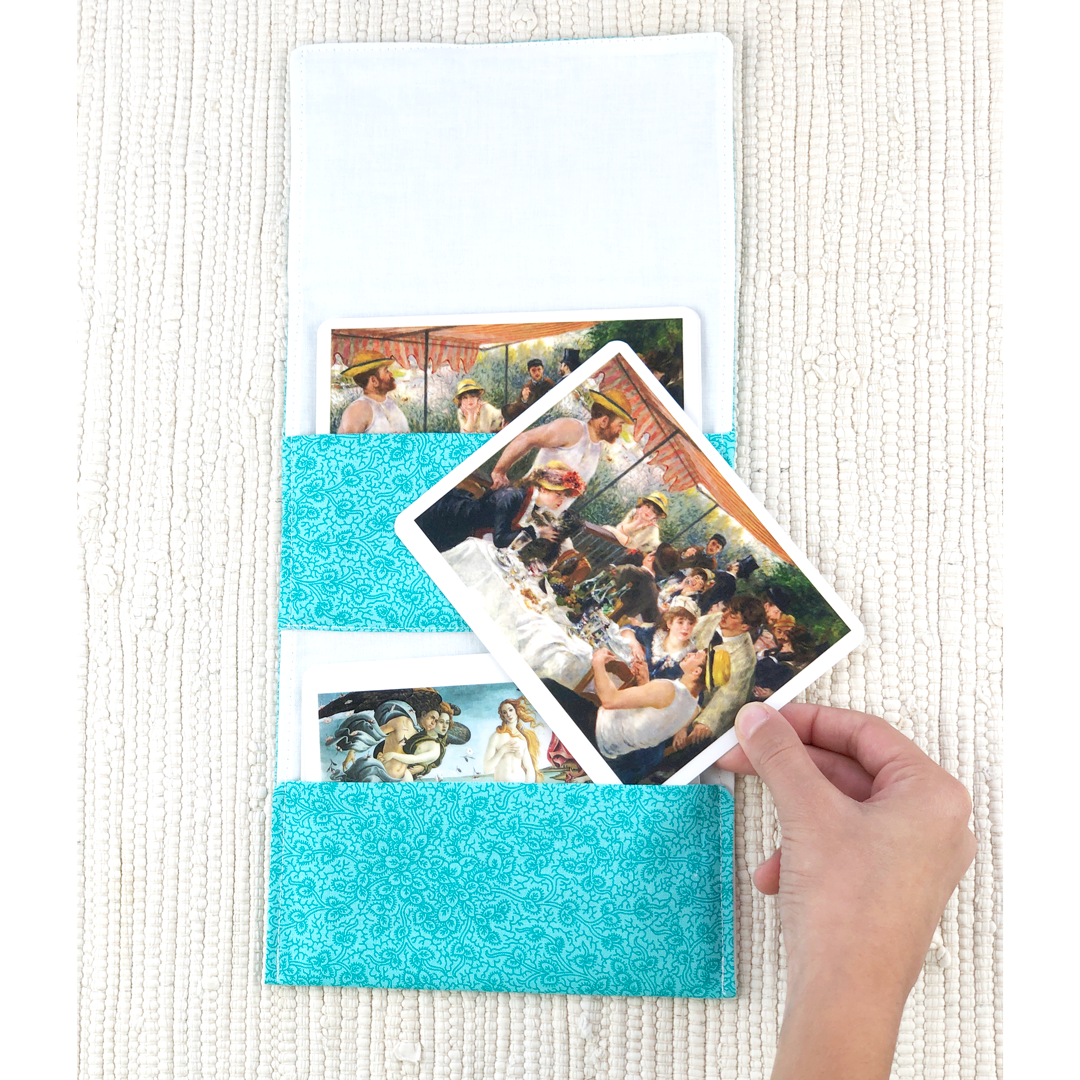
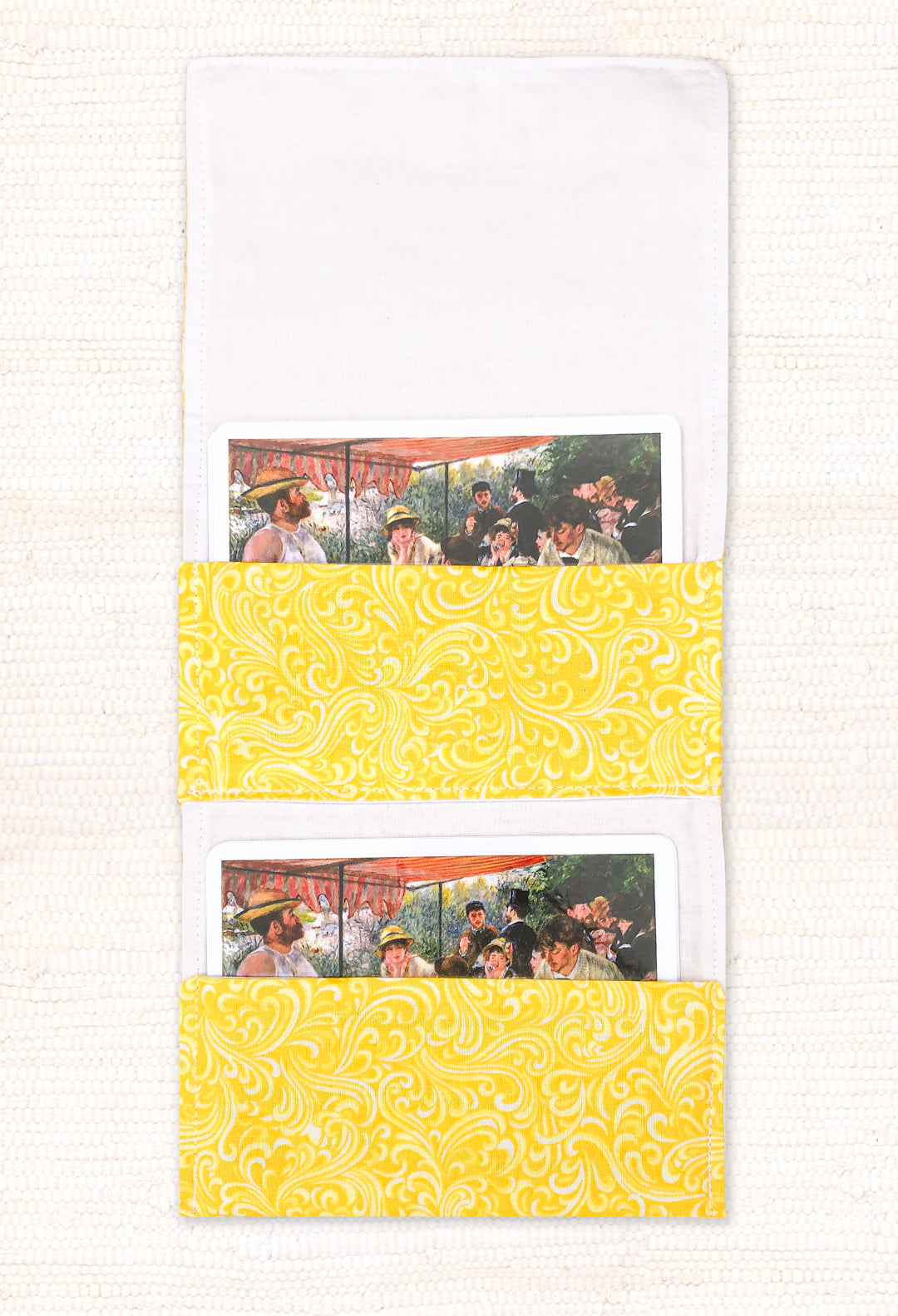
You'll also find the Matching Starter Set, the Common Nouns Matching Card Sets, and 2-pocket cloth pouches sized for displaying matching work.
Why matching cards matter for reading
Interest drives learning. Montessori is a student-centered approach: the teacher observes what each student is curious about and offers materials that match. A student who loves birds will choose bird matching again and again. Each time, they name the pictures and discuss them with a teacher or friend.
That repetition is what makes new words stick, since one lesson is rarely enough. Vocabulary is one of the language comprehension strands of Scarborough's (2001) reading rope. A student who knows what a word means will understand it when they later meet it in text.
The cards are also designed for independent work. They are text-free, so pre-readers aren't stopped by printed words they can't yet read. Each card has a red or blue dot on its back, so students can sort the cards into their two sets on their own before they start matching.
Reference
Scarborough, H. S. (2001). Connecting early language and literacy to later reading (dis)abilities: Evidence, theory, and practice. In S. B. Neuman & D. K. Dickinson (Eds.), Handbook of early literacy research (pp. 97–110). Guilford Press.
How do you use matching cards?
Start with words the student already knows from a vocabulary lesson. Then offer the matching games in order, moving on when the student is ready:
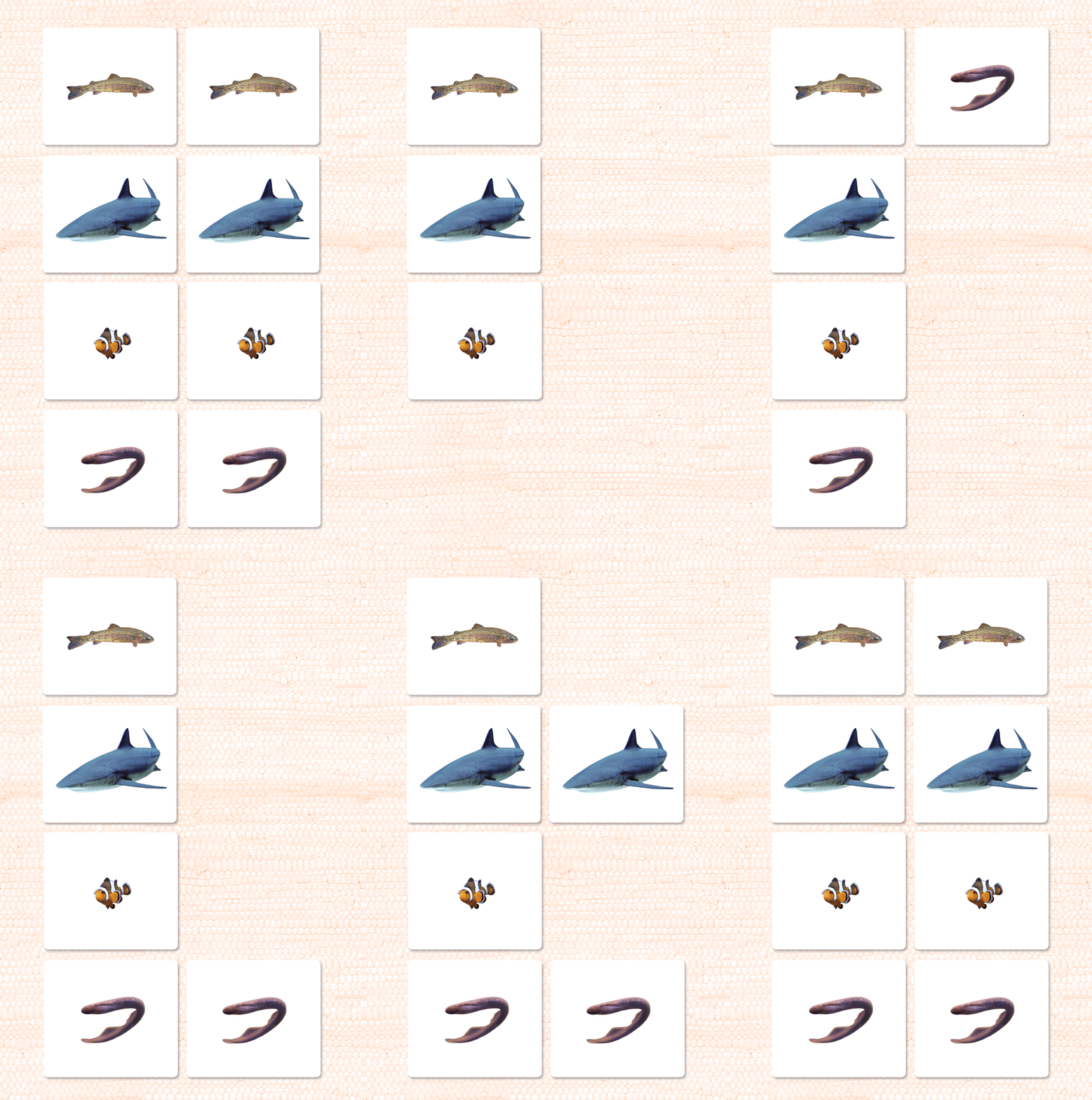
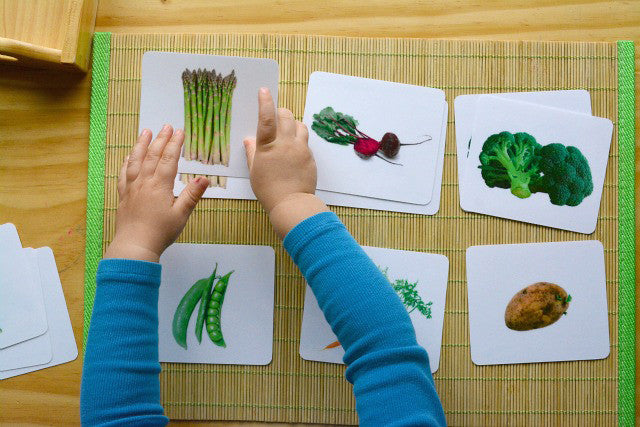
- Side-by-side matching: Sort the cards into two identical sets (using the color-coding on the back of each card to make this easy). Lay out the first set, then match each card from the second set to its twin, naming each picture.
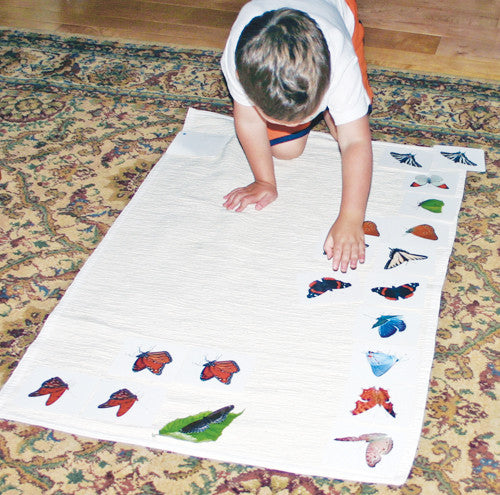
- Distance matching: Place the two sets on opposite sides of the room. The student carries one card at a time to find its match, holding the picture and its name in mind along the way.
- Memory matching: Lay the cards face down in a grid. Students turn over two at a time, naming each picture, and keep pairs that match.
- Mixed-set matching: Combine two or more packets. Students sort by category and then match within each group.
What comes next
Once students are ready to group pictures by what they have in common, add our Sorting Cards. When students are reading, move on to our 3-Part Reading Cards, where they read the same kinds of words they've been practicing aloud.
What ages are matching cards for?
Typically ages 3 and up. Matching cards also work well for English learners and for students who need extra oral vocabulary support or intervention.
Do students need to know the words before matching?
Yes. Matching is practice, not the first introduction. Teach the names first with our Vocabulary Cards or one set of the matching cards and the three-period lesson. Then matching cards give students more ways to use those same words.
How should I store and display matching cards?
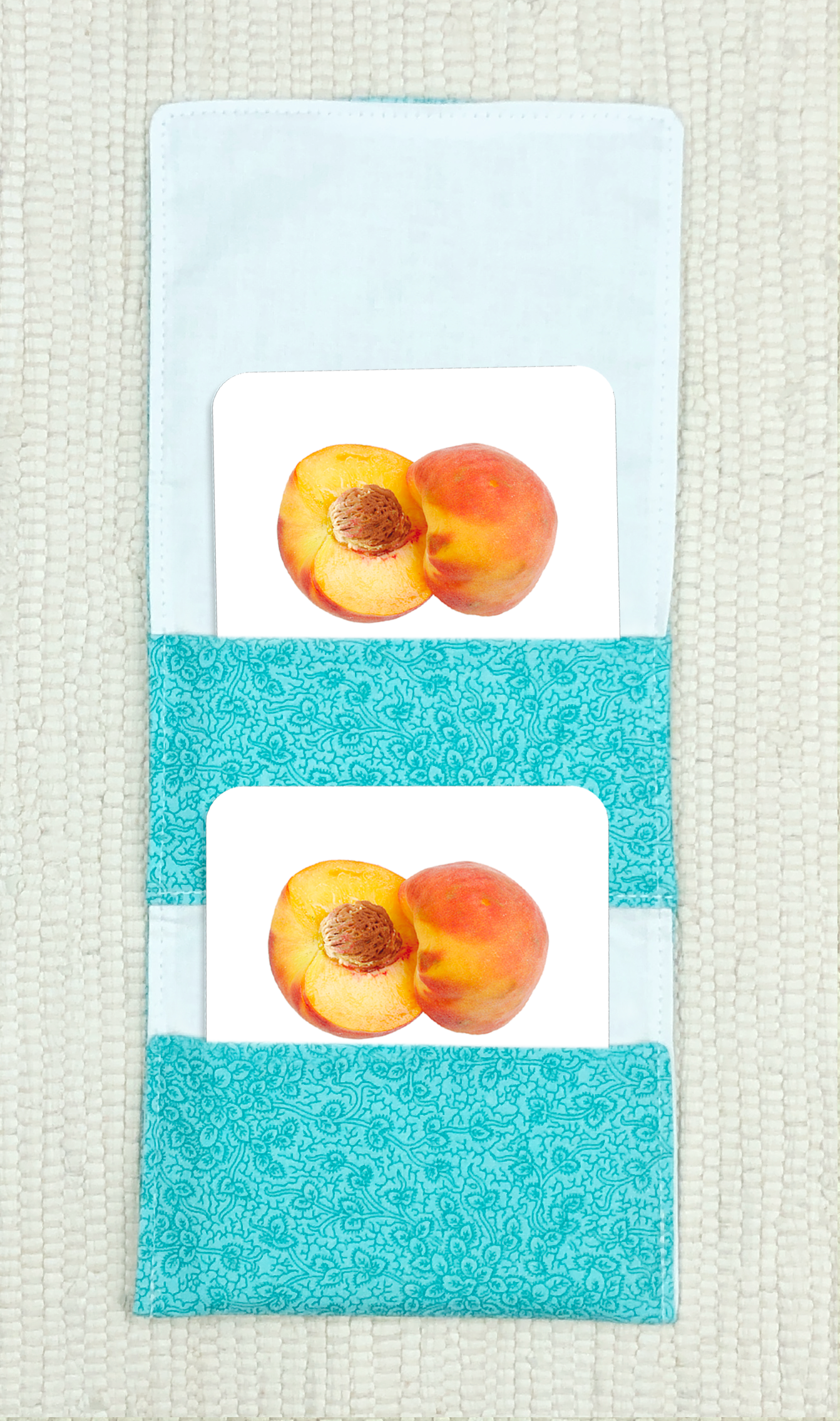
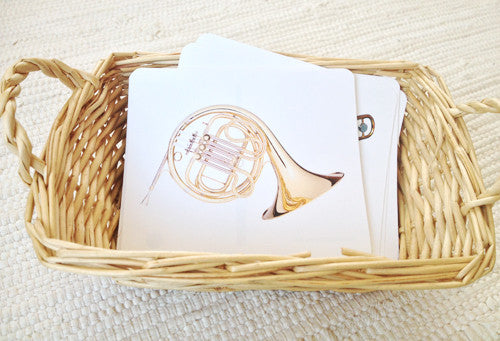
We recommend putting several packets out at one time to meet the interest of the entire room. We like to display each set in our 2-pocket cloth pouches, one pocket for each set of cards. (Each packet's storage bag is for teacher storage only, not student use.) As students lose interest in the topics on the shelf, swap in new packets using the same pouches in the same shelf location.
Download a PDF of our materials

Follow Us