
Word Study


More Information:
Word Study

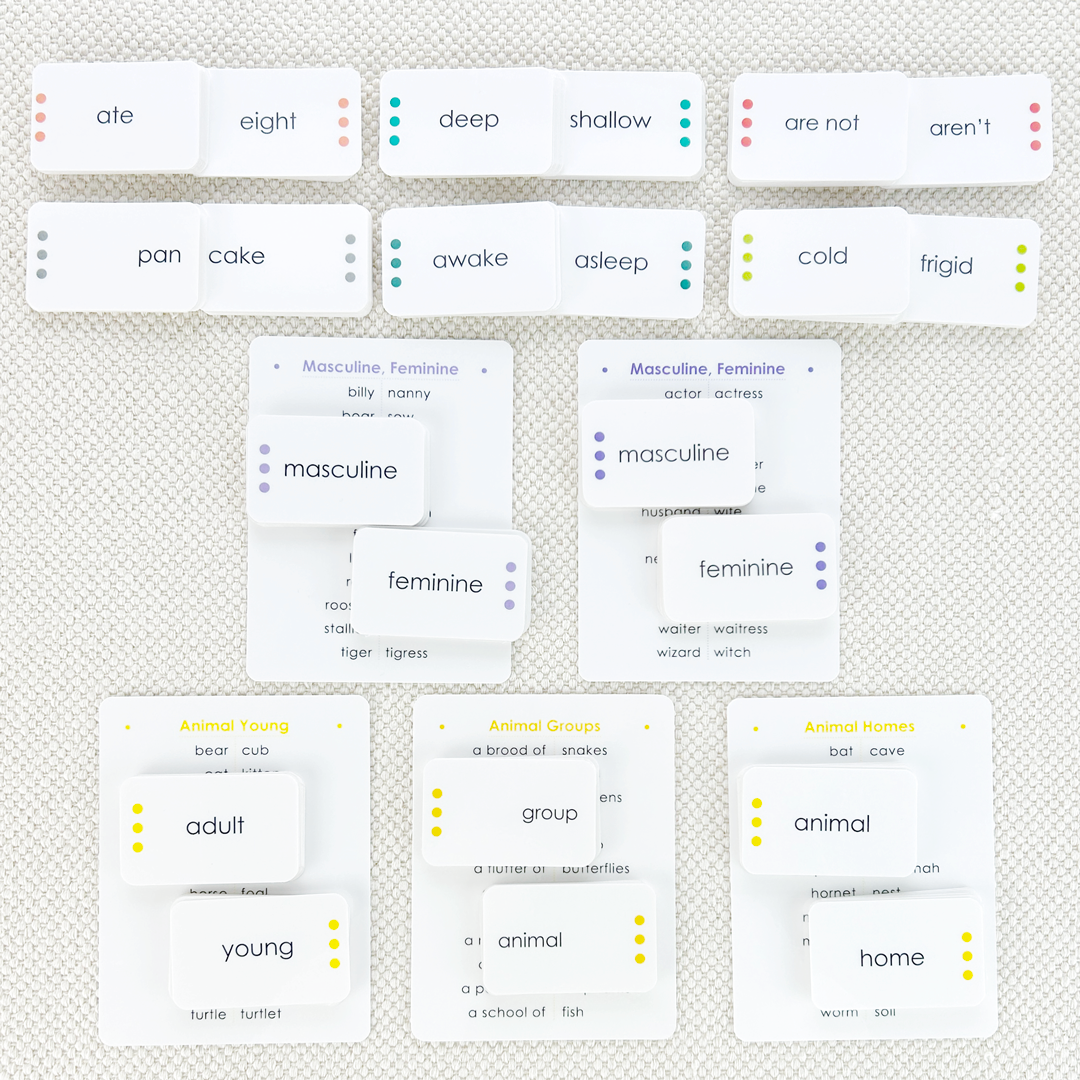
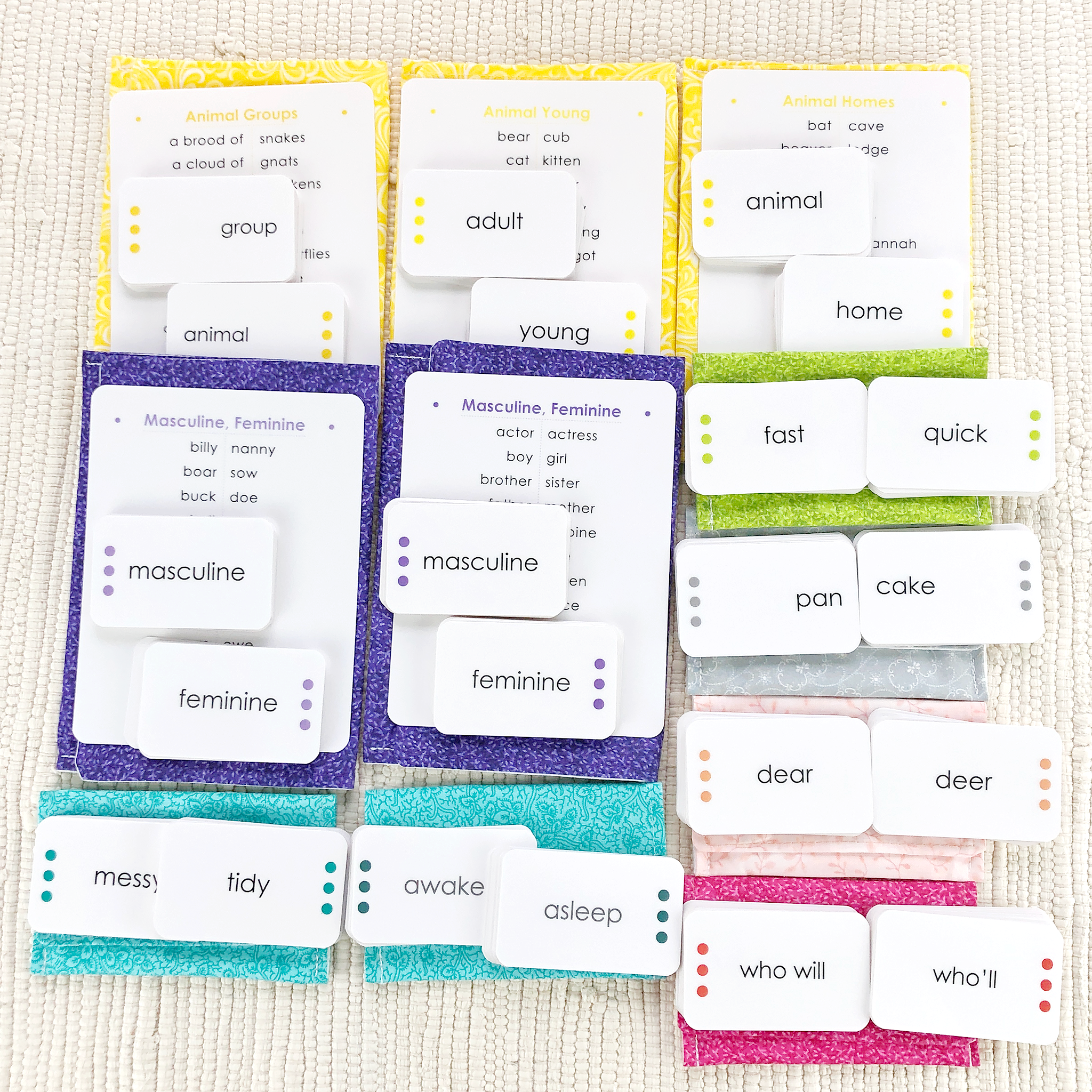
Montessori word study helps students discover how words connect to each other. Our word study cards let students handle language directly. They join two words into a compound word, pair words that mean the same or the opposite, match animals to their young, their homes, and their groups, and more. Each connection they make adds to the web of words they bring to reading.
Word study works well for one student alone or for two or more students together.
What's in this collection
- Word Study Kit
- Compound Words and Contractions: how words combine and shorten
- Synonyms, Antonyms, and Homophones: words that mean the same, mean the opposite, or sound alike
- Animals and Their Young, Animal Homes, Animal Groups, and Masculine & Feminine: related words from the animal world
- Word Study Spelling Charts: a new round of word study vocabulary for spelling and memory games, plus charts on plurals and word families
- Digital versions of each set, for printing at school or home
Why word study matters for reading
Vocabulary is one of the strands of language comprehension in Scarborough's (2001) reading rope. Word study builds vocabulary in a particular way: by connecting words to words the student already knows. Learning that a "cygnet" is a young swan, or that "messy" is the opposite of "tidy," is part of how we build the word webs that support deep reading. A student with a rich web of connected words understands more of what they read.
Word study also introduces morphology, the study of how words are built from smaller meaningful parts. Compound words show students that "starfish" is "star" and "fish." Contractions show that "can't" is "can" and "not" pressed together. The spelling charts go deeper, with plurals (wolf, wolves) and word families built around a shared word (play, playful, display). When students notice these parts, long words on the page become shorter ones they already know, which helps with reading, spelling, and figuring out what new words mean.
Reference
Scarborough, H. S. (2001). Connecting early language and literacy to later reading (dis)abilities: Evidence, theory, and practice. In S. B. Neuman & D. K. Dickinson (Eds.), Handbook of early literacy research (pp. 97–110). Guilford Press.
How do you use Montessori word study cards?
Word study always begins with spoken language. Sit with a small group of students and say, "Let's play a word game. I'm thinking of words that make a new word when you put them together. Star...fish. Starfish! Gum...drop. Gumdrop! What words can you think of?" Encourage them to think of as many as they can.
The cards come next. Now students can lay their hands on language, mix it up, and put it back together. The dots on each card show which column it belongs in. Students lay out the cards with dots on the left in a column on the left side of the work space. Then they read each card with dots on the right and try it next to each word in the column until they find its partner. This is self-correcting work, so let the student's logic lead. To practice again, mix up one column and re-match, then the other, then shuffle all the cards together.
Once students know the matches well, bring in two movable alphabets in different colors. Turn one column of cards face down, and invite the student to build the hidden words with the first alphabet. Then turn the other column face down and build those words with the second alphabet. Flip the cards over to check. This is one of the first places students begin refining their spelling. This is also great work for students to do together with dictation games.
The spelling charts extend the work. Two students can take turns: one reads a word from the chart while the other spells it with the movable alphabet or on a chalkboard, then they check with the chart. A student working alone covers half of a chart and writes the missing words from memory. Our free word study lesson plan walks through each activity.
What comes next
Word study leads naturally into Reading Comprehension, where students put their growing word knowledge to work with definition books and definition cards.
Learn how Montessori and the Science of Reading align.
What ages are Montessori word study cards for?
Typically kindergarten (ages 5–6) through grade 3, once a student is beginning to read non-phonetic words. Older students, English learners, and students in intervention also benefit.
What should students know before starting word study?
Students are ready for the cards once they're beginning to read non-phonetic words, for example through 3-Part Reading Cards or grammar activities. They don't need to be fluent readers yet. In fact, this word and short-phrase work helps them become more fluent. The spoken word games can start earlier, with any student who enjoys playing with words.
Which word study set should I start with?
We recommend starting with compound words, then moving through related nouns, antonyms, synonyms, contractions, and homophones. This order isn't set in stone, though. Follow your students' curiosity so the work stays connected to their lives and interests.
Should I choose printed or digital word study cards?
Our printed sets arrive ready to use. The digital versions are a low-cost option if you'd like to print and prepare the cards yourself.
Download a PDF of our materials

Follow Us