The Science Behind Maitri Learning
Maitri Learning educational materials are designed at the intersection of two fields: AMI-certified Montessori pedagogy and neuroscience research. Every card, book, movable alphabet, and phonetic sequence that we create reflects what brain science tells us about how children actually learn to read. The beauty is that when Montessori is done well, it checks all the brain science boxes.
Why Hands-On Materials Work: What the Brain Tells Us

Learning isn't just in the brain and it's not just about cognition. Learning is deeply connected to emotions, physical experiences, and relationships. Neuroscience of Learning research has revealed five fundamental developmental factors that shape human learning (Immordino-Yang et al., 2023):
- Each child is unique: Learning and development are dynamic, they don't follow a set path.
- We learn through experience (hands-on activity matters).
- We are driven to find meaning and purpose in what we do.
- Learning is inseparable from and embedded in culture and relationships.
- Learning physically changes our bodies and genes (embodiment).
Those five factors translate directly into how we design materials and structure lessons:
- Respect the human need for agency, to make logical choices and realize the results of those choices
- Allow students to think deeply about what they are learning and make connections to the broader world
- Encourage peer teaching, feedback, input, and relationships
- Avoid stress (which differs from the urgency to get things done on time)
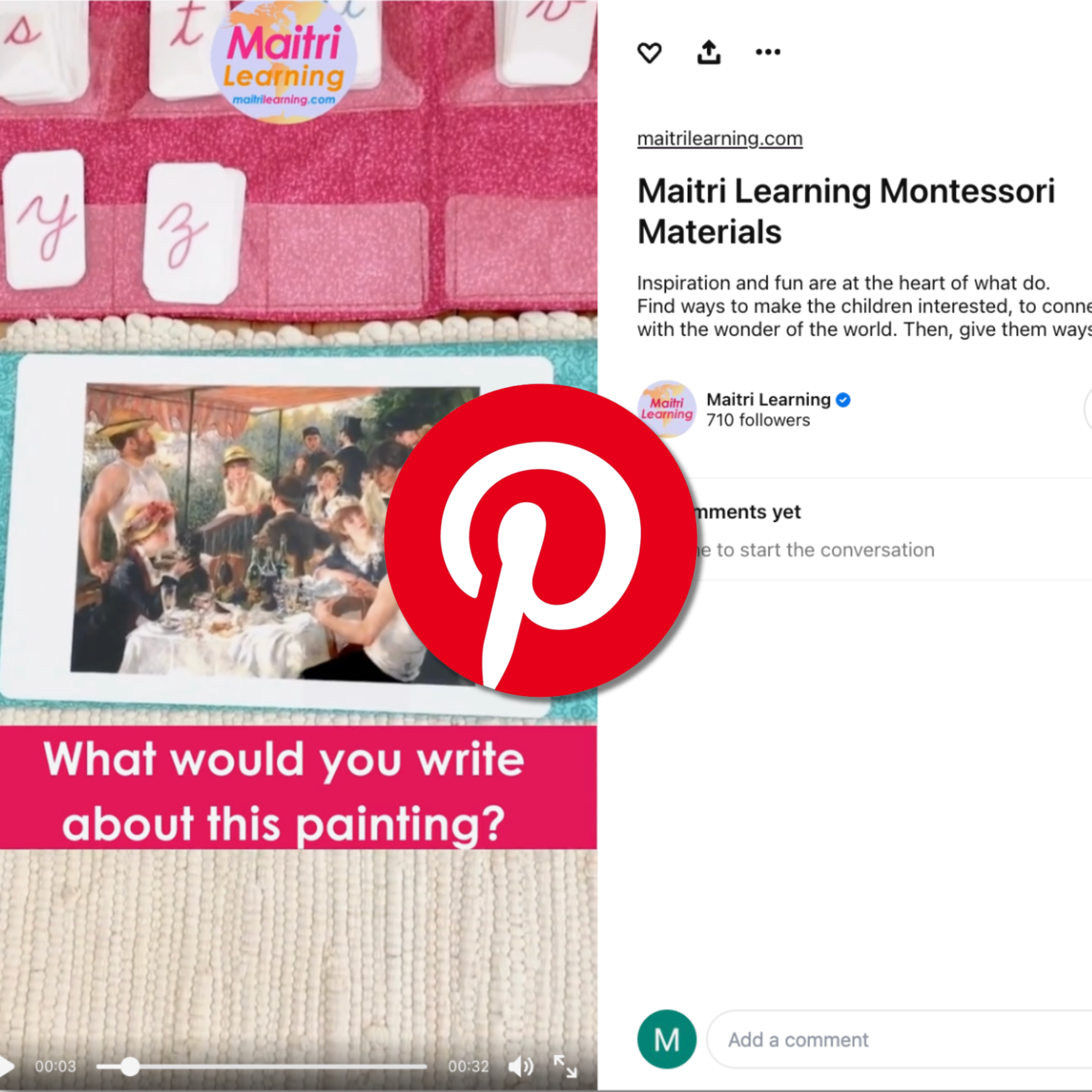
For example, a child who picks up movable alphabet letters and builds a word is not doing the same work as a child who fills out a worksheet. The Movable Alphabet activity synchronizes a child’s intention (executive function) with their vision (depth-perception), motor skills, letter-sound knowledge, and auditory system. It requires the child to choose, to think independently, and is inherently multi-sensory. Movable Alphabet work is much richer learning than using a worksheet; it engages multiple neural pathways.
Multi-sensory materials are just one aspect of what distinguishes Maitri Learning materials from conventional literacy materials. In the Maitri Learning/Montessori system, children are active partners in their learning. After receiving instruction on how to use materials, the children are free to write about things that matter to them; to learn the sounds of the letters in their sister’s or friend’s name; to choose what work they will do when; to work on something for as long as they need to. In essence, the Maitri Learning/Montessori system teaches children how to use the tools in their classrooms to teach themselves.
There is a tremendous amount of research that demonstrates the benefits of this approach (see https://maitrilearning.com/pages/research for starters). These studies demonstrate that when children are active participants in their own development, they have better outcomes.
The Science of Reading and the Montessori Method

The Science of Reading (https://maitrilearning.com/pages/science-of-reading) is not a single study or program. It is a body of converging research — from cognitive psychology, linguistics, and neuroscience — that identifies the specific skills children need to become fluent readers: phonemic awareness, phonics, fluency, vocabulary, and comprehension.
Montessori language materials, developed by Maria Montessori in the early 20th century through careful observation of children, map with striking precision onto what this research now confirms:
- Vocabulary/Background Knowledge: Speaking and listening are the core of all language learning
- Phonological Awareness: We can’t learn to read if we can’t recognize the large (like syllables) and smaller (phonemic awareness) sound units of language
- Phonics: We need to target letter-sound knowledge, encoding (writing) and decoding (reading) with writing coming before reading (it’s easier to create a code than decipher one)
- Fluency & Reading Comprehension: Student interests drive repetition and anything the brain does repeatedly it gets more efficient at
Our materials are designed with the essential balance between word recognition (phonics) and language comprehension in mind. They integrate key findings from literacy models like the Simple View of Reading (Gough & Tunmer, 1985; Hoover & Tunmer, 2022), Scarborough's Reading Rope (Scarborough, Neuman, & Dickinson, 2001), and the Dwyer system (Dwyer, 2004).
Who Designs These Materials
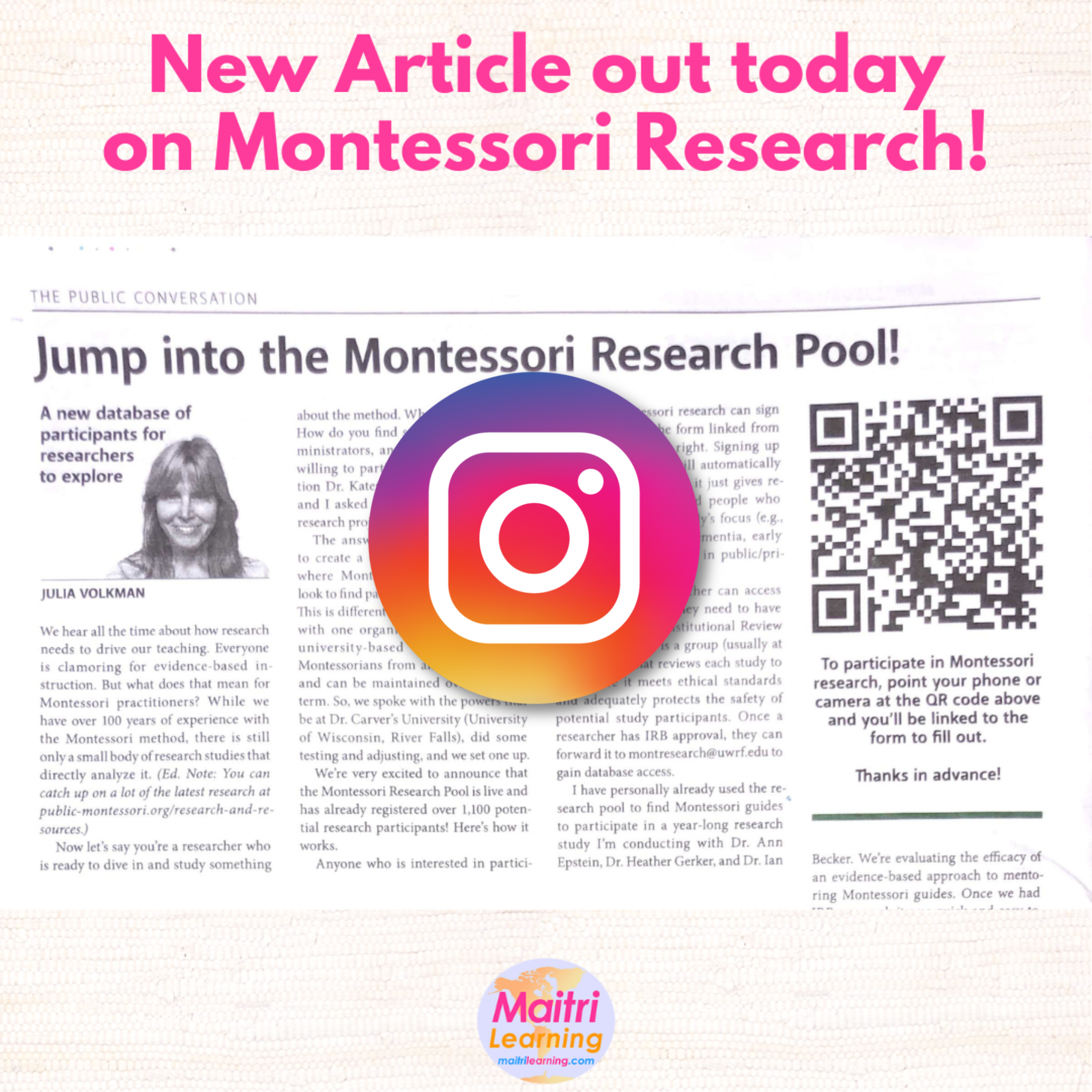
 Maitri Learning was founded by Julia Volkman, an AMI-certified Montessori educator (3–6+) and Harvard ALM-trained educational researcher on the neuroscience of learning. Julia has conducted graduate-level research on the effectiveness of the movable alphabet in early literacy development, guest lectures at Harvard on the neuroscience of learning, and delivered a TEDx talk — Are We Teaching Against the Brain? — on the mismatch between how children's brains develop and how most schools approach early literacy.
She has also co-authored peer-reviewed research on teacher development and mentoring, and has worked for over two decades with classroom teachers to understand what actually serves children — not in theory, but in daily practice.
This is not a company where materials are designed by graphic artists optimizing for shelf appeal. At Maitri, every product decision traces back to a pedagogical and neuroscientific rationale.
How Maitri Materials Are Made

Understanding the science shapes not just what we make, but how we make it.
Sequencing. Our language materials are organized across key developmental steps — from Speaking & Listening through Reading Comprehension. But we also know that each human is unique. So we do not prescribe a one-size-fits-all approach to literacy. Every material, every learning sequence easily adapts to the needs of each child. Our materials make the lessons explicit so educators and parents can meet children exactly where they are.
Tactile quality. We make everything in-house so we can assure the quality. We print on heavyweight paper with food-grade laminate using a commercial press. Cards are sturdy enough for daily classroom use by three-year-olds, which is not an accident. Montessori materials are meant to be handled thousands of times. A card that falls apart after a few months is a card that can't do its job.
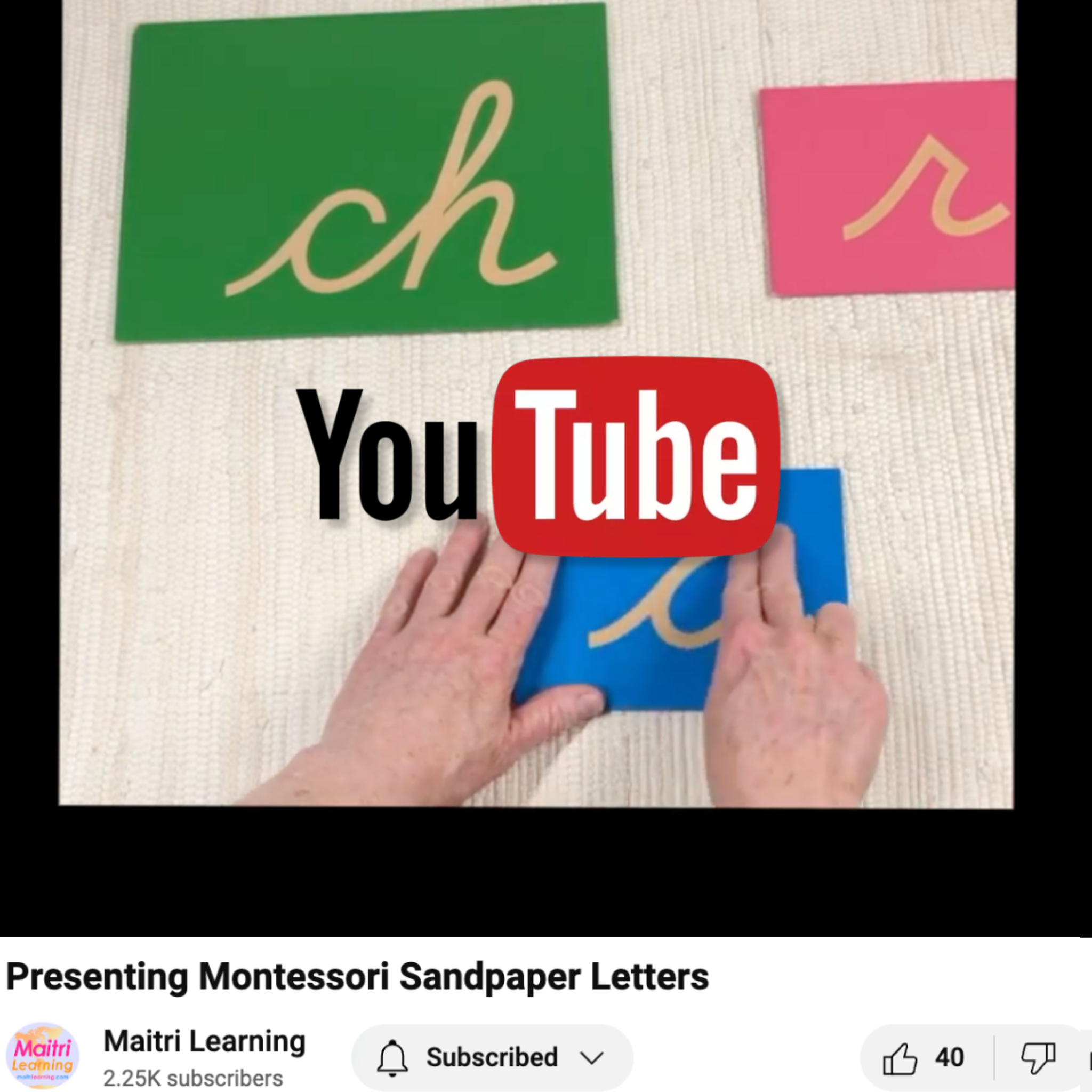
Color coding. Pink for consonants. Blue for vowels. Green for digraphs. This is not decoration — it is a visual-linguistic scaffolding system that helps children see the architecture of the English language before they can articulate it. The color system is consistent across all Maitri and Montessori language materials so that each new set reinforces what the child already knows.

Made in the USA. Our materials are manufactured in Westhampton, Massachusetts, in a straw bale building. We pay fair wages and use environmentally responsible practices throughout. We are CPSIA compliant.
Frequently Asked Questions
At what age should children begin Maitri language materials?
Most children are ready to begin the earliest phonemic awareness activities — sound sorting, rhyming, oral vocabulary — between around age 2½ . Work with the movable alphabet typically begins around age 4, though readiness varies by child. Our Step 1 (Speaking & Listening) and Step 2 (Phonological Awareness & Encoding) materials are designed to build the prerequisite skills systematically all while appealing to the child’s interests.
How do Maitri materials relate to the Science of Reading?
Directly and by design. Our materials cover all the key areas identified in Science of Reading research: oral language development → phonological awareness → phonemic awareness → alphabetic principle → phonics → fluency → vocabulary → comprehension. While there is an implied sequence, these areas overlap and often develop simultaneously. With Maitri materials, you follow the child, not a rigid lesson plan.
Are these materials appropriate for children who are struggling with reading?
Yes. The multi-sensory, hands-on nature of Montessori language materials makes them particularly effective for children who have not responded to conventional phonics instruction. The movable alphabet in particular — because it decouples the physical act of encoding from the fine motor demands of writing — allows children to compose and spell words long before handwriting is fluent (see our founder’s graduate research at Harvard for details). Many reading specialists and dyslexia practitioners use Montessori materials precisely for this reason.
Can parents use these materials at home?
Absolutely. Maitri materials are used widely by homeschooling families, and every product ships with clear instructions. Our Preschool Literacy Bundles are specifically assembled to give parents a complete, sequenced starting point without requiring prior Montessori training.
What makes Maitri different from other Montessori materials suppliers?
Most Montessori materials suppliers are distributors. Maitri is a manufacturer. We design and produce our own proprietary materials — over 600 proprietary titles — in-house, which means we control quality at every step and can respond to what teachers actually tell us they need. Our founder is both a practicing educator and an educational researcher, which means product decisions are grounded in classroom reality and current science simultaneously.
Can these materials be used in non-Montessori schools?
Absolutely. While our materials are rooted in Montessori pedagogy, the underlying principles — multi-sensory learning, explicit phonics, child-directed practice, and hands-on engagement — are effective regardless of classroom model. Our materials are used in public schools, charter schools, reading intervention programs, and special education settings across the country.
You do not need a Montessori classroom to use Montessori materials effectively. A reading specialist can use our phonetic 3-part cards for one-on-one intervention. A kindergarten teacher can add our movable alphabet to a literacy center. A special education teacher can use our 3-part letter-sound cards for phonics practice with students at any age. Many of the materials are self-correcting by design, which means children can work with them independently once introduced — a feature that's useful in any classroom structure, not just Montessori.
Maitri Learning has been making gold-standard Montessori language materials since 2003. Woman-owned. Made in the USA. Trusted by educators in Montessori schools, private schools, public classrooms, and homes in all 50 states and around the world.
Download a PDF of our materials

Follow Us