very nice
"These are really nice cards. Very simple and clean looking. I am very happy with them."

 Rooted in Neurodevelopment

See the Guided Lesson Plan
 High quality materials
 Eco-Happy
 Fun & Engaging Activities
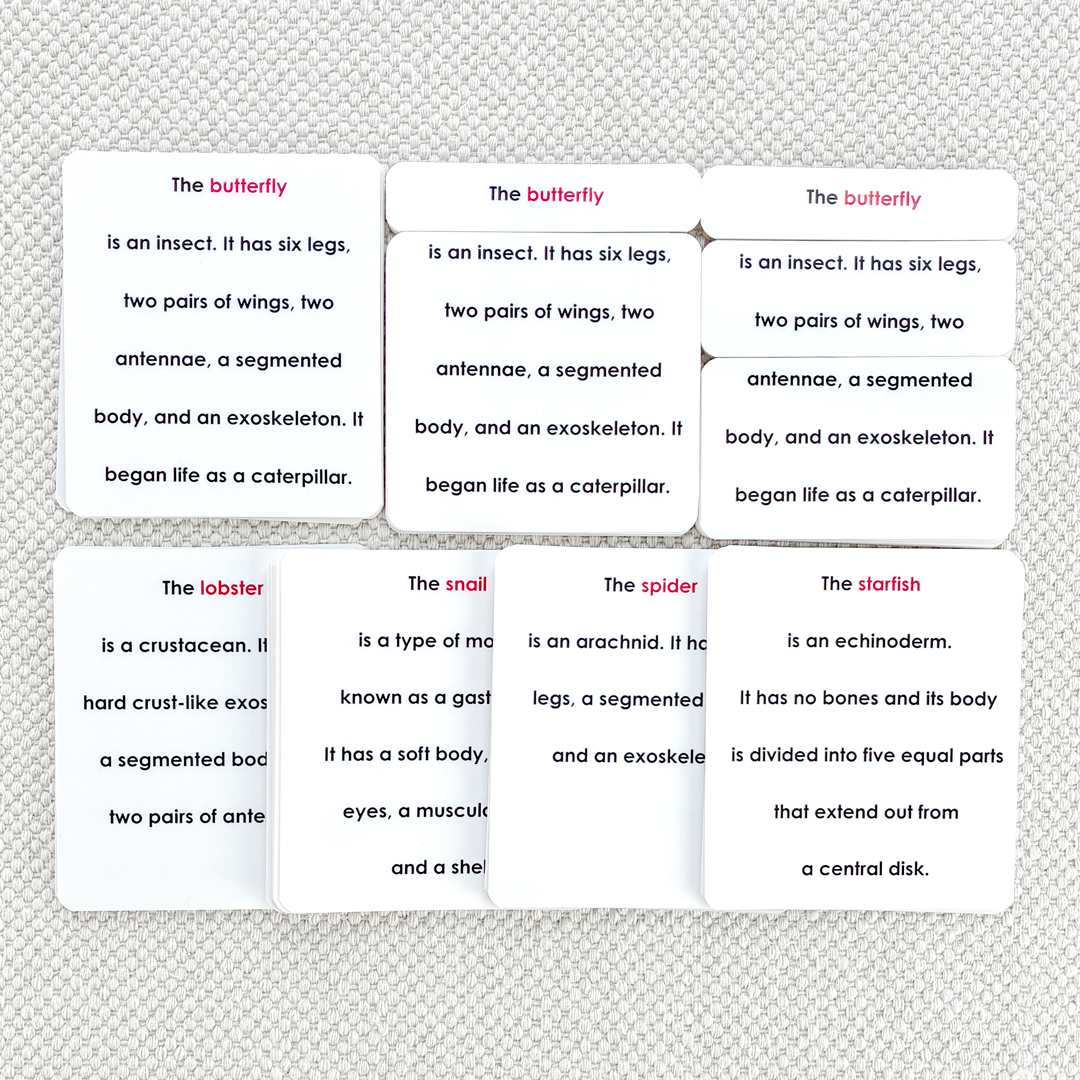
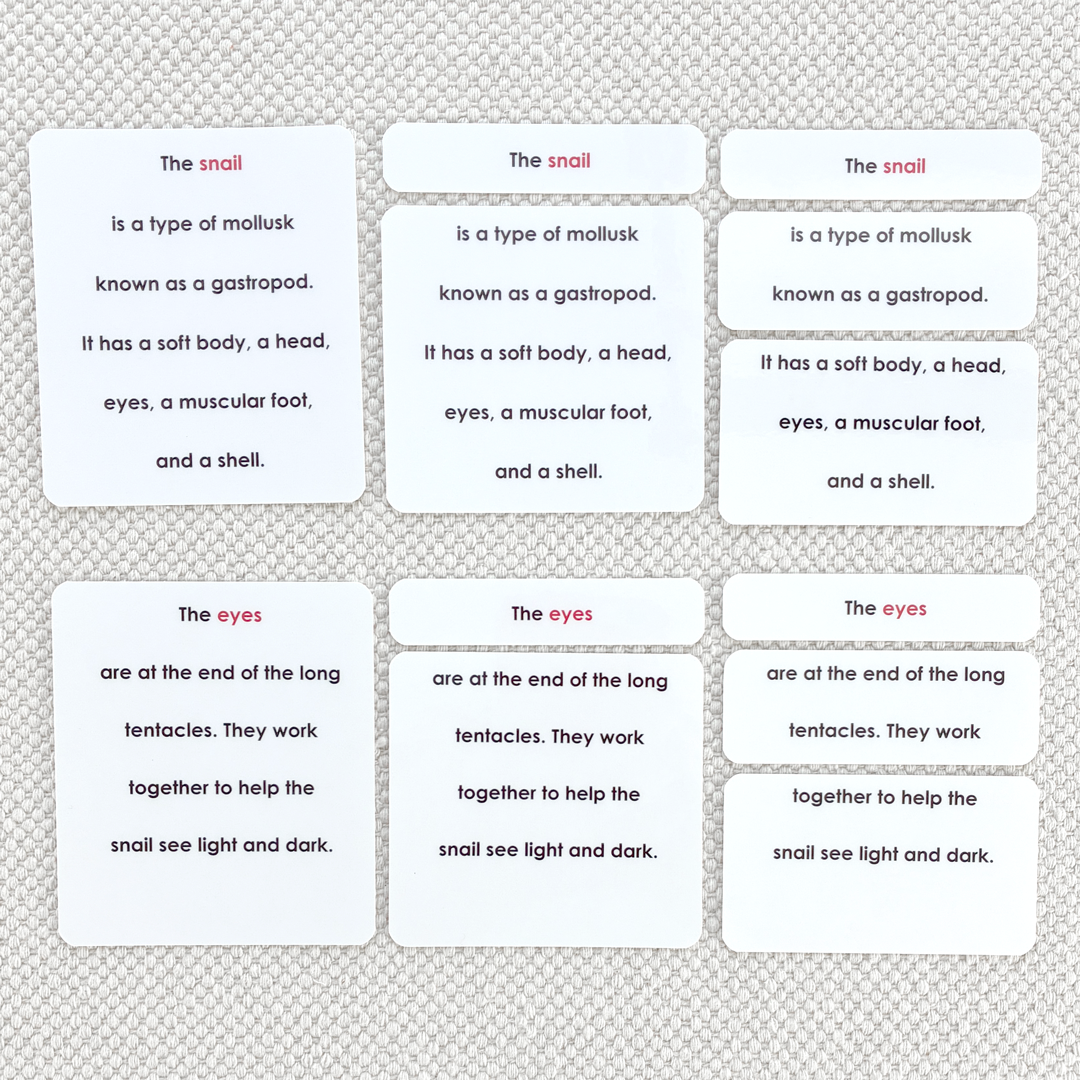
Our Invertebrates Definition Card Set brings together five classic Montessori "Definitions in Stages" packets, one for each invertebrate group in our "Parts of" materials: insects (butterfly), crustaceans (lobster), mollusks (snail), arachnids (spider), and echinoderms (sea star). Each packet matches the pages in its "Parts of" book. After getting to know the finished definitions through our Definition Books, students rebuild them. They match term cards to definition cards like puzzle pieces, then check their own work with the control cards.
Laying the five side by side helps students see how differently invertebrate bodies can be built. A spider and a lobster both have a cephalothorax, for example, while a sea star has a central disk and tube feet. The matching books are collected in our Invertebrates "Parts of" Book Bundle. The set costs less than buying the five packets separately.
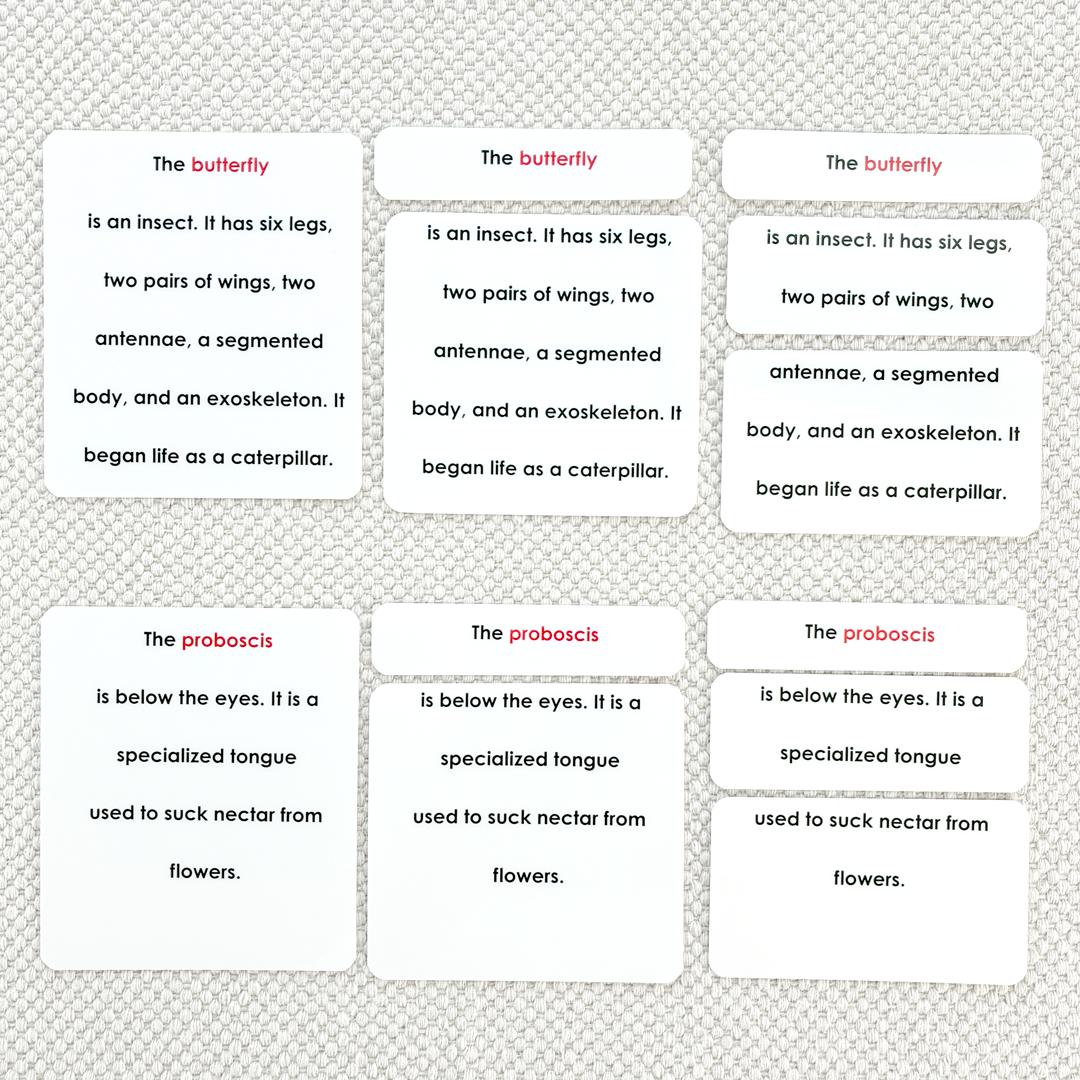
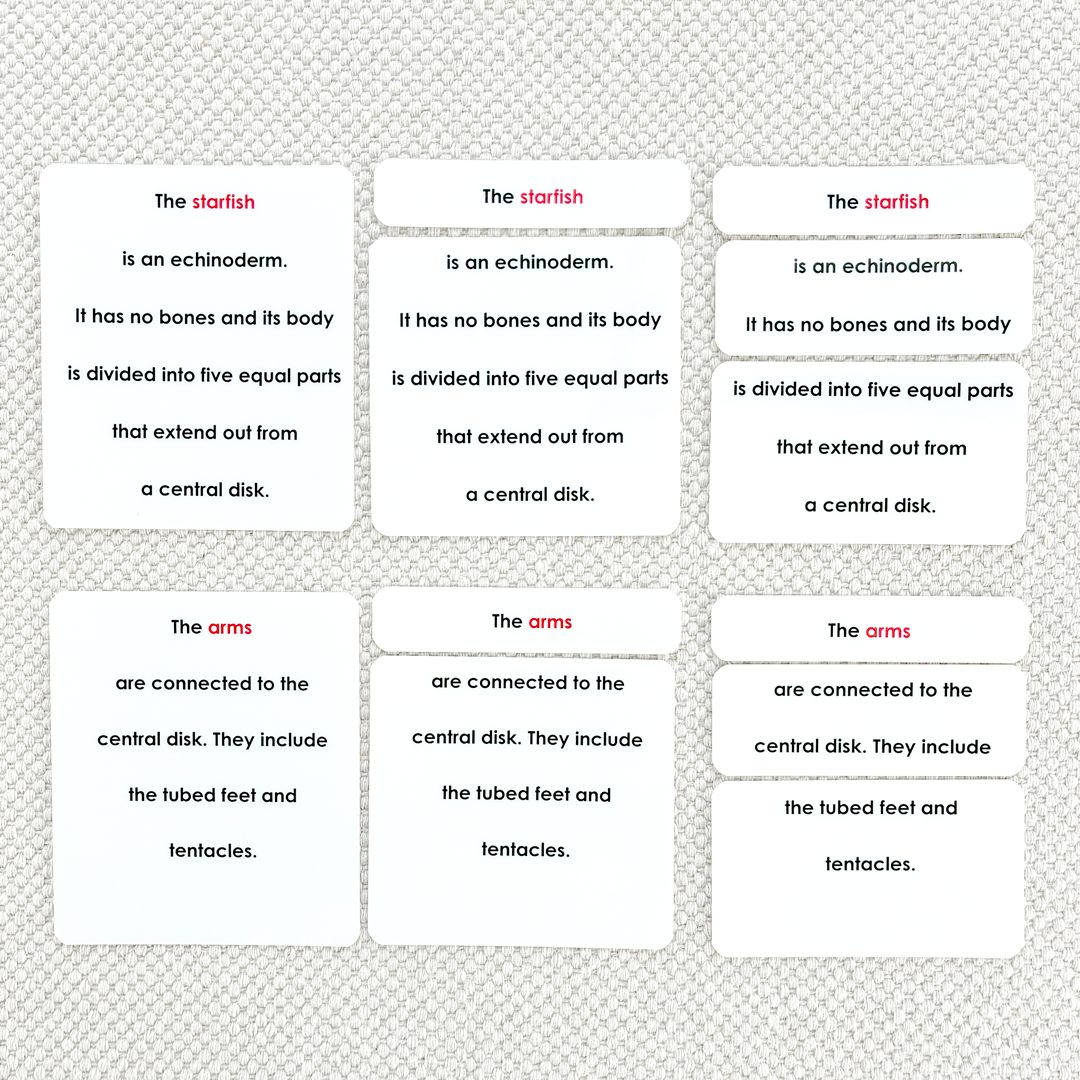
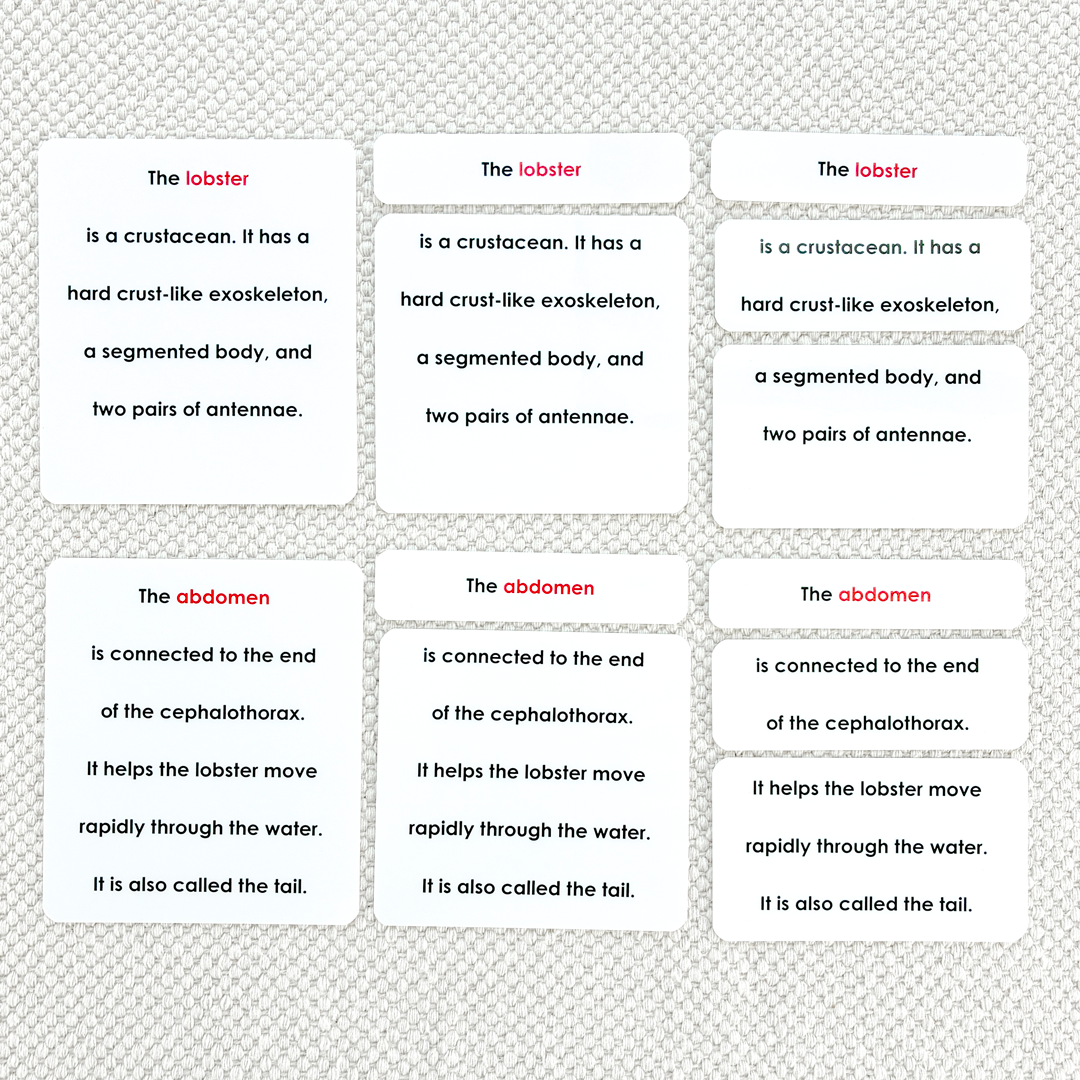
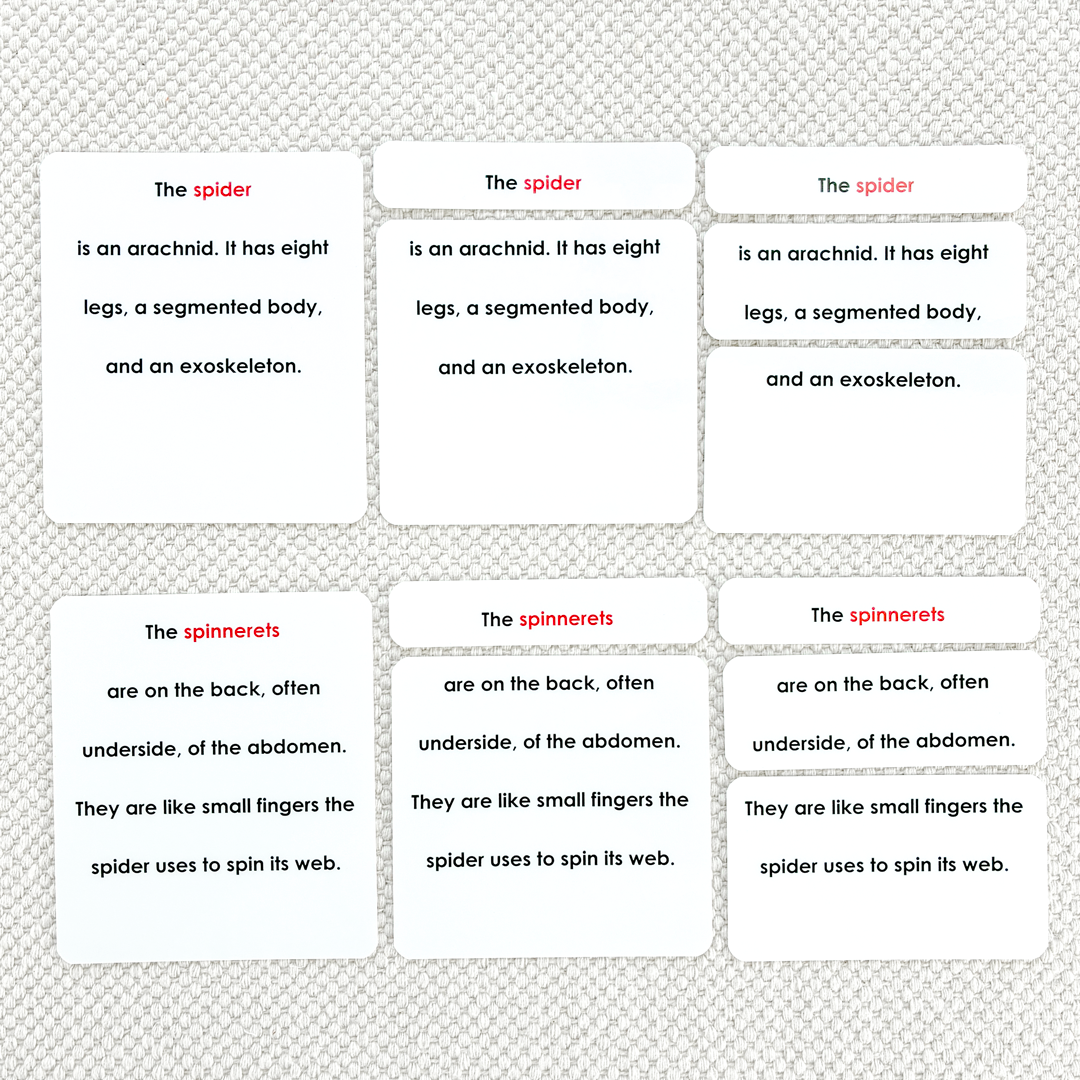
Each term has five cards (all card sizes are approximate):
Created by a Montessori teacher and a zoologist. Eco-printed in our rural New England office.
Made in the USA. CPSIA compliant.
Reading comprehension depends on more than vocabulary. Language structures and verbal reasoning are strands of comprehension too (Scarborough, 2001). Rebuilding a definition from separate cards asks a student to reason through the structure of a definition. This builds a deeper understanding of each term.
Put out one packet at a time, matched to what students are studying. First, introduce the terms through conversation, real-world observation, the matching "Parts of" book, and the 3-Part Reading Cards. Then lay out the term cards and match a full definition card to each term. Students check their work with the control cards. When this is easy, add challenge: match each term card to its first-half definition card, then its second-half definition card, and check again with the control cards.
Once students have worked with several packets, invite them to compare: Which animals share a part? Which parts look different but do a similar job?
Typically grades K–6 (ages 6–12). Because the cards are text only, with no photos for support, they work best with students who read well and already know the animal parts, often from the books or the 3-Part Reading Cards.
Choose options
Overall rating: 5.0 / 5 from 1 reviews.
Review topics: [].
"These are really nice cards. Very simple and clean looking. I am very happy with them."
Download a PDF of our materials