
Books






More Information:
Books

Montessori definition books, also called nomenclature books, teach the names and meanings of things in the natural world. Each spread has one real photo on the left and its definition on the right, with the term printed in red. Students can hear the books read aloud long before they can read them, then read them on their own as their fluency grows.
We created these books with teacher trainers, expert Montessorians, a zoologist, and a botanical expert, so every photo and definition is accurate.
What makes our books different
- When you open each book, you arrive directly at the content. Copyright and ISBN information appear only on the outside back cover.
- The left page shows one clear photo that isolates its topic.
- The right page gives a clear definition, with the term printed in red.
- Pages are approx. 4¼" x 5¼".
- Tight spiral binding lets the books lie flat, so students can work with them freely.
- Each book comes with a free lesson plan.
What's in this collection
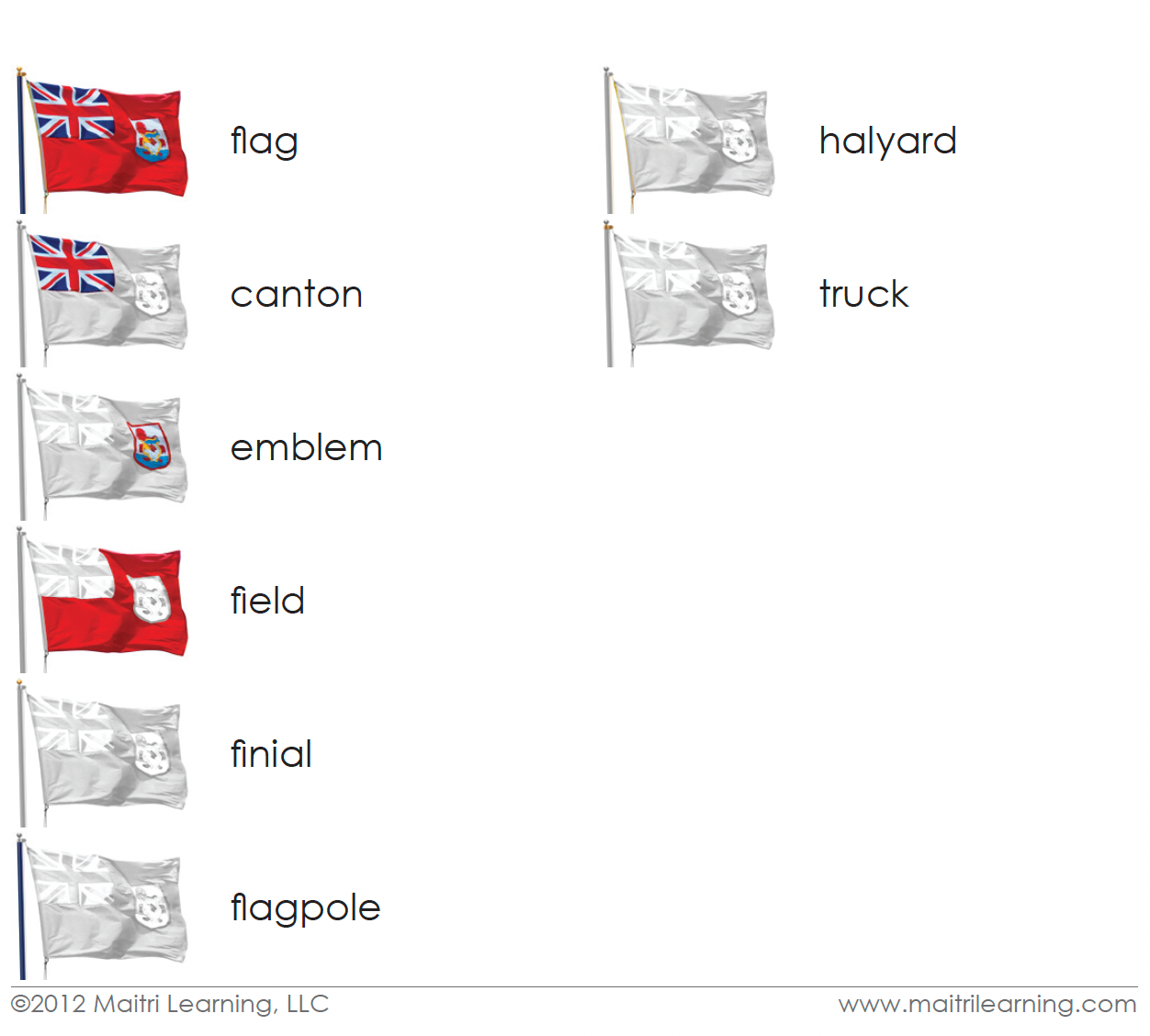
- Geography: Land & Water 1 and Land & Water 2 plus "Parts of" the Flag
- "Parts of" the vertebrate books: Bird, Fish, Frog, Horse, and Turtle
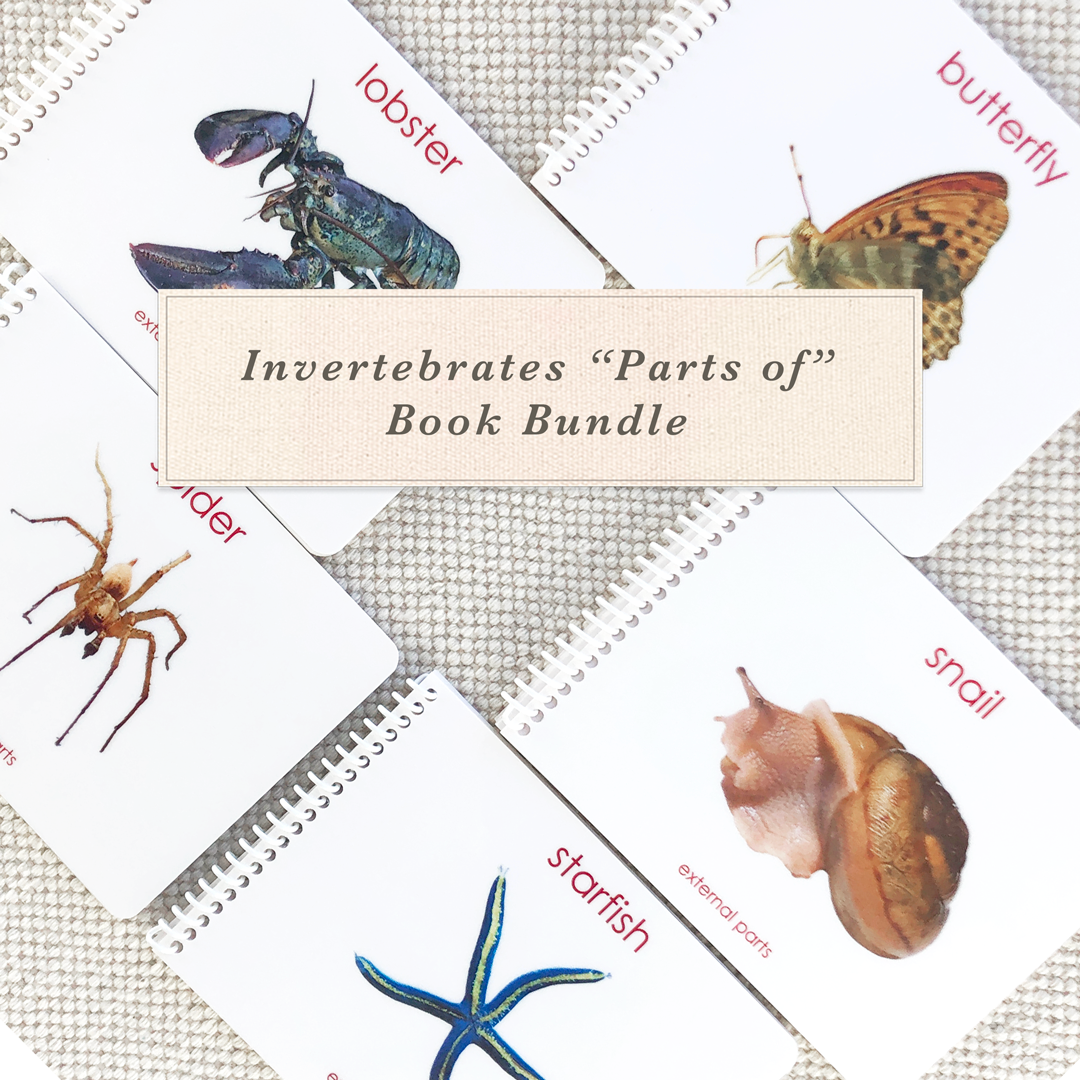
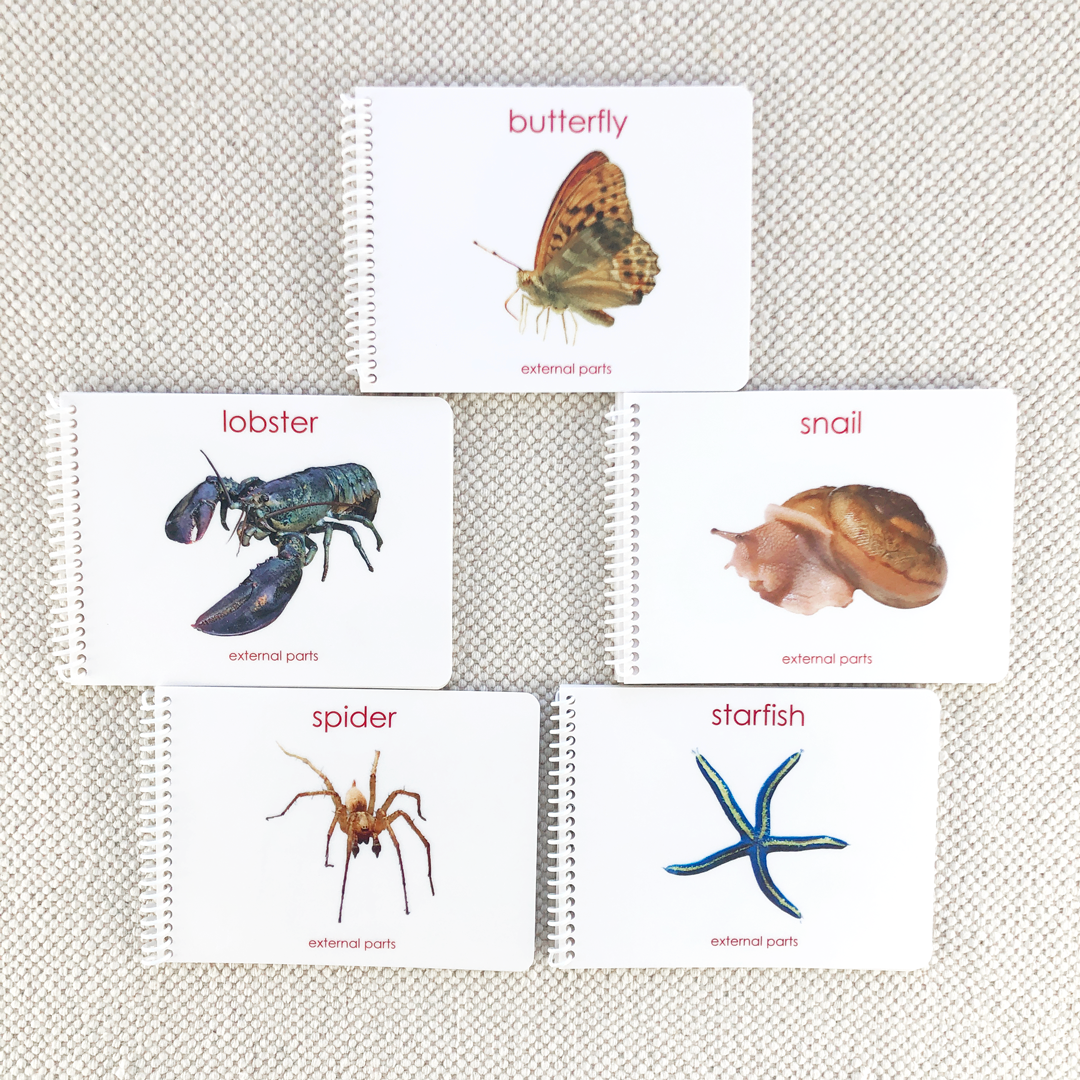
- "Parts of" the invertebrate books: Ant, Butterfly, Katydid, Lobster, Sea Star, Snail, and Spider
- "Parts of" botany books: Flower (Dicot), Flower (Monocot), Leaf, and Tree
- More botany and zoology: Leaf Shapes (Botany Cabinet) and Horses (Coat Colors)
- Bundles: Vertebrates, Invertebrates, and Botany "Parts of" Book Bundles, plus the Complete Book Bundle of all 21 books
Land & Water 1 is also available in Spanish and Chinese.
Why definition books matter for reading
Interest drives learning. Montessori is a student-centered approach: the teacher observes what each student is curious about and offers materials that match. A student fascinated by spiders or horses will return to that book again and again, first listening, then reading along, then reading alone.
Each reading builds the knowledge that makes reading possible. In Scarborough's (2001) reading rope, vocabulary and background knowledge are core strands of language comprehension. Definition books pair a real photo with a printed term and its meaning, so students have the knowledge in place when they meet those words in informational text later.
Our "Parts of" books also use the same structure across species, which helps students see how living things are alike and different. A frog has no outer ear, but it does have a tympanum for hearing. A fish has no arms or legs, but its pectoral and pelvic fins sit where our arms and legs are.
Reference
Scarborough, H. S. (2001). Connecting early language and literacy to later reading (dis)abilities: Evidence, theory, and practice. In S. B. Neuman & D. K. Dickinson (Eds.), Handbook of early literacy research (pp. 97–110). Guilford Press.
What comes next
Most of our books have matching definition cards, which let students rebuild each definition from separate pieces. Our build-a-book sets combine the book, vocabulary cards, 3-part cards, and definition cards for a complete learning experience.
How do you use definition books?
Use a definition book to extend what students already know from nature, real specimens, or our 3-part cards, or to introduce a new topic. Set the context, then read together, pausing to discuss each page. With older students, read the definition and discuss whether it sounds right. Ask how they would define it. As students grow more fluent, move to paired reading and then independent reading.
What ages are these books for?
Read them aloud to any interested student, typically PreK through 3rd grade. Independent reading is typically for ages 6 and above.
Why don't the books open to a title page?
We want students to arrive straight at the content. Copyright and ISBN information are on the outside back cover, so nothing stands between the student and the first photo and definition.
Download a PDF of our materials

Follow Us