Grammar




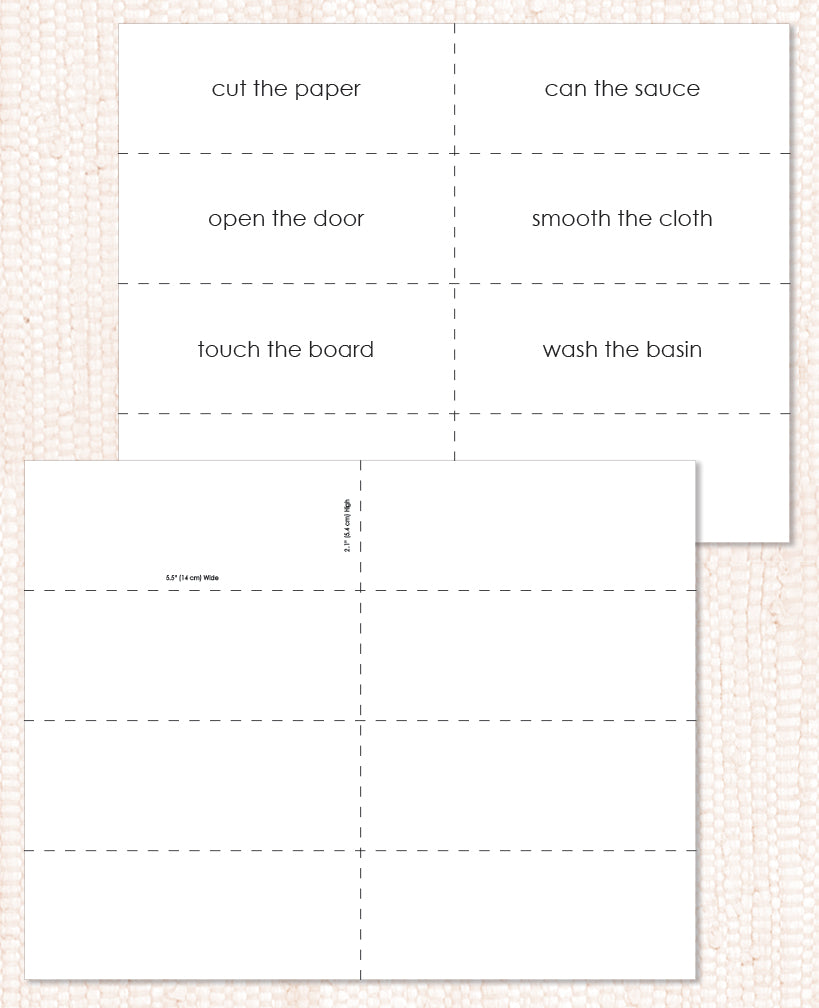
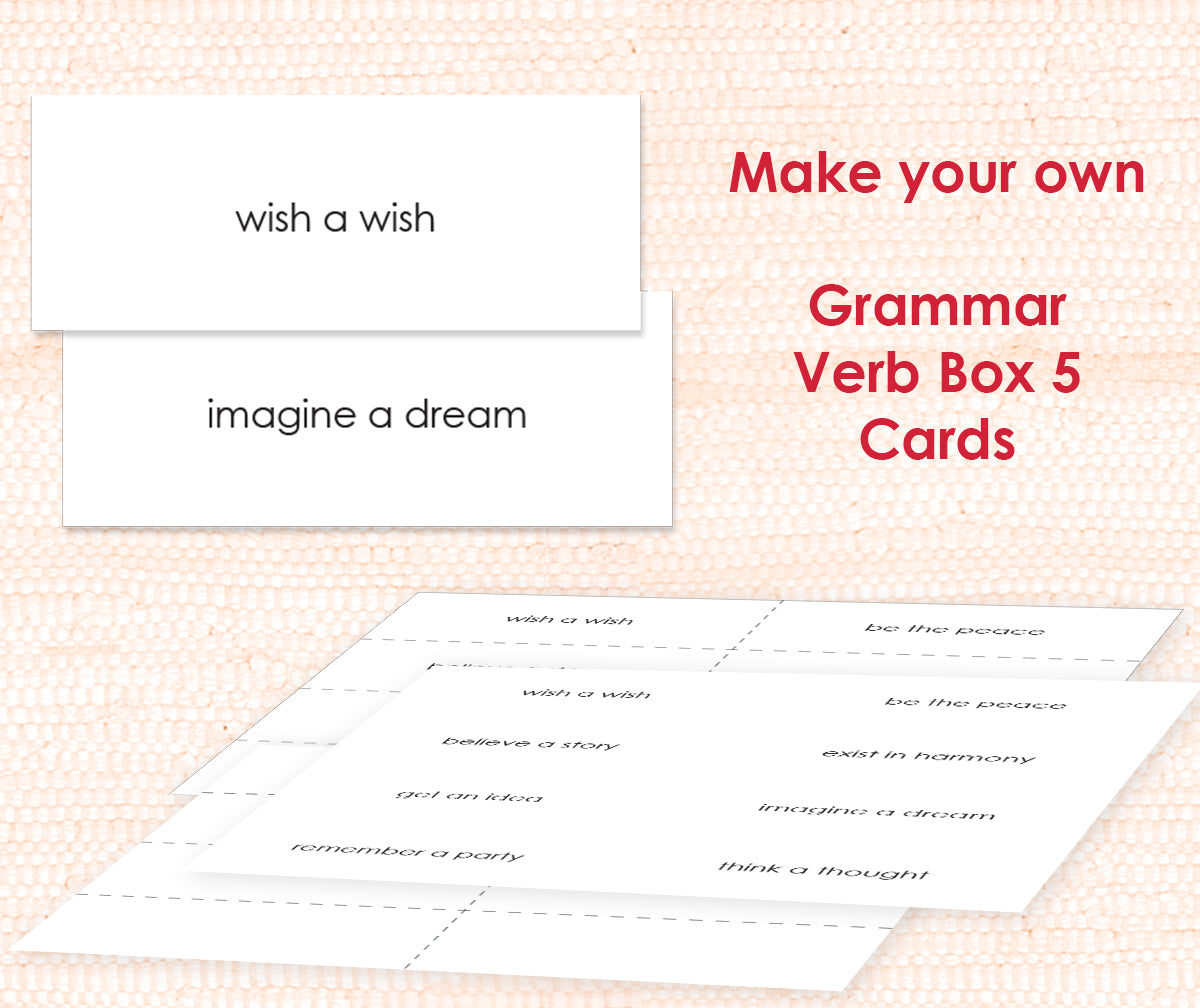
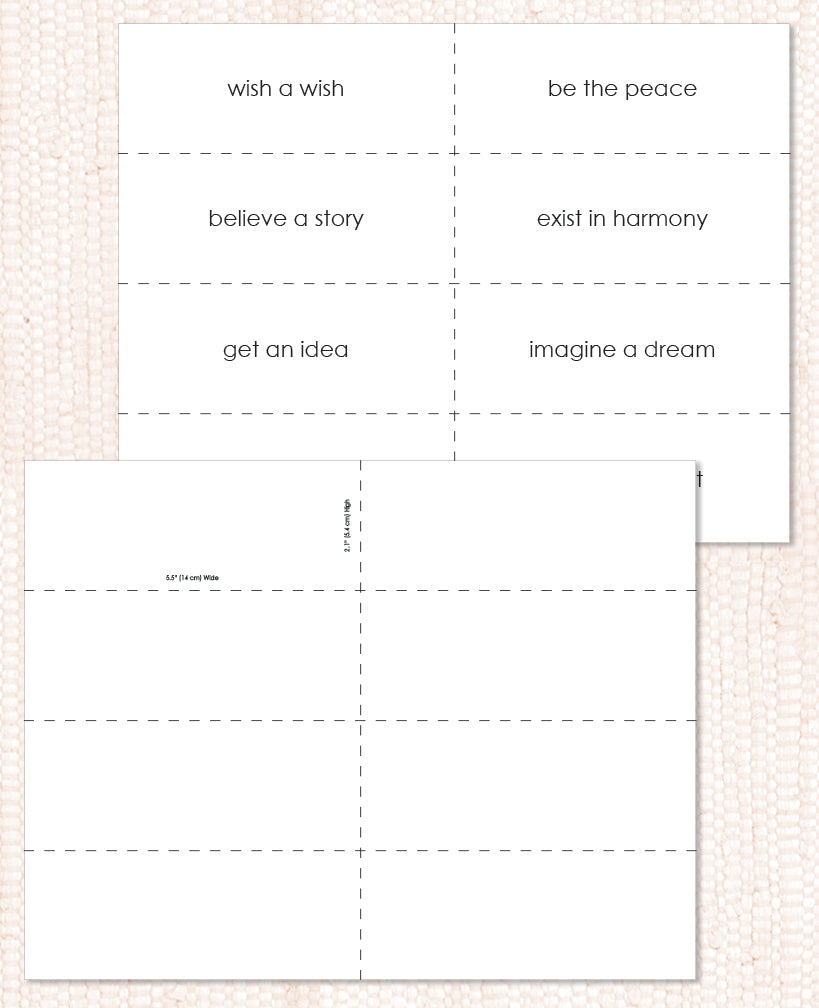
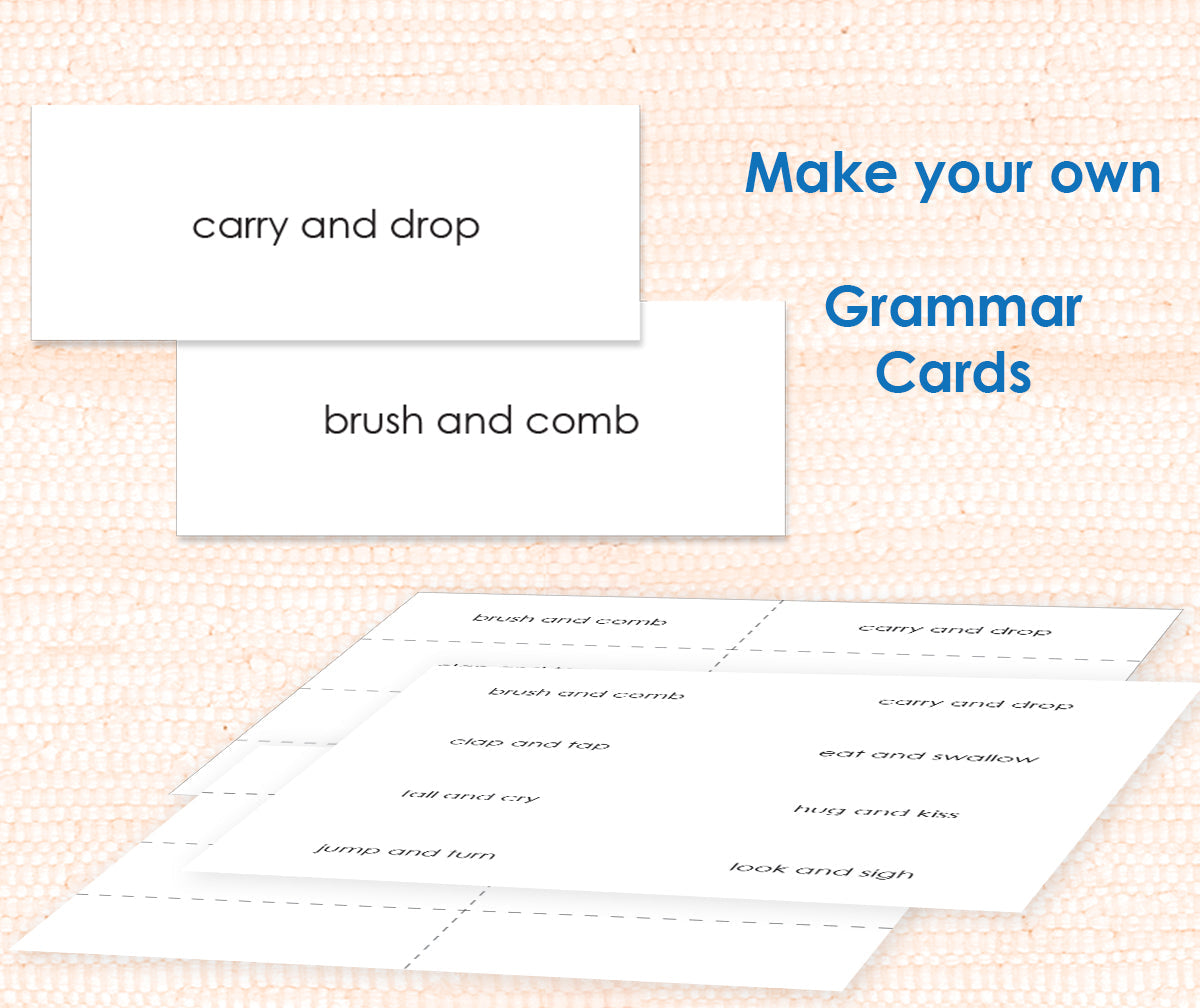
More Information:
Grammar

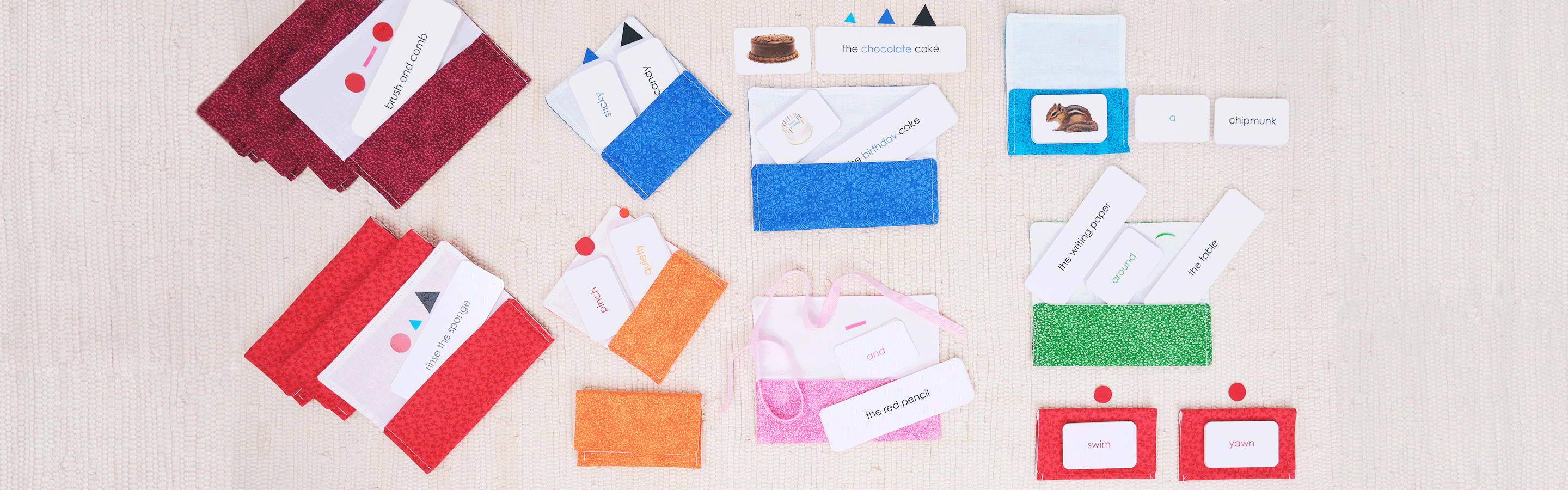
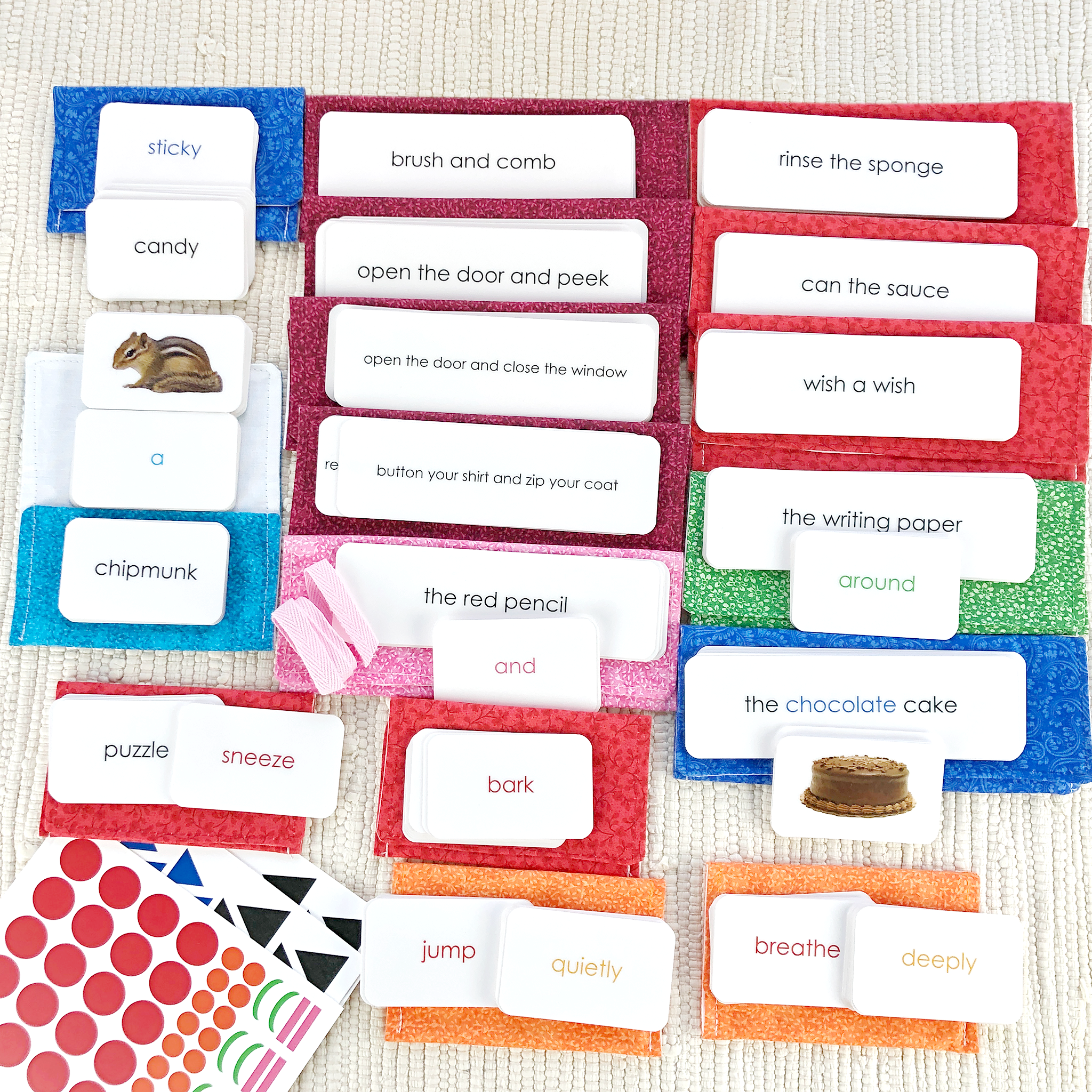
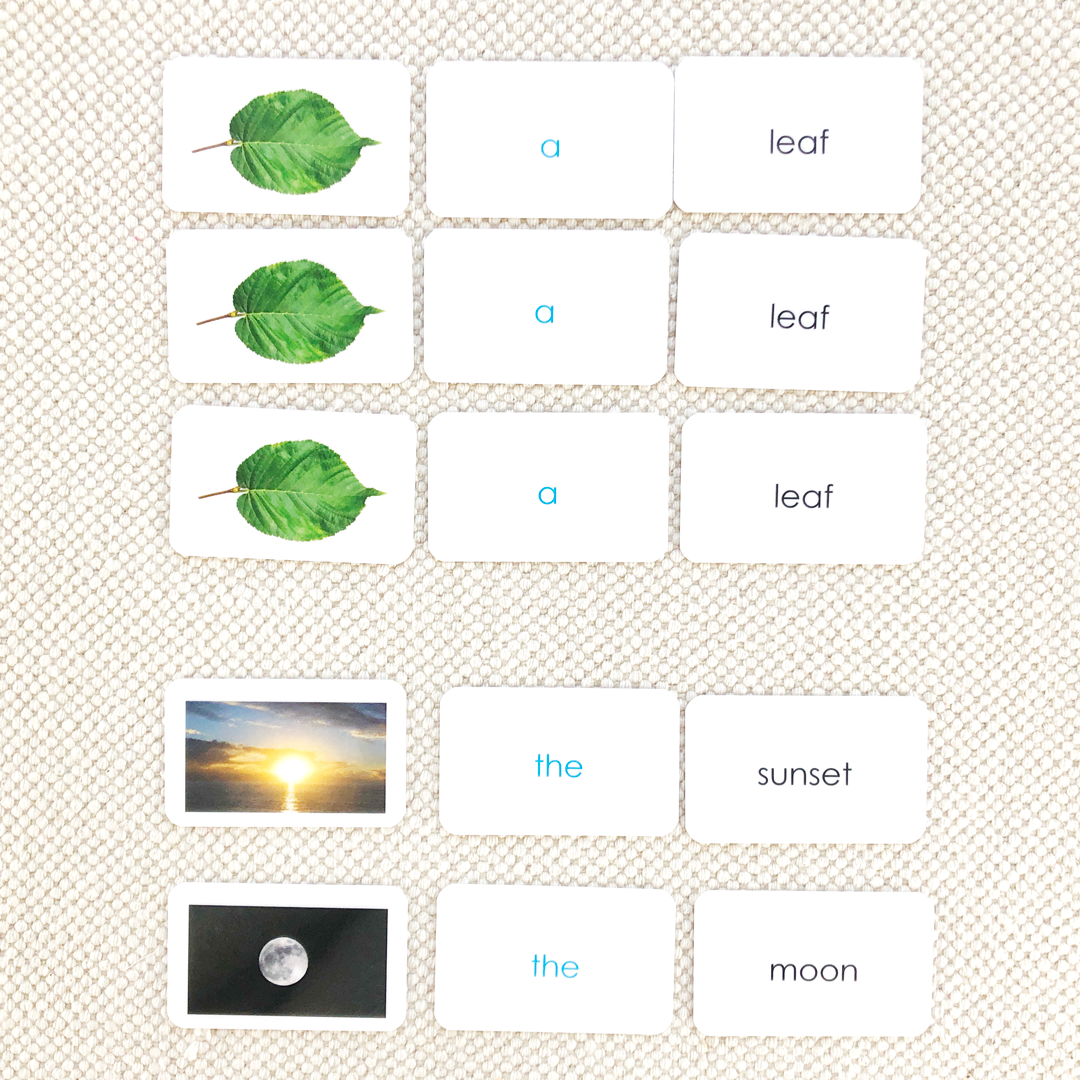
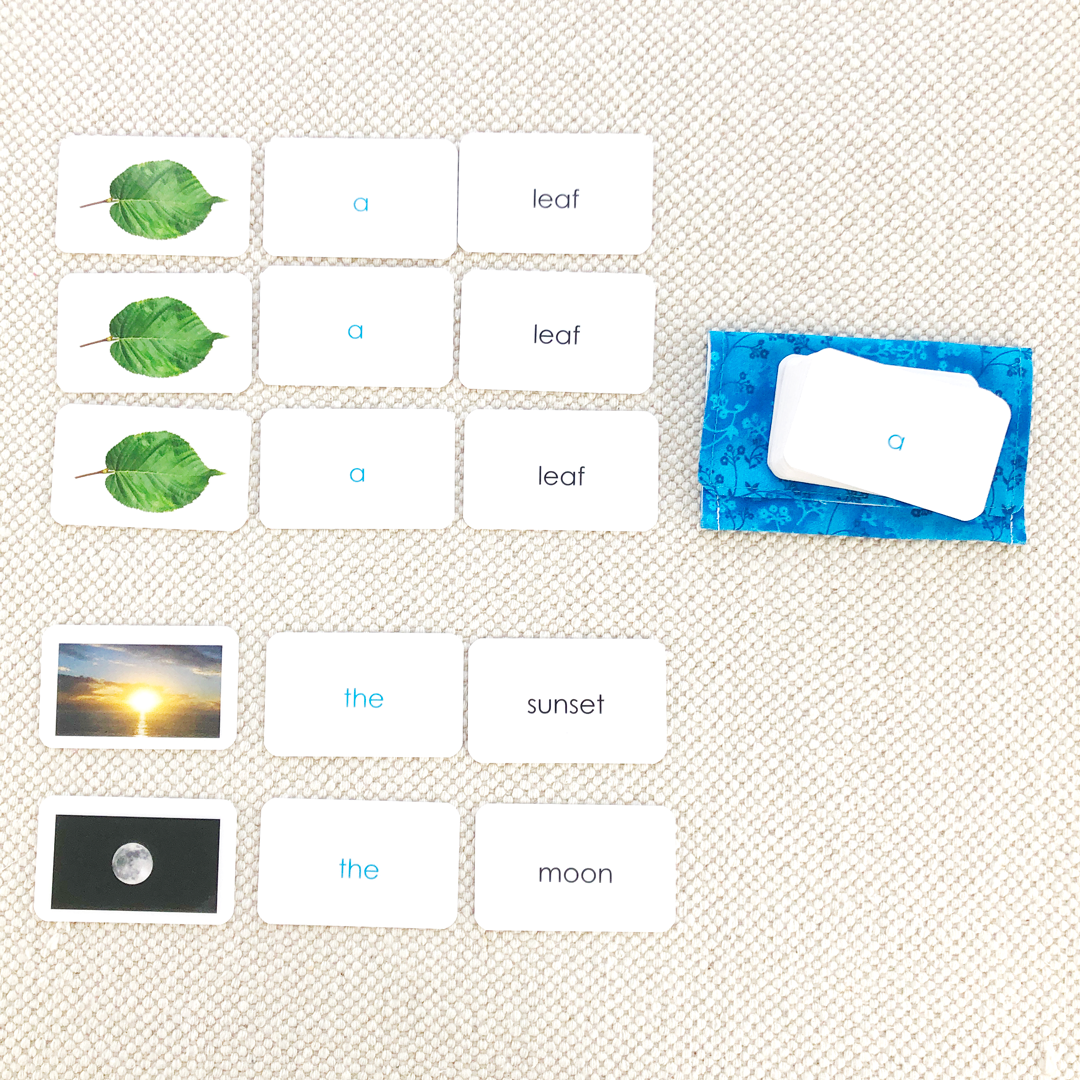
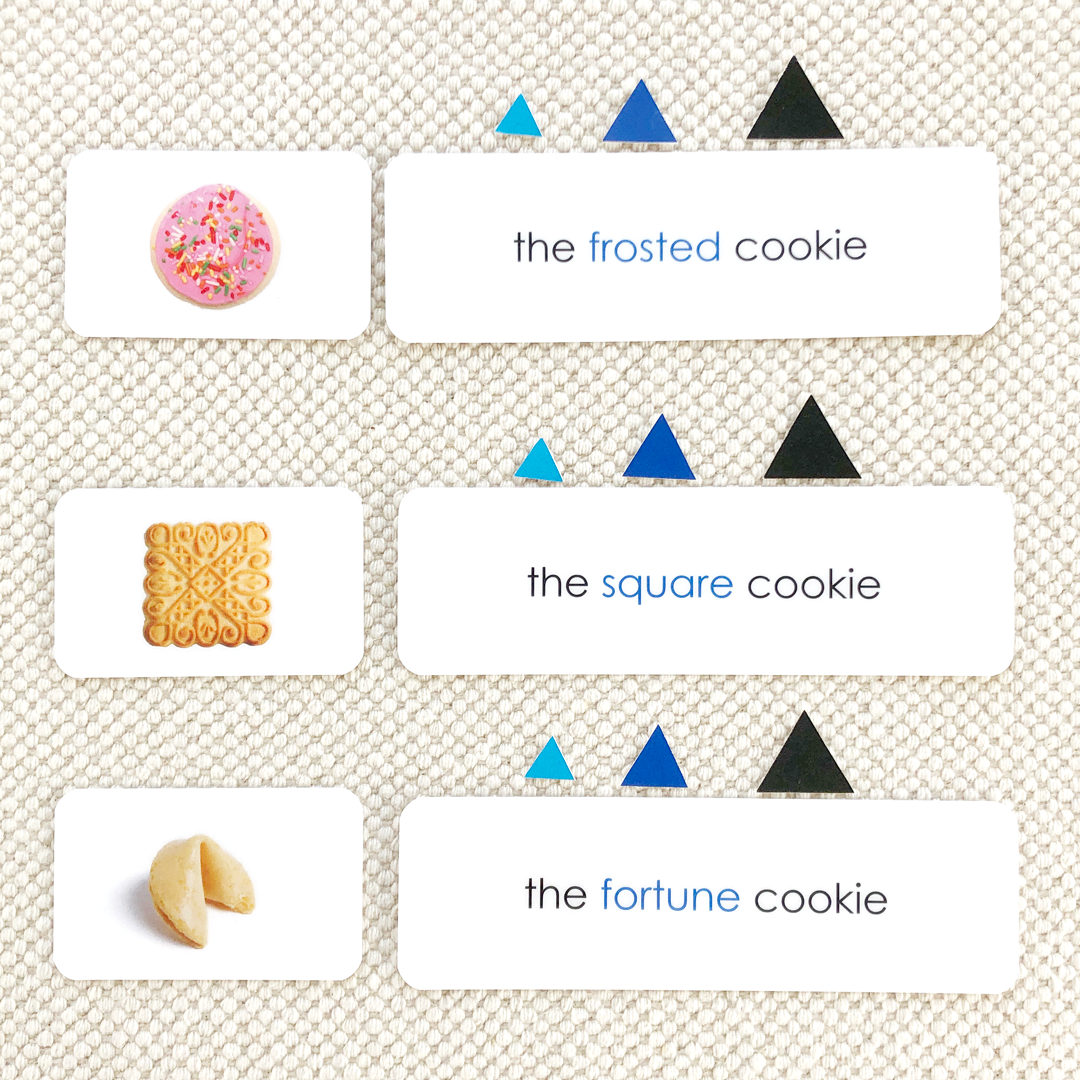
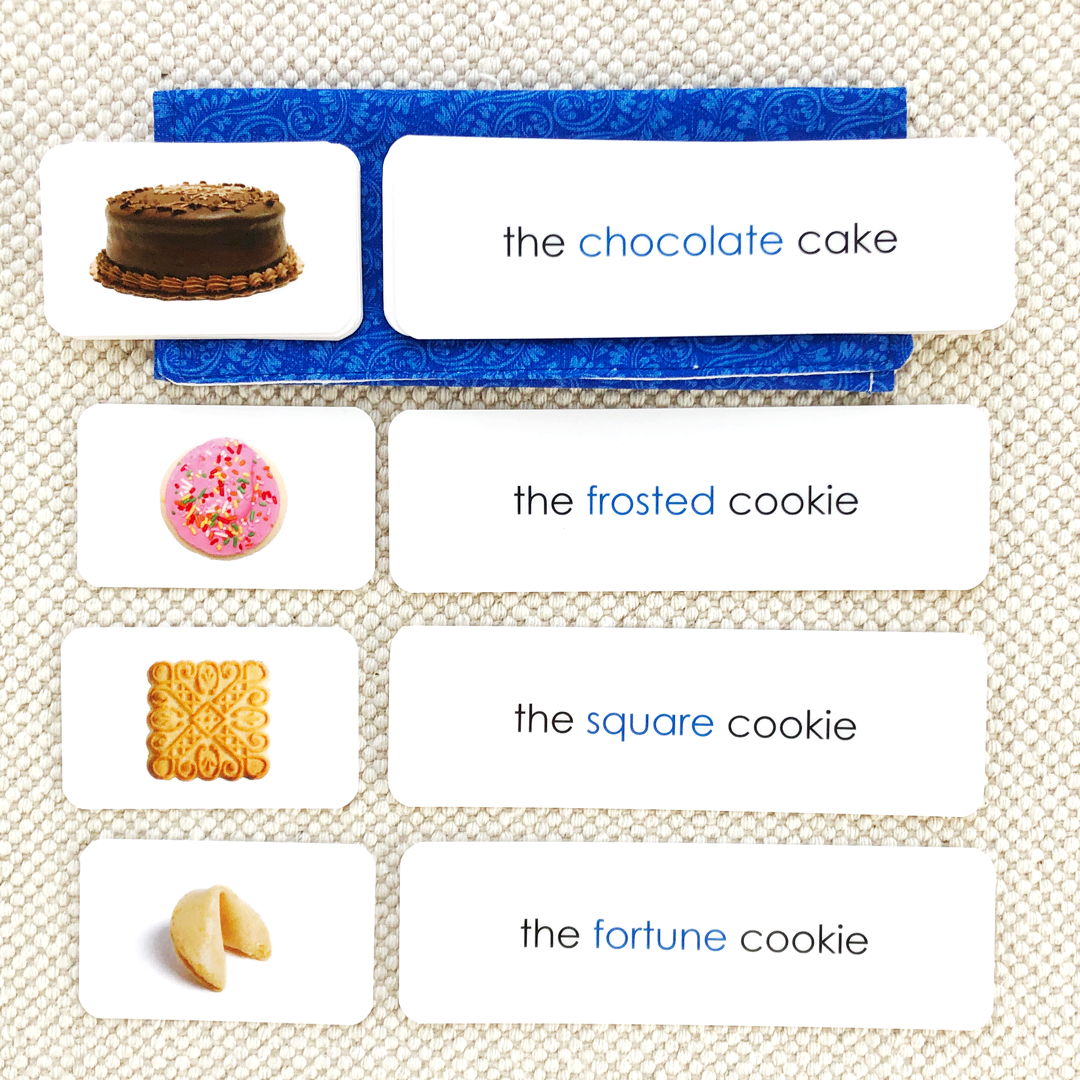
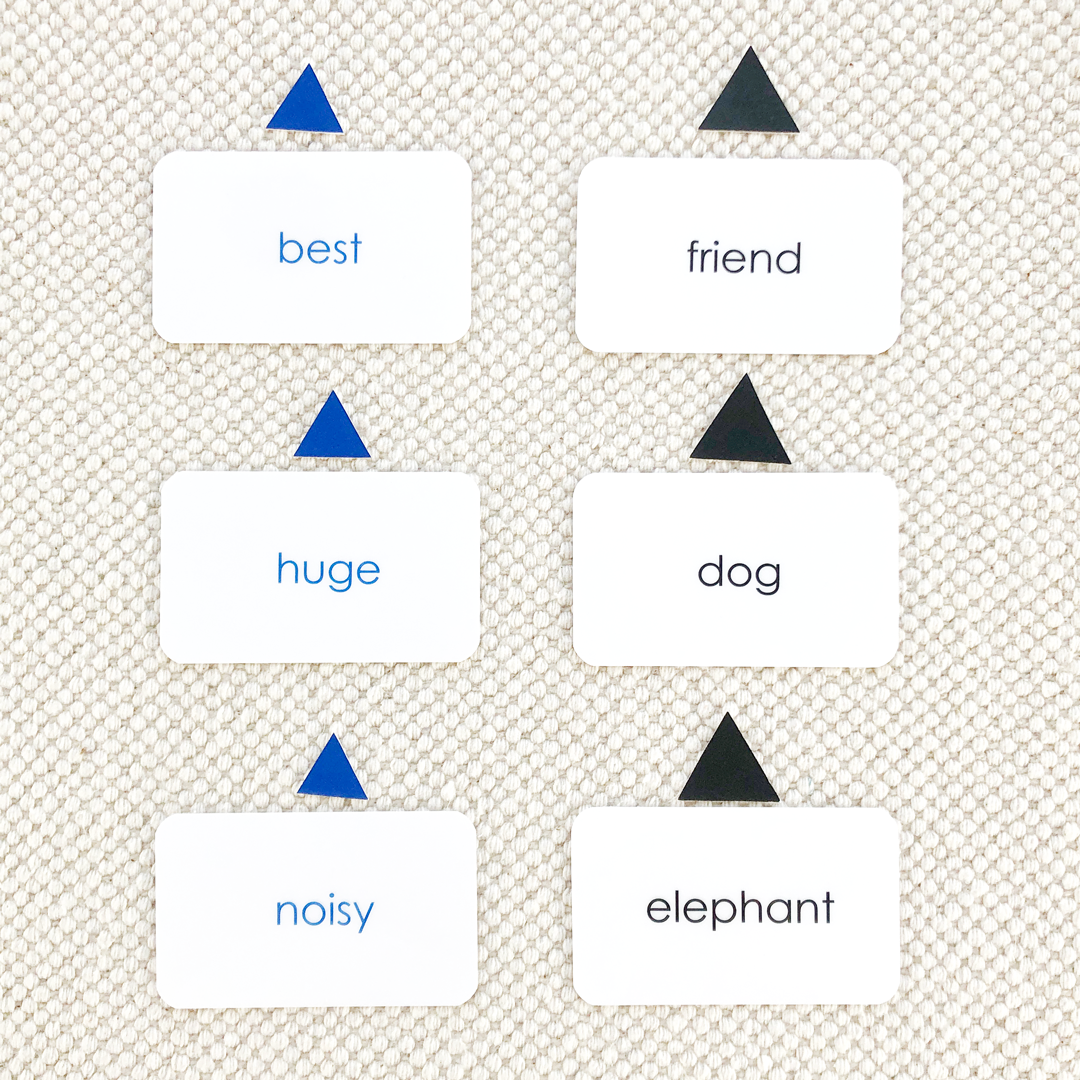
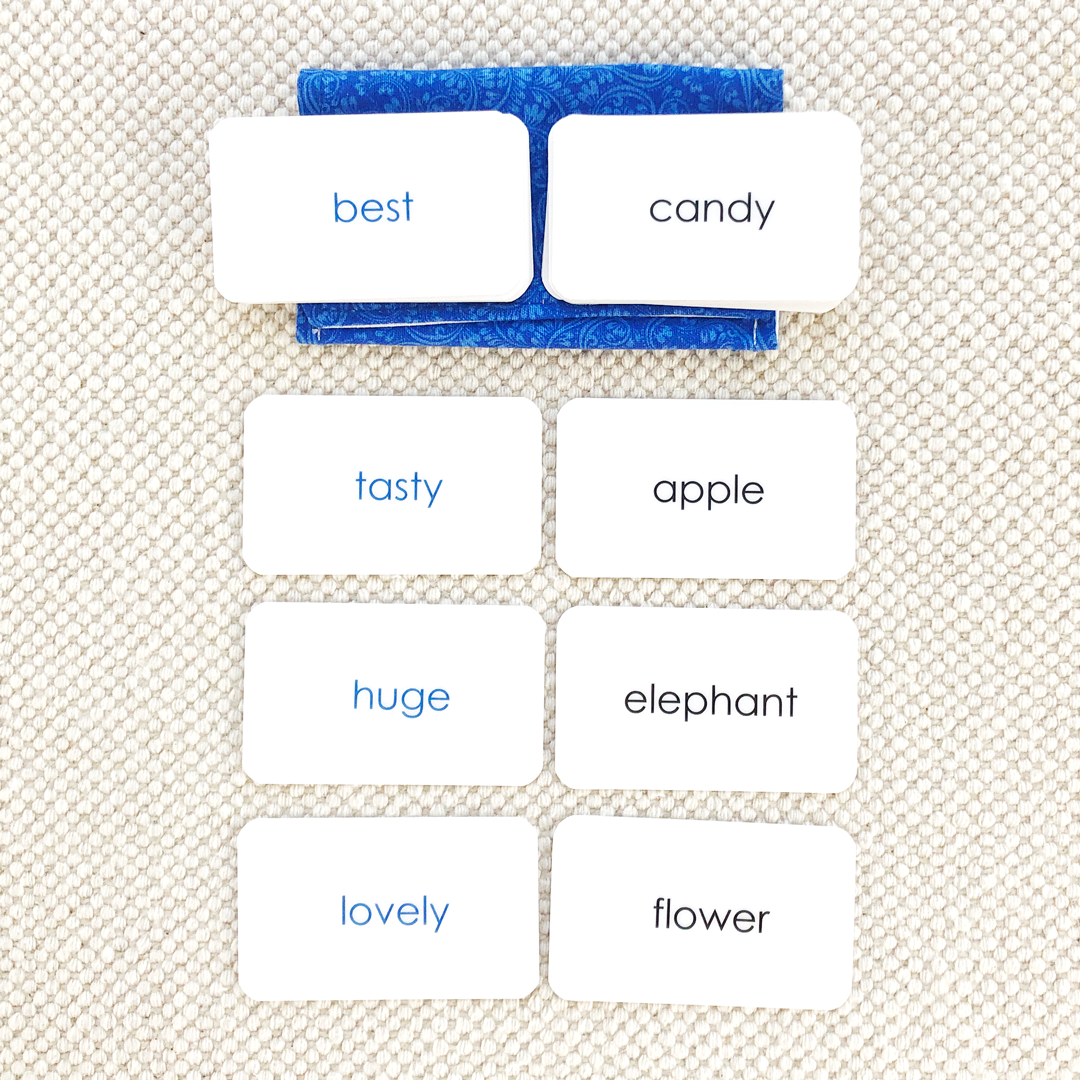
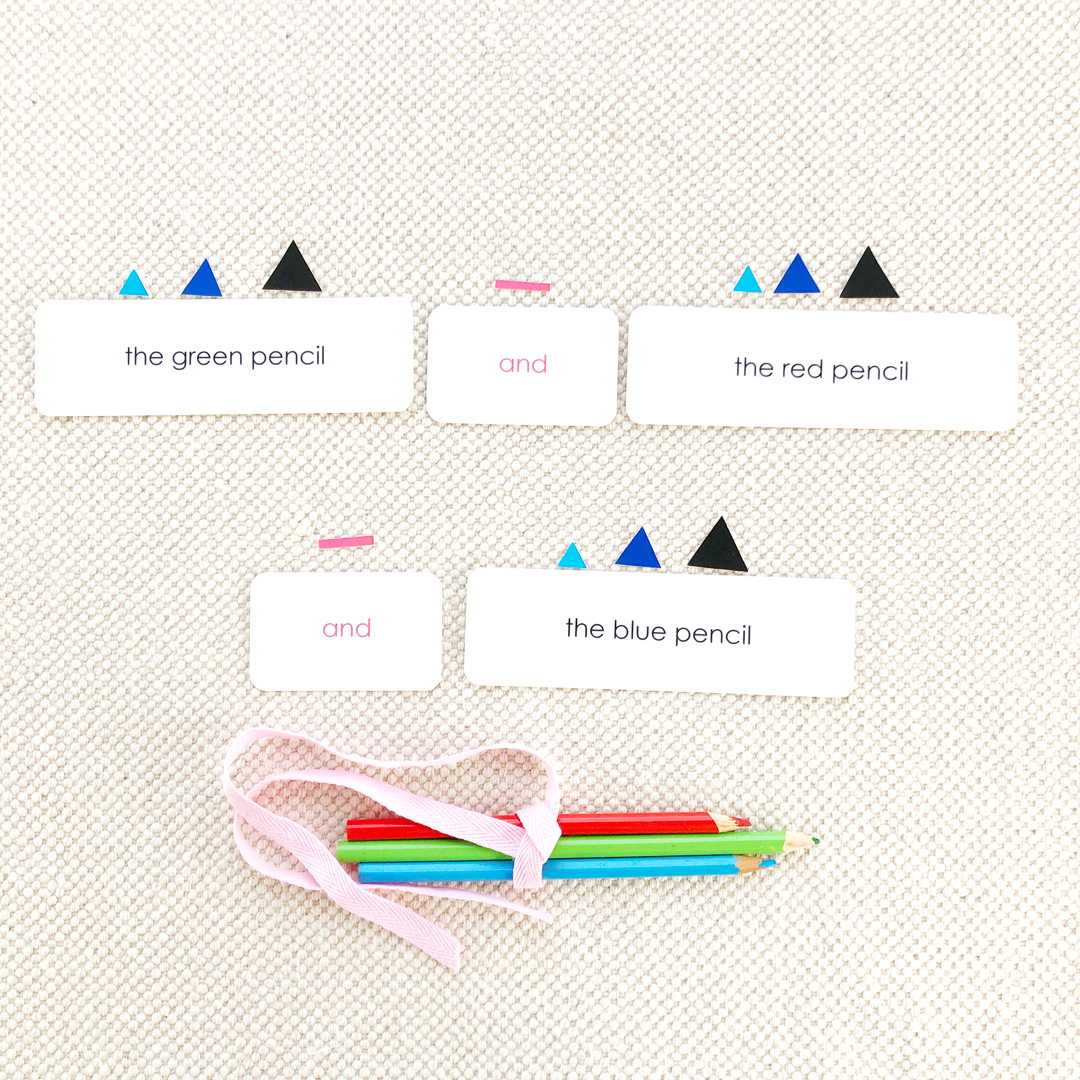
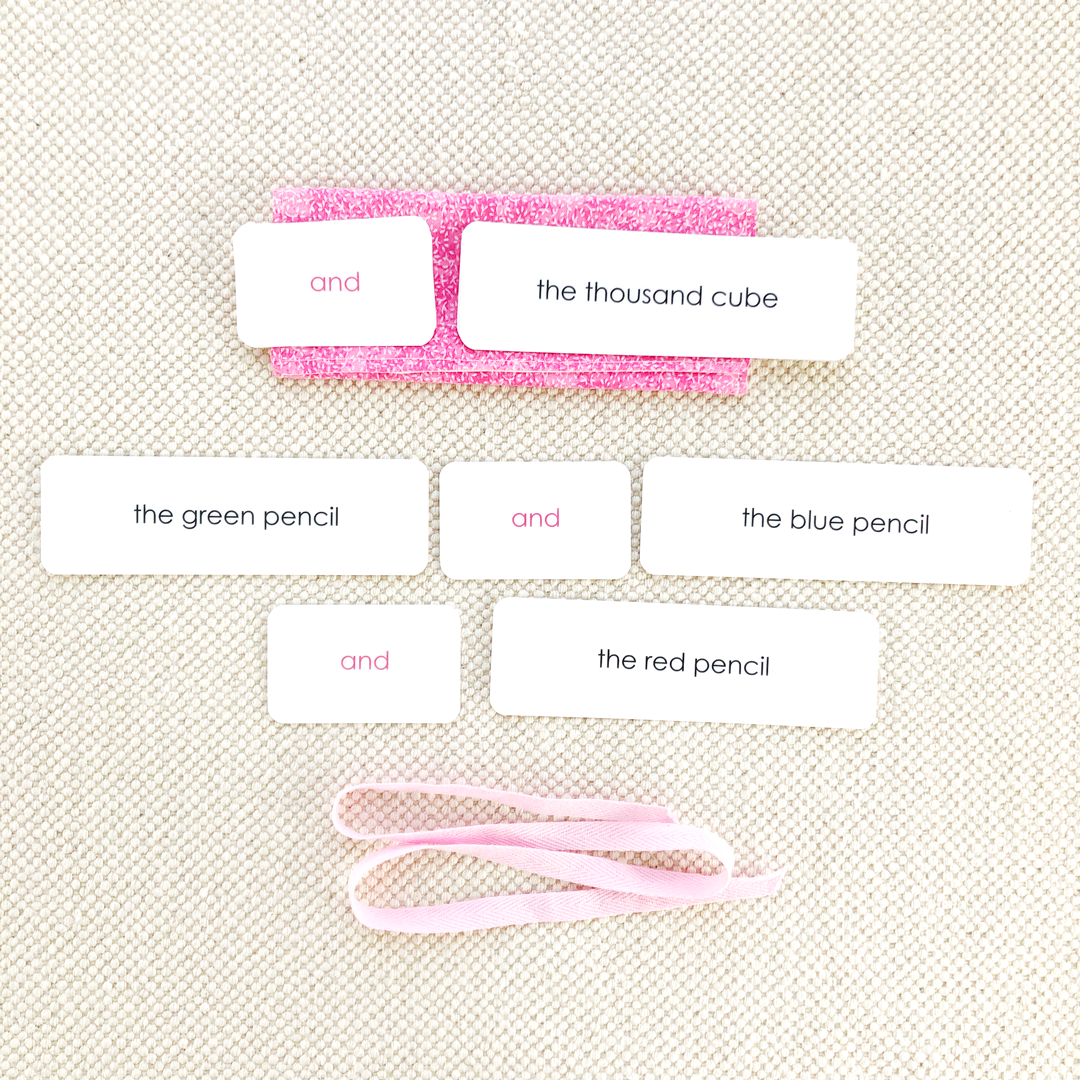
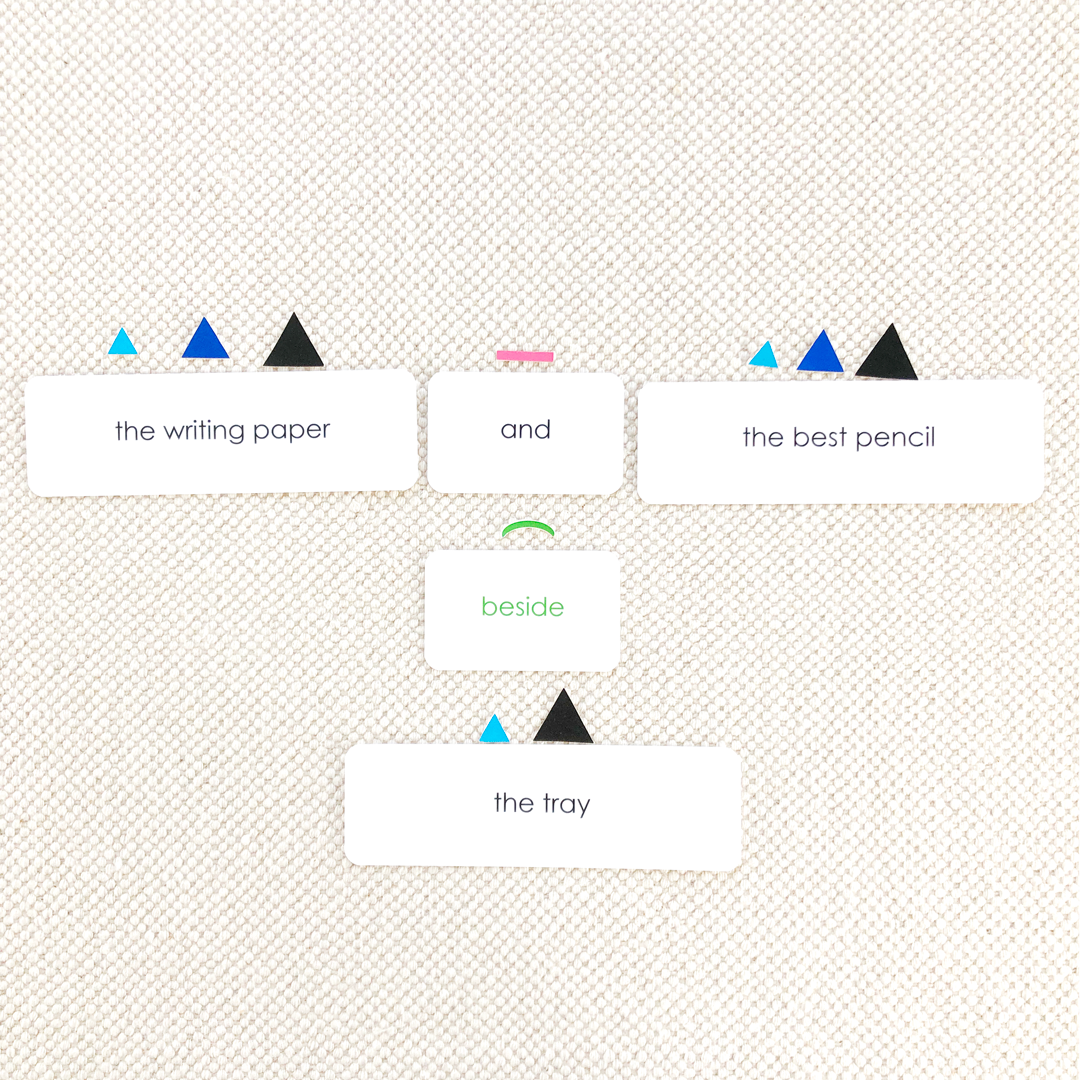
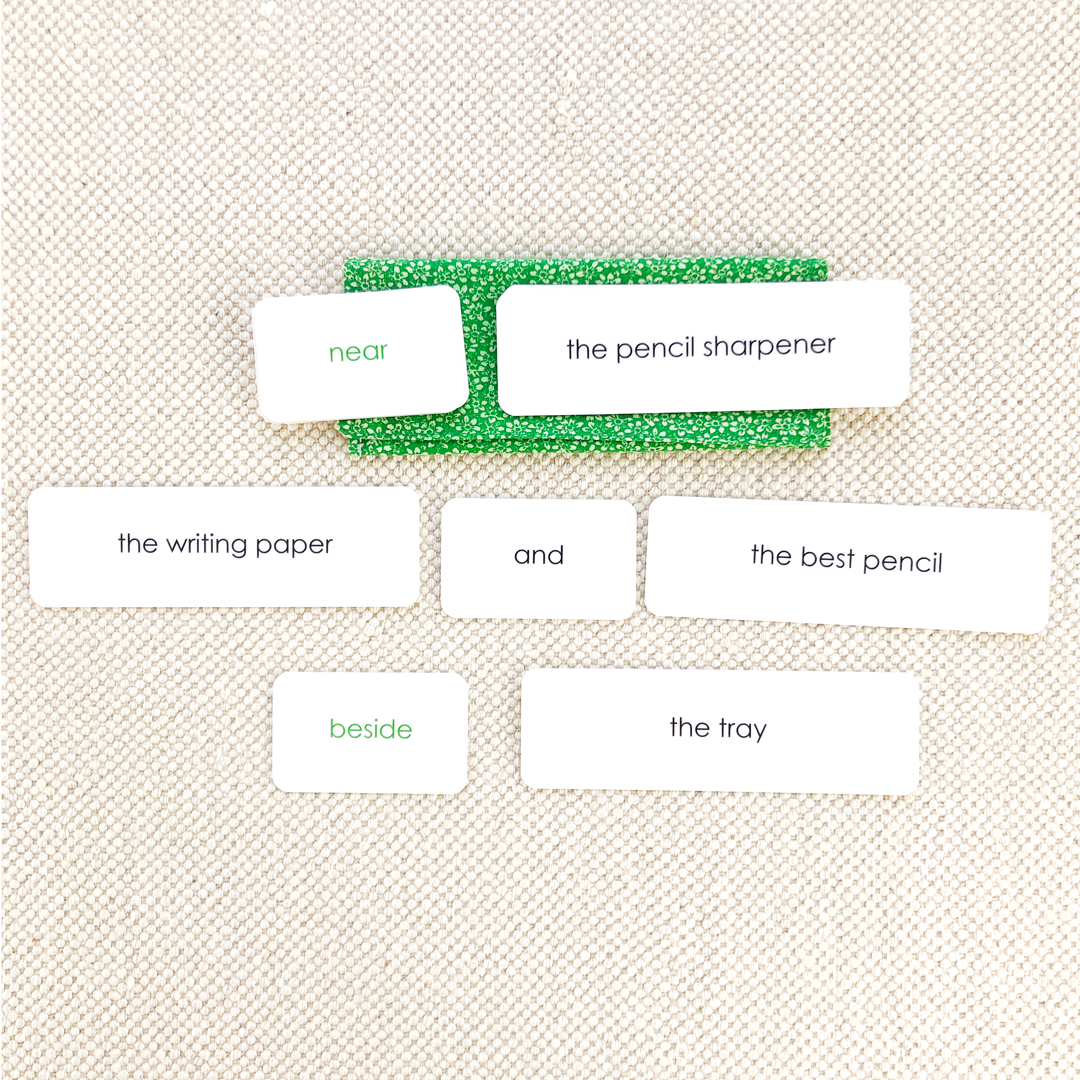
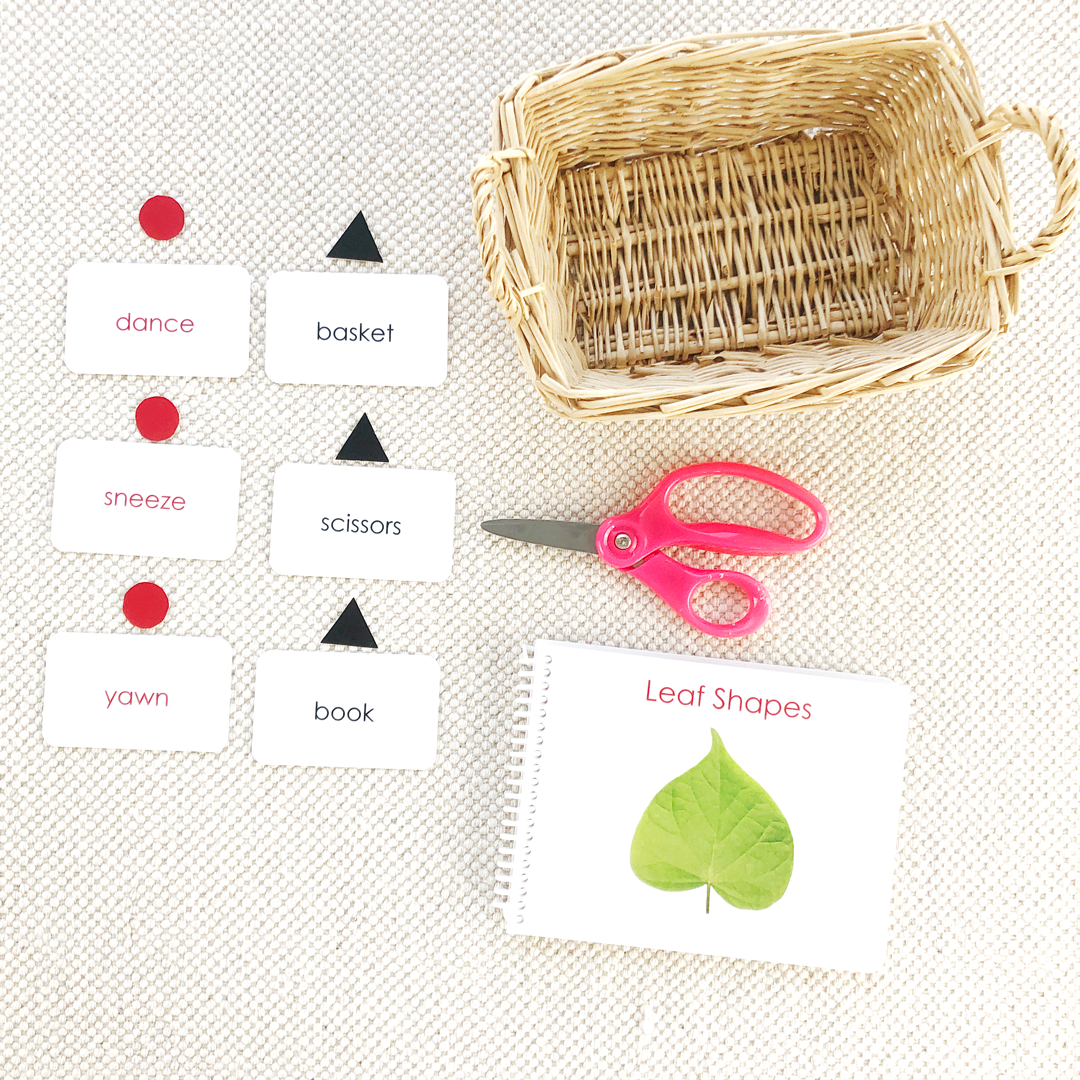
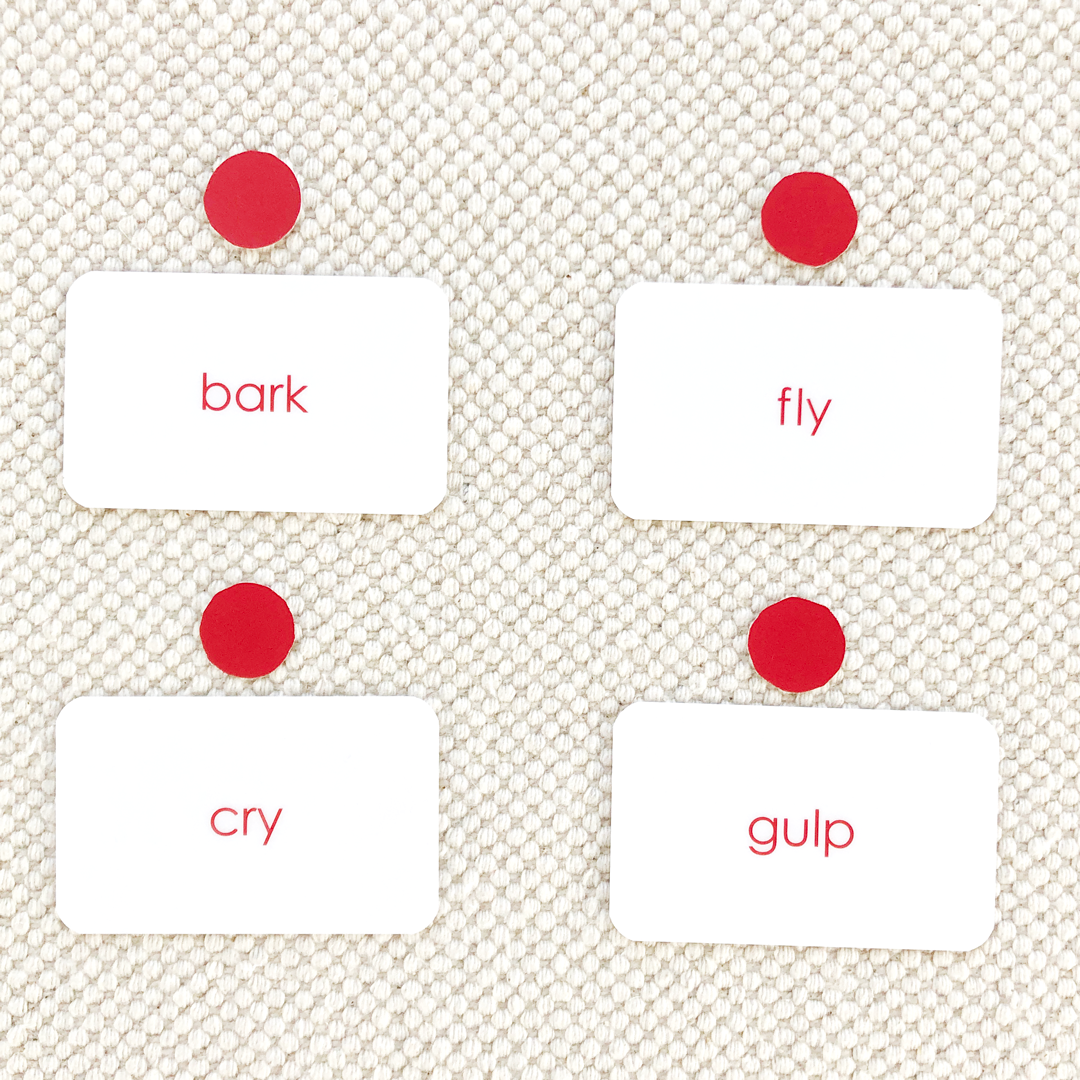
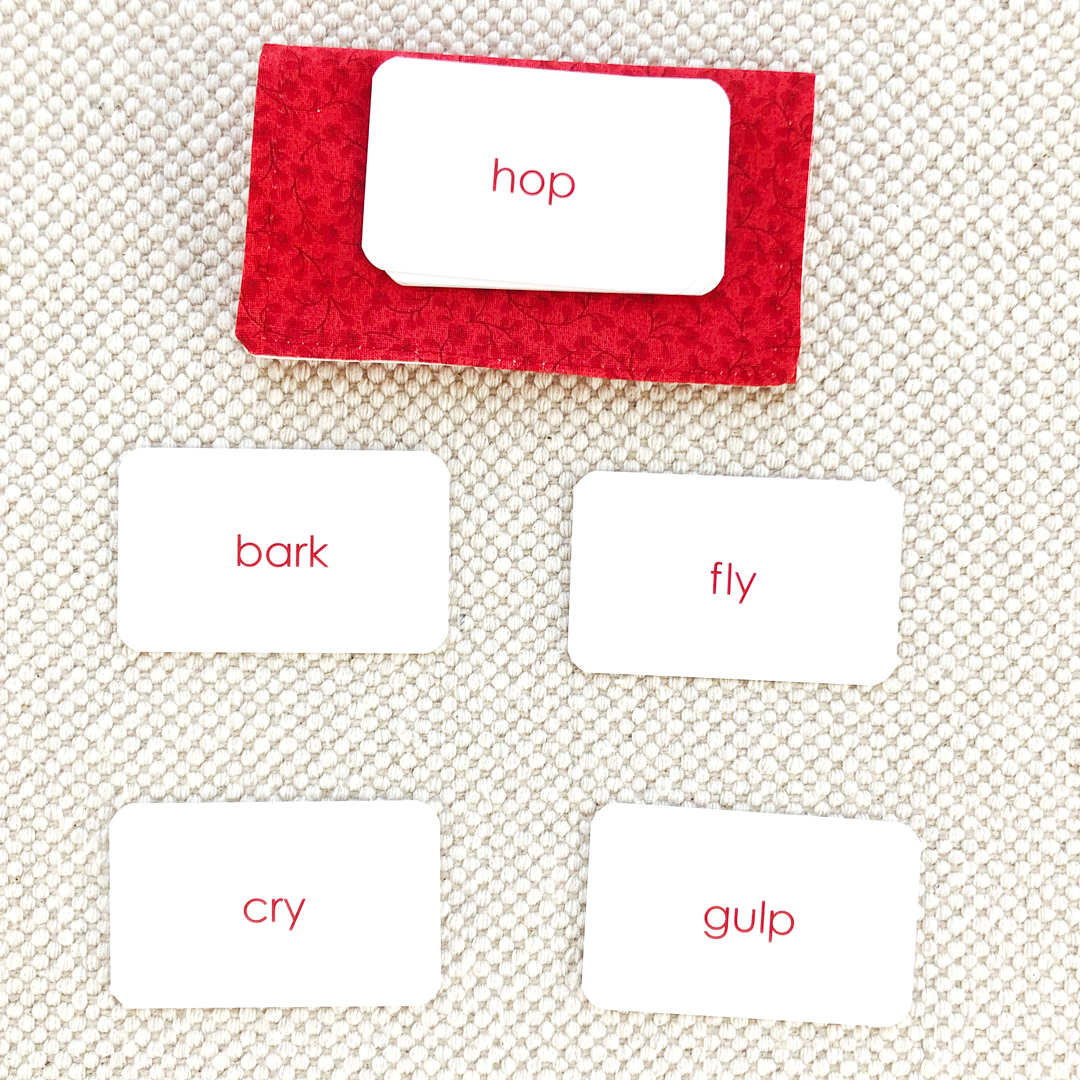
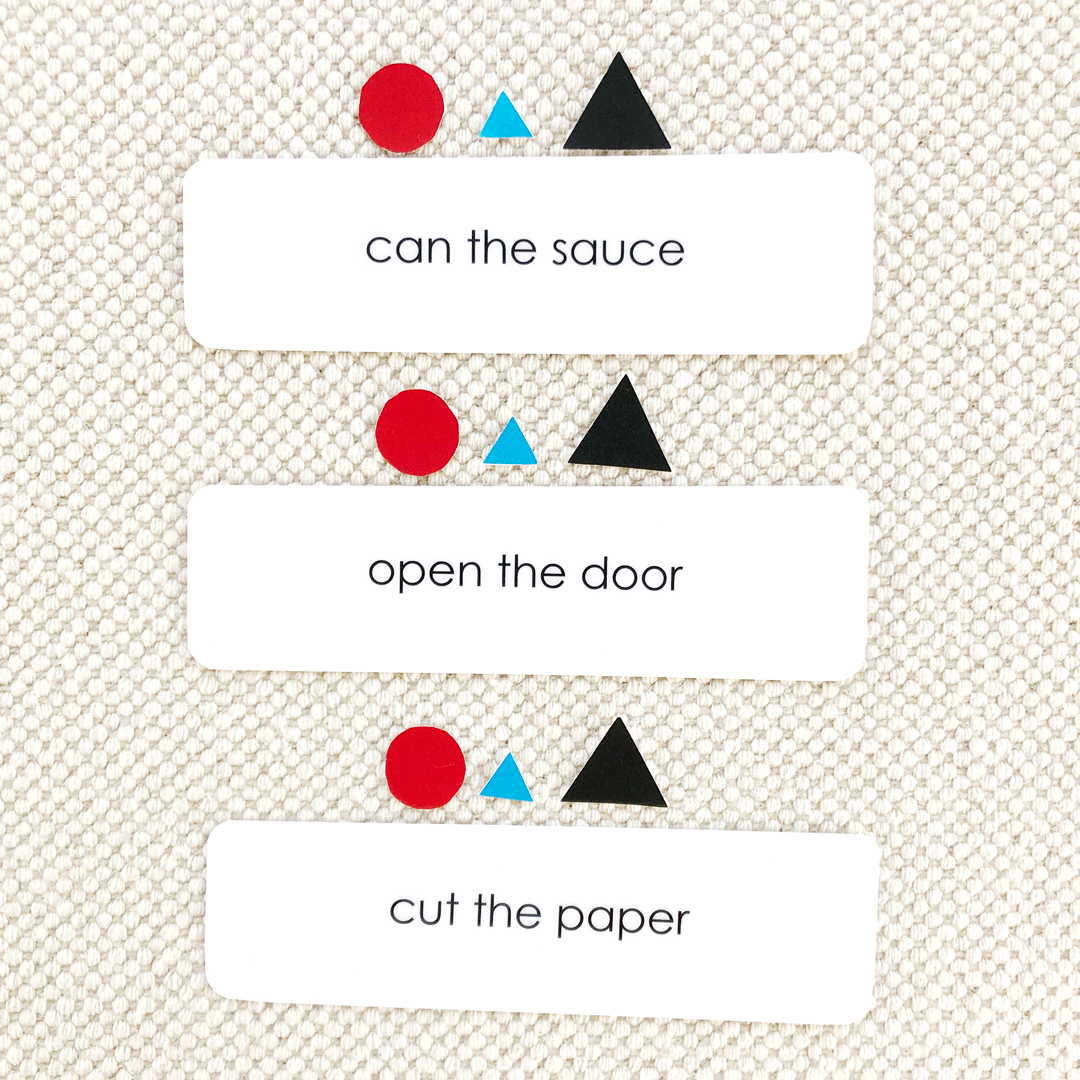
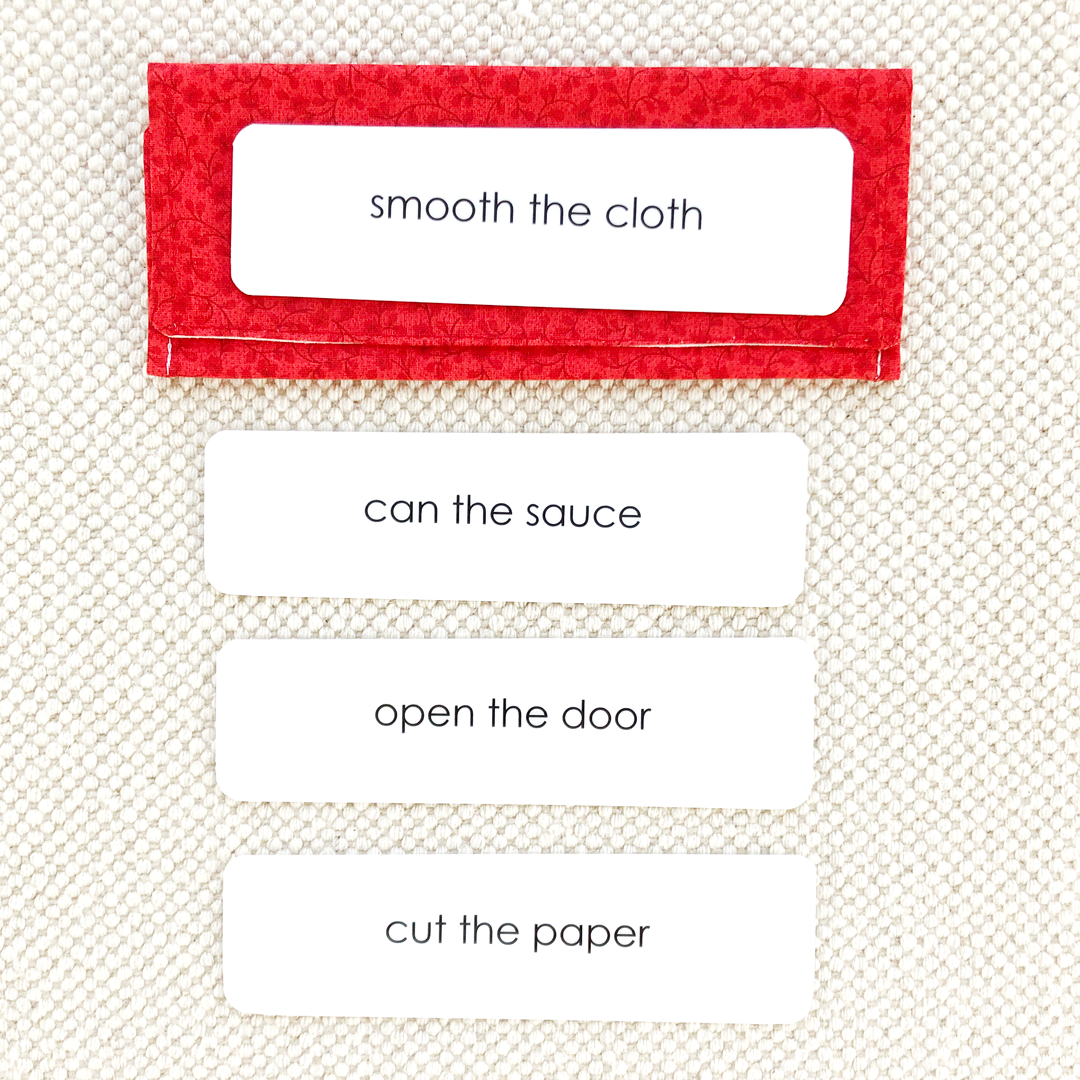
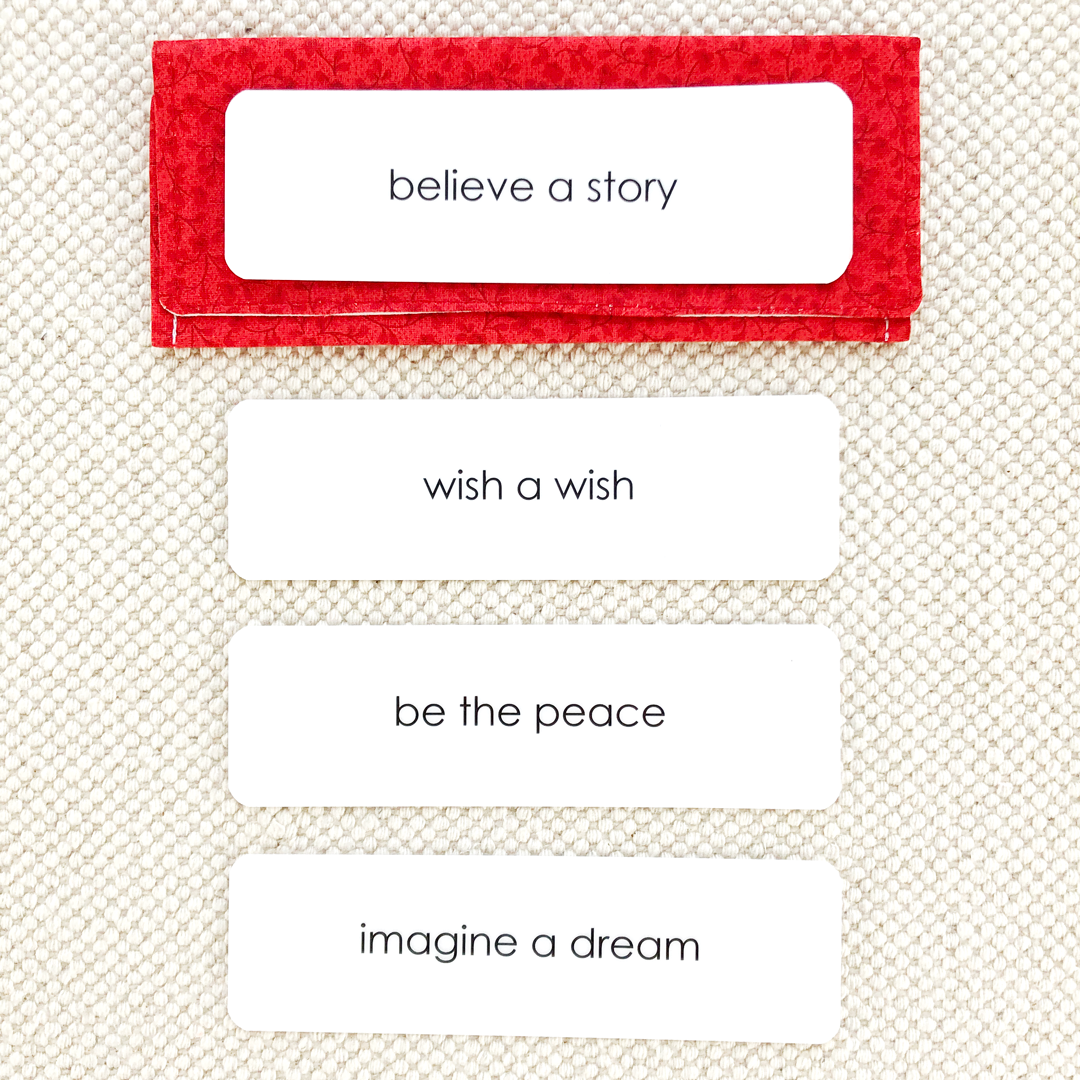
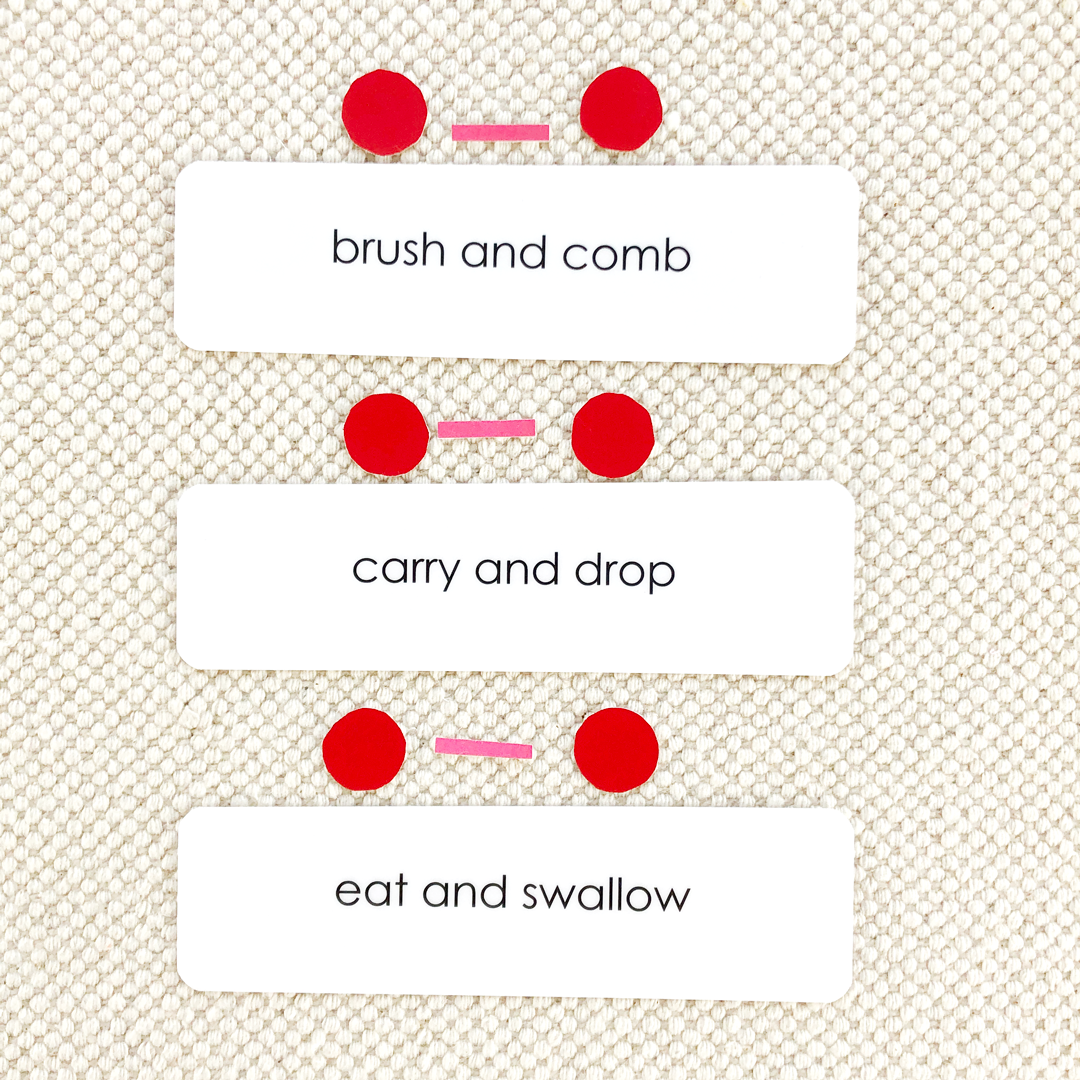
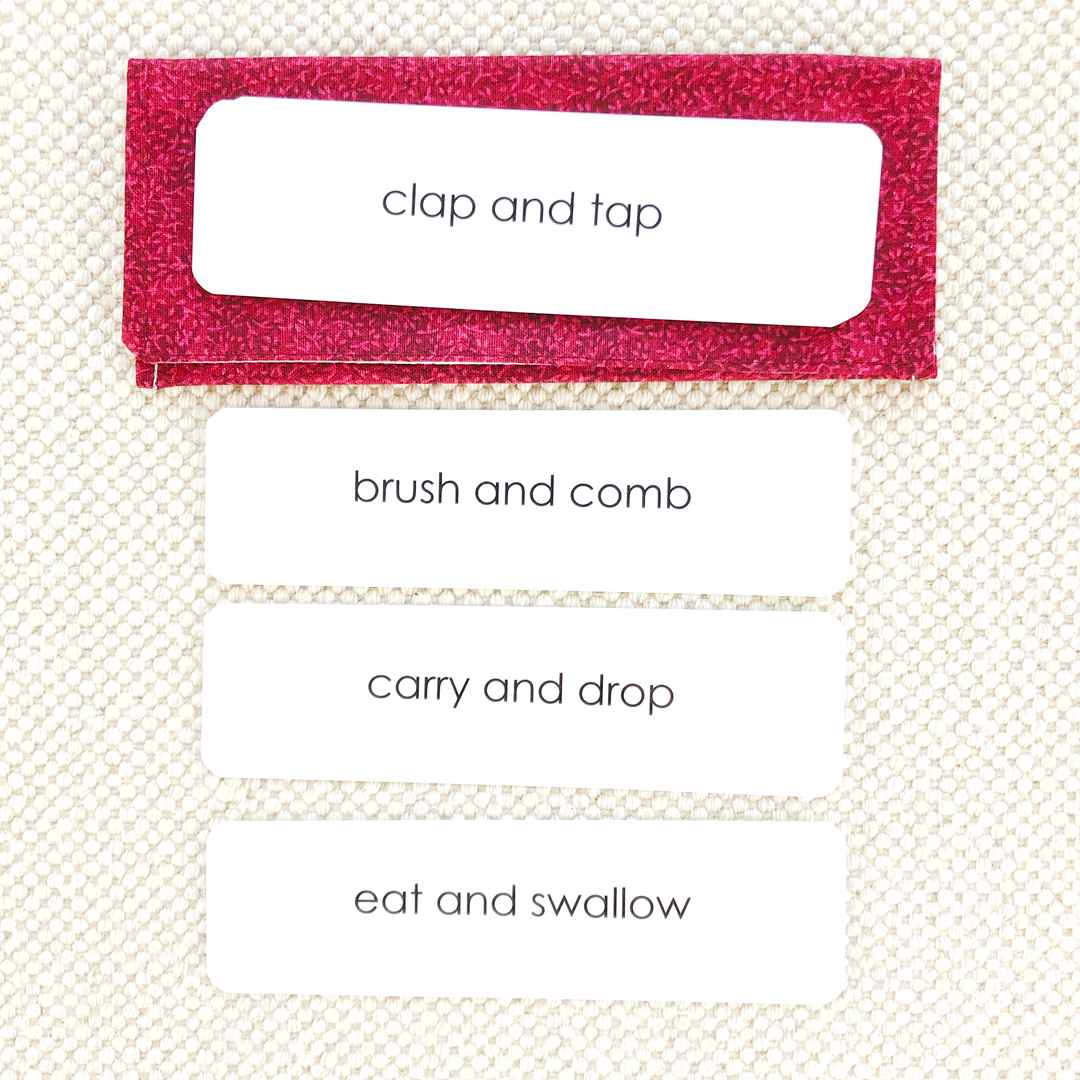
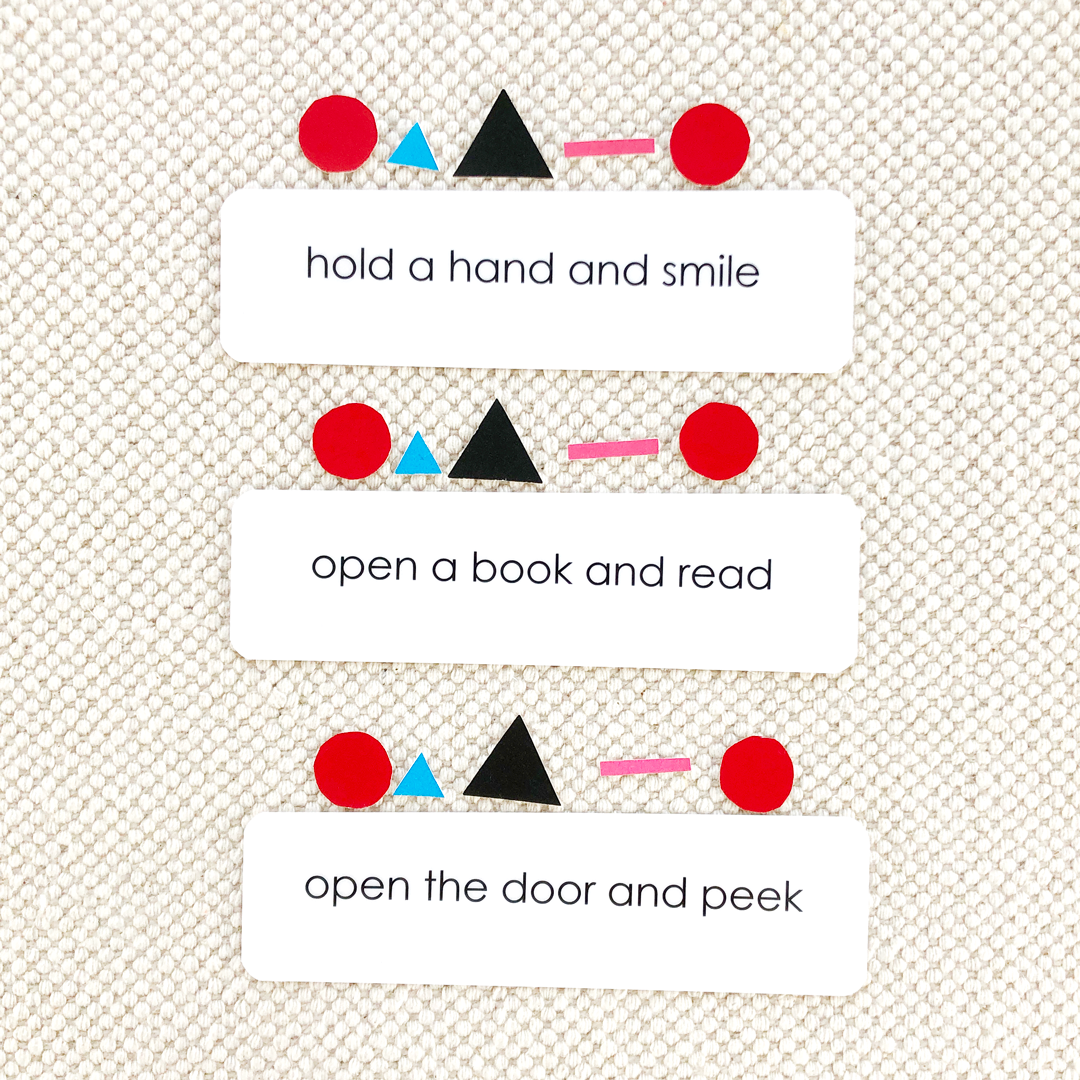
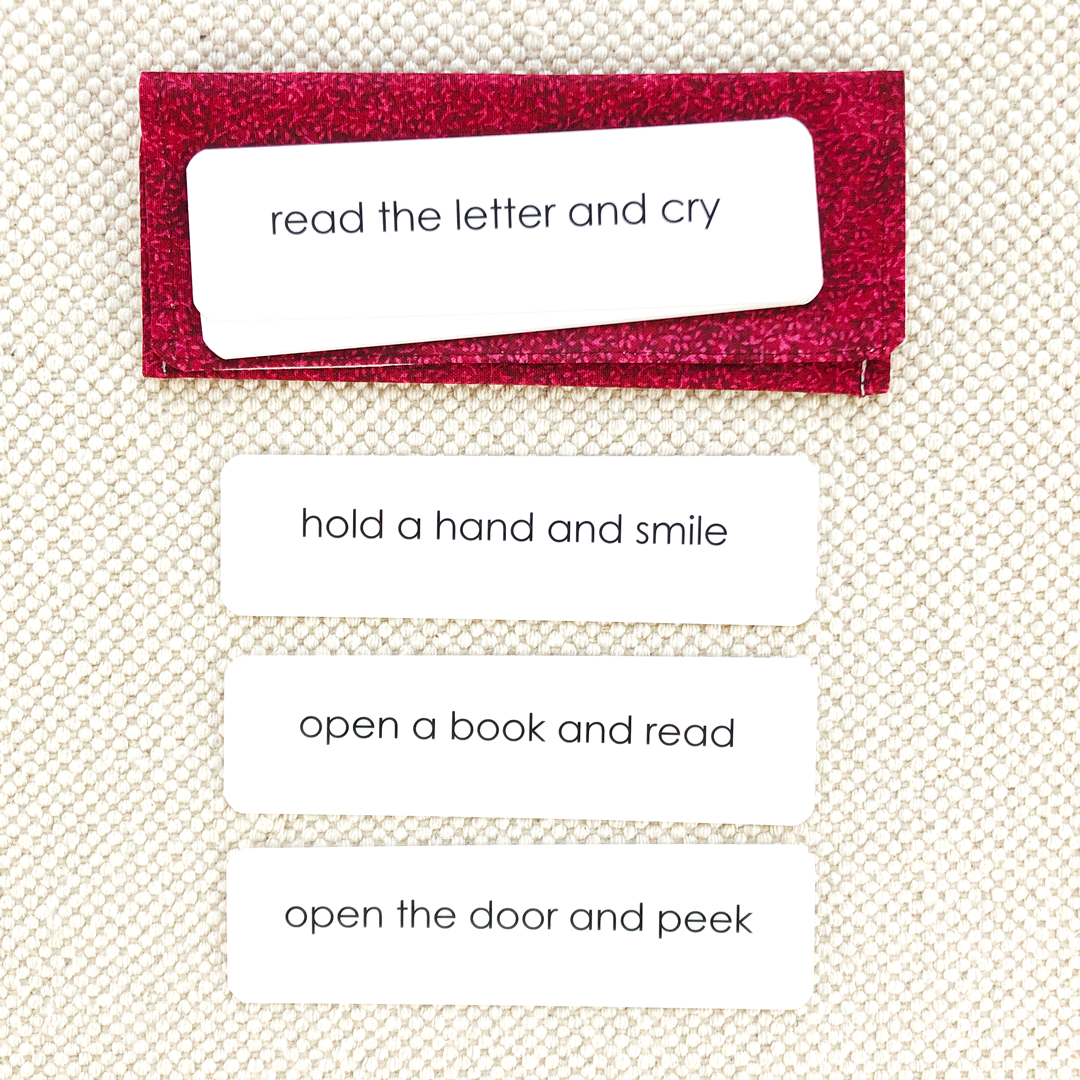
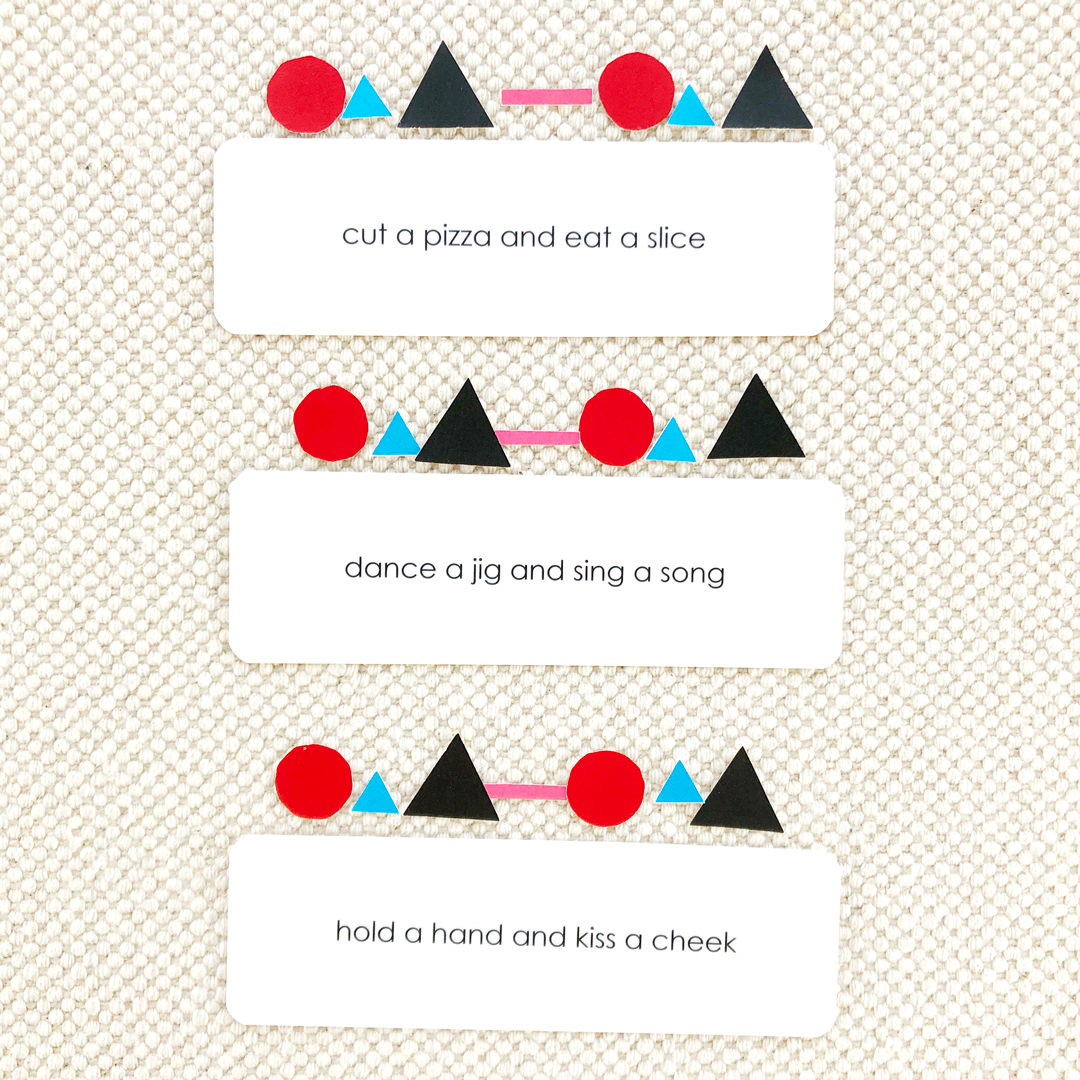
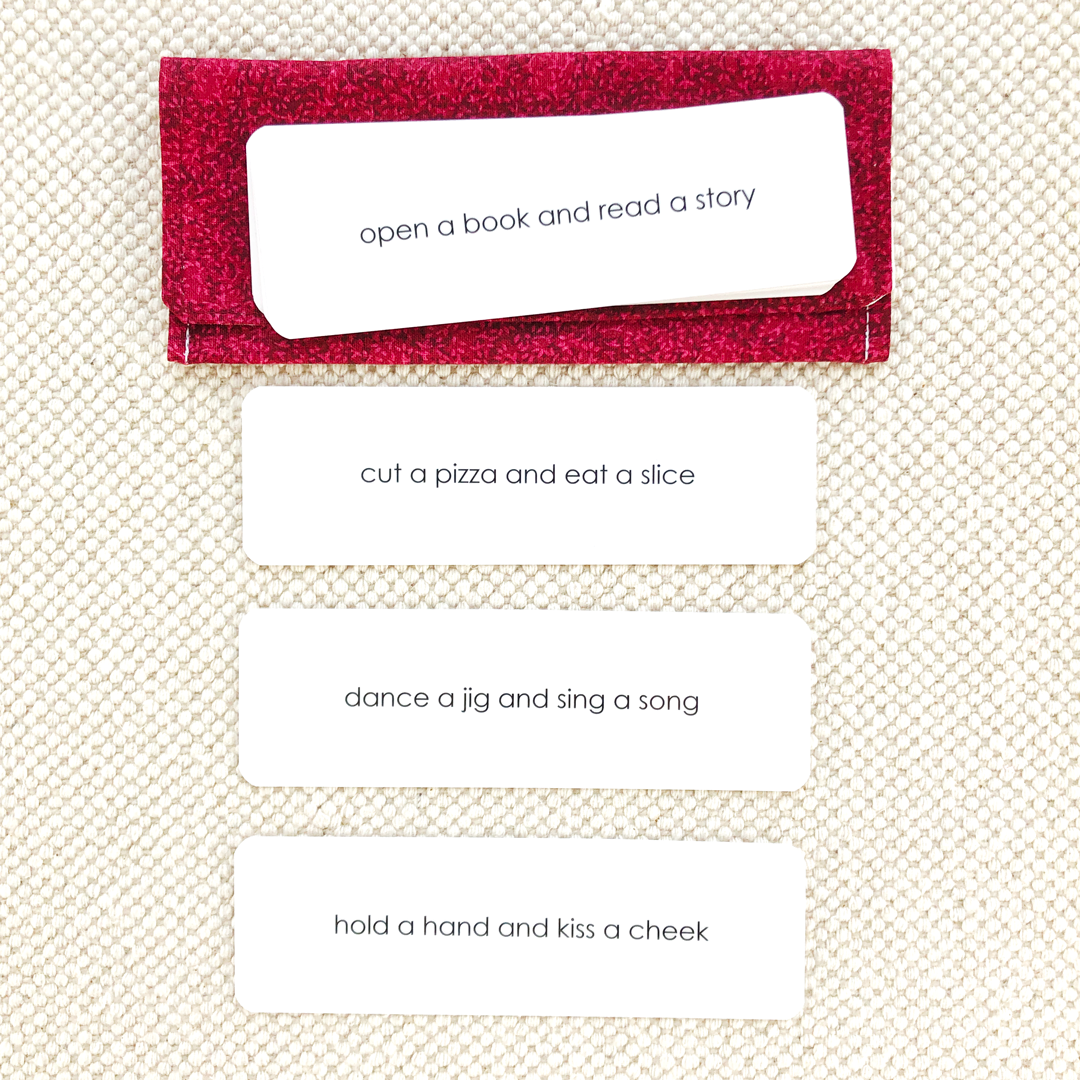
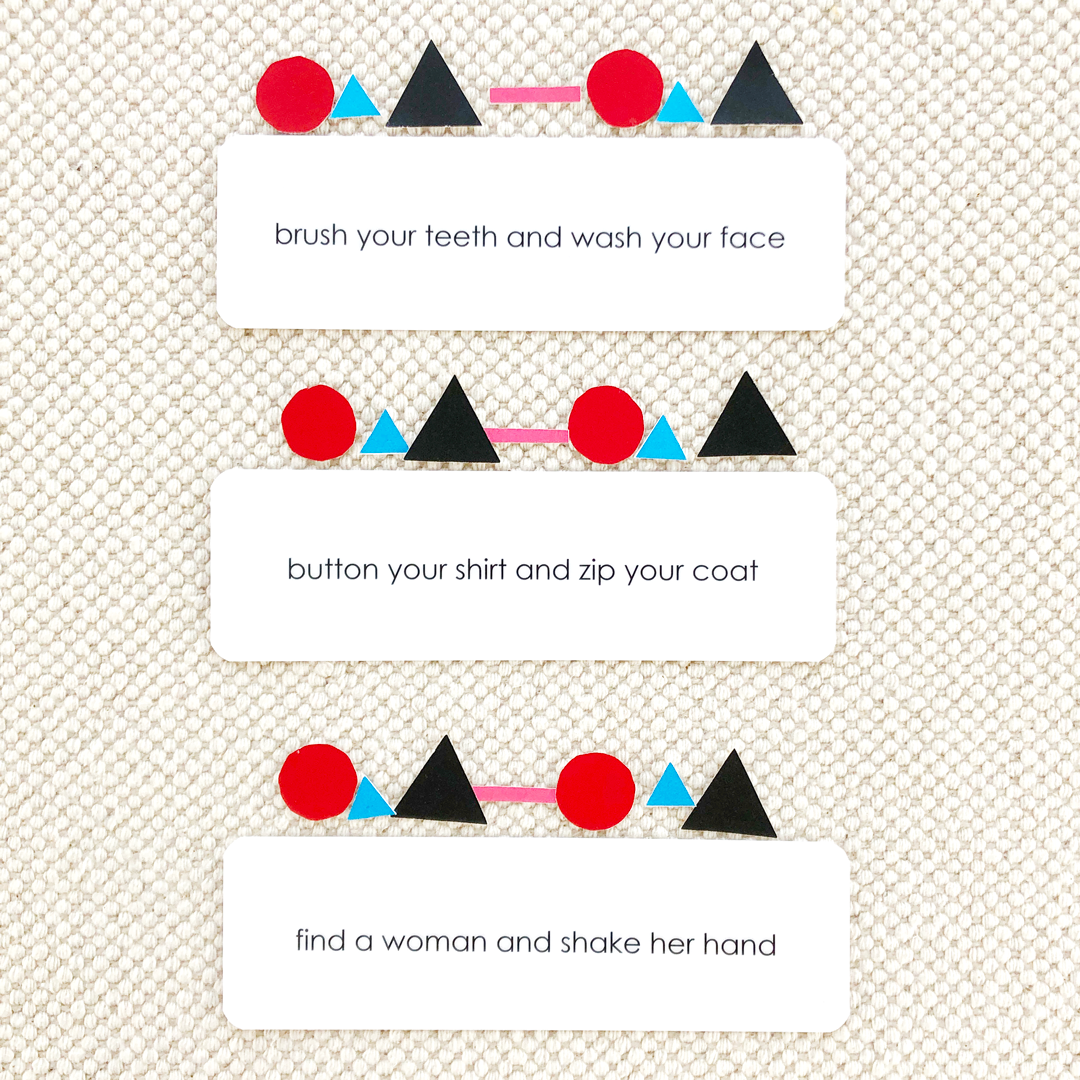
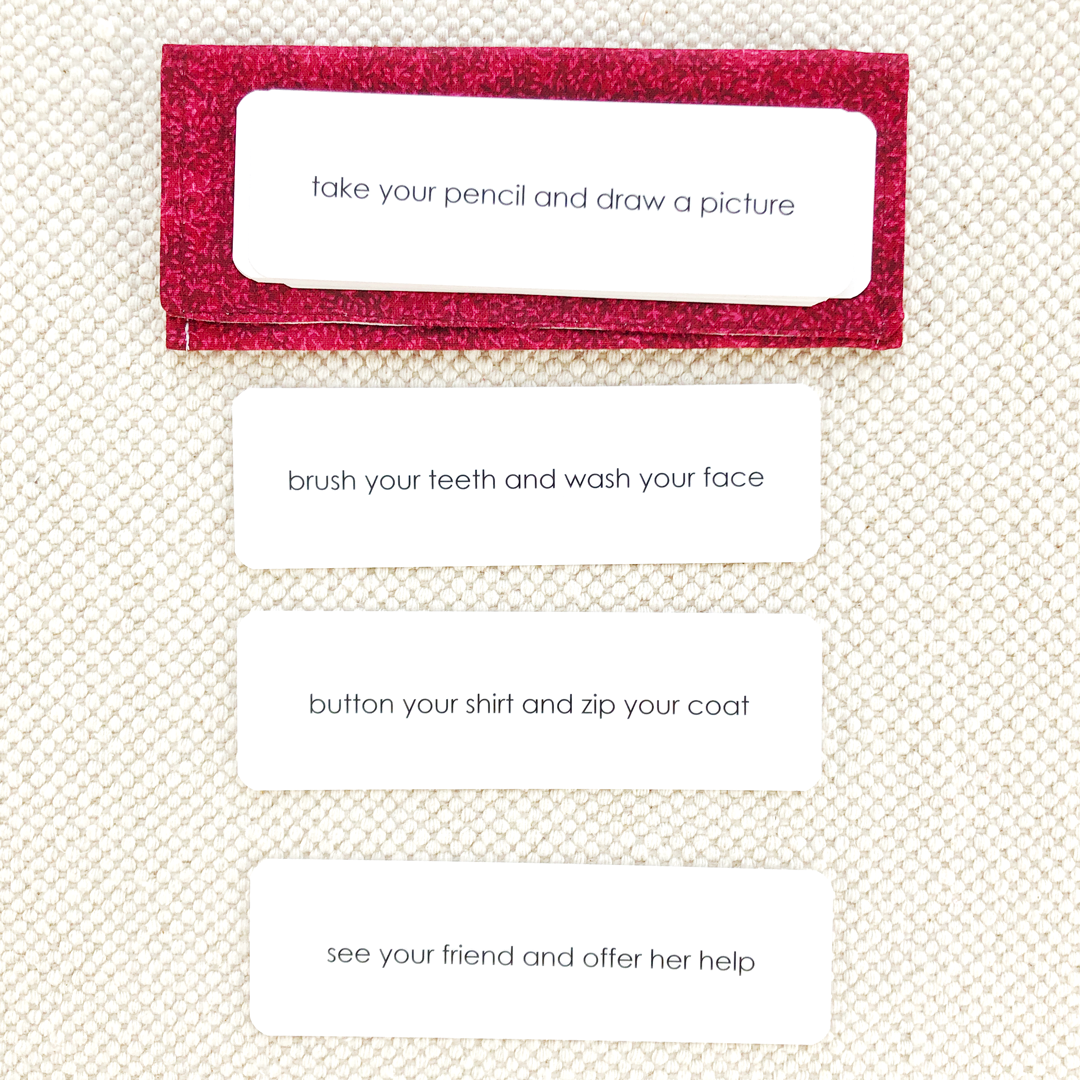
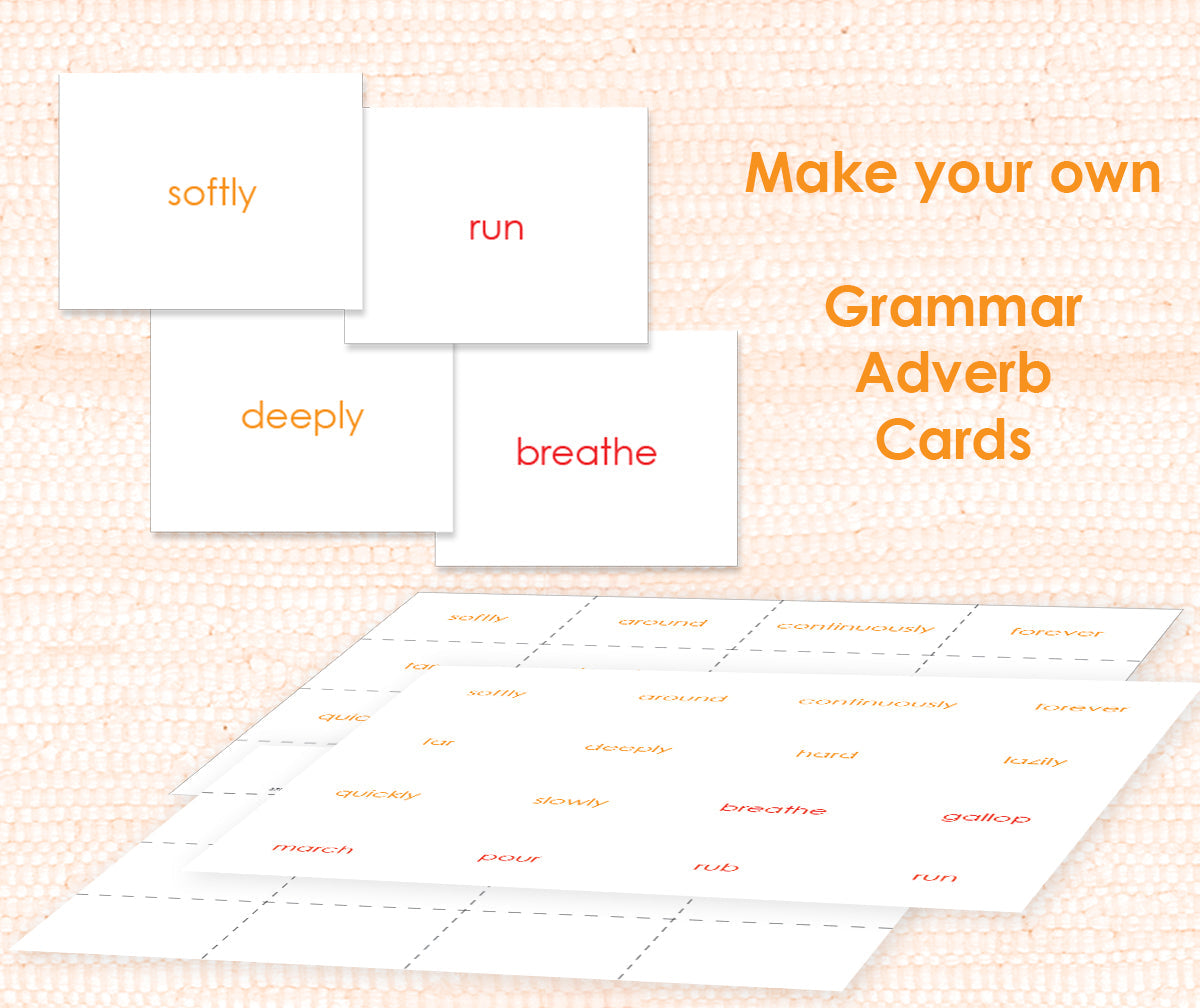
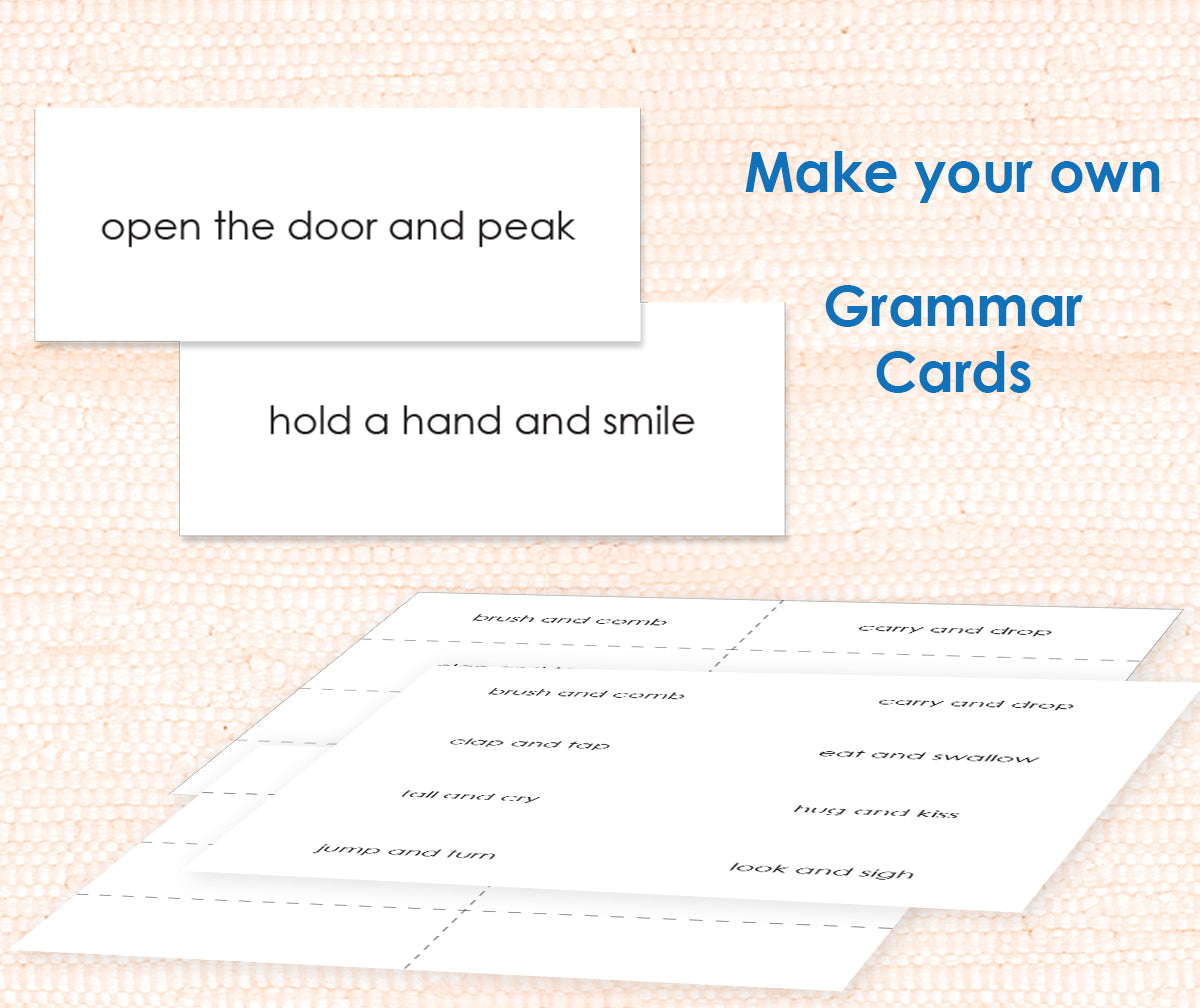
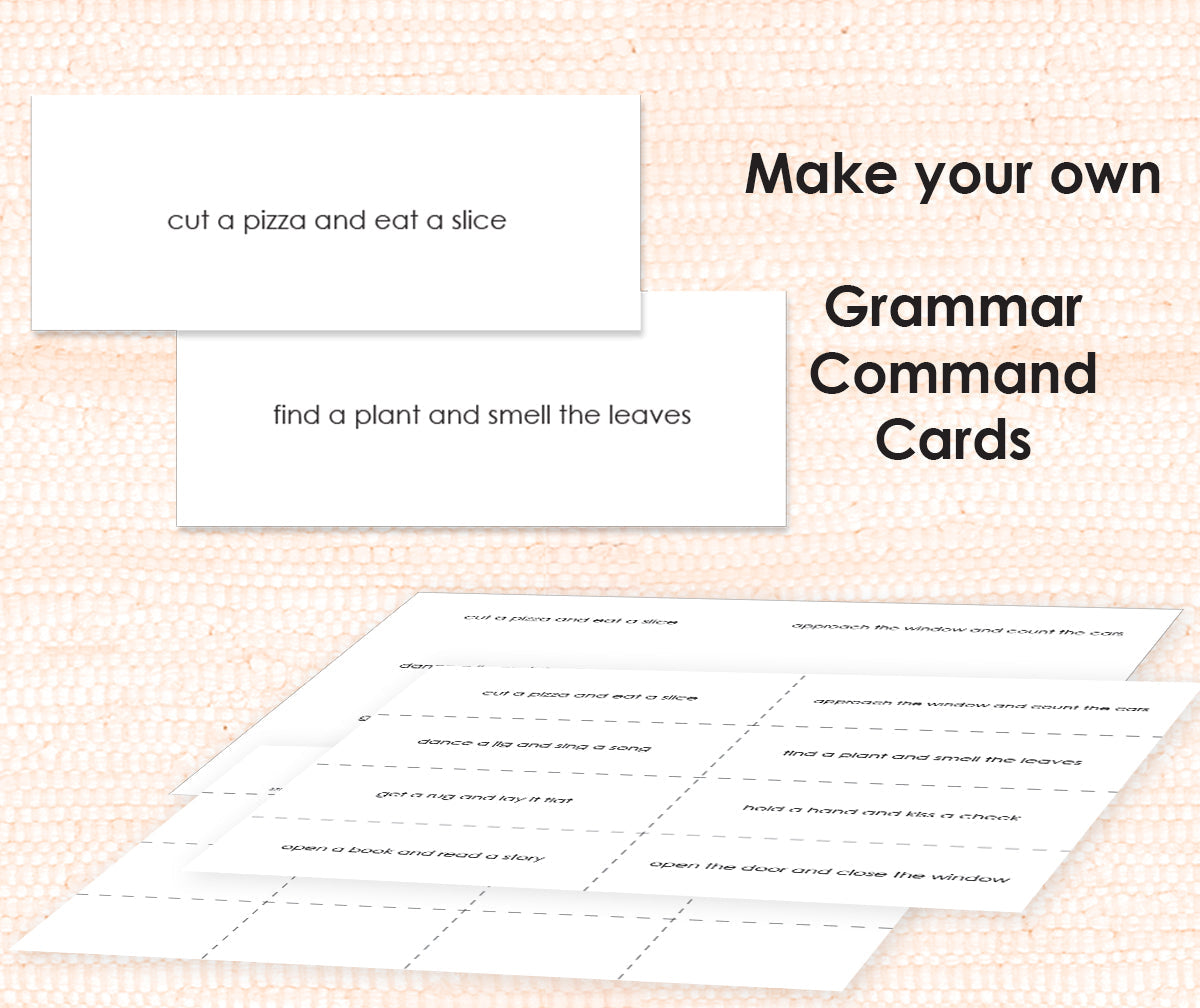
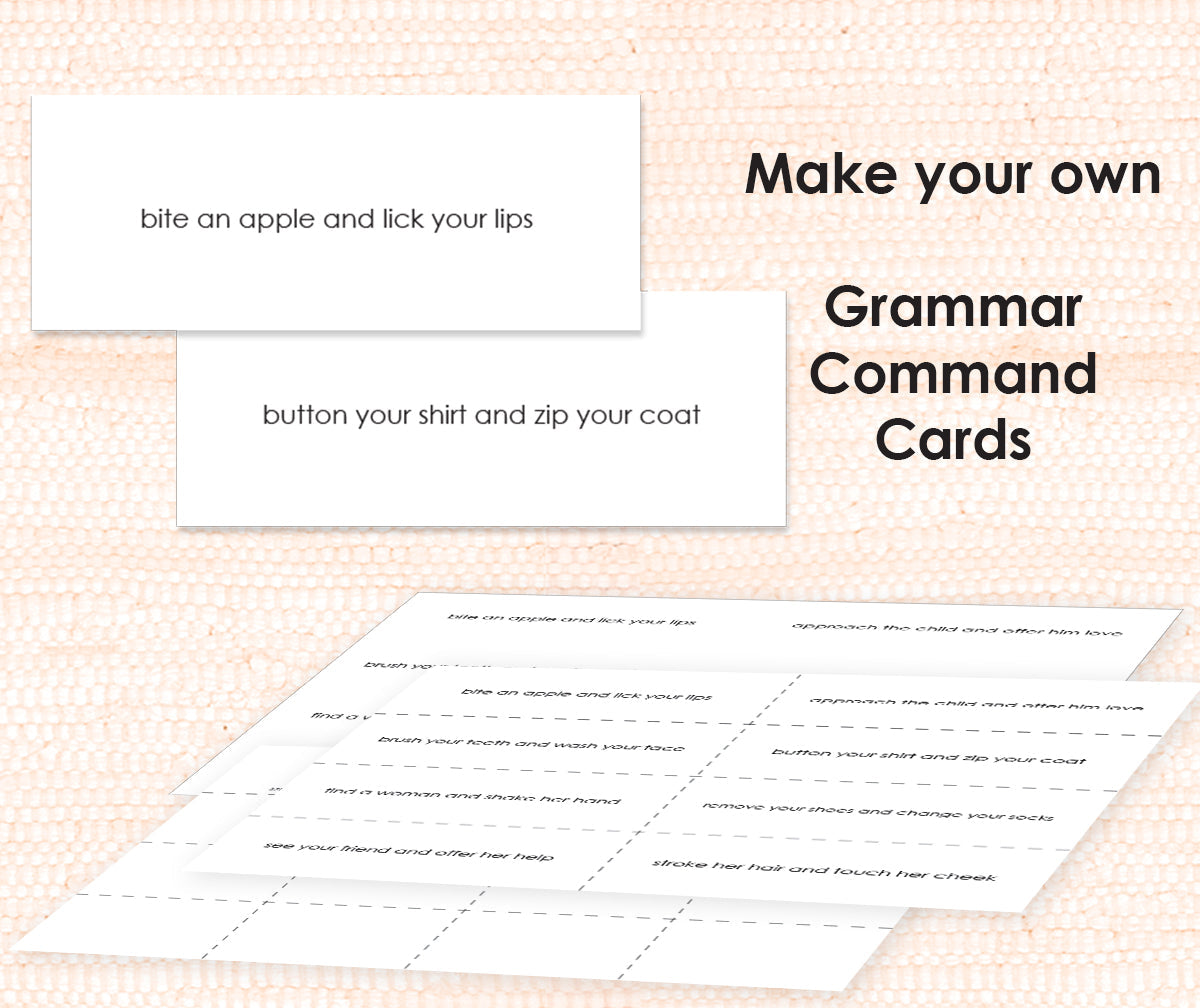
Montessori grammar, often called Function of Words, teaches students what each kind of word does in a sentence. Our grammar cards introduce one part of speech at a time through short reading games. Students read a word, phrase, or command, then put it in order, transpose it, act it out, or find what it describes. The job of each word becomes something they can see and do.
The work also gives beginning readers a reason to read more and more words, both phonetic and non-phonetic. Along the way, they discover that changing the order of words changes the meaning.
What's in this collection
Sixteen grammar steps, sold individually or together:
- Grammar Kit: all 16 steps in one set
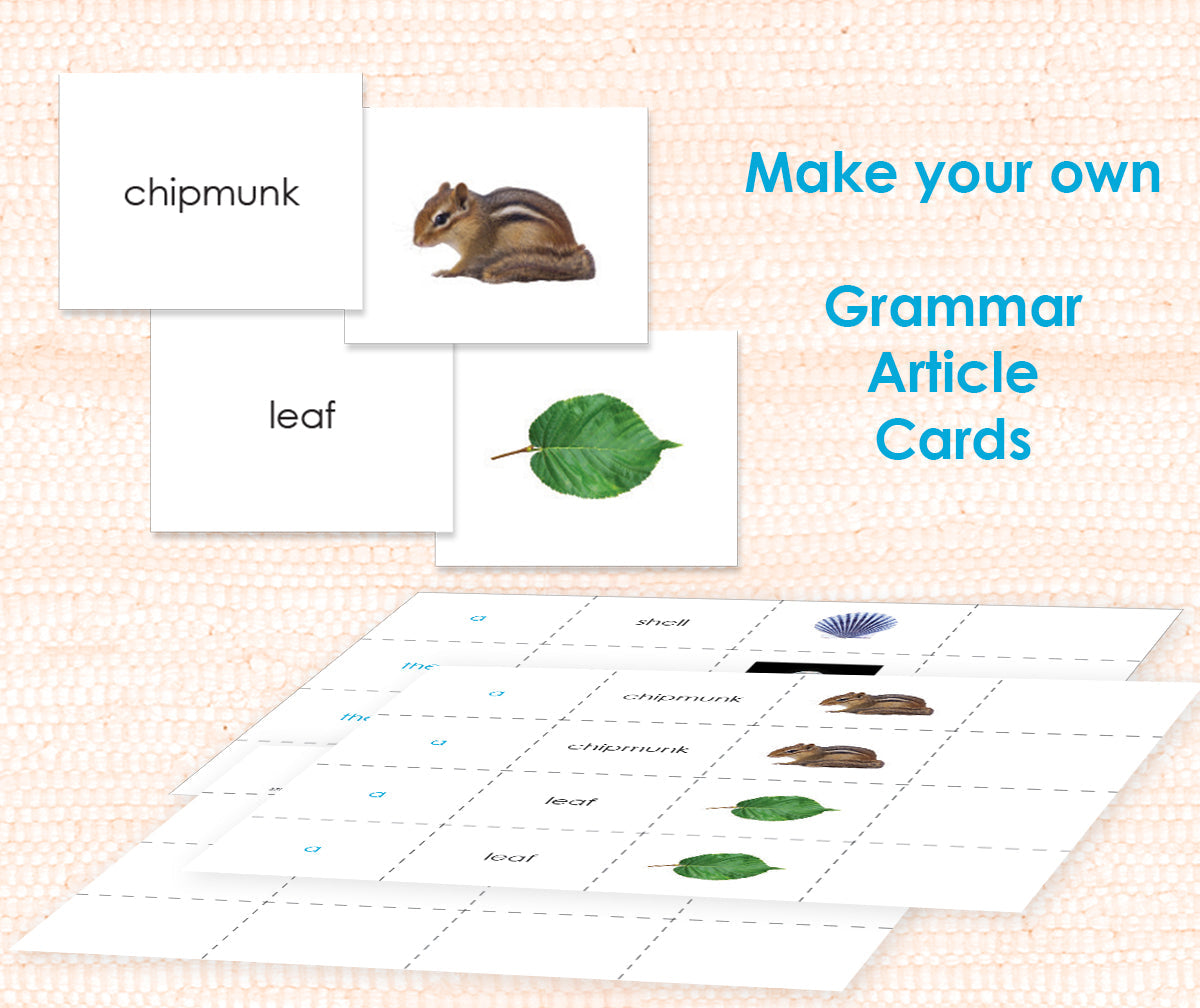
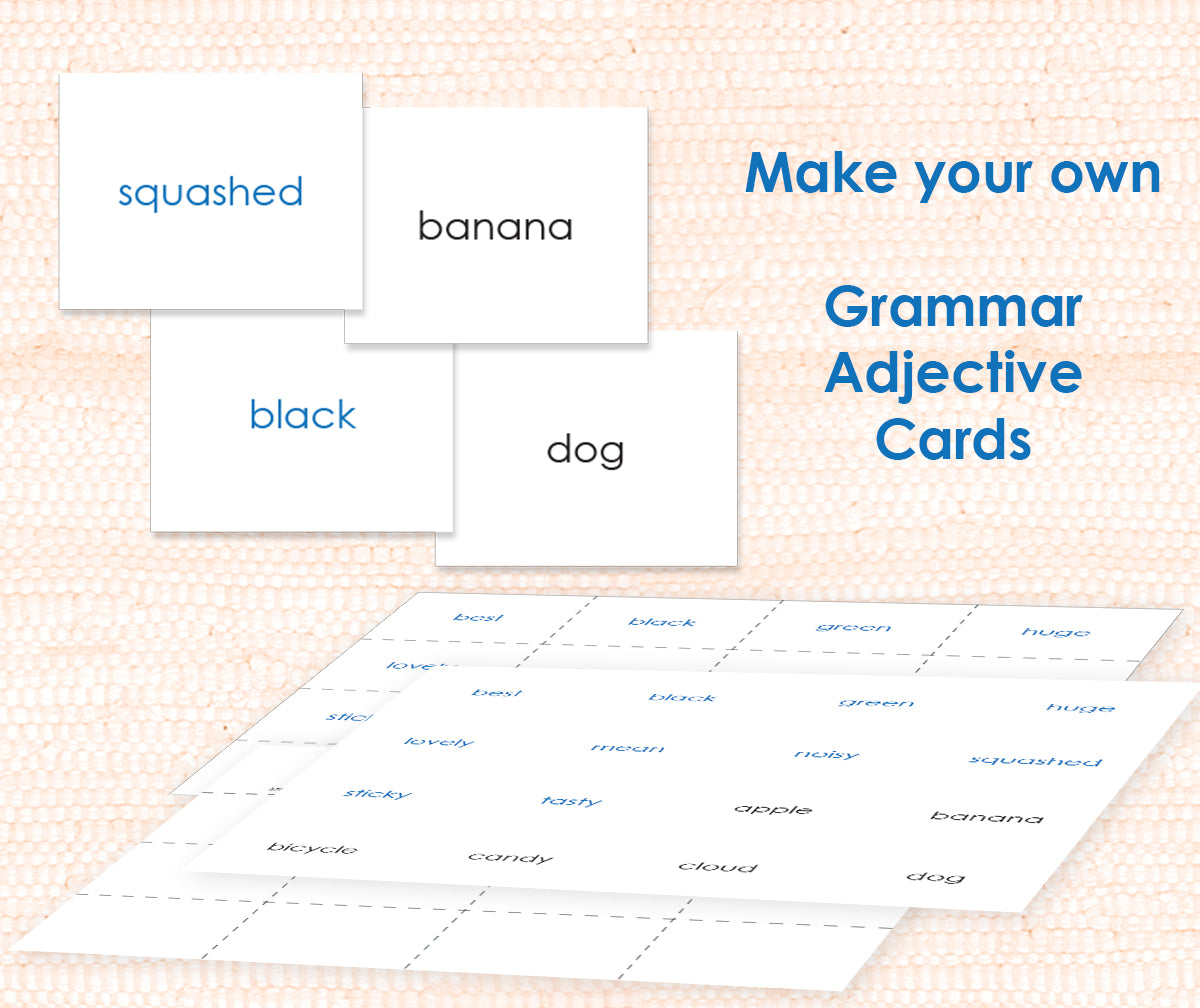
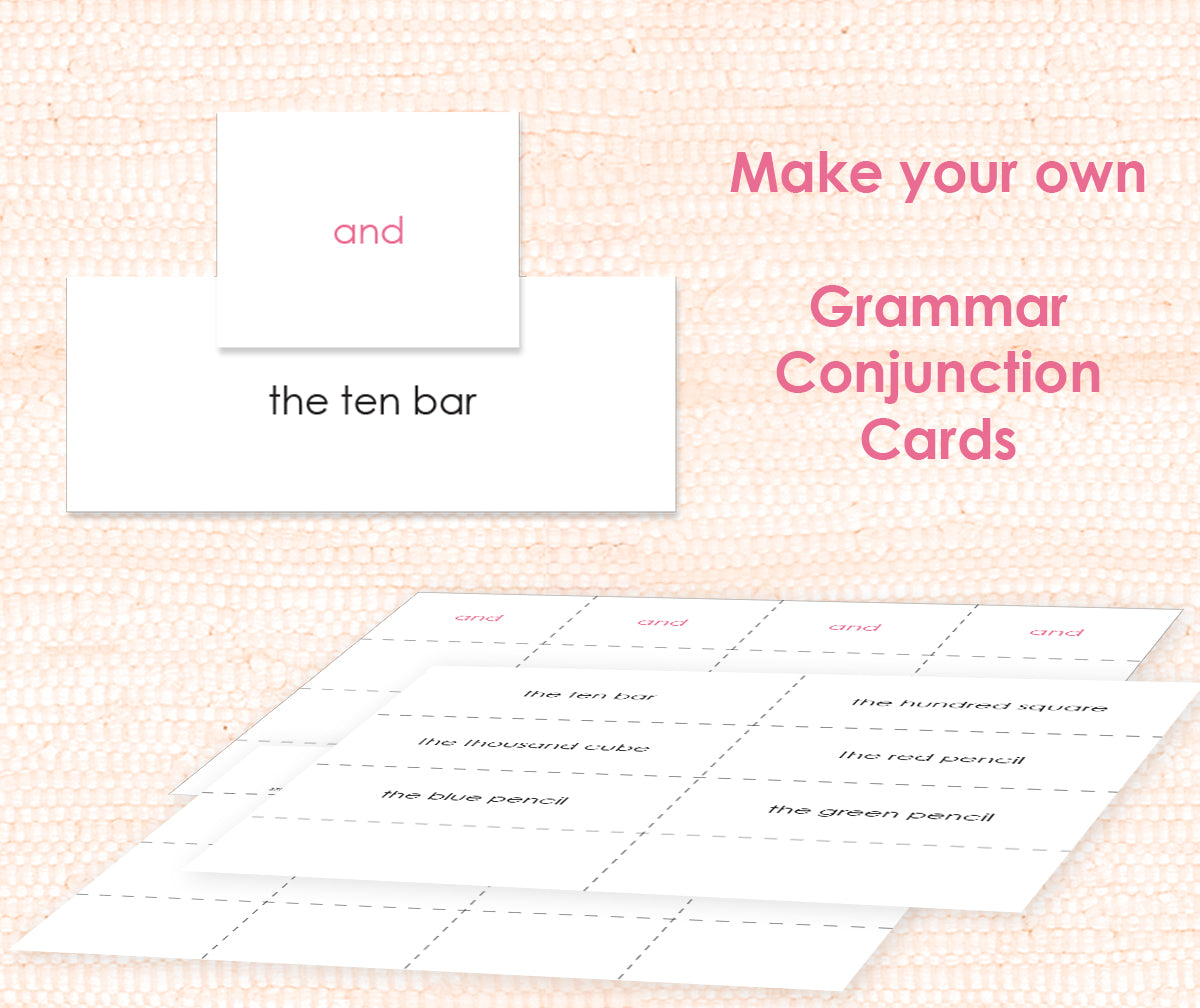
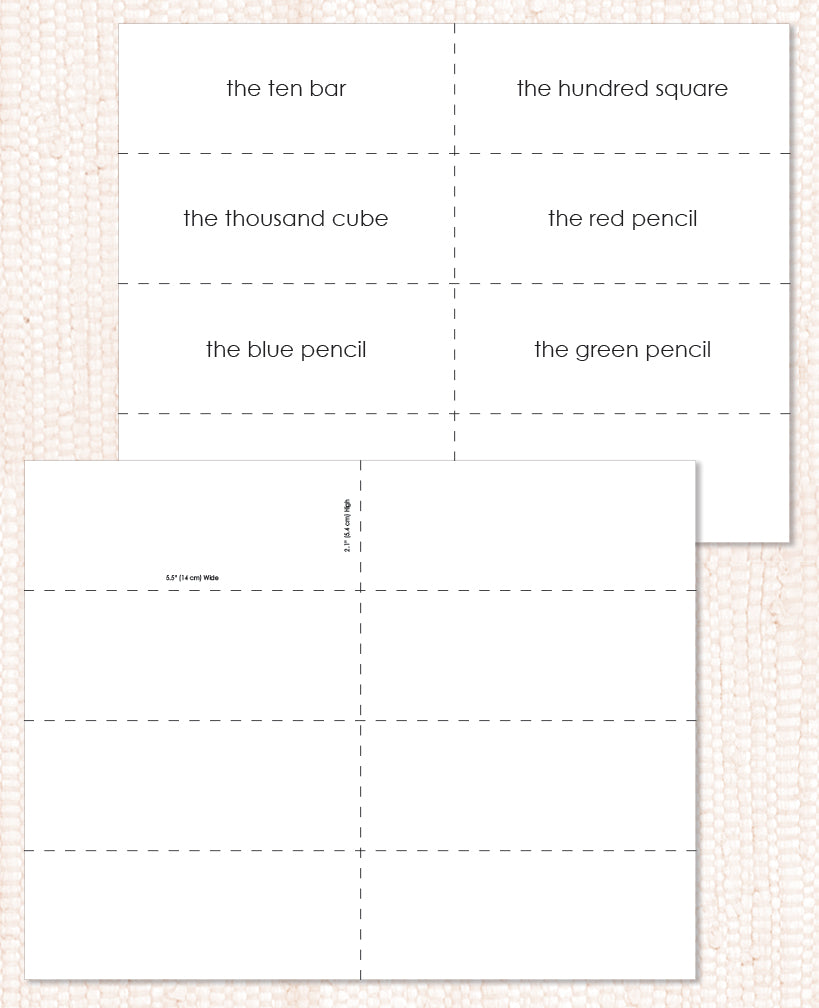
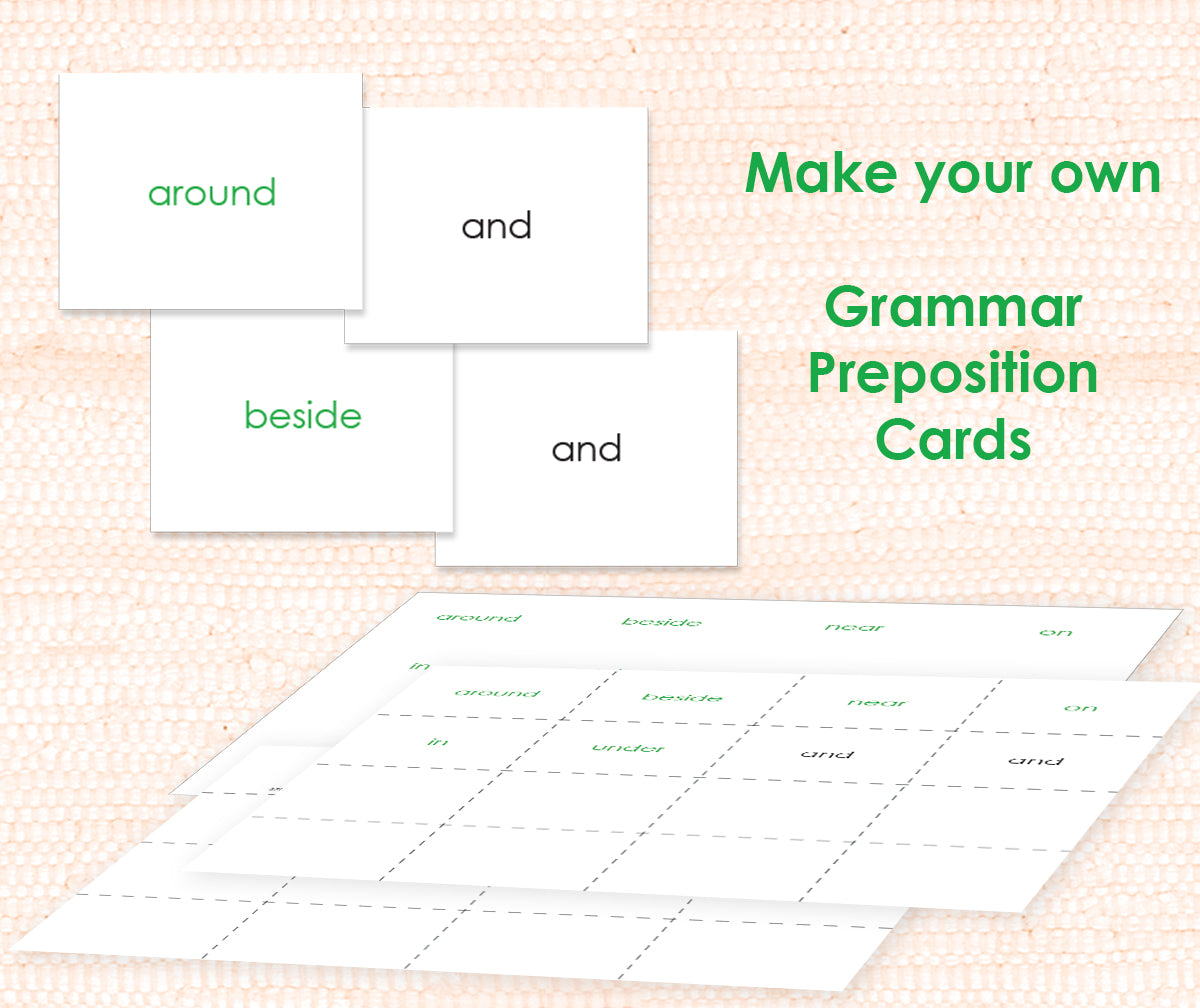
- Steps 1–5: the article, the adjective (two activities), the conjunction, and the preposition
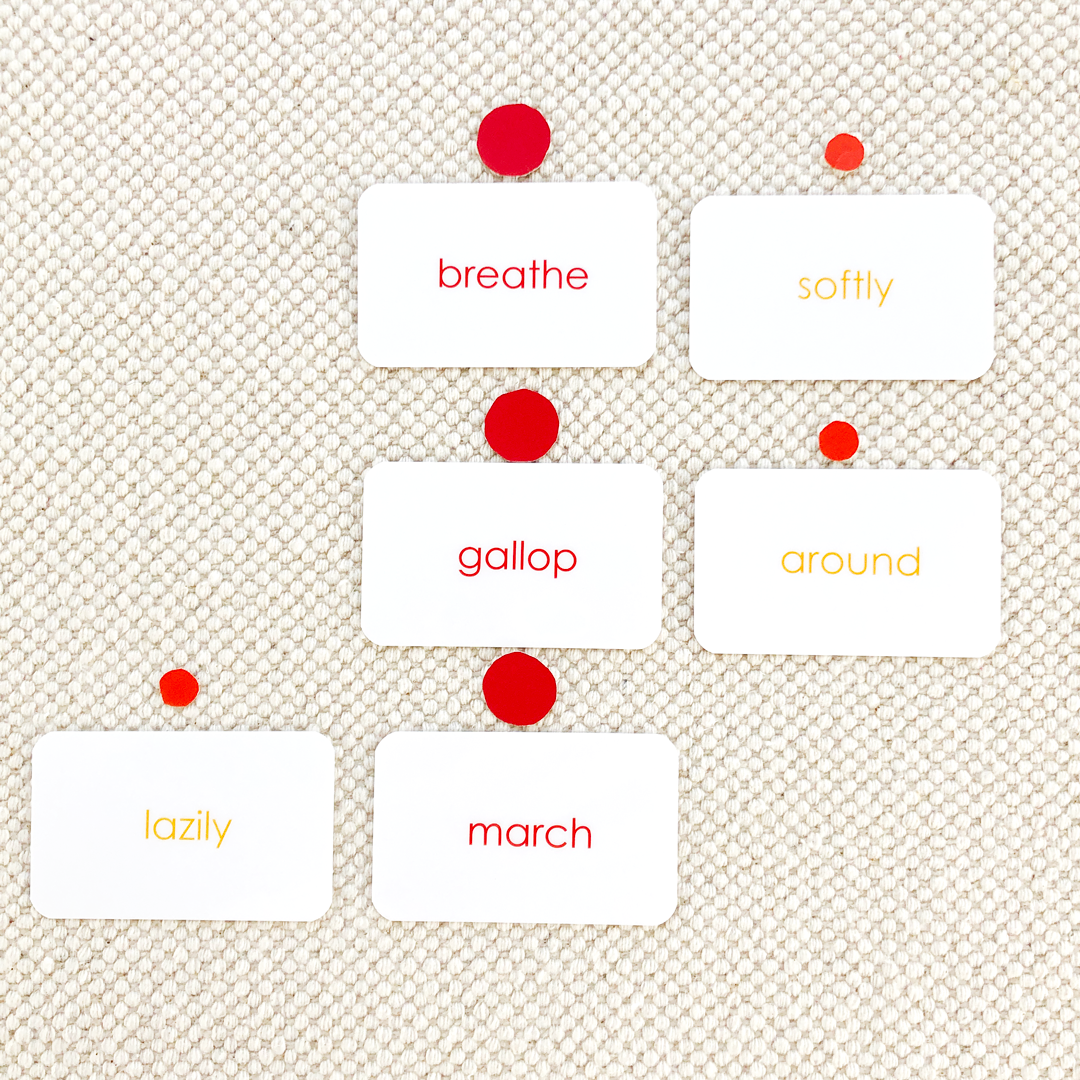
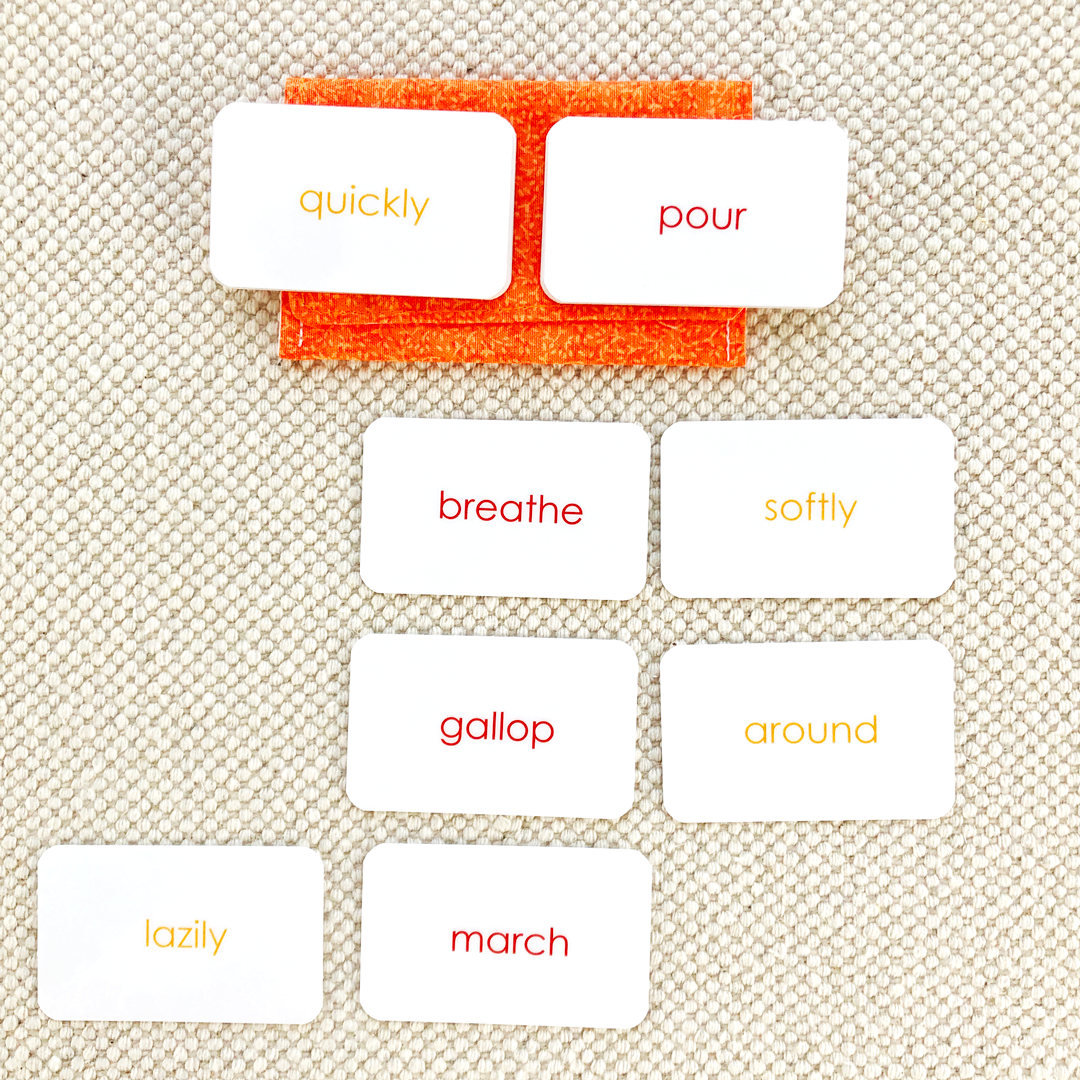
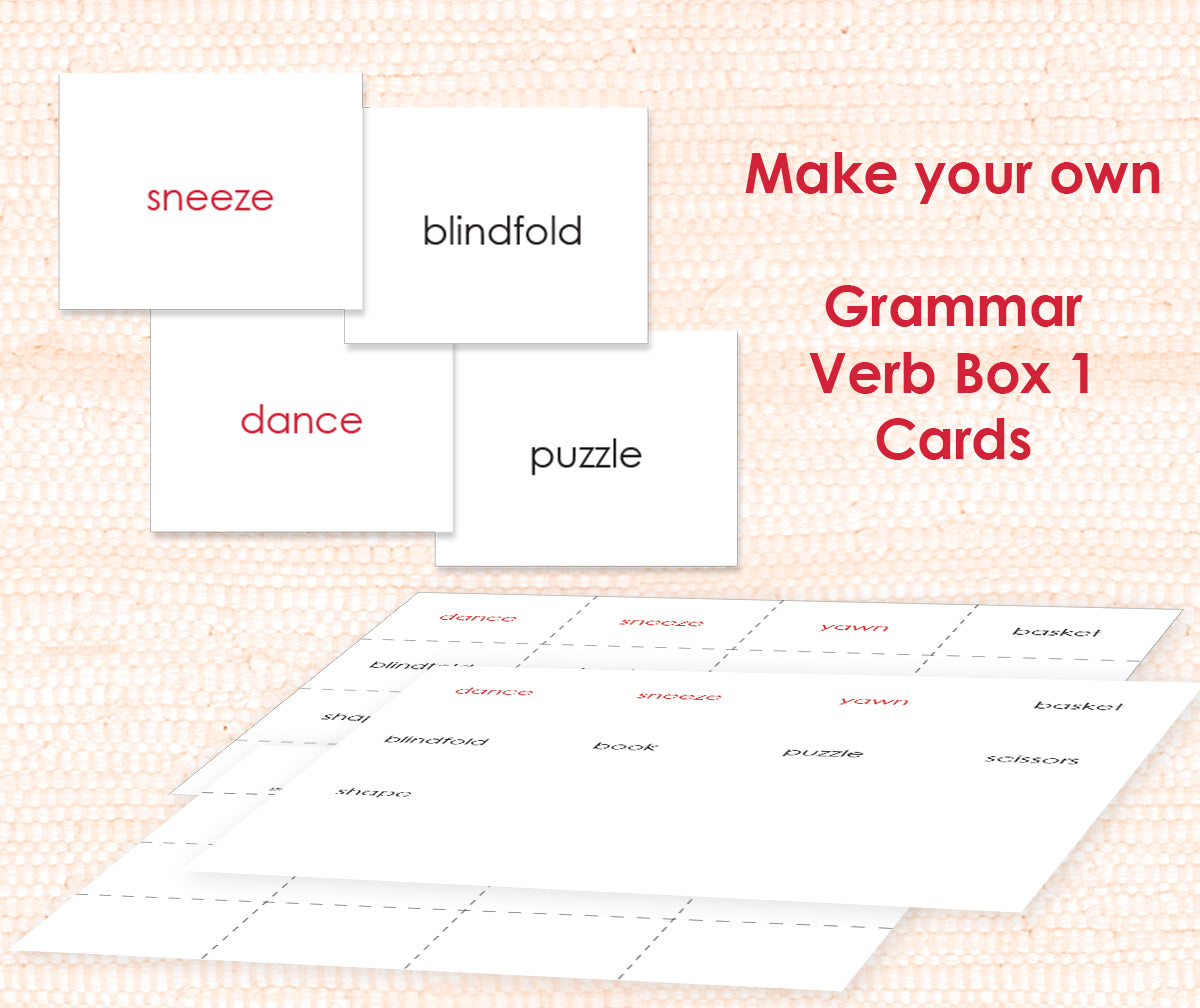
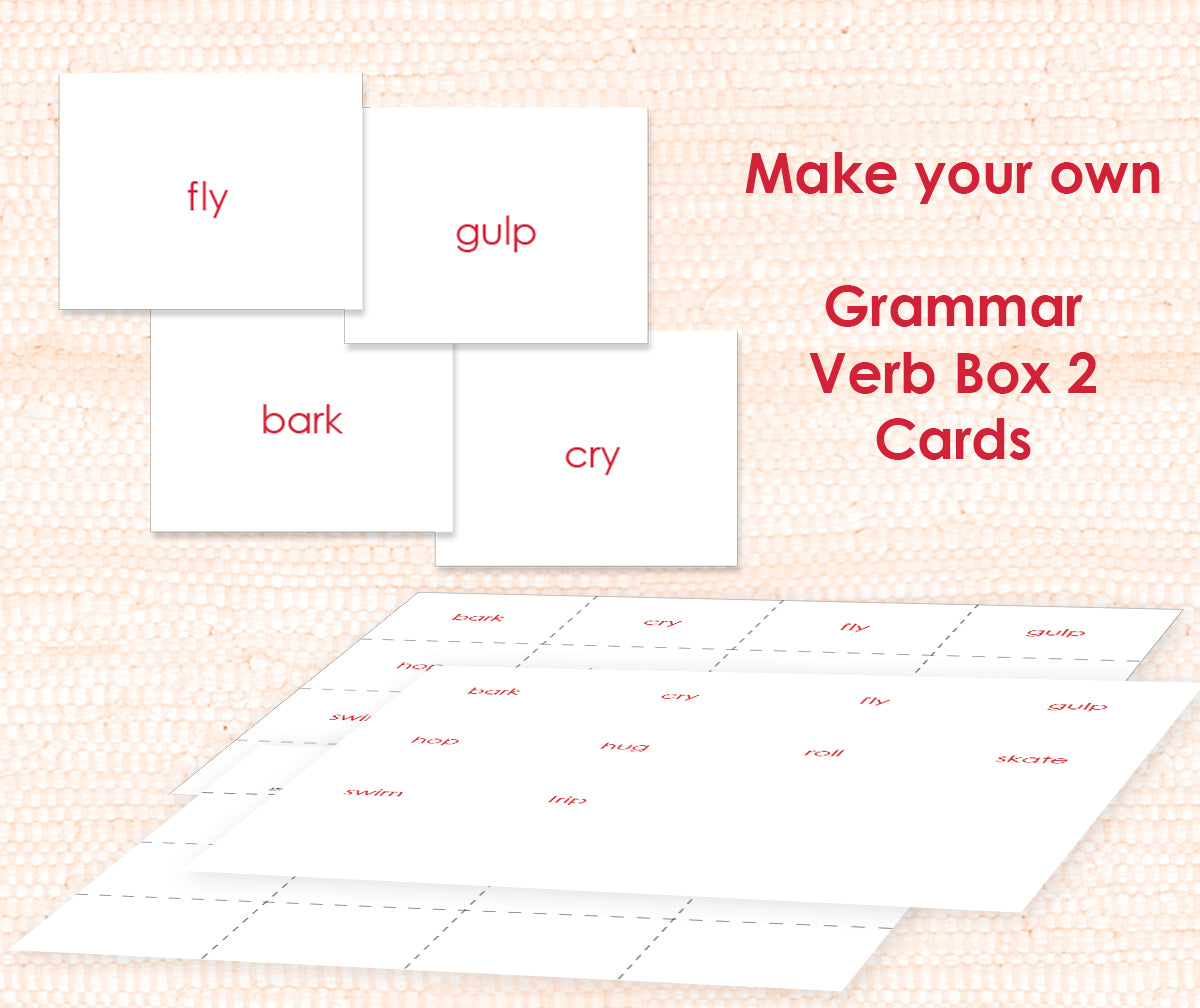
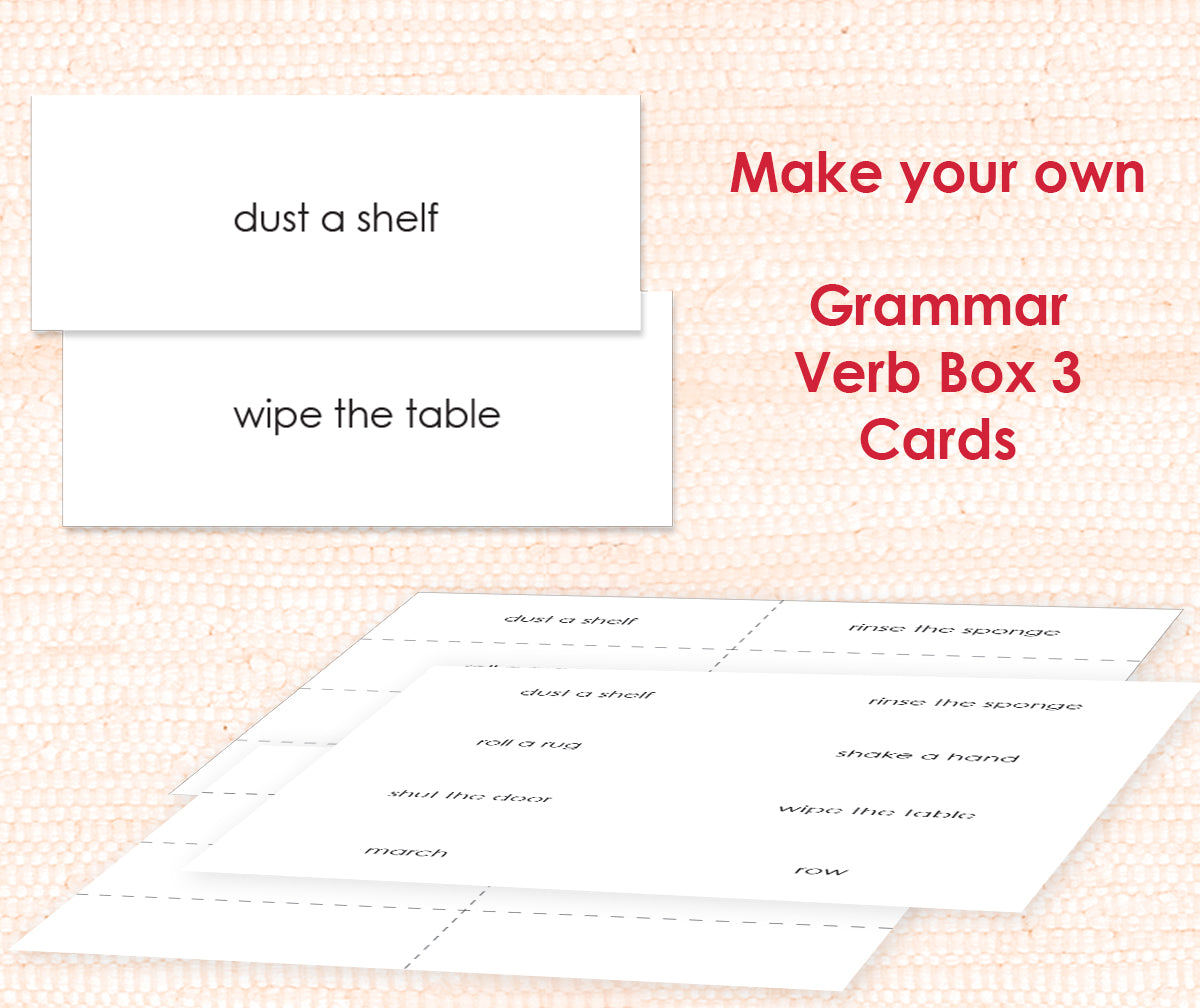
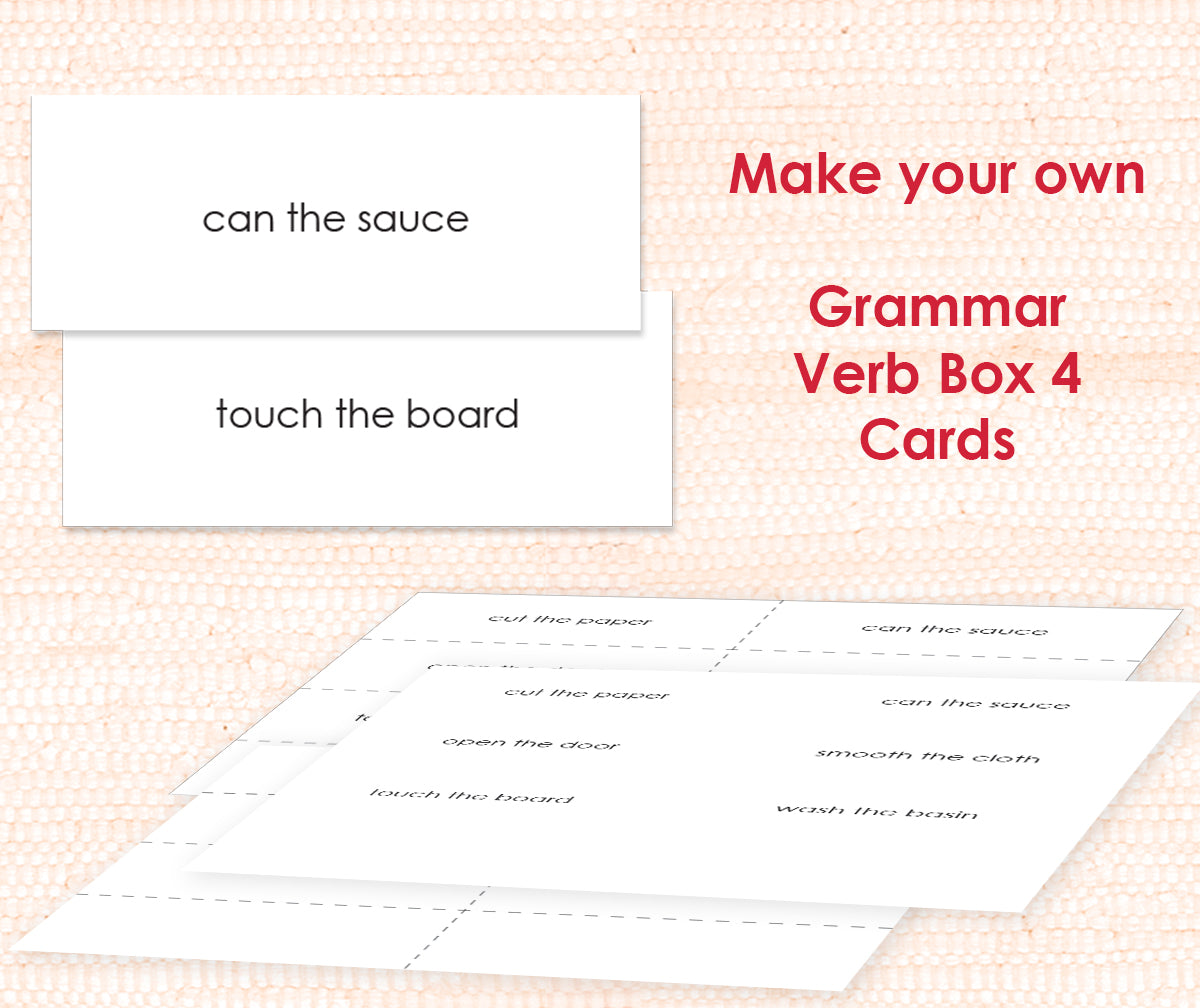
- Steps 6–12: the verb and adverb, including verb charades, transitive and intransitive verbs, syntax, and mental activity verbs
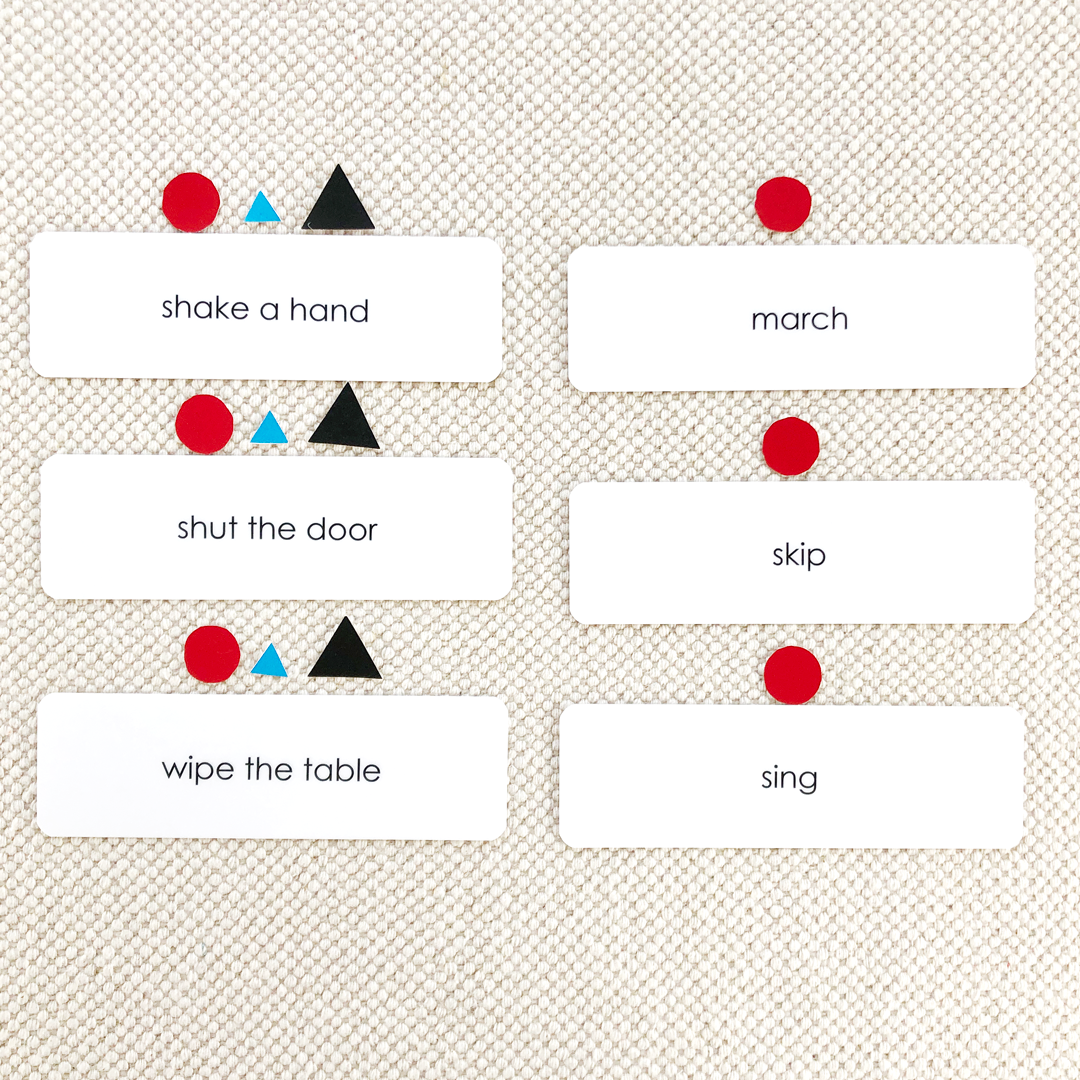
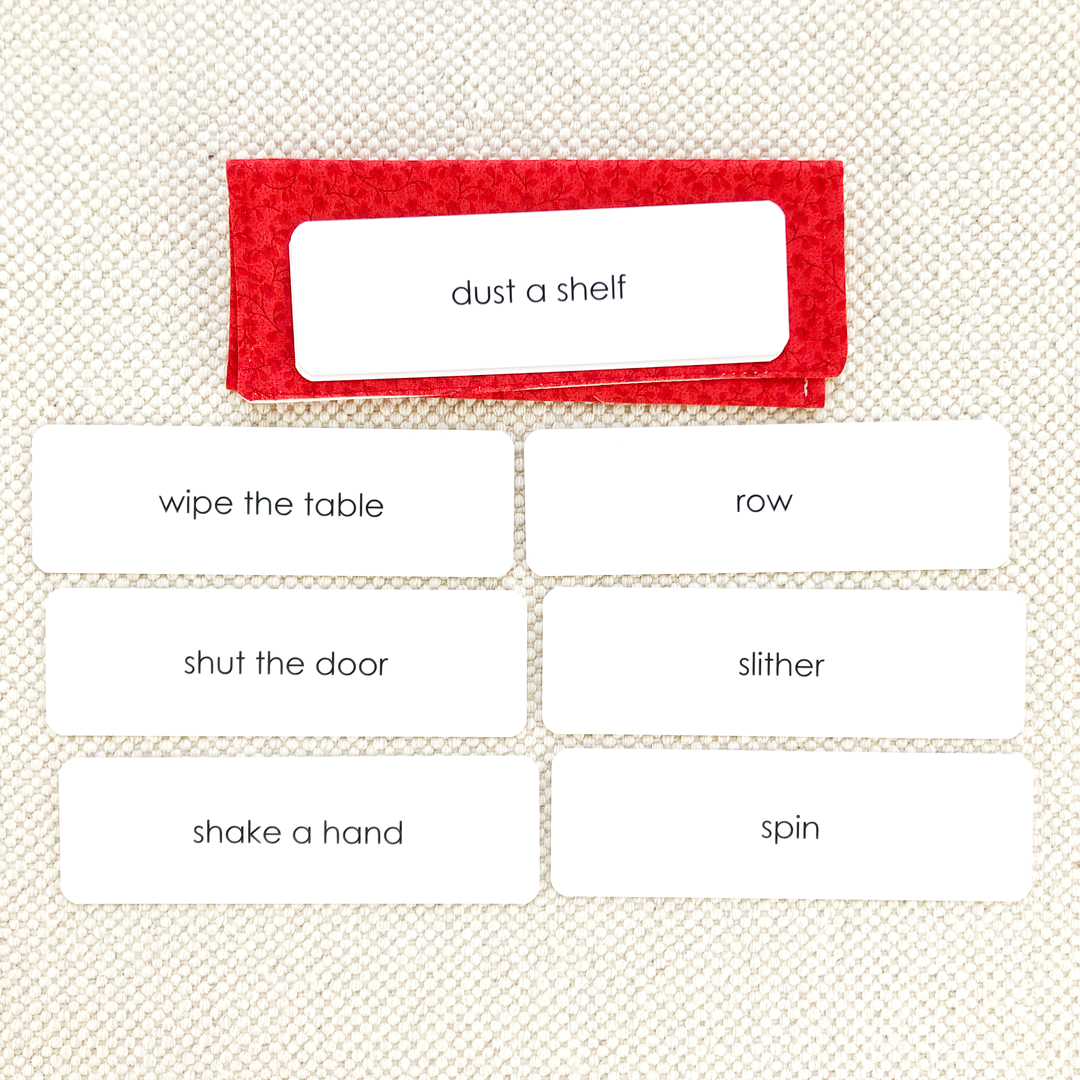
- Steps 13–16: commands, four activities
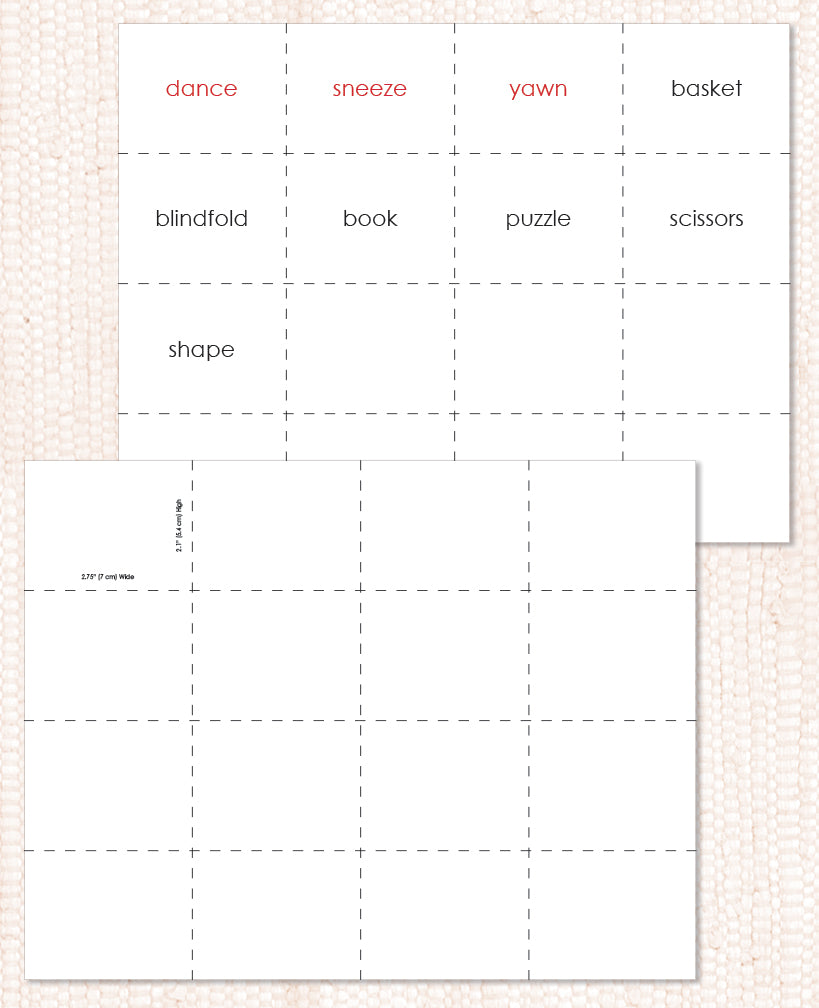
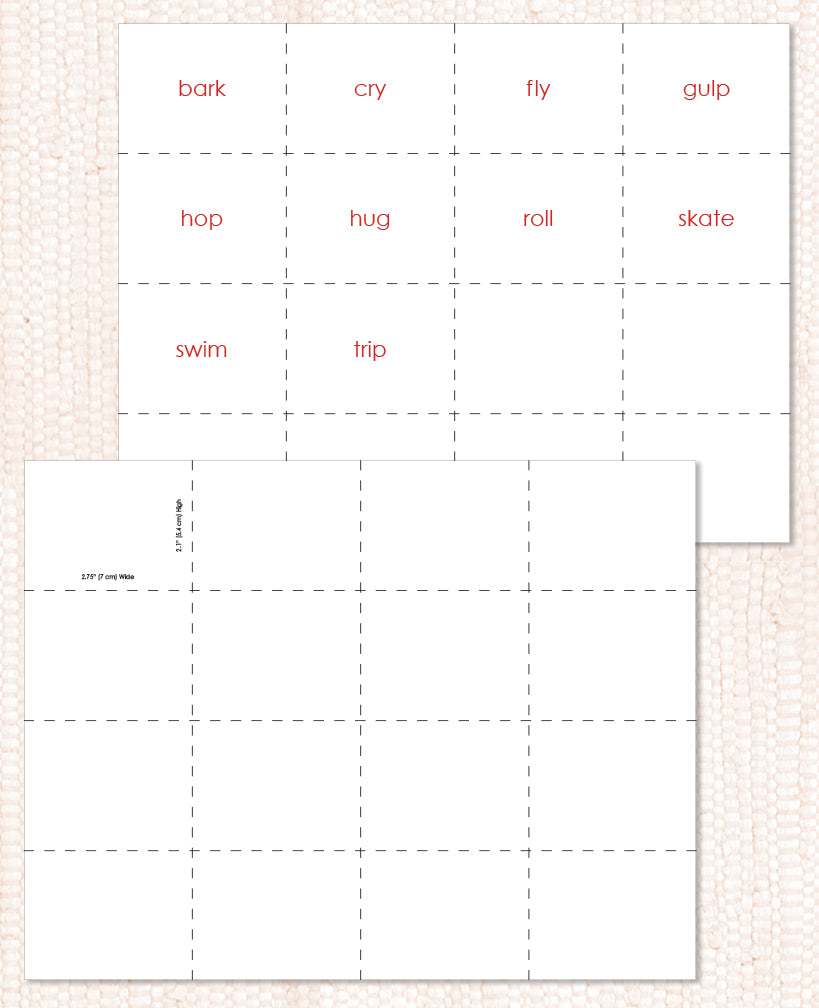
- Digital versions of every step, for printing at school or home
Why grammar matters for reading
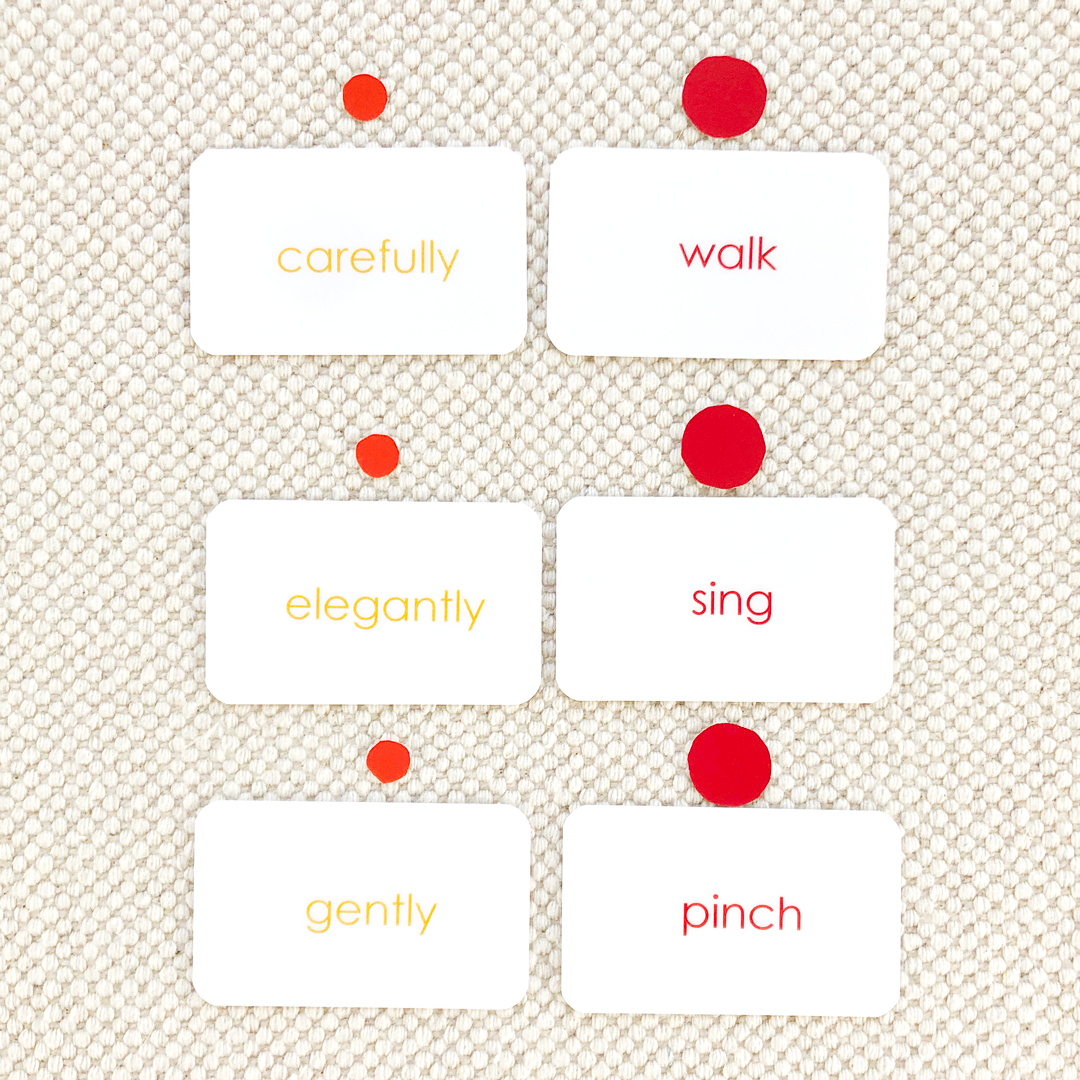
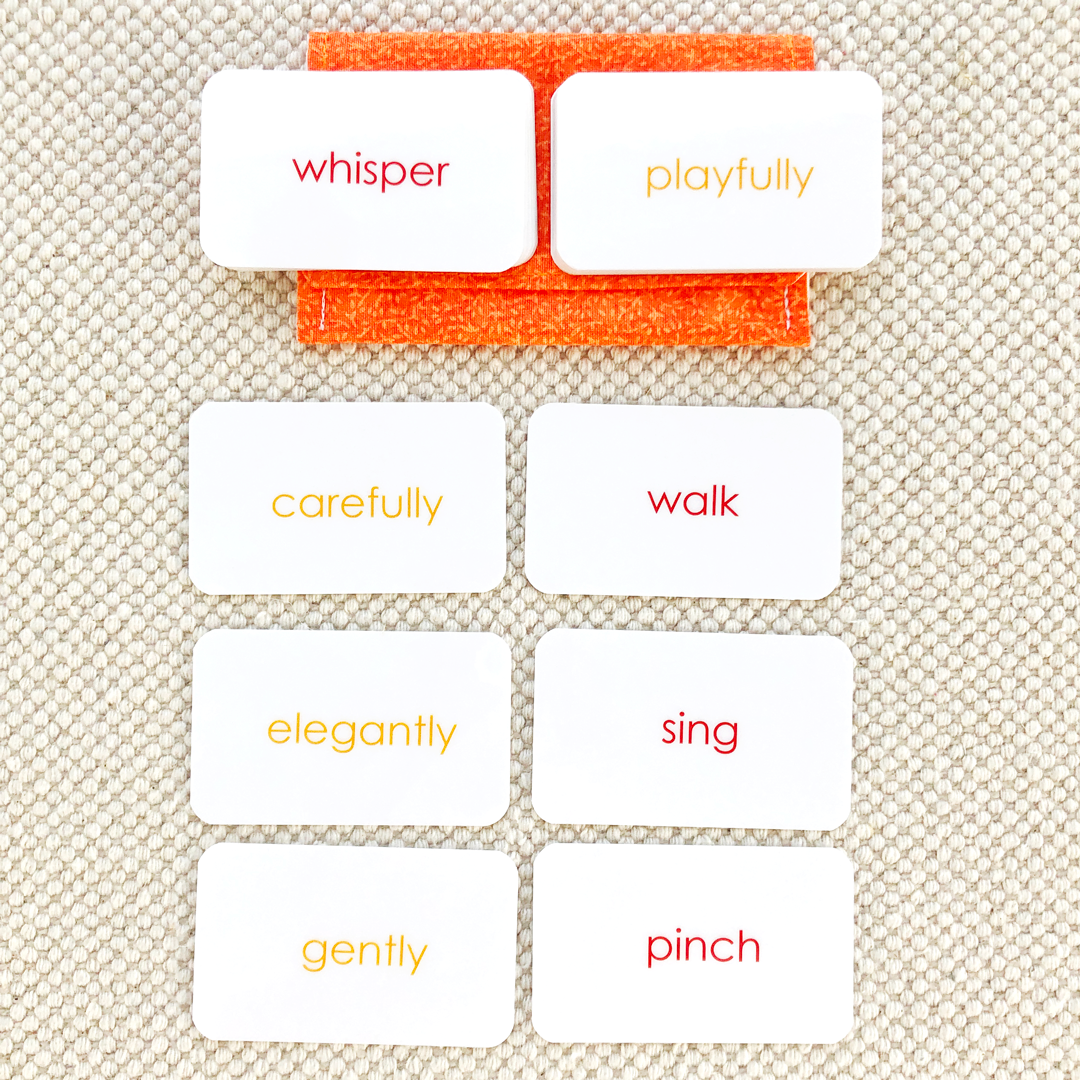
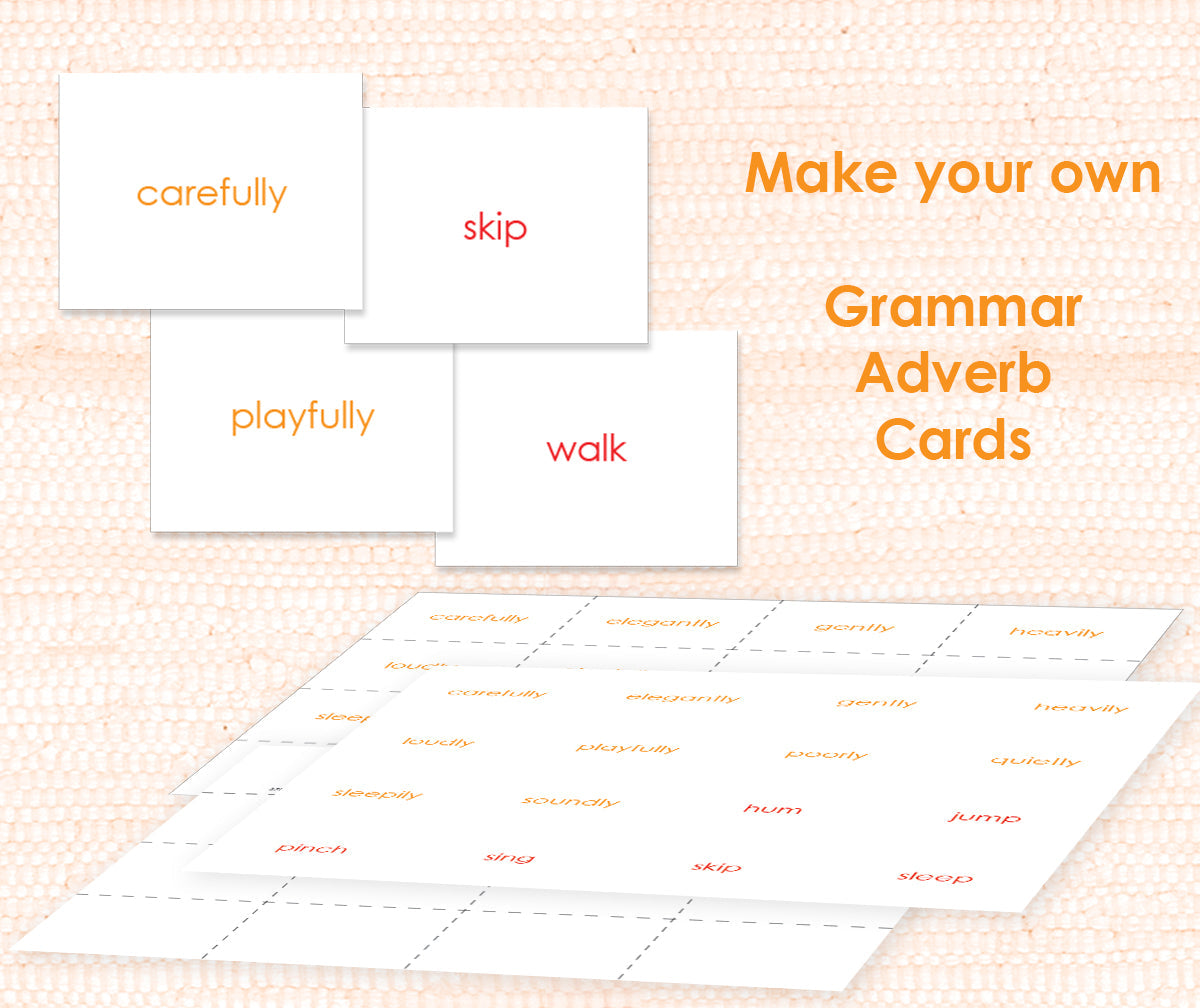
Reading comprehension depends on more than decoding words. Scarborough's (2001) reading rope names language structures, meaning how words work together in sentences, as one of the strands of language comprehension. When students act out "carefully walk" and then "elegantly walk," they feel how one word changes the meaning of a phrase. That understanding carries into every sentence they read.
These games are also good reading practice. Students want to find out what the next card says, so they read it. Each step adds new words, so fluency grows with every activity.
Reference
Scarborough, H. S. (2001). Connecting early language and literacy to later reading (dis)abilities: Evidence, theory, and practice. In S. B. Neuman & D. K. Dickinson (Eds.), Handbook of early literacy research (pp. 97–110). Guilford Press.
How do you use Montessori grammar cards?
Follow the steps in order. Each one builds on the words and ideas from the step before. Because each word functions uniquely, each activity has a unique presentation. Our free guided lesson plan walks through every step.
We recommend this order:
- The Article
- The Adjective: Activities 1 & 2
- The Conjunction
- The Preposition
- The Verb: Activities 1 & 2
- The Adverb: Activities 1 & 2
- The Verb: Transitive & Intransitive
- The Verb: Syntax
- The Verb: Mental Activity
- Commands: Activities 1–4
Watch the adjective game
See the Function of Words adjective cards in action.

What comes next
Once students understand how words work in a sentence, they're ready to look inside the words themselves with Word Study, then move into Reading Comprehension.
Learn how Montessori and the Science of Reading align.
What ages are Montessori grammar cards for?
Typically kindergarten (ages 5–6) through grade 3, beginning once a student can read phonetic words and phonograms on their own. Older students, English learners, and students in intervention also benefit, since each step is a short, active reading game.
What should students know before starting grammar?
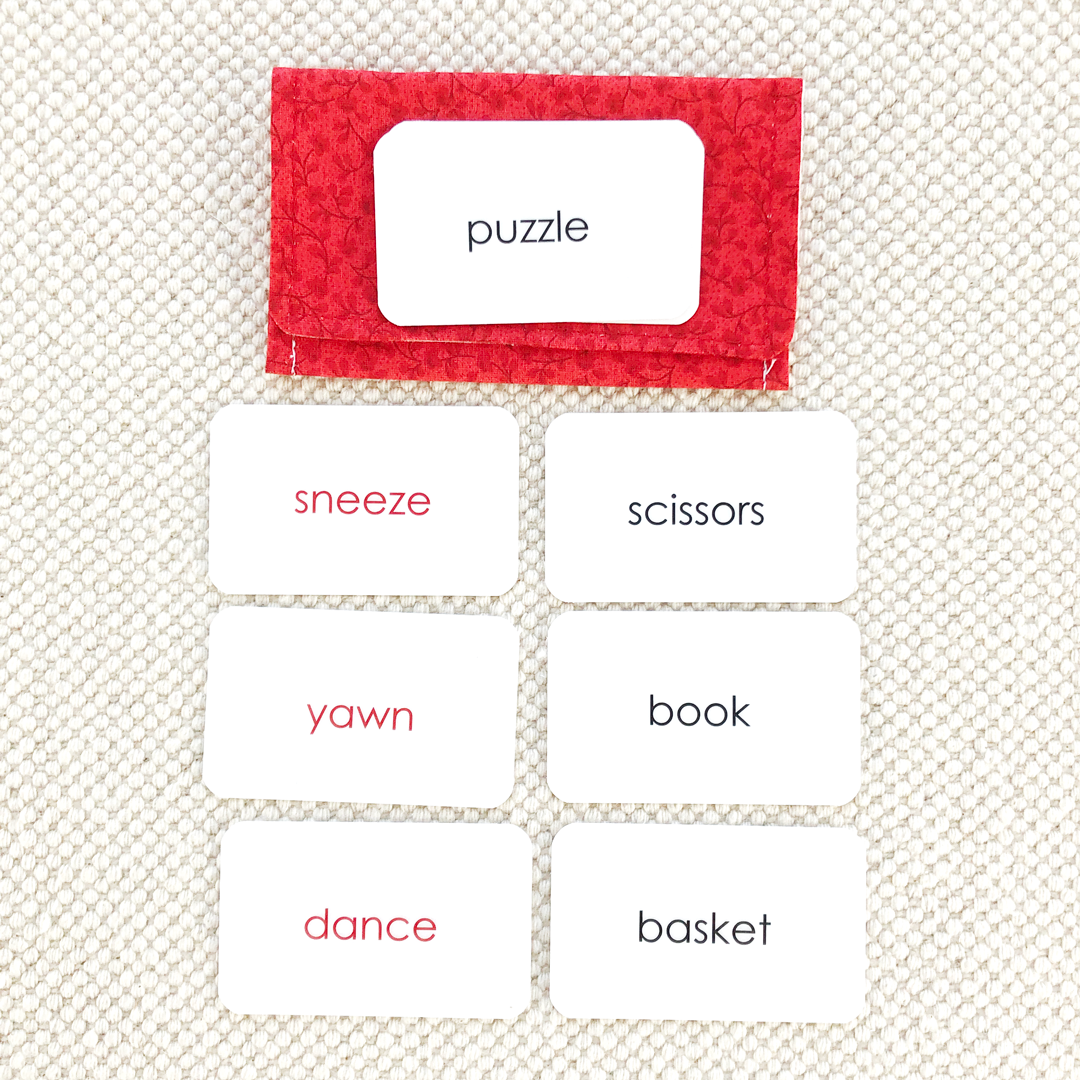
Students should be reading words with phonograms with confidence and starting on puzzle words. The grammar steps then help them read more and more non-phonetic words.
Where can I get Montessori grammar symbols?
Each part of speech has its own Montessori grammar symbol. You can download our grammar symbols for free and make your own.
Should I choose printed or digital grammar cards?
Our printed sets arrive ready to use. The digital versions are a low-cost option if you'd like to print and prepare the cards yourself. The Grammar Kit is the simplest way to get all 16 steps at once.
Download a PDF of our materials

Follow Us