Fine Art 4-Part Cards
 Rooted in Neurodevelopment
-

See the Guided Lesson Plan
 High quality materials
 Eco-Happy
 Fun & Engaging Activities
Ages/Stages
Common Core
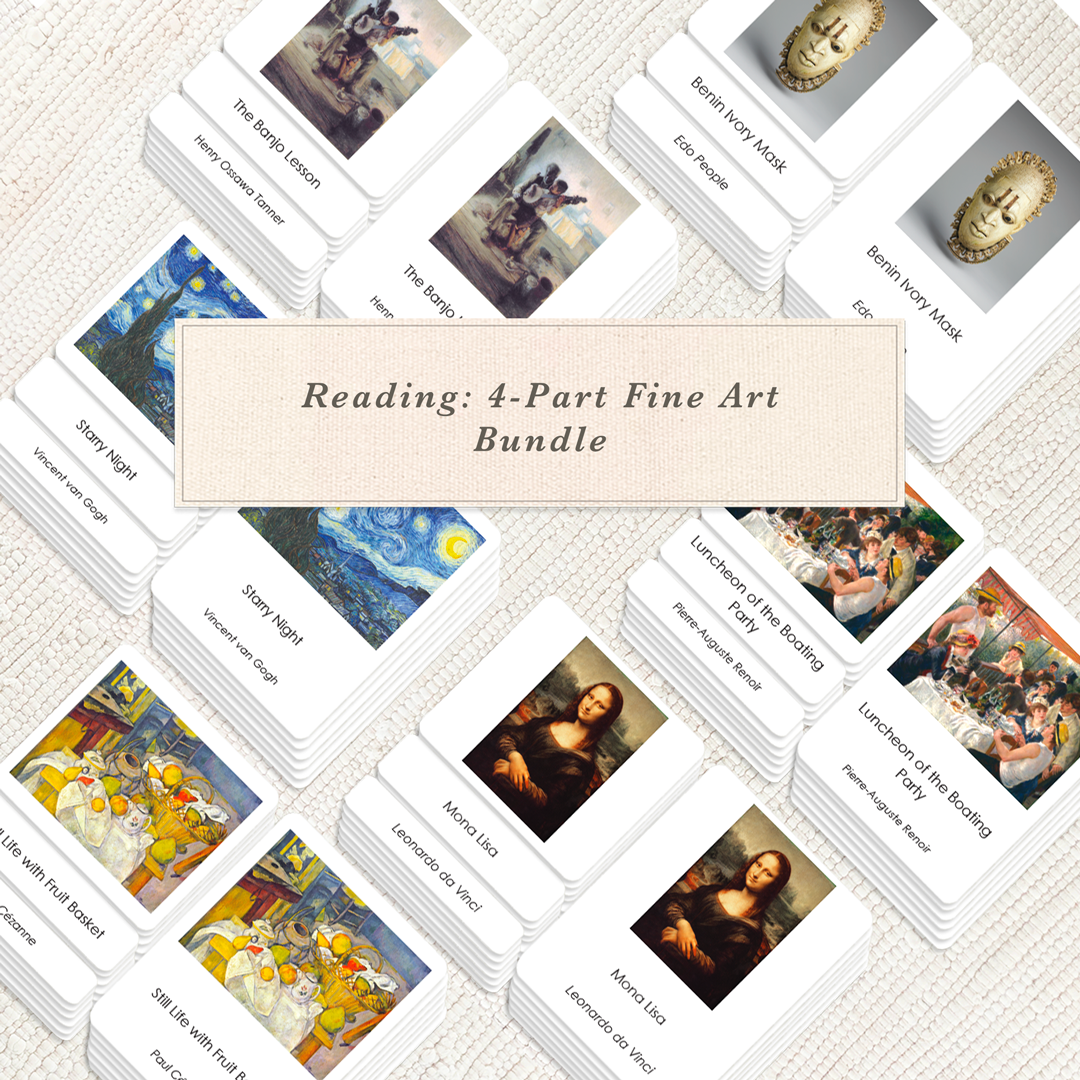
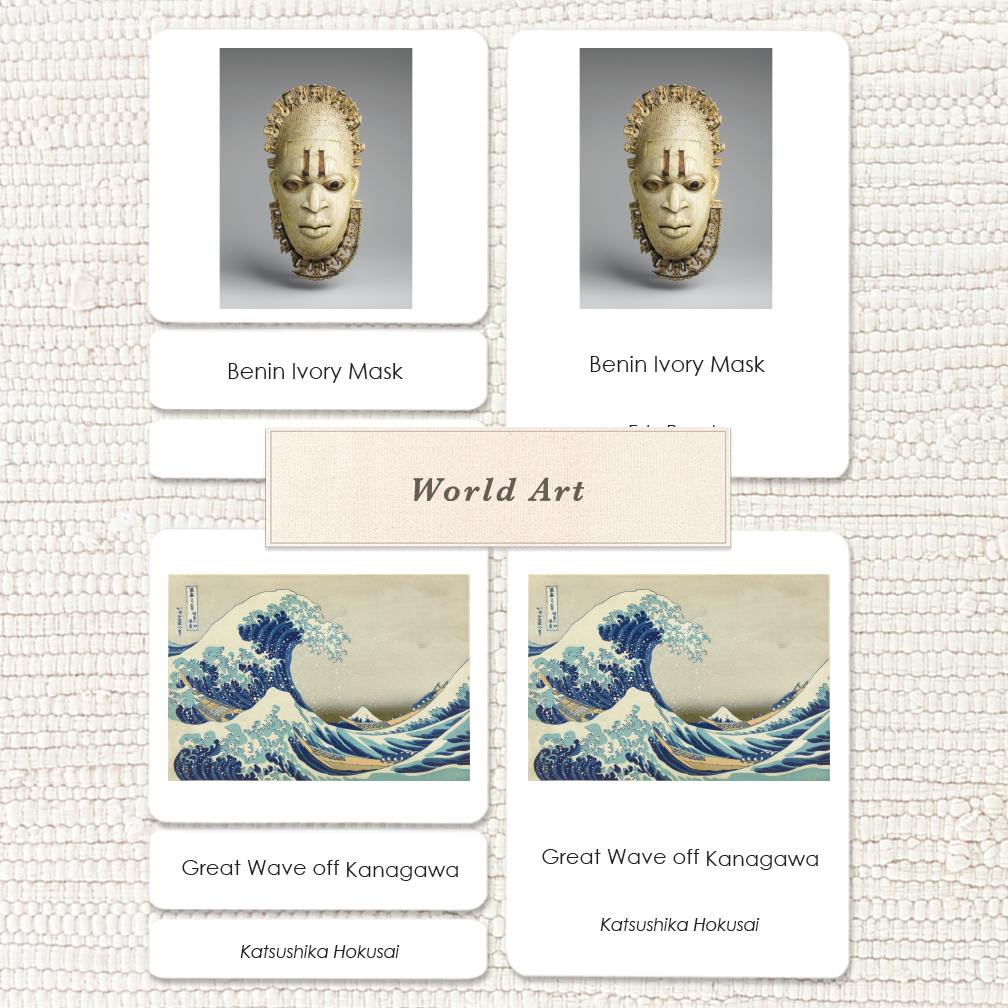
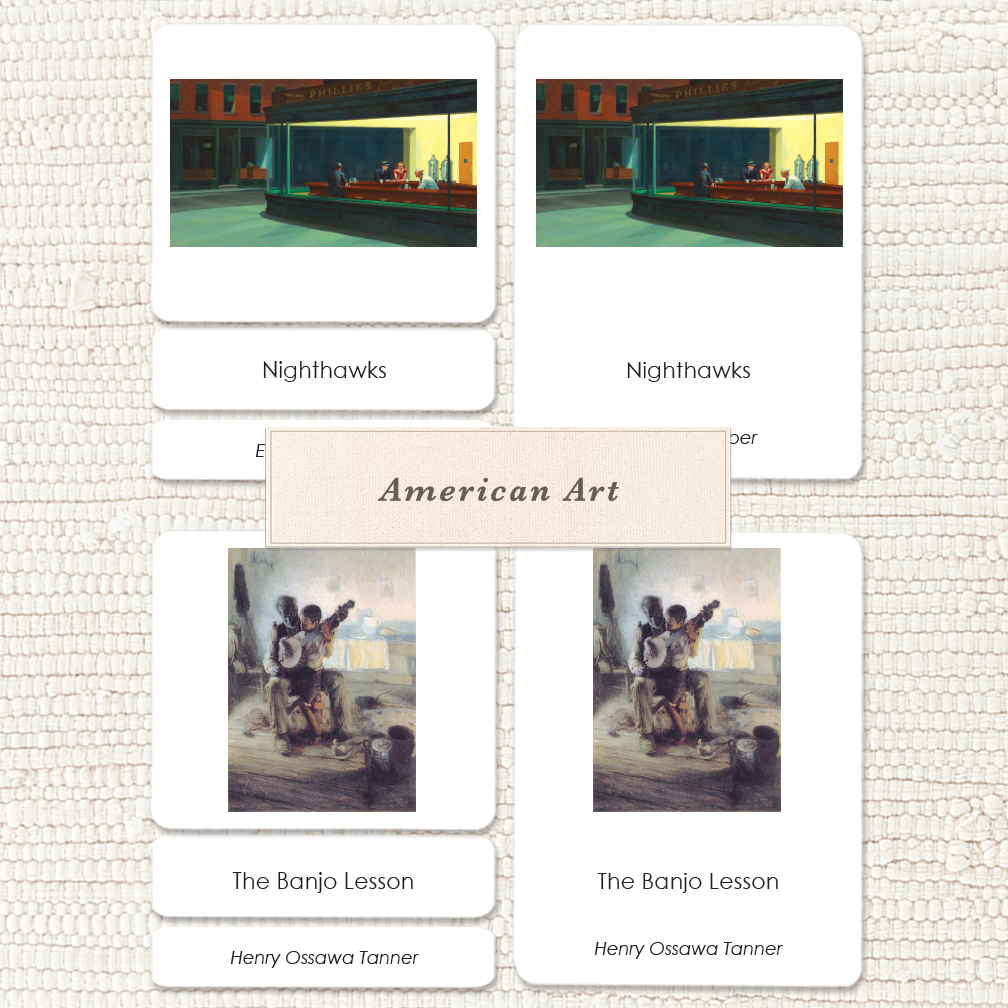
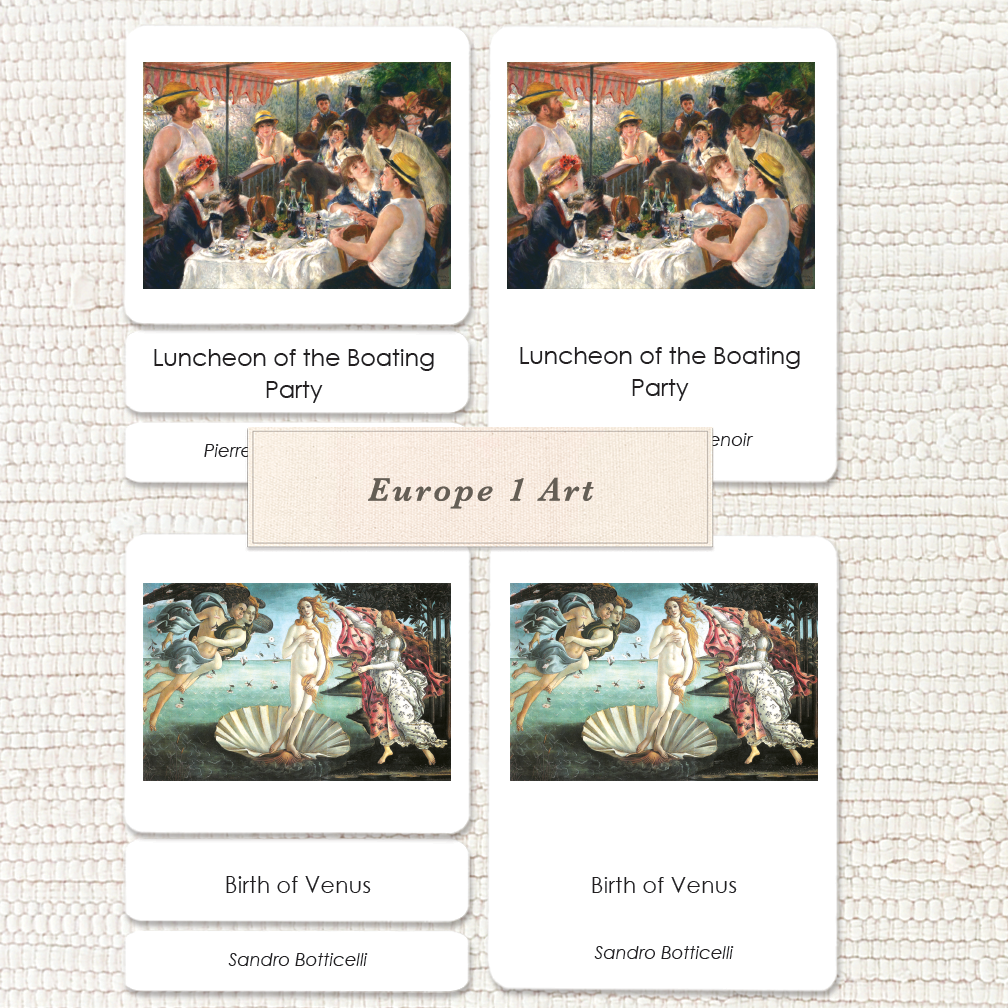
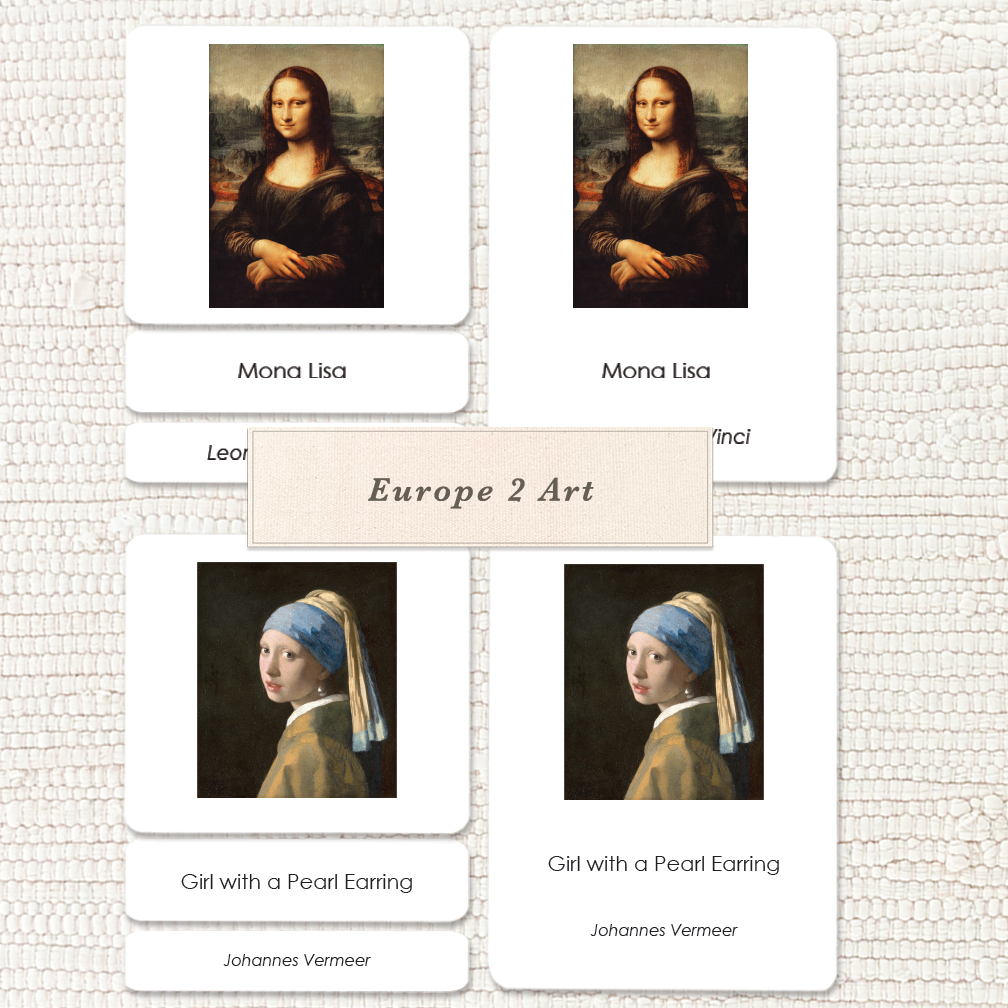
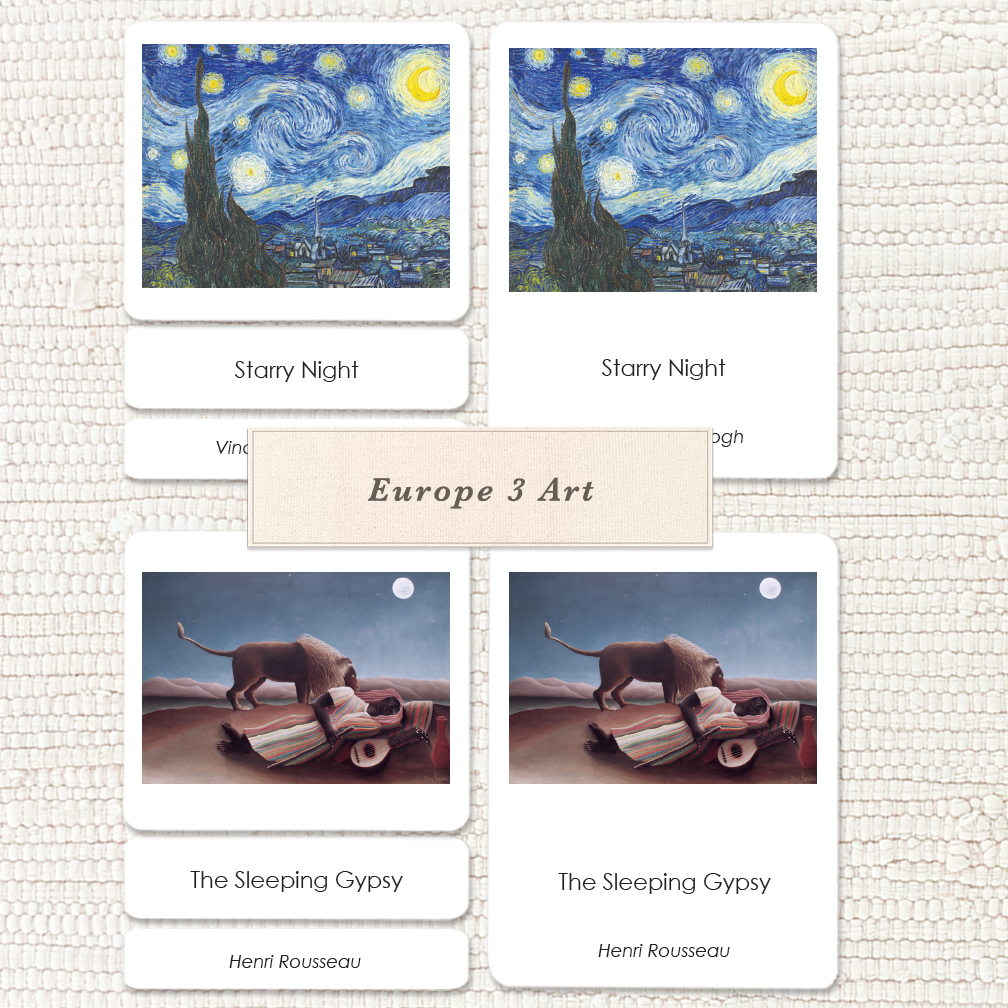
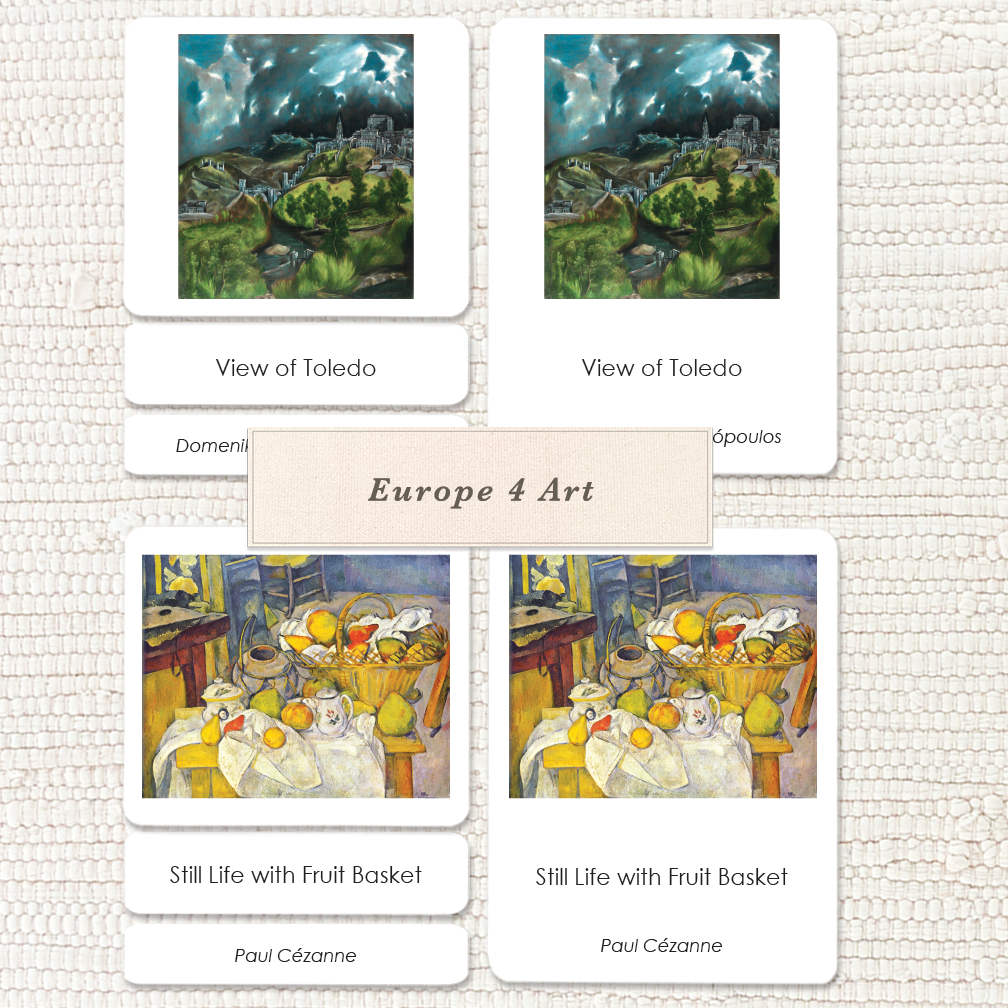
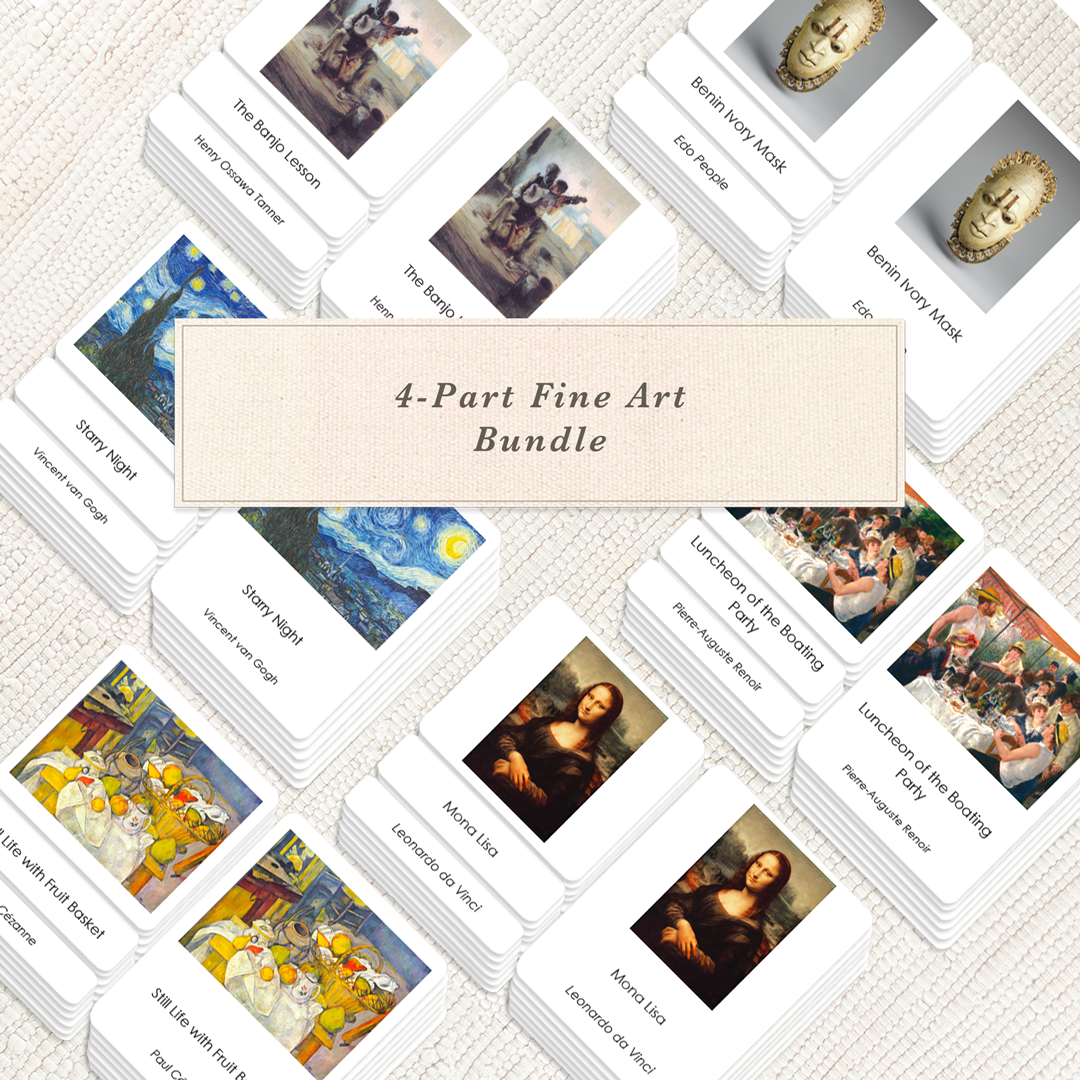
Fine Art 4-Part Cards challenge students to match famous works of art with their titles and artists. Each set pairs a card showing the artwork with separate cards for its title and its artist, plus a control card that shows all three together so students can check their own work.
These cards build on our Fine Art 3-Part and Artists 3-Part Cards. Now students connect three pieces of information instead of two, often using clues in a title to decide which painting it belongs to. And they're not just for children. Art lovers of any age enjoy the challenge.
What's included
- 6 famous works of art (24 cards) in each series
- 4-part format: artwork cards, title cards, artist cards, and control cards that show all three together
- Cards are approx. 4¼" x 3¾" (artwork), 4¼" x 1" (title), 4¼" x ¾" (artist), and 4¼" x 5¼" (control)
- Eco-laminated with a food-grade laminate and rounded corners
- Sturdy, clear reclosable bag for teacher storage
- Free guided lesson plan
Choose a series
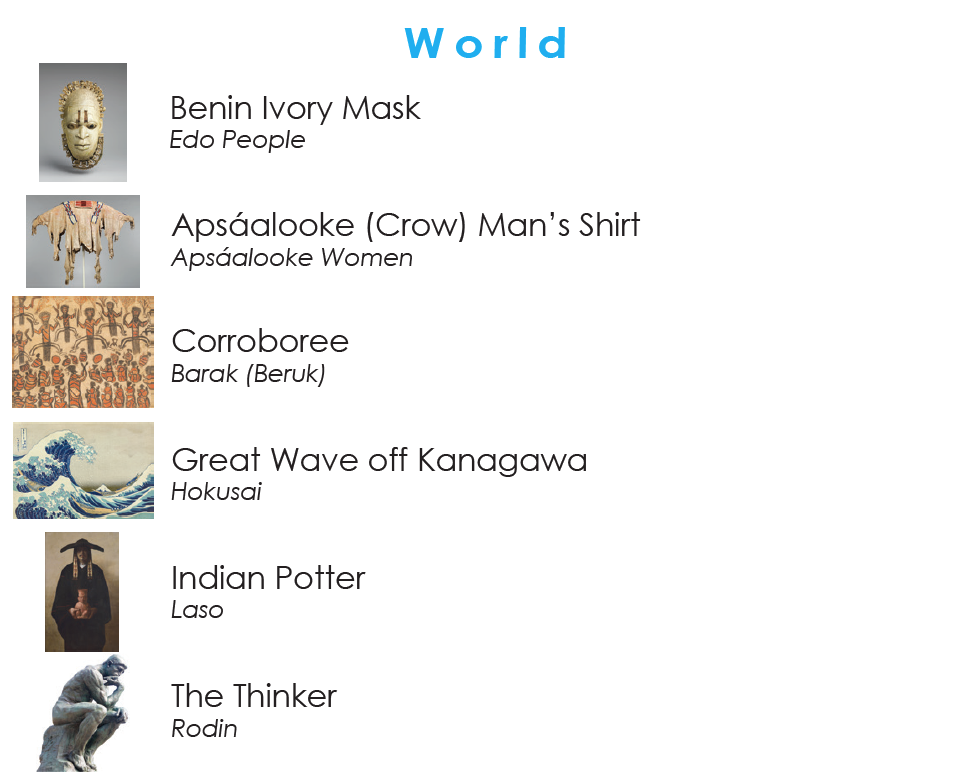
- World: art from each continent with a permanent human population, including textile beadwork (North America), painting and pottery (South America), sculpture (Europe), a carved mask (Africa), painting (Asia), and drawing (Australia). A great first introduction to the many forms art can take.
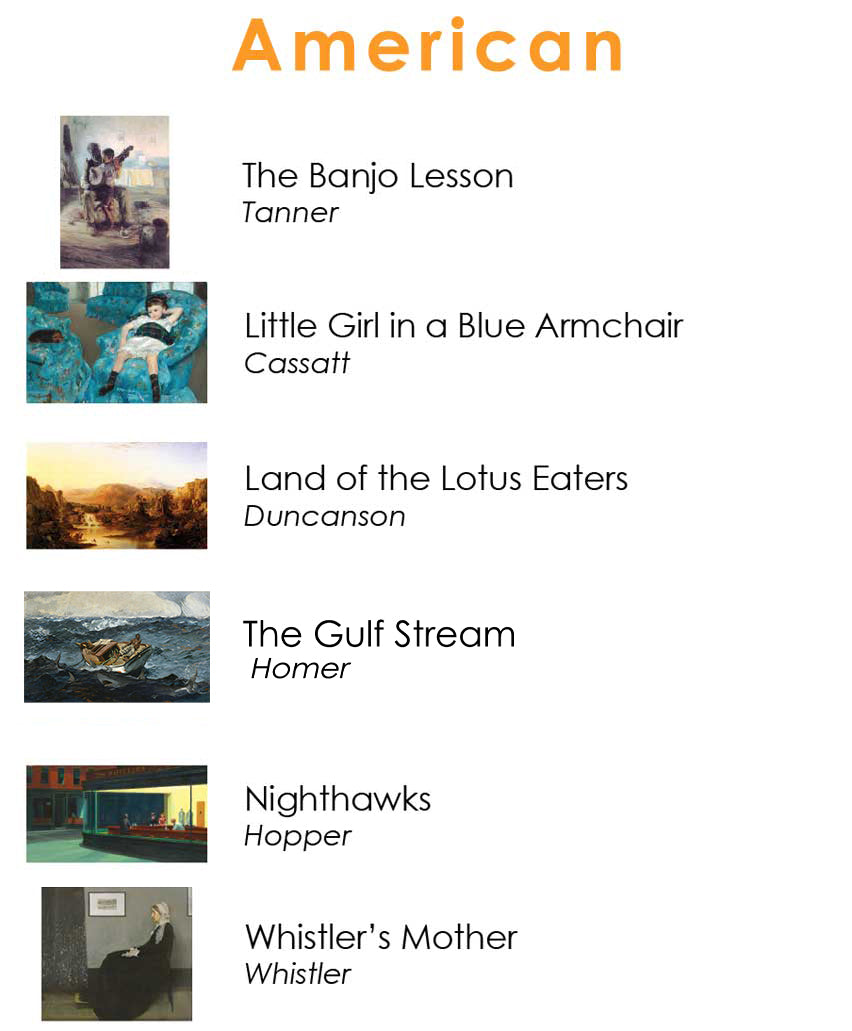
- American: Henry Ossawa Tanner, Mary Cassatt, Robert S. Duncanson, Winslow Homer, Edward Hopper, and James McNeill Whistler
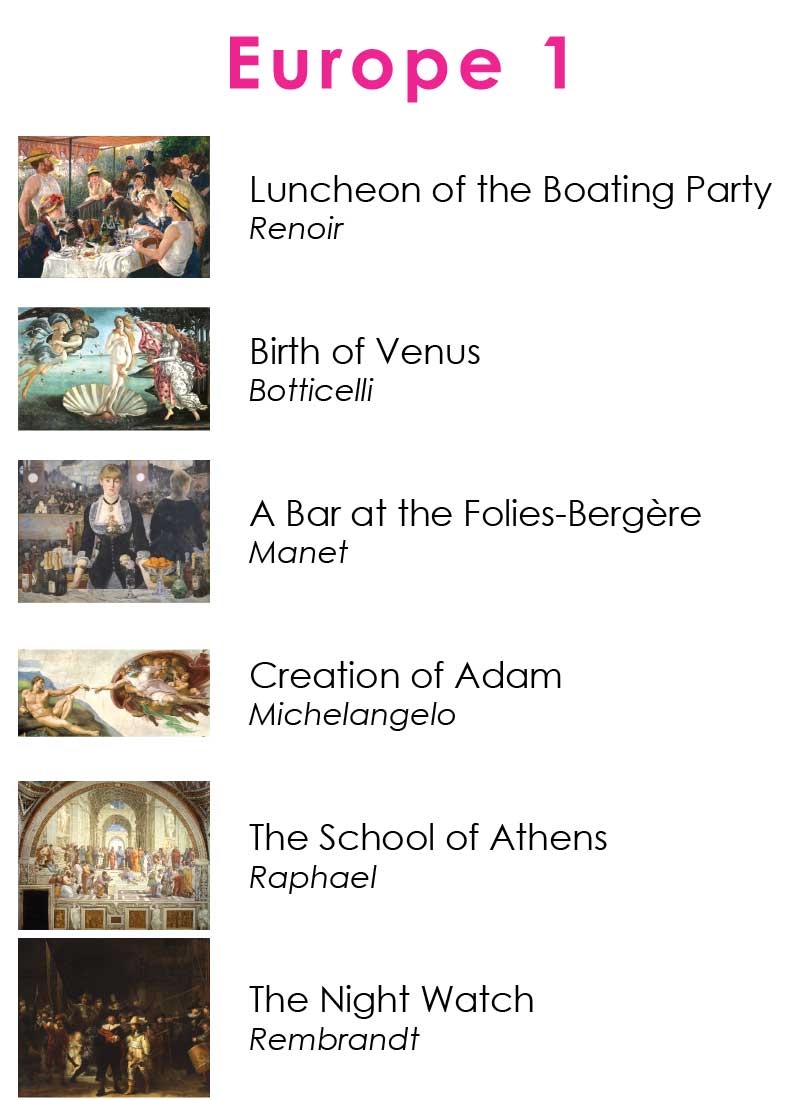
- Europe 1: Sandro Botticelli, Édouard Manet, Michelangelo, Raphael, Rembrandt, and Pierre-Auguste Renoir
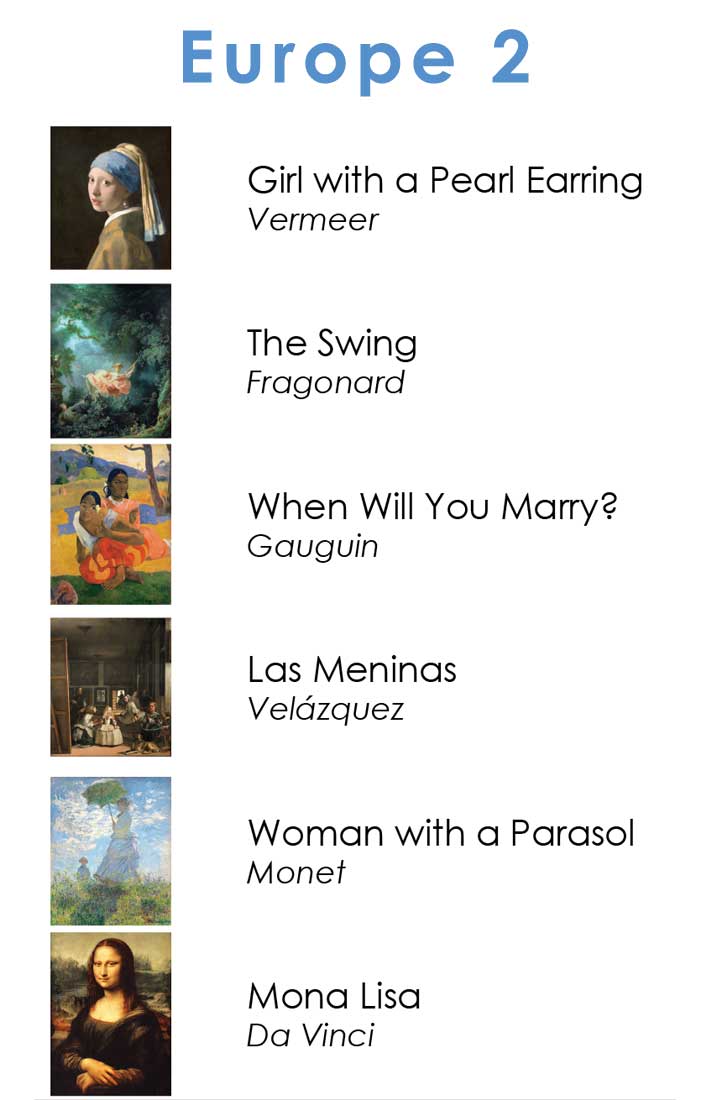
- Europe 2: Johannes Vermeer, Jean-Honoré Fragonard, Paul Gauguin, Claude Monet, Diego Velázquez, and Leonardo da Vinci
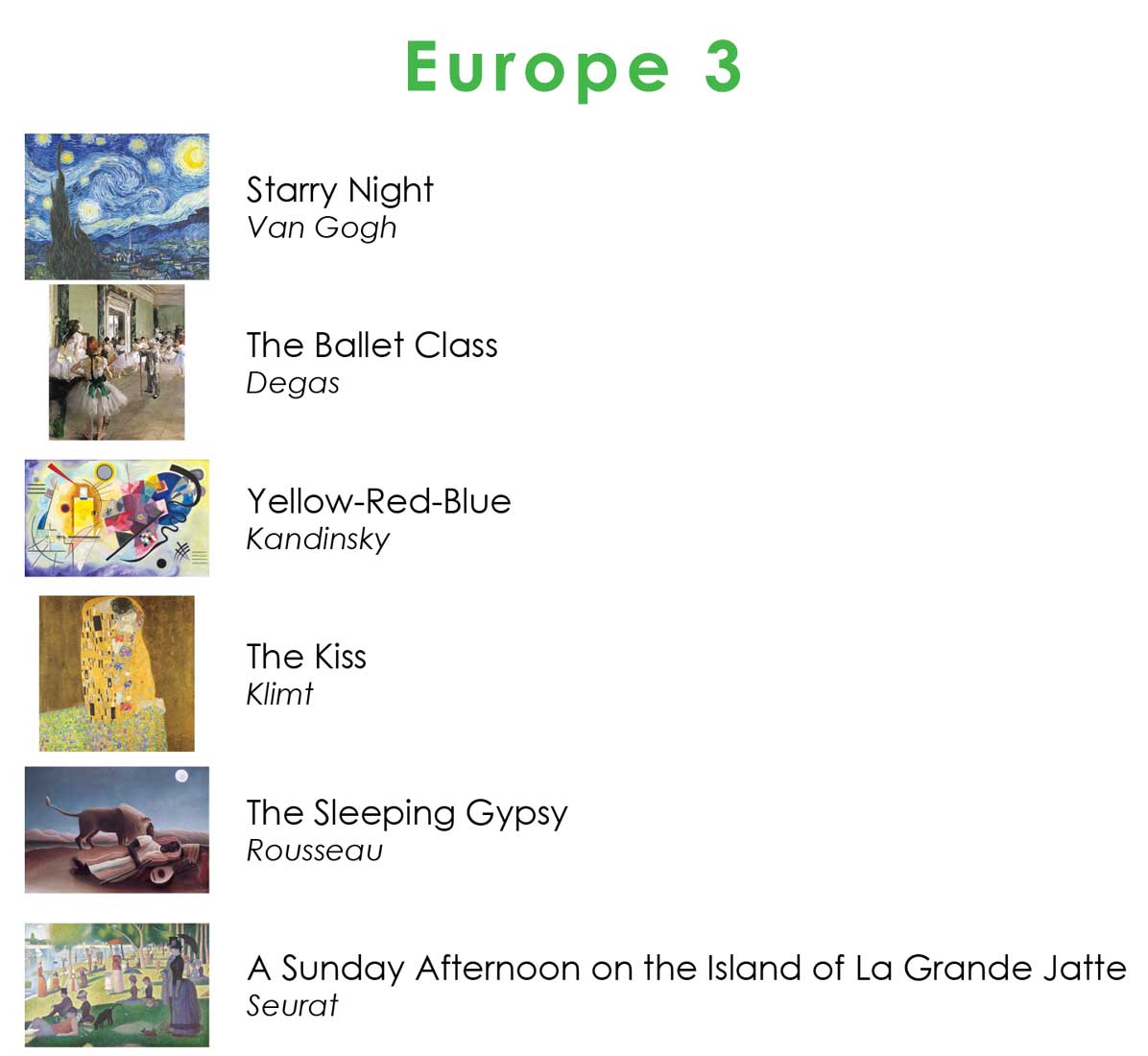
- Europe 3: Vincent van Gogh, Edgar Degas, Wassily Kandinsky, Gustav Klimt, Henri Rousseau, and Georges Seurat
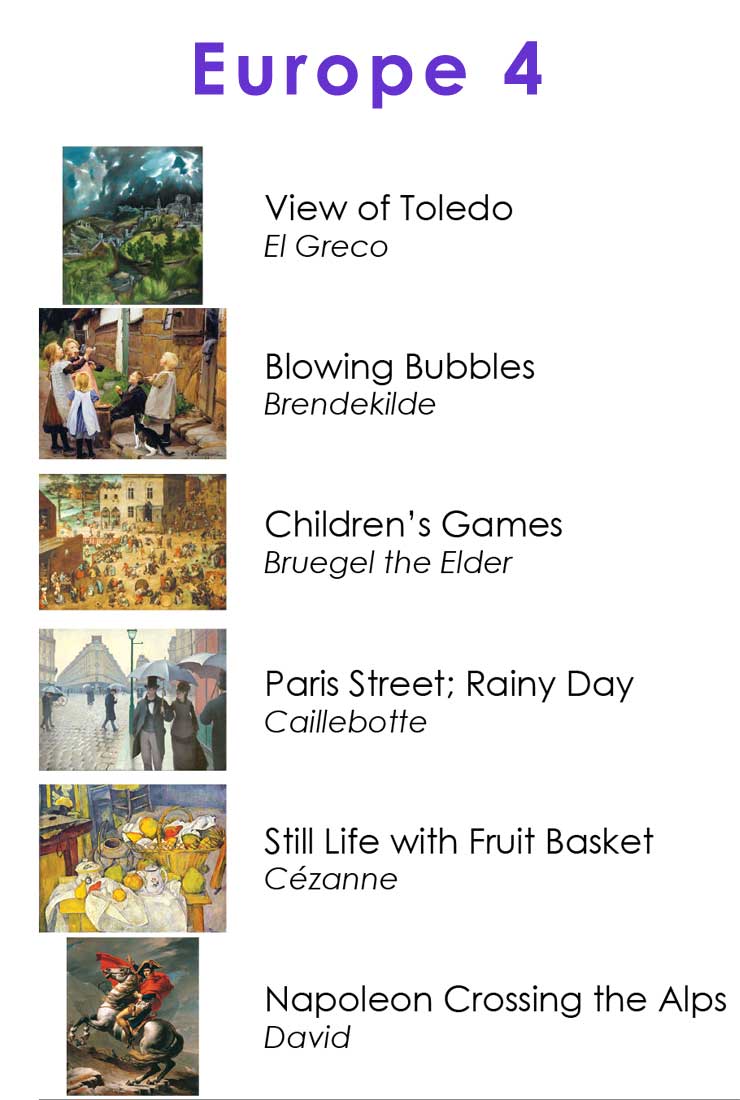
- Europe 4: El Greco, Hans Andersen Brendekilde, Pieter Bruegel the Elder, Gustave Caillebotte, Paul Cézanne, and Jacques-Louis David
- Bundle: all six series
Created by a Montessori teacher. Eco-printed in our rural New England office.
Made in the USA. CPSIA compliant.
Note: Artwork may change from those pictured.
Watch a fine art 4-part card lesson
See an 11-year-old use these cards to match artworks with their titles and artists. She is completely focused even in the midst of a Thanksgiving holiday full-house!
Why do fine art 4-part cards matter for reading?
Interest drives learning. Montessori is a student-centered approach: the teacher observes what each student is curious about and offers materials that match. A student who loves art will come back to this work again and again, and each time is more reading practice. In Scarborough's (2001) reading rope, background knowledge and verbal reasoning are strands of language comprehension. These cards build both. Students learn about artists and artworks from around the world, and they reason through clues, like a title that names what's in the picture, to decide what fits.
How do you use 4-part cards?
- Lay out the artwork cards in a column.
- Read each title card and place it with the artwork it belongs to.
- Read each artist card and place it with the matching artwork and title.
- Use the control cards to check for accuracy independently. No teacher help is required.
Where do these fit in the fine art sequence?
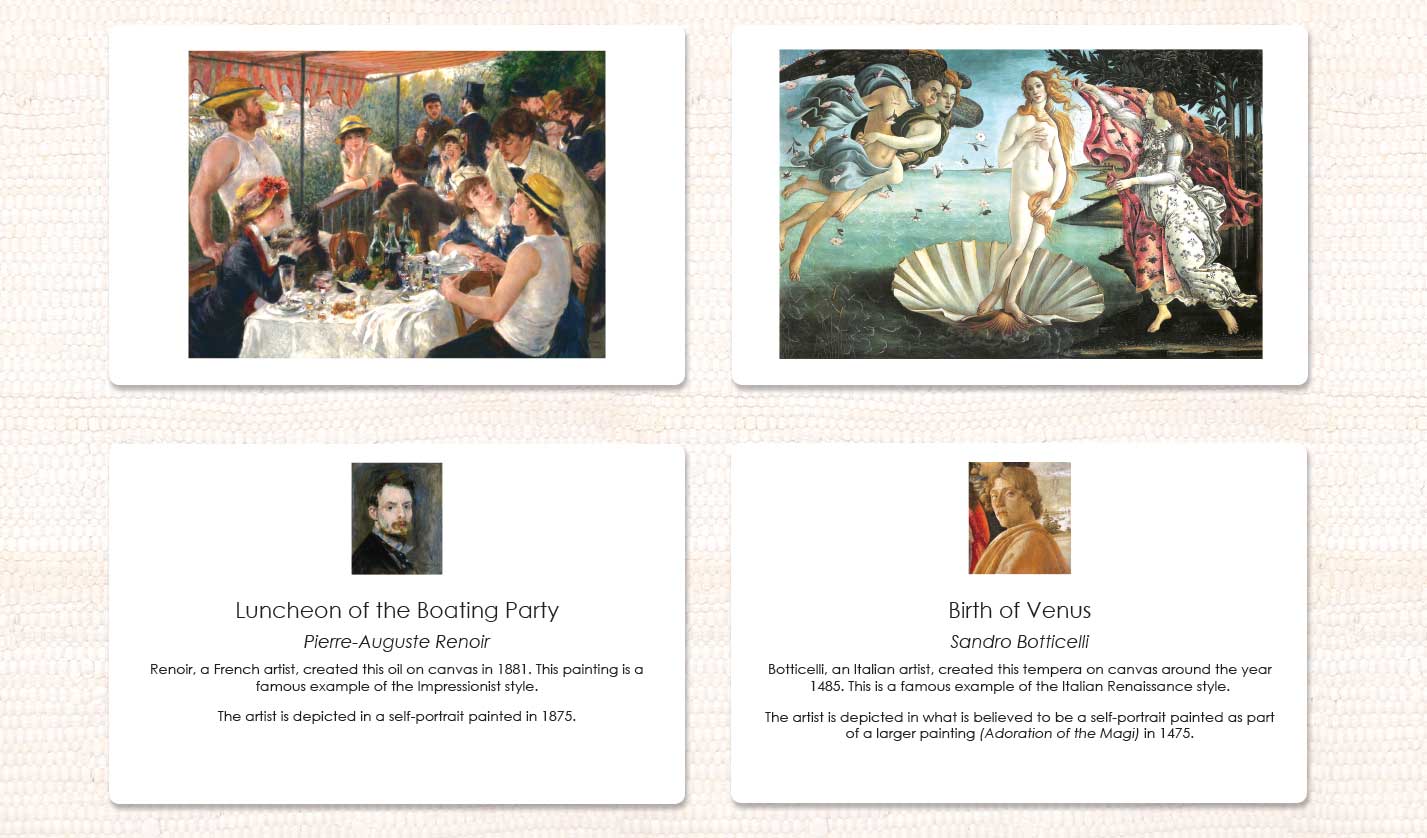
- Begin with our Fine Art Display Cards to explore each artwork in detail, including the year it was made, the artist, and its style.
- Move on to our Fine Art Matching Cards, which let students work with the artwork they love in a new way.
- When students begin to write, invite them to write about a favorite artwork with the movable alphabet, a chalkboard, or pencil and paper.
- Once students read non-phonetic words, introduce the Fine Art 3-Part Cards, then the Artists 3-Part Cards, where students match each artist's name with their portrait.
- Finally, when students succeed with the 3-part cards, introduce these 4-part cards.
Which series should I start with?
We recommend the World series first. It introduces art in many of its common forms, from beadwork to sculpture to painting. Then follow your students' interests into the American and European series.
What ages is this for?
Typically ages 6 and up, once a student reads non-phonetic words with ease and has worked with our 3-part art cards. There's no upper age limit. Older students and adults enjoy the challenge too.
Choose options
Knowledge Bank
Recommended Articles

Download a PDF of our materials

Follow Us