


Sorting Set
 Rooted in Neurodevelopment
-

See the Guided Lesson Plan
 High quality materials
 Eco-Happy
 Fun & Engaging Activities

Ages/Stages
Common Core
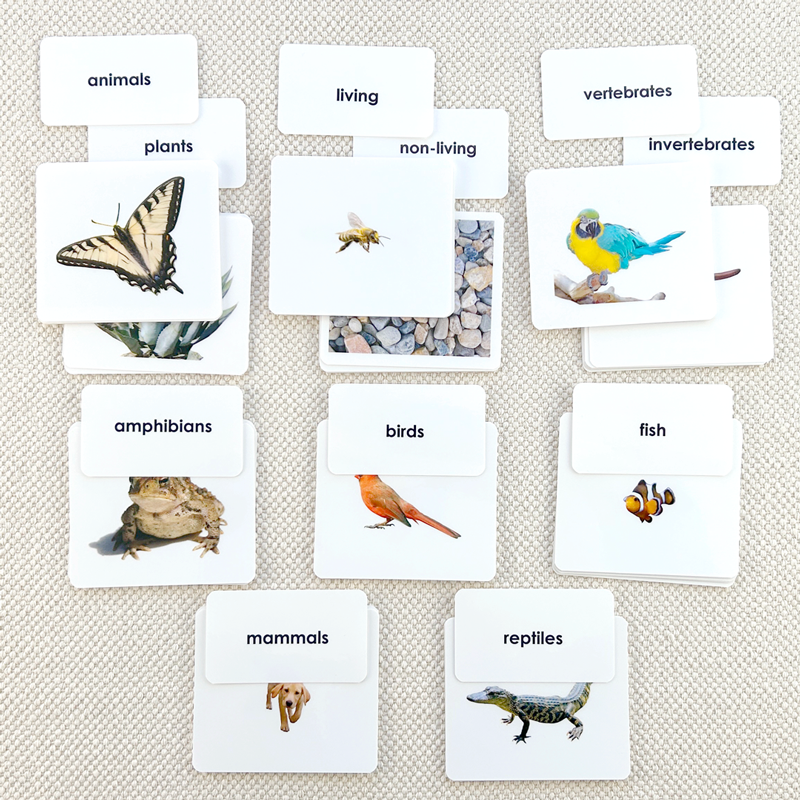
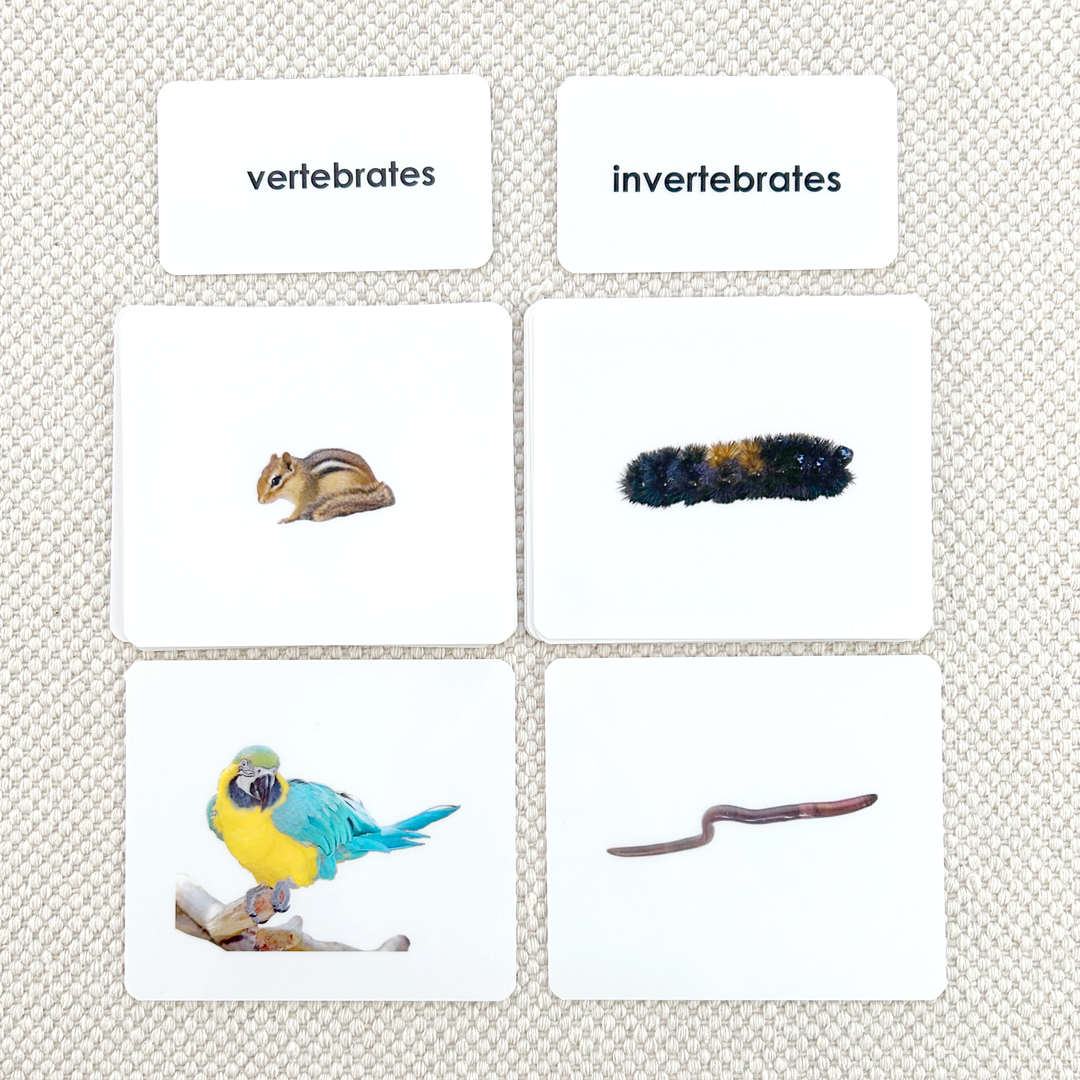
Our Sorting Set includes all four of our Montessori sorting card packets, which together follow the classification sequence from broad to specific: living/non-living, plant/animal kingdom, invertebrates/vertebrates, and the five vertebrate classes. The picture cards show real photographs with no text, so pre-readers can sort by naming and discussing. Students who are reading add the sorting labels at the top of each column.
Each sort divides one group from the step before. Living things divide into plants and animals, animals divide into invertebrates and vertebrates, and vertebrates divide into fish, amphibians, reptiles, birds, and mammals. Students who are reading can explore each animal group further with our self-correcting 3-part zoology cards.
What's included
- Four sorting packets, 88 cards in all:
- Living/Non-Living Sorting: 16 cards (7 living, 7 non-living, 2 sorting labels)
- Plant/Animal Kingdom Sorting: 16 cards (7 plants, 7 animals, 2 sorting labels)
- Invertebrates/Vertebrates Sorting: 16 cards (7 invertebrates, 7 vertebrates, 2 sorting labels)
- Vertebrate Classes Sorting: 40 cards (7 of each of the five classes, plus sorting labels)
- Picture cards show real photos with no text; species represent the diversity of each group
- Picture cards are approx. 3¾" x 4¼"; sorting labels are approx. 3½" x 2"
- Eco-laminated with a food-grade laminate, with rounded corners
- Each packet in its own sturdy, clear reclosable bag for storage
- Lesson plan included
Display these cards in our medium cloth pouches (sold separately).
Created by a Montessori teacher and a zoologist. Eco-printed in our rural New England office.
Made in the USA. CPSIA compliant.
Note: Photos may change from those pictured.
Why does sorting matter for reading?
Vocabulary and background knowledge are two of the language strands that support reading comprehension (Scarborough, 2001). When students sort, they practice vocabulary by naming each picture and discuss what makes each category what it is. Learning how words relate through classification is also part of how we build gist and the word webs that support literacy. This set carries that work through four levels, from the broadest category to the most specific.
How do you use the Sorting Set?
Work through the packets in order, starting with Living/Non-Living. For each sort, first make sure students know the name of each picture, using the three-period lesson if needed. Then discuss what the members of each category have in common. For example, living things grow, need food and water, and make more of their own kind. Plants make their own food, while animals must eat. Vertebrates have bones. Finally, invite students to sort the pictures into groups. For readers, place the sorting labels at the top of each column. When students are comfortable with one sort, move on to the next. After Vertebrate Classes, continue with our zoology cards to learn the animals within each class.
What ages is this for?
Typically ages 4 and up. The set works for both pre-readers and readers, and for English learners and students in intervention settings. Because the sorts move from broad to specific, the set grows with students over time.
Choose options
Knowledge Bank
Recommended Articles

Download a PDF of our materials

Follow Us