
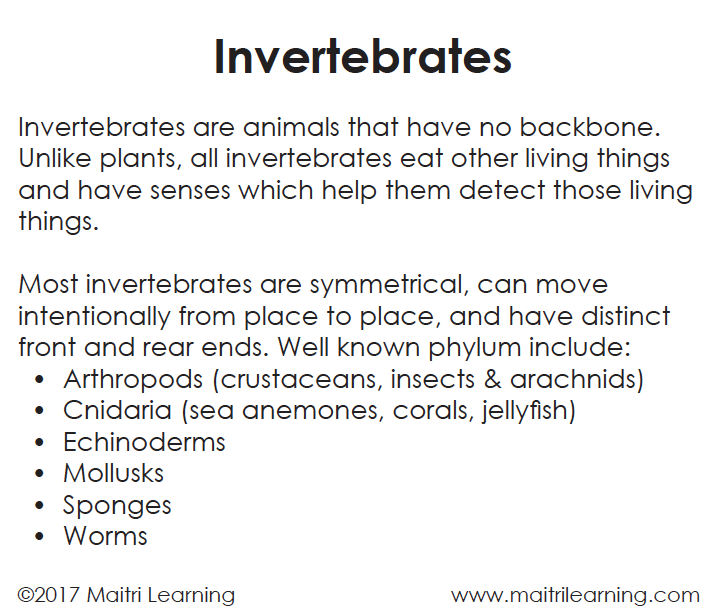
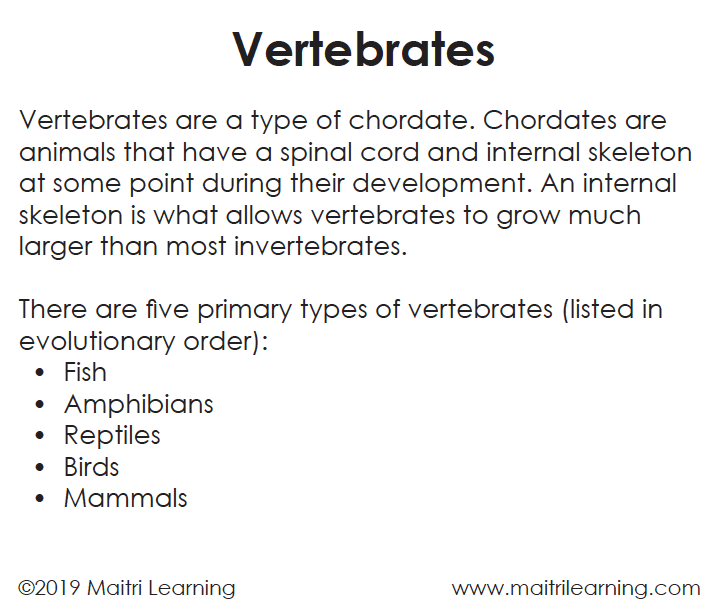
Invertebrates/Vertebrates Sorting
 Rooted in Neurodevelopment
-

See the Guided Lesson Plan
 High quality materials
 Eco-Happy
 Fun & Engaging Activities

Ages/Stages
Common Core
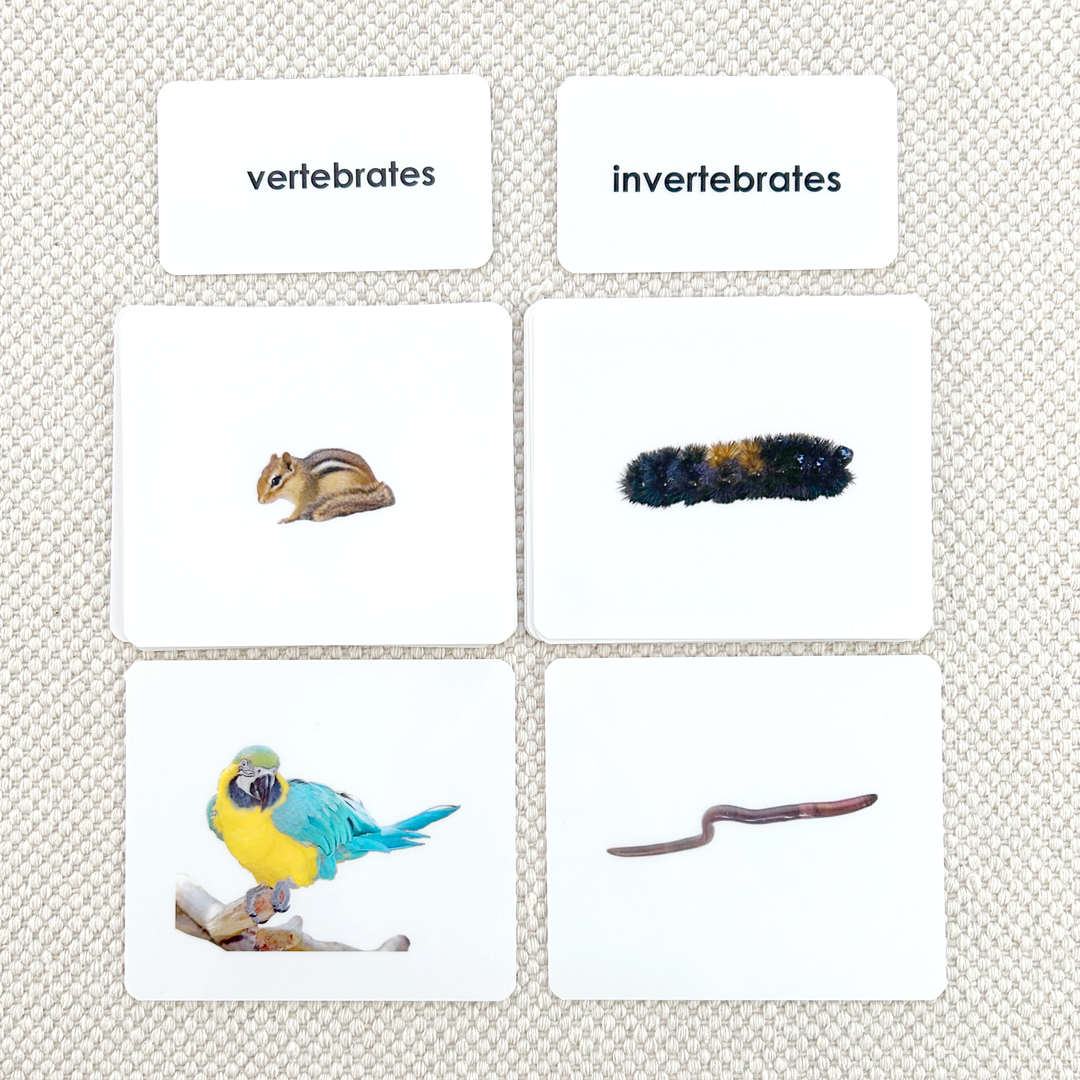
Our Invertebrates/Vertebrates Sorting cards are real-photo cards students sort into two groups: animals with bones, teeth, and claws and animals without them. It follows plant/animal kingdom sorting in Montessori classification work and is the first division students make within the animal kingdom.
The picture cards have no printed words, so pre-readers can sort by looking and discussing. When students begin reading, add the two sorting labels so they read each category name as they work.
What's included
- 16 cards: 7 invertebrates, 7 vertebrates, and 2 sorting labels
- Picture cards have real photos and no text, which can distract pre-readers
- Approx. 3¾" x 4¼" (picture cards) and 3½" x 2" (sorting labels)
- Eco-laminated with a food-grade laminate and rounded corners
- Sturdy clear reclosable bag for storage
- Lesson plan included
You can display these cards in our medium cloth pouches (sold separately).
Also available in Spanish.
Created by a Montessori teacher and a zoologist. Eco-printed in our rural New England office.
Made in the USA. CPSIA compliant.
Note: Photos may change from those pictured.
Why does sorting matter for reading?
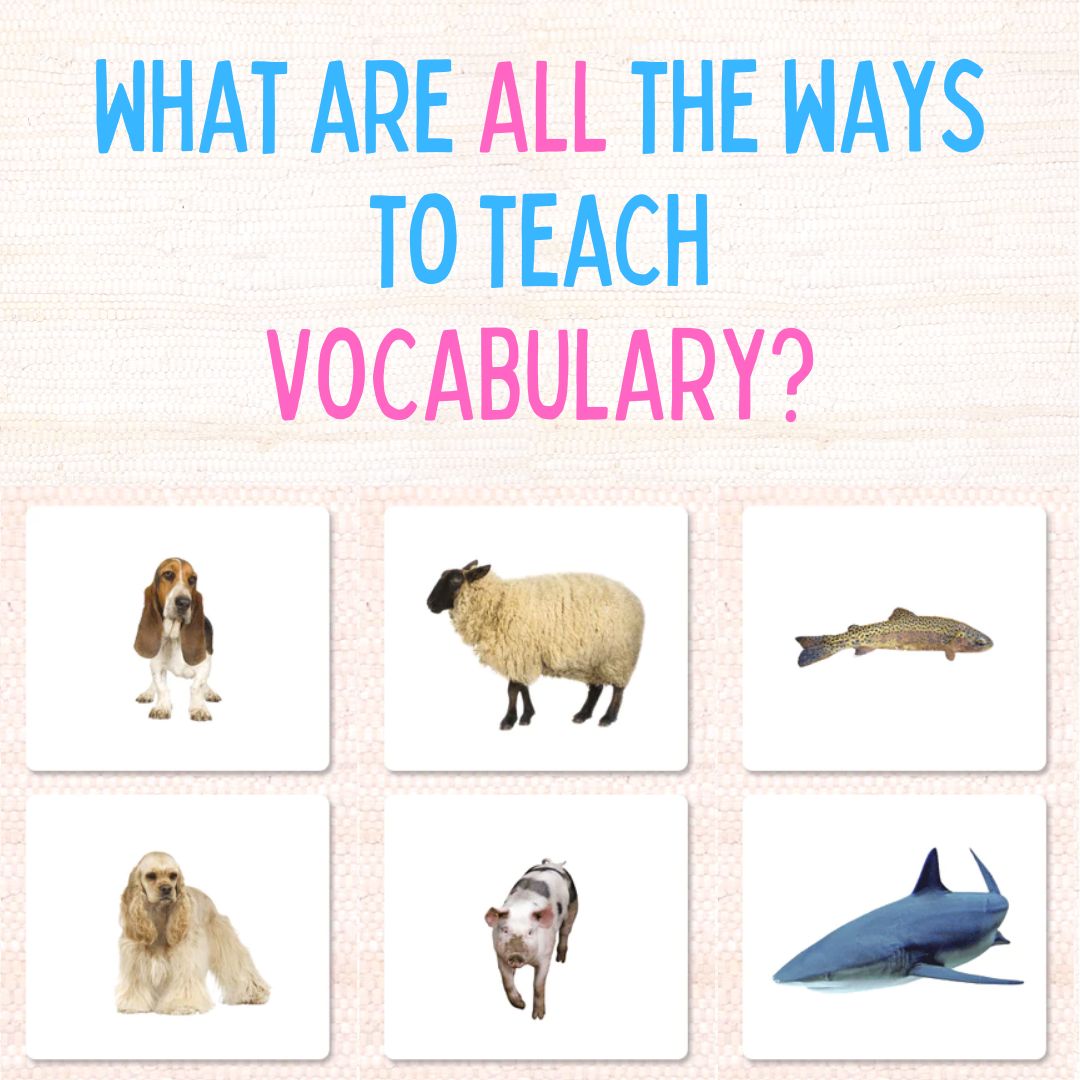
Vocabulary and background knowledge are two of the language strands that support reading comprehension (Scarborough, 2001). Sorting builds both. Students practice their vocabulary by naming and discuss what makes an animal a vertebrate or an invertebrate, knowledge they will draw on when they later read about the natural world.
Learning how words relate to one another through classification activities is also part of how we build gist and the word webs that support literacy.
How do you use invertebrate/vertebrate sorting cards?
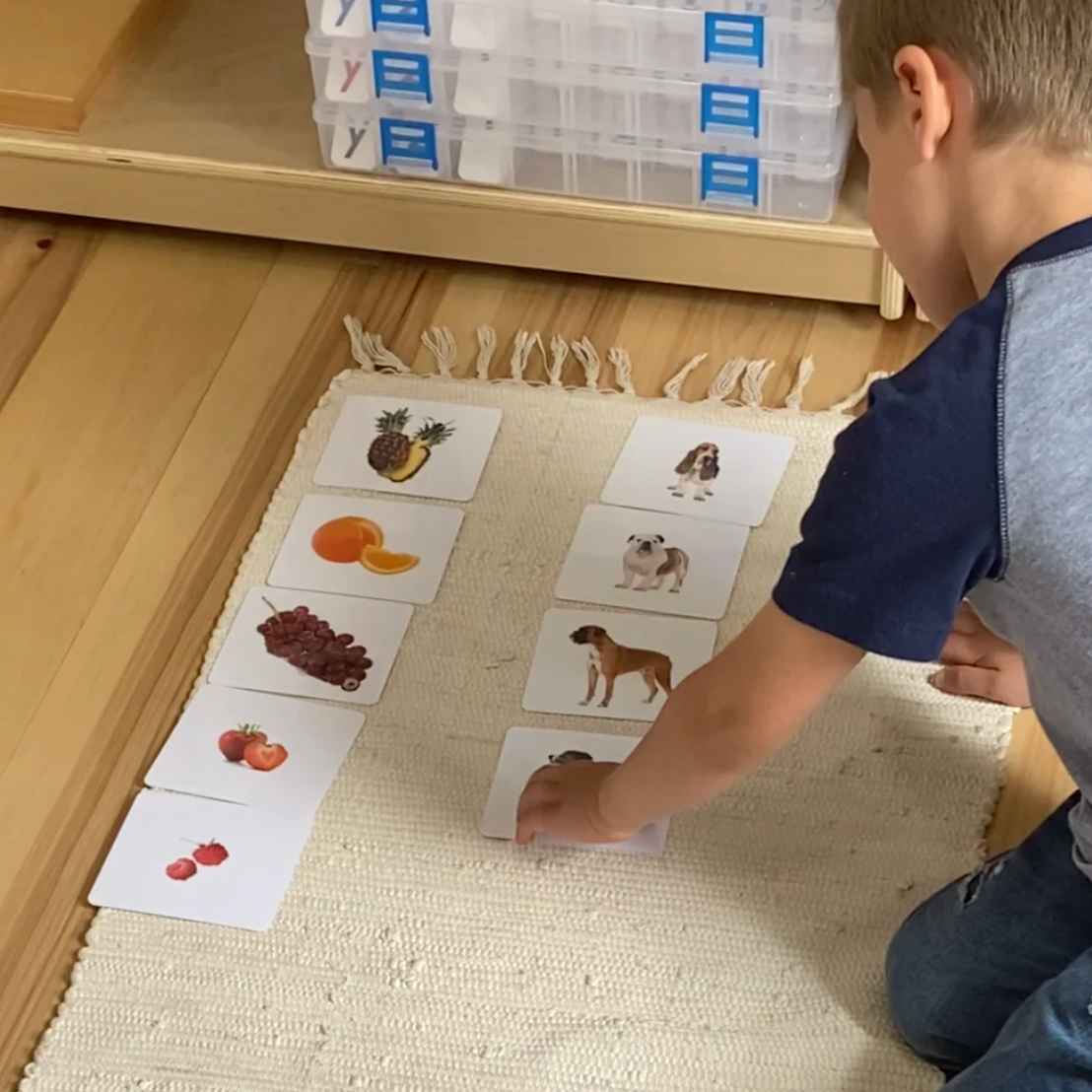
First, make sure students know the name of each picture, using the three-period lesson if needed. Then discuss the difference between the two groups: vertebrates have bones, teeth, and claws, and invertebrates do not. Students can feel their own bones, nails, and teeth and discover that they are vertebrates, too. Finally, invite students to sort the cards into two groups. For students who are reading, place the "invertebrate" and "vertebrate" labels at the top of each column. When this sort is comfortable, move on to vertebrate classes sorting.
What ages is this for?
Typically ages 4 and up. Pre-readers sort the pictures while students who are reading add the sorting labels. The cards also work well for English learners and in intervention settings.
Choose options
Knowledge Bank
Recommended Articles
Download a PDF of our materials

Follow Us