Phonetic Level 4B
 Rooted in Neurodevelopment
-

See the Guided Lesson Plan
 High quality materials
 Eco-Happy
 Fun & Engaging Activities
Ages/Stages
Common Core
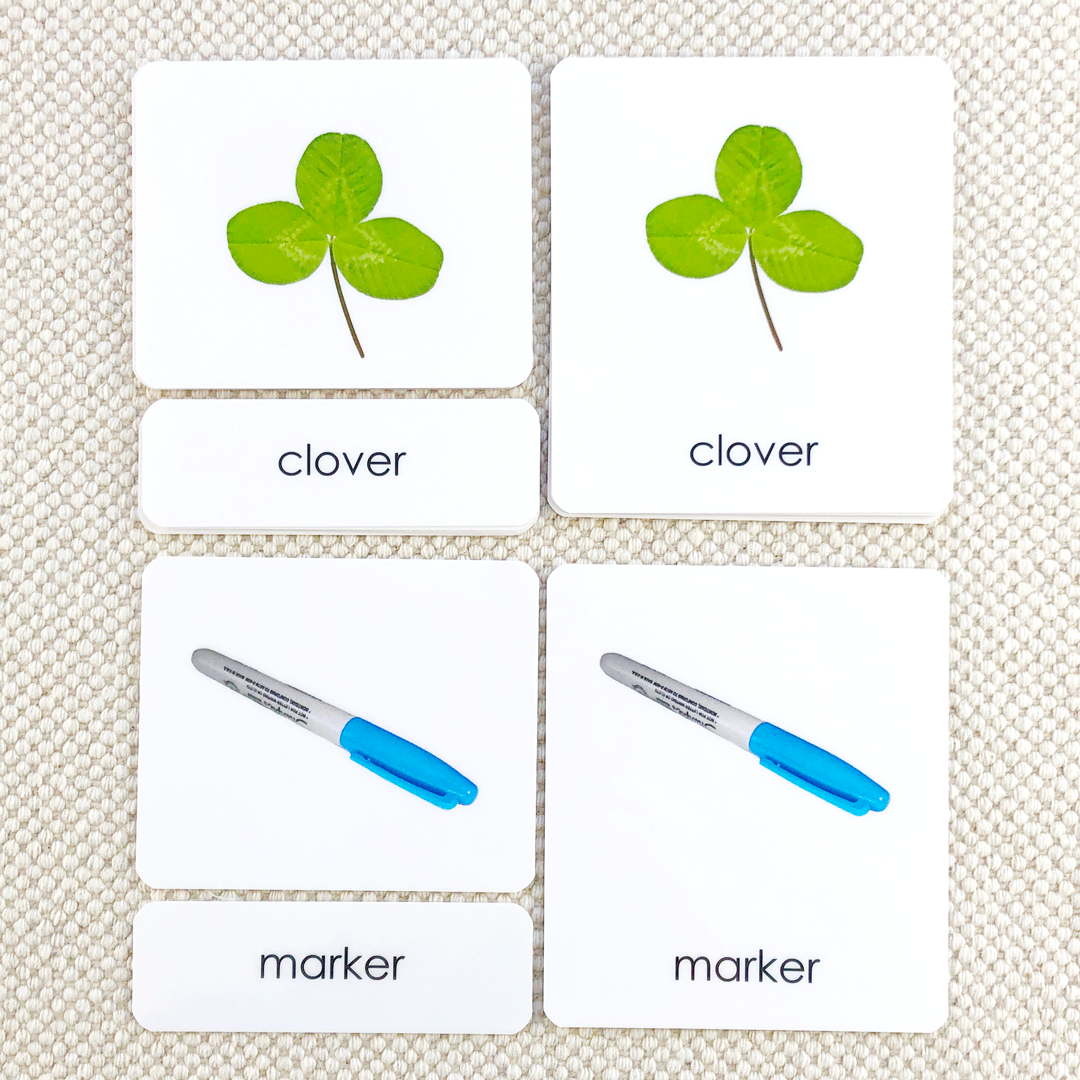
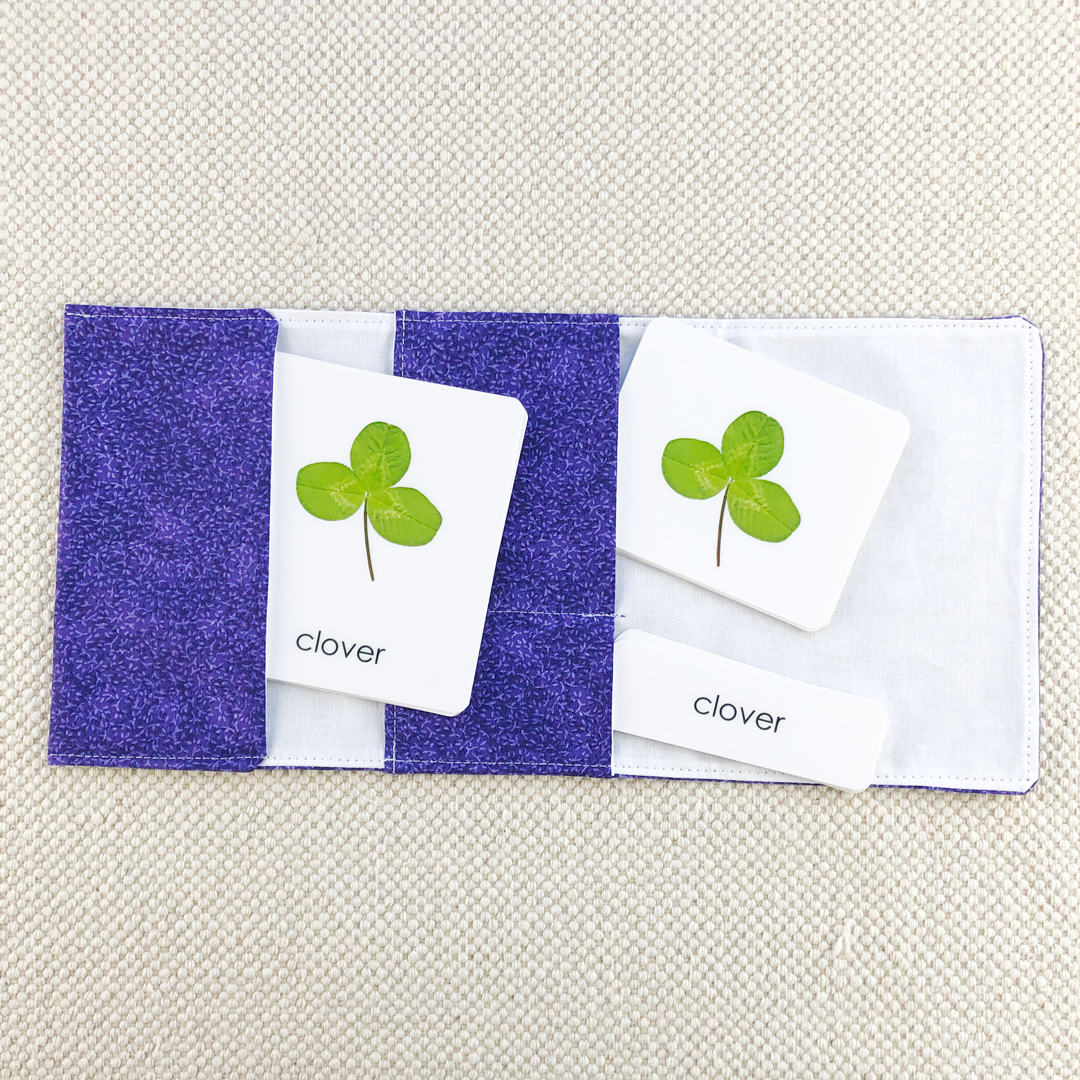
Phonetic Level 4B is a packet of Montessori 3-part cards with six two-syllable words that end in er and include one other phonogram, like clover and rooster. Students read each word label, match it to its photo, and check their own work with the control cards.
Packet 4B is one step more daring than Packet 4A. Words now have two syllables, and all text is printed in black, with no red to point out the phonograms. Every word still follows the rules students learned in Levels 1 through 3. Every photo shows something familiar, so new vocabulary doesn't get in the way.
What's included
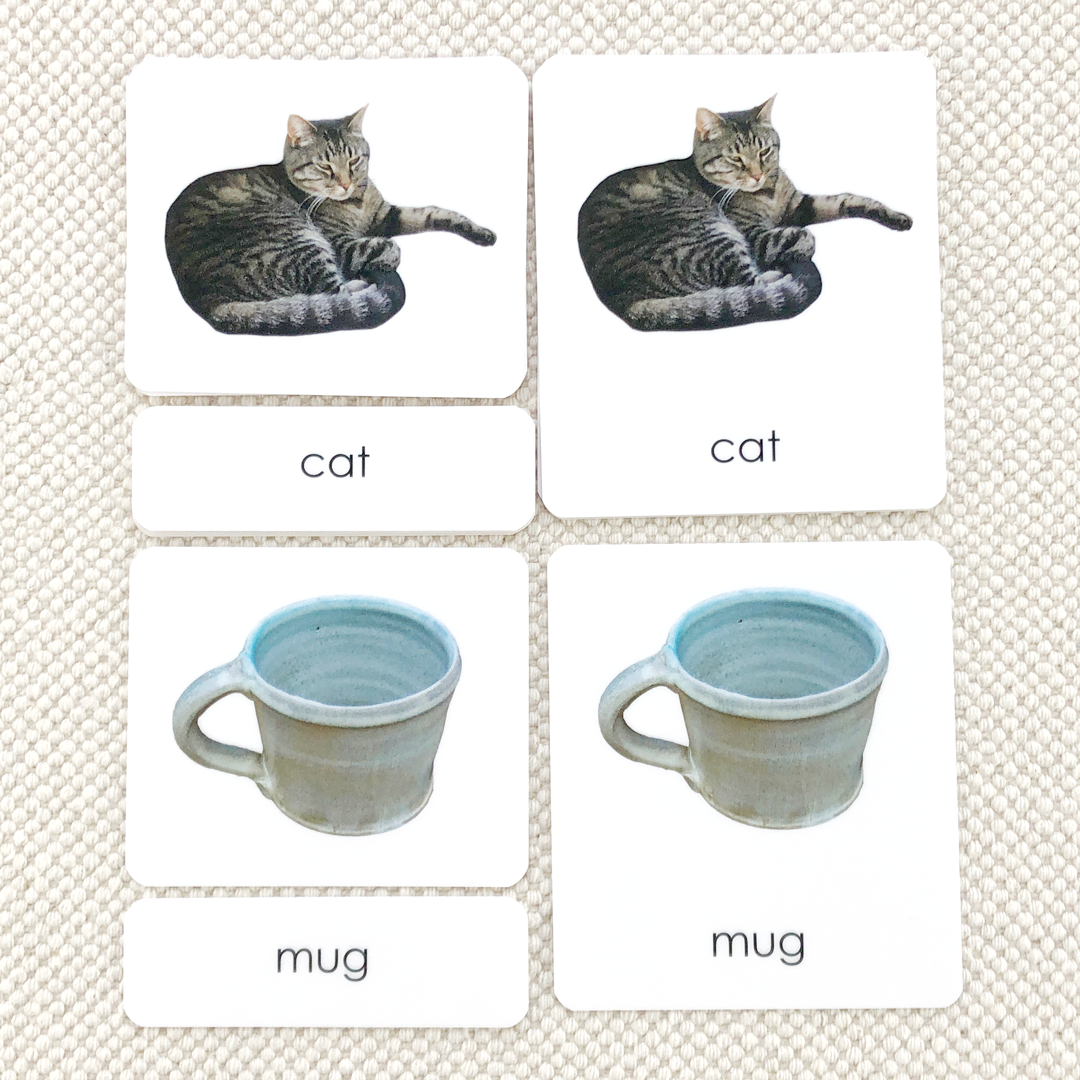
- 18 cards: six two-syllable words in 3-part format (a photo card, a word card, and a control card for each word)
- Each word ends in er and includes one other phonogram
- All text printed in black
- Photos of familiar things, so there are few vocabulary roadblocks
- Cards are approx. 3¾" x 4¼" control cards, 3¾" x 3" photo cards, and 3¾" x 1¼" word cards
- Eco-laminated with a food-grade laminate and rounded corners
- Sturdy, clear reclosable bag for teacher storage
- Lesson plan included
Packet 4B is also part of our Phonetic Level 4 Set, which includes all five Level 4 packets (4A–4E).
Add our purple 3-pocket foldover cloth pouch for color-coded, student-accessible display.
Created by a Montessori teacher. Eco-printed in our rural New England office.
Made in the USA. CPSIA compliant.
Note: Photos may change from those pictured.
Why do challenging phonetic words matter for reading?
Practice is what makes reading easier and, eventually, automatic. In Level 4, students read words with more than one phonogram and no red to point the phonogram out, so they practice spotting phonograms on their own. Because every word still follows the rules, students succeed and gain confidence before they meet non-phonetic words. The photos help students figure out how to pronounce each word, and the control cards let them find and fix their own errors, which is how humans learn best, with no teacher correction required.
How do you use Level 4 3-part cards?
First, make sure the student knows the name of each picture (use the three-period lesson if needed). Lay out the photo cards in a column. The student reads each word label and places it under its photo. Then the student places each control card just to the right of its photo/word pair to check and fix any errors independently. Once students are reading successfully, extend the work with a dictation game: one student reads a control card aloud while another builds the word with the movable alphabet, then they check the spelling with the control card. See our guide to phonetic reading cards for more.
What should students know before starting?
Students should read words with phonograms in our Key Sound Phonograms set and our Other Phonograms set, and the one-syllable words in Packet 4A. Ideally, they have also built words with phonograms using the movable alphabet.
What ages is this for?
Typically ages 4 to 6, once a student reads Level 3 phonogram words. These cards also support:
- Older students who are building reading confidence
- English learners
- Students in reading intervention
What comes after Packet 4B?
Move on to Packet 4C, with two phonograms in each two-syllable word, then Packets 4D and 4E, which have compound words. After Level 4, students are ready for puzzle words and non-phonetic words in our 3-Part Reading Cards.
Choose options
Knowledge Bank
Recommended Articles
Download a PDF of our materials

Follow Us