

Imperfect Phonetic Level 3 Set: Other Phonograms
 Rooted in Neurodevelopment
-

See the Guided Lesson Plan
 High quality materials
 Eco-Happy
 Fun & Engaging Activities
Ages/Stages
Common Core
Scratch & Dent Discount: These materials did not pass our strict quality control process, so you get them at a lower price. The error may be a small spot or hair under the laminate on one or more cards, color slightly different from our standard, an image printed slightly askew, or slightly curved laminate. Many teachers can't find the error, but we can! Each packet is complete. See all of our scratch and dent materials.
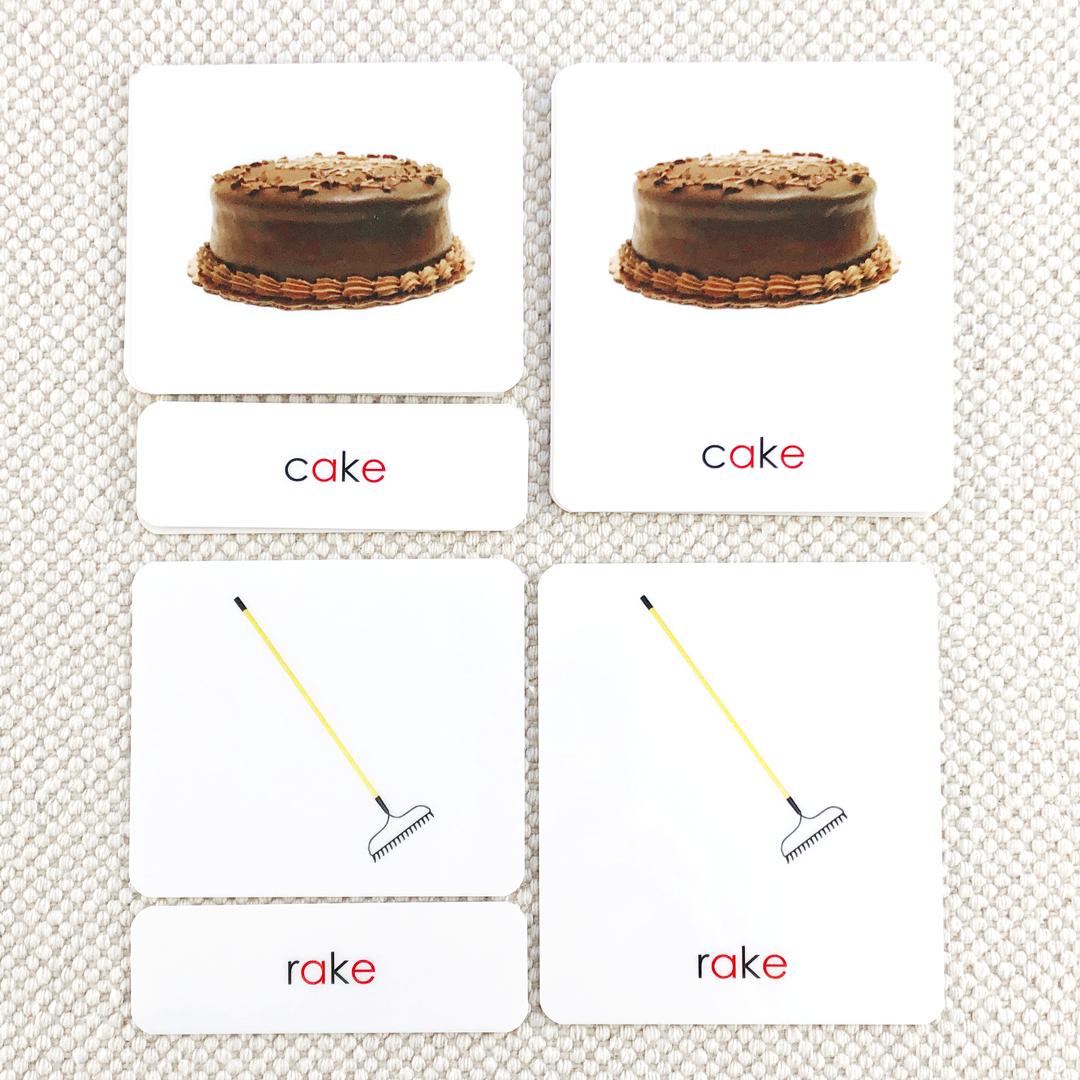
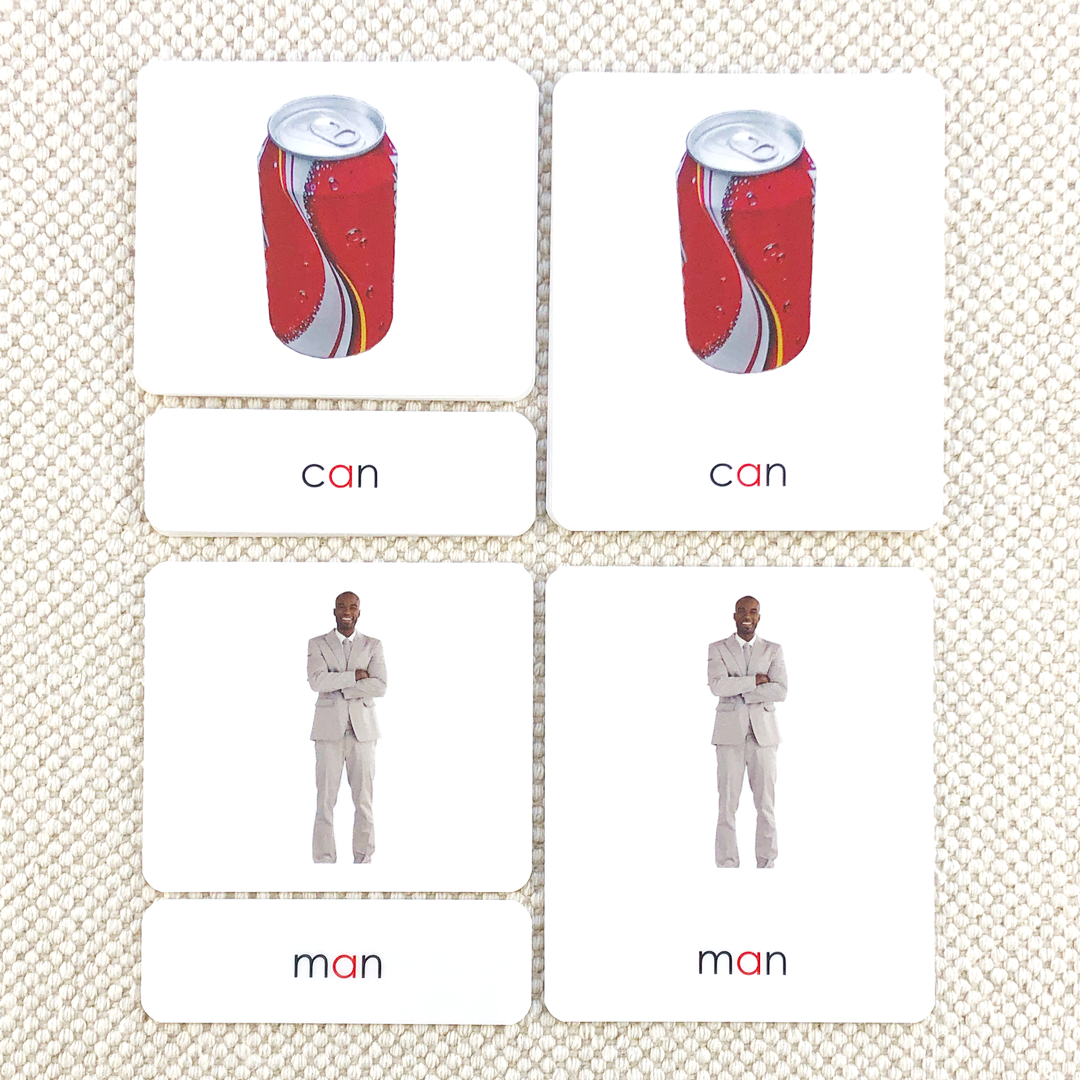
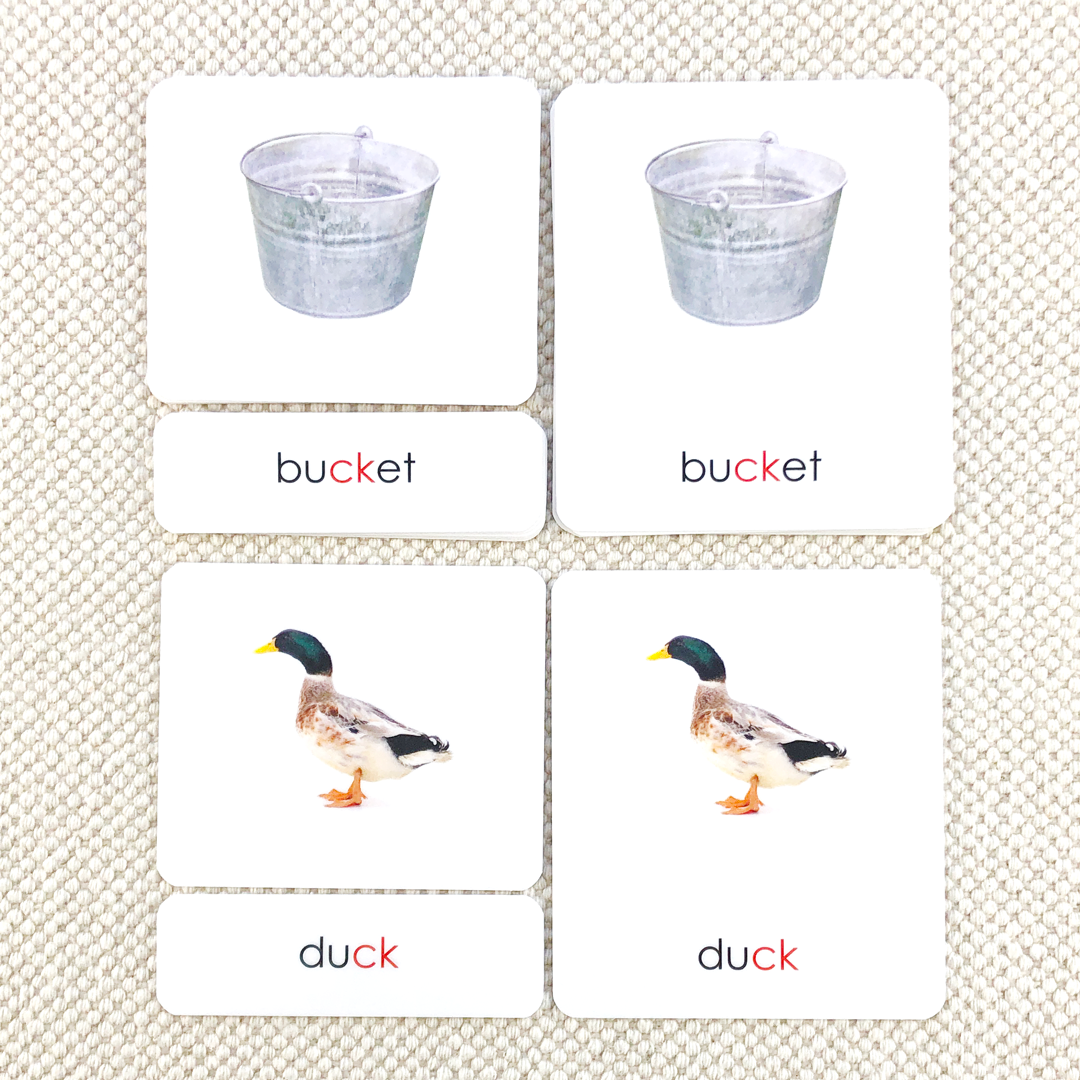
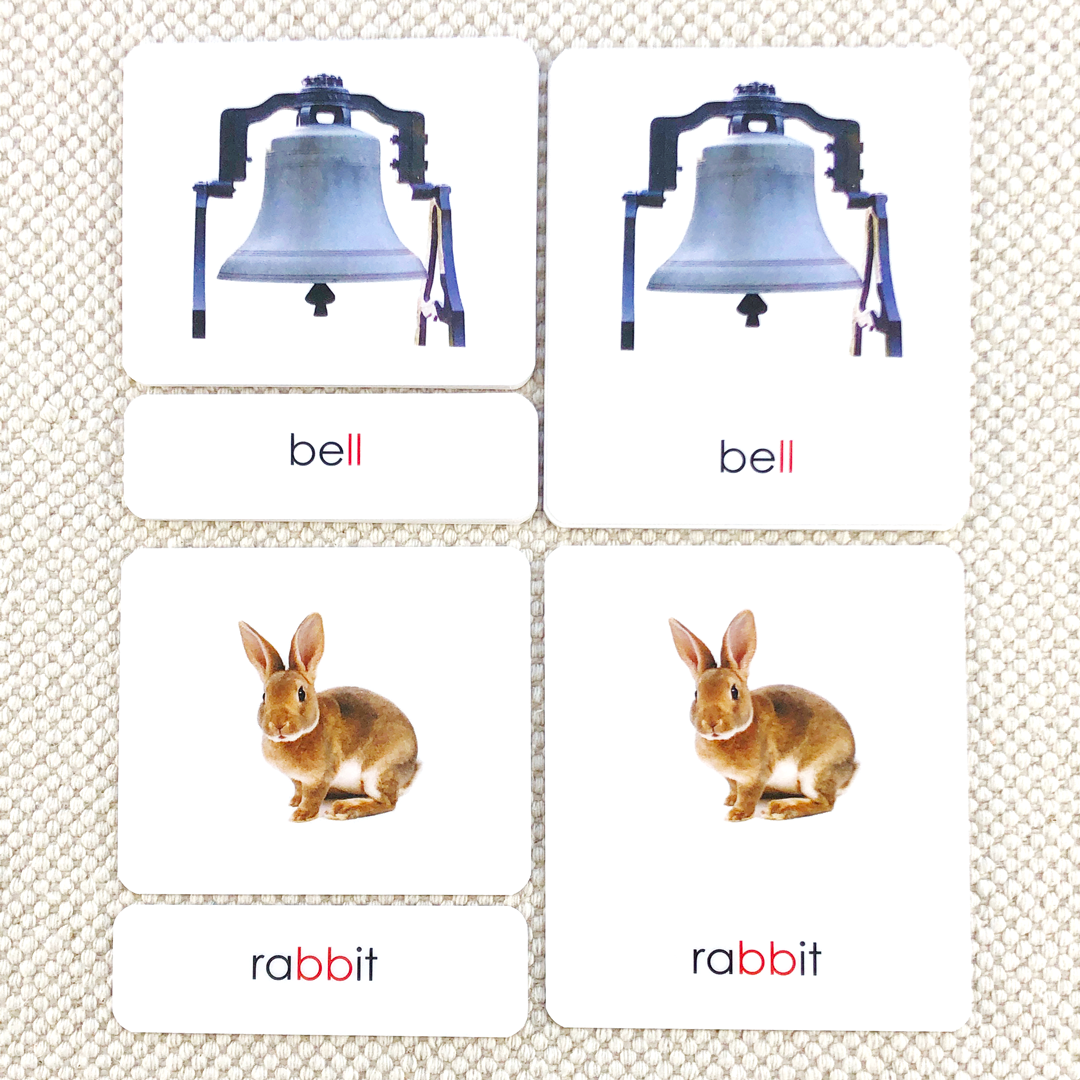
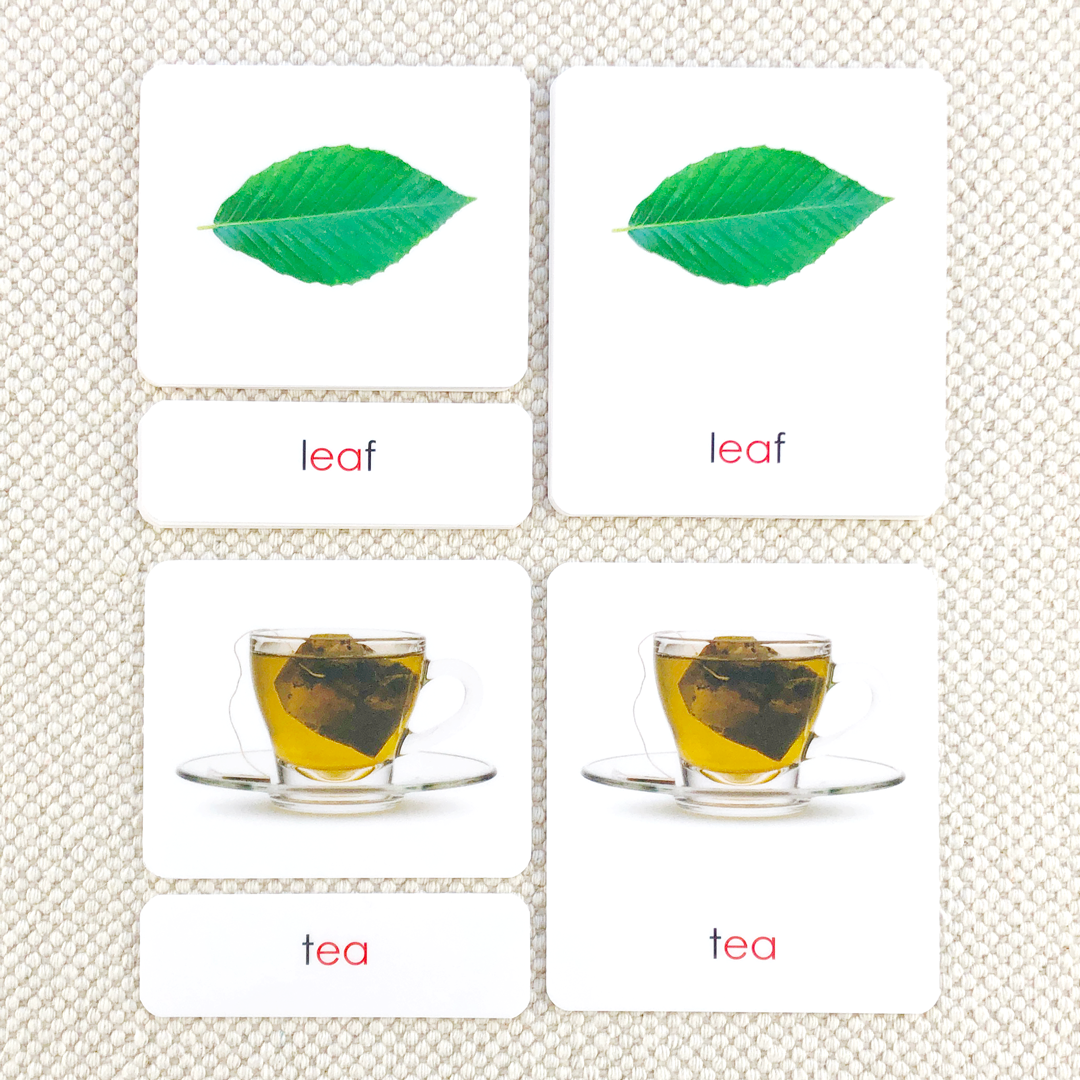
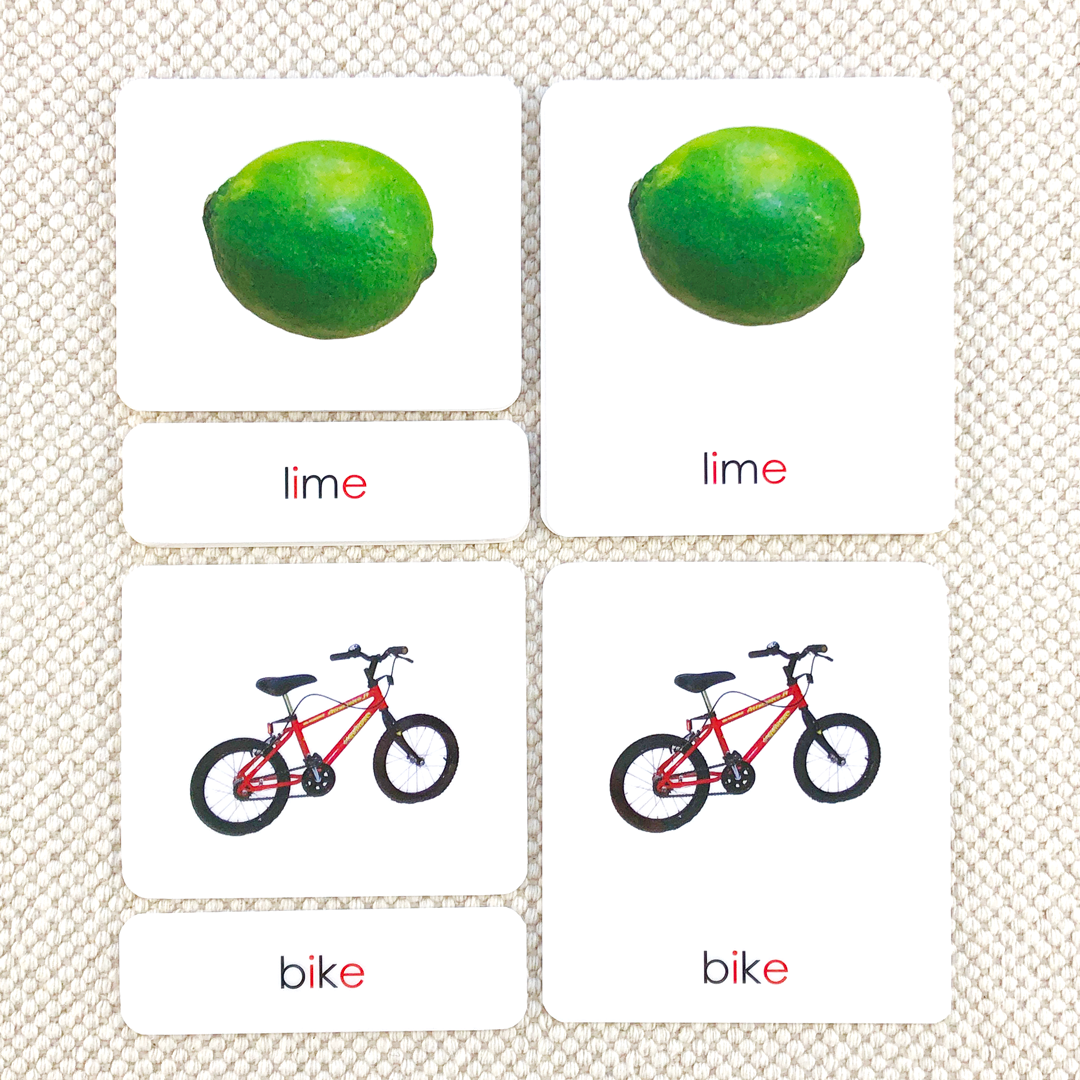
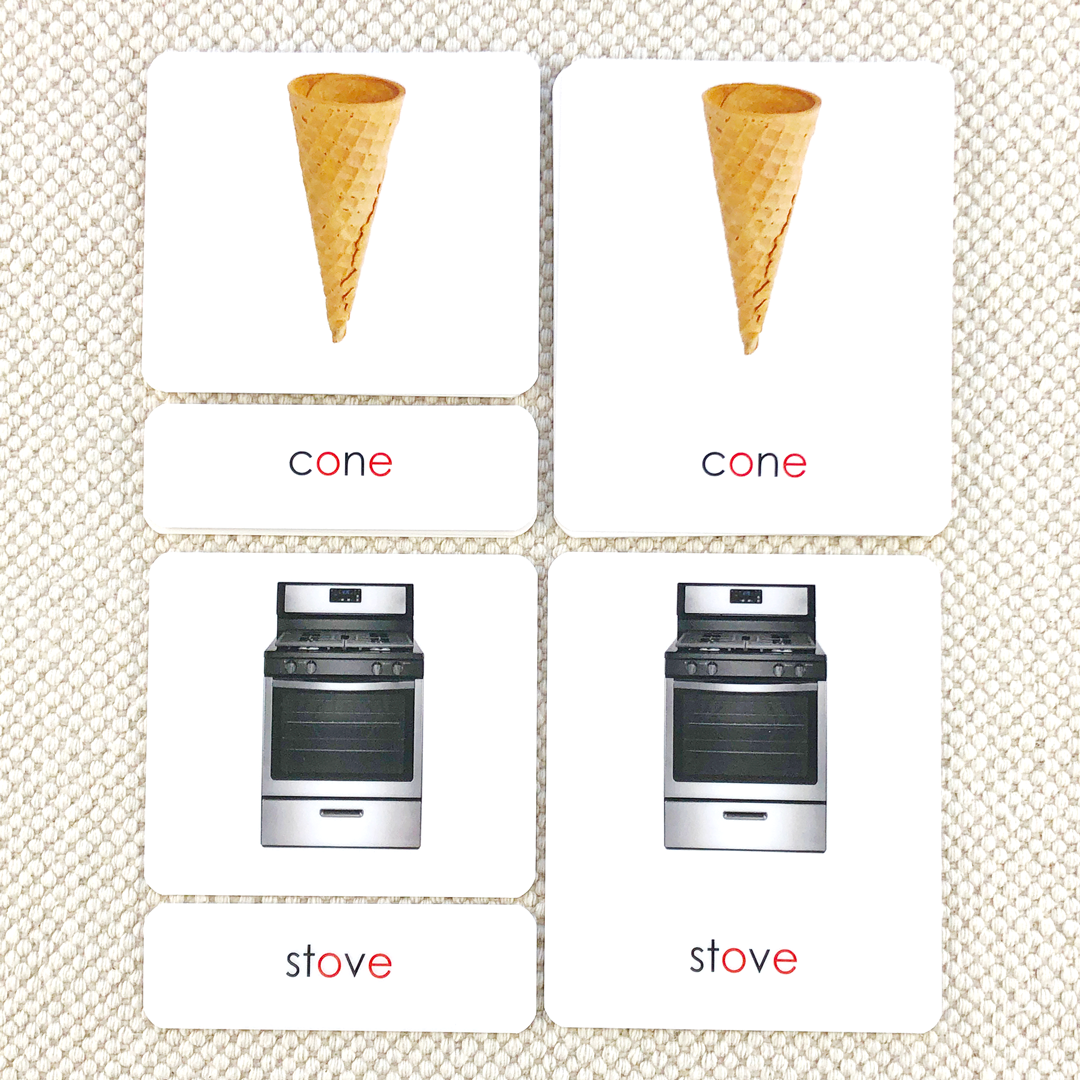
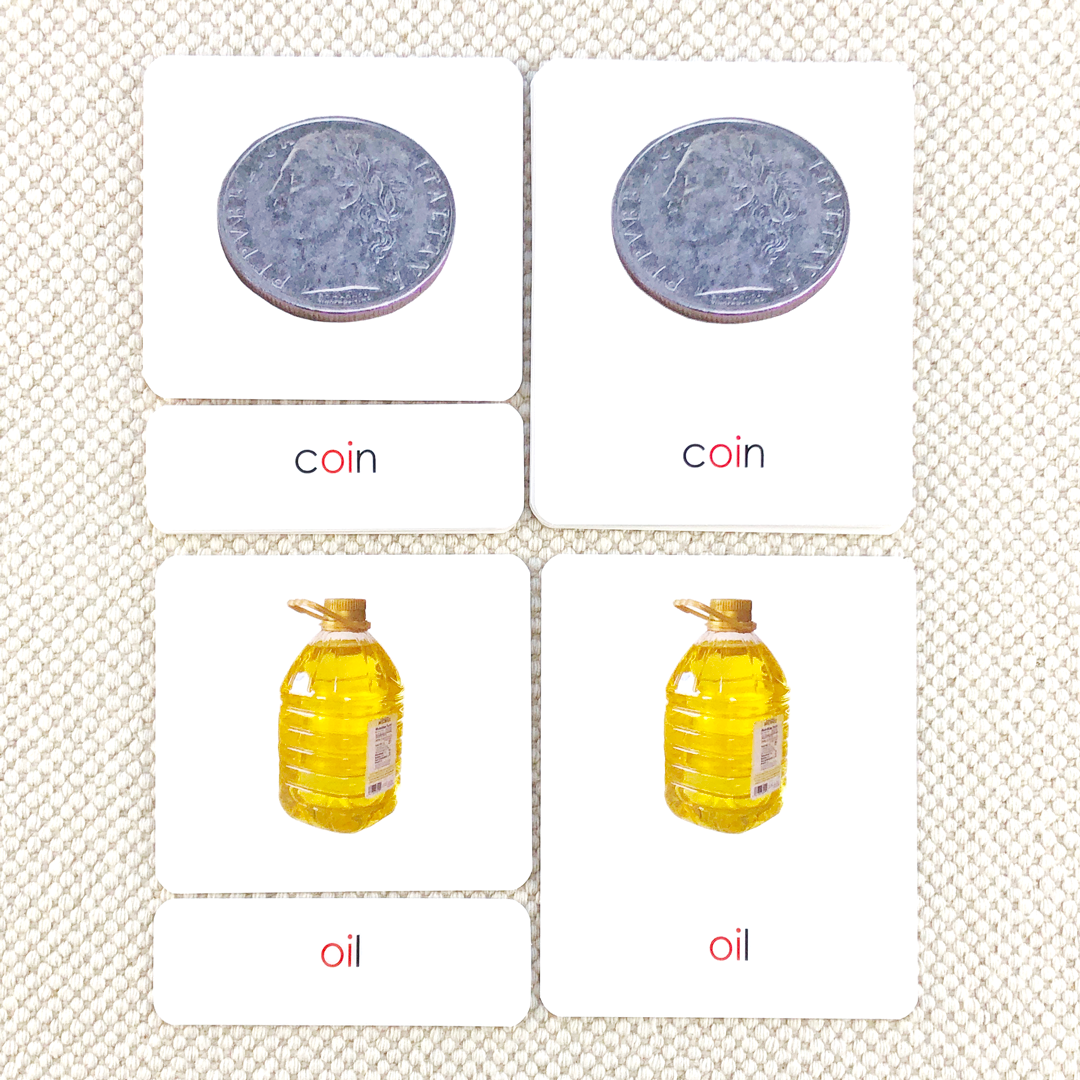
Our Phonetic Level 3 Set: Other Phonograms is a set of Montessori phonogram 3-part cards with 60 words in ten packets, one packet for each phonogram. Students read each word label, match it to its photo, and check their own work with the control cards.
Level 3 is also known as the green series. Each word has one phonogram printed in red, so the new sound stands out, and every other letter is fully phonetic. The photos show familiar things, so new vocabulary doesn't get in the way. This set comes after our Phonetic Level 3 Set: Key Sound Phonograms.
What's included
- 180 cards total: 60 photo cards, 60 word cards, and 60 control cards
- 10 packets of 6 words (18 cards) each, one packet per phonogram
- The phonogram is printed in red; all other letters are black
- Photos of familiar things, so there are few vocabulary roadblocks
- Cards are approx. 3¾" x 4¼" control cards, 3¾" x 3" photo cards, and 3¾" x 1¼" word cards
- Eco-laminated with a food-grade laminate and rounded corners
- Sturdy, clear reclosable bag for teacher storage
- Lesson plan included
What's in each packet
Each packet focuses on one phonogram:
- a with silent e (like cake and skate)
- a (nasal) (like can and ant)
- ck (like bucket and sock)
- double letters (like bell and rabbit)
- ea (like leaf and bead)
- i with silent e (like lime and kite)
- o with silent e (like cone and stove)
- oi (like coin and toilet)
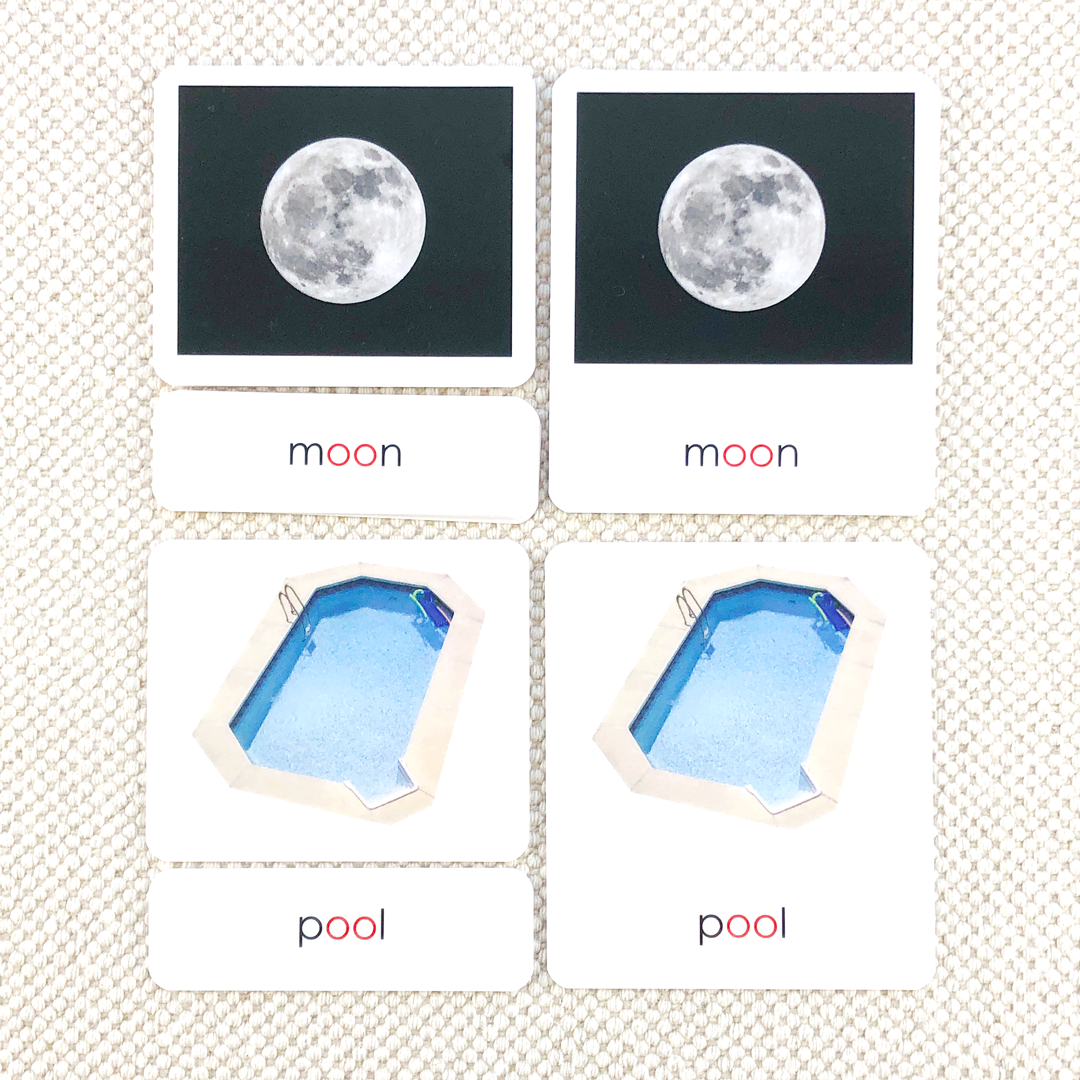
- oo (as in moon) (like moon and pool)
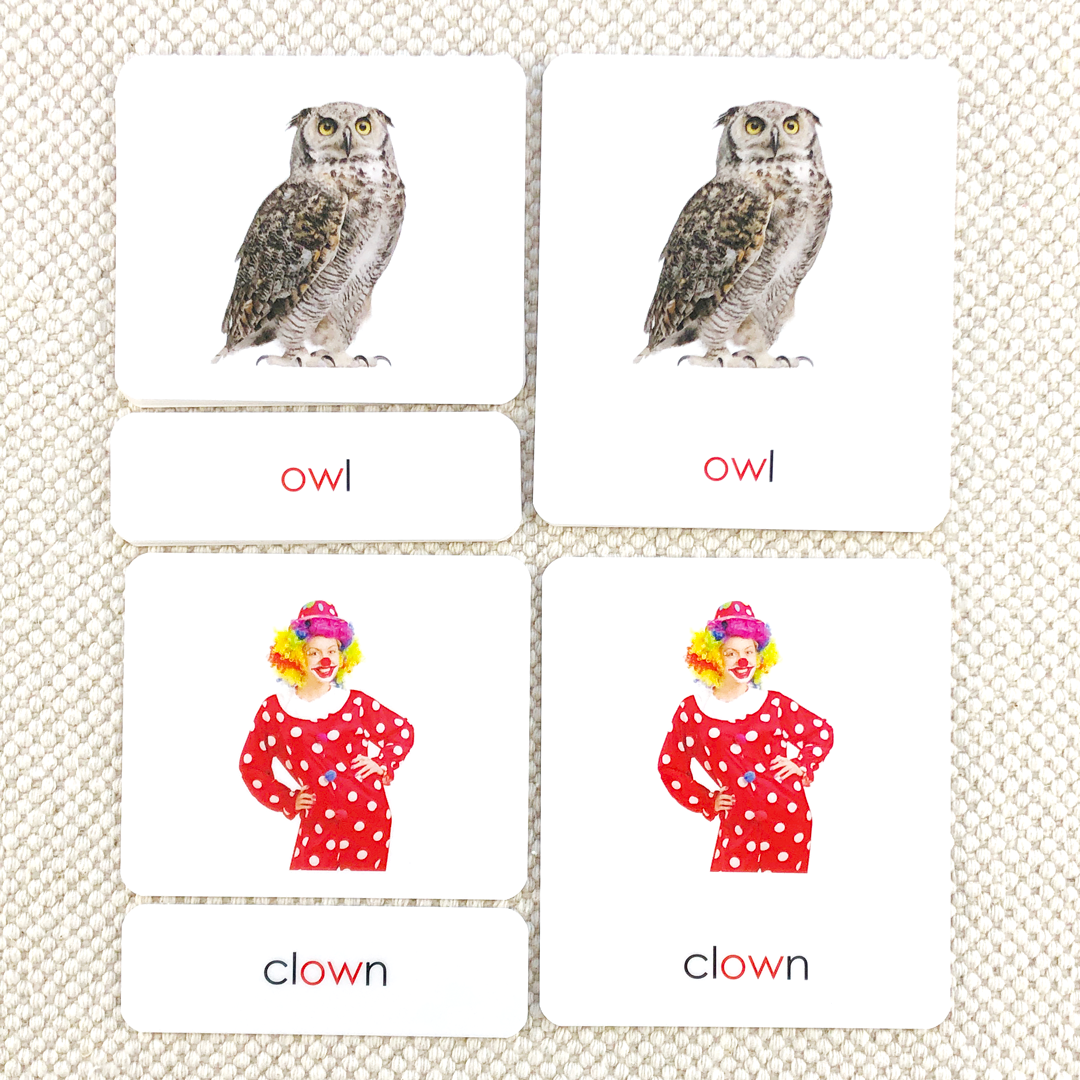
- ow (like owl and clown)
Packets are also sold individually using the links above.
Add a pine 3-pocket foldover cloth pouch for an elegant, student-accessible display. One pouch per packet lets several students work at once.
Created by a Montessori teacher. Eco-printed in our rural New England office.
Made in the USA. CPSIA compliant.
Note: Photos may change from those pictured.
Watch how phonogram 3-part cards work
A short video about our phonetic 3-part cards.
Why do phonogram 3-part cards matter for reading?
Practice is what makes reading easier and, eventually, automatic. Beginning readers want to read, and this format shows them they can. The photos are a scaffold that helps students figure out how to pronounce each word and the red phonogram tells them exactly where the phonogram is. The control cards let students find and fix their own errors, which is how humans learn best, with no teacher correction required.
How do you use phonogram 3-part cards?
First, make sure the student knows the name of each picture (use the three-period lesson if needed). Lay out the photo cards in a column. The student reads each word label and places it under its photo. Then the student places each control card just to the right of its photo/word pair to check and fix any errors independently.
Why is nasal a treated as a phonogram?
Words like man and can often appear in phonetic reading cards, but they aren't truly phonetic. The a in those words is a nasal a. To avoid confusion right from the start, we save those words for this level and teach them with the phonograms.
How do these cards relate to the phonogram object box?
These cards work like the phonogram object box, with a built-in control of error. After your first phonogram object box lessons, move to these cards to keep the reading going while students find and correct their own mistakes.
What should students know before this set?
Students should read Level 1 (CVC) and Level 2 (consonant blend) words, along with the words in our Key Sound Phonograms set. Ideally, they have already built words with phonograms using the movable alphabet.
What ages is this for?
Typically ages 3 to 6, once a student reads Level 1, Level 2, and Key Sound Phonogram words. Older students, English learners, and students in reading intervention also benefit.
What comes after this set?
Next, students move on to our Phonetic Level 4 Set, with more challenging words, including compound words. After that, they're ready for non-phonetic words in our 3-Part Reading Cards.
Choose options
Included In This Bundle
Cards Only
Cards Only
Cards only
Cards Only
Cards only
Cards Only
Cards Only
Cards only
Cards only
Cards Only
Knowledge Bank
Recommended Articles


Download a PDF of our materials

Follow Us