

Fine Art Matching Variety Pack
 Rooted in Neurodevelopment
-

See the Guided Lesson Plan
 High quality materials
 Eco-Happy
 Fun & Engaging Activities

Ages/Stages
Common Core
Clearance item: This product is available only while supplies last. Once it sells out, it won't be restocked. All clearance sales are final. See all clearance items.
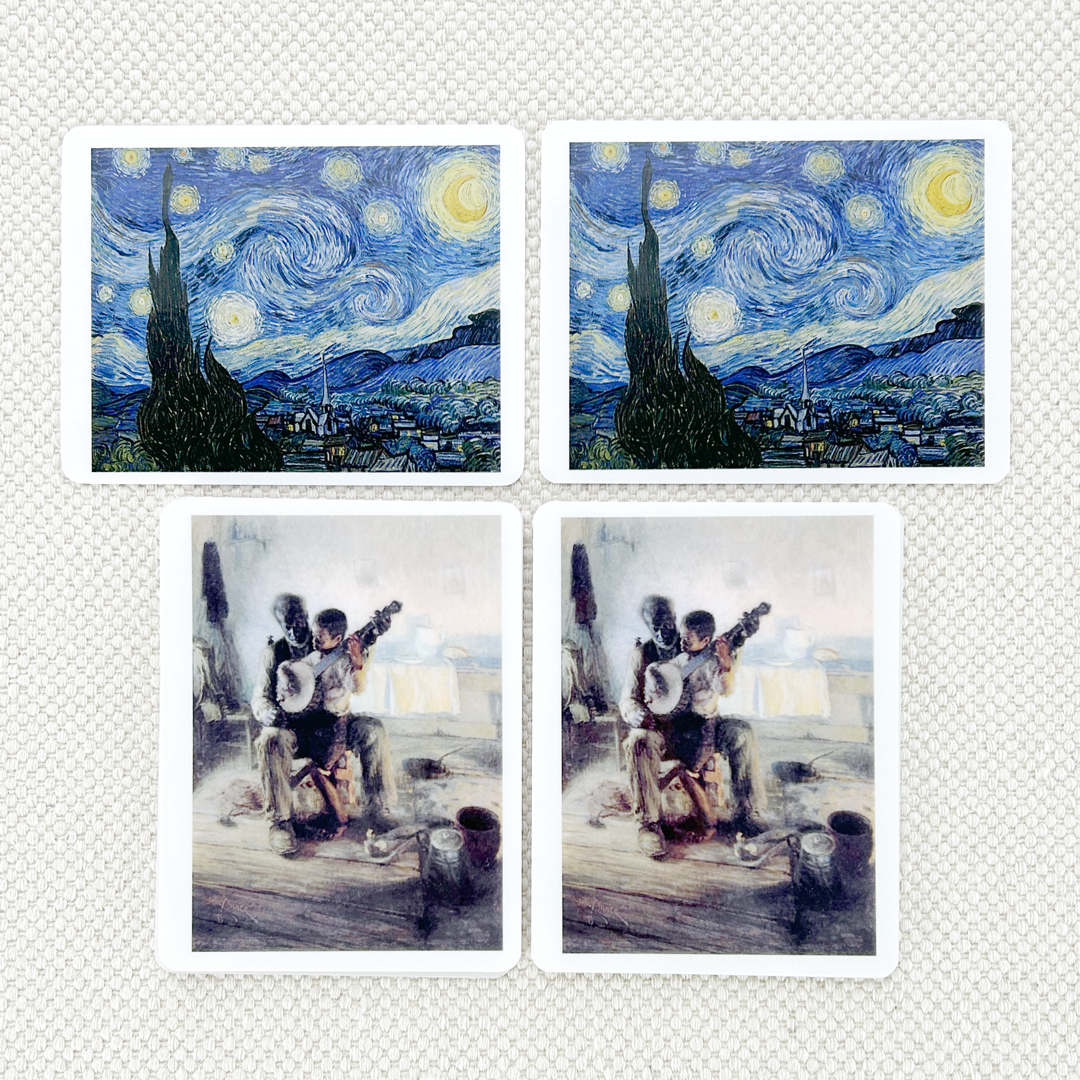
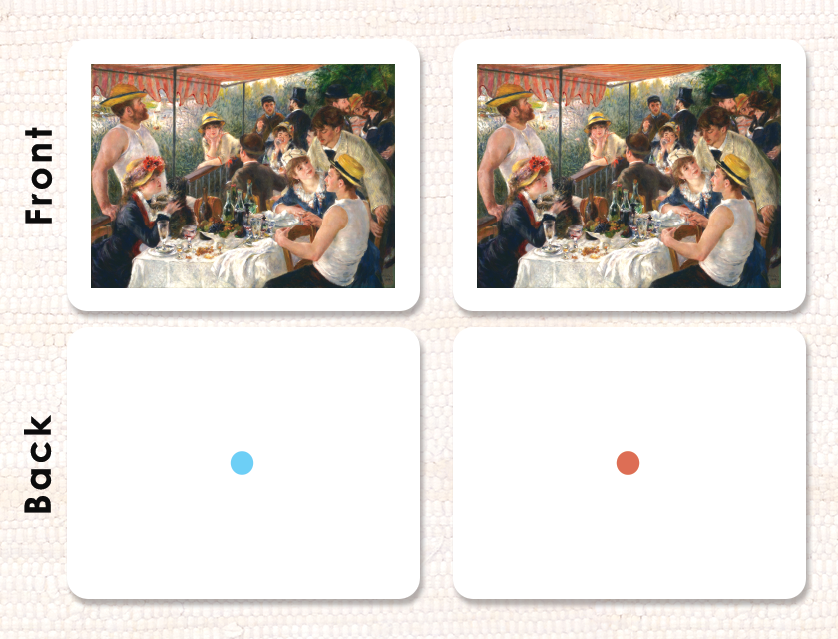
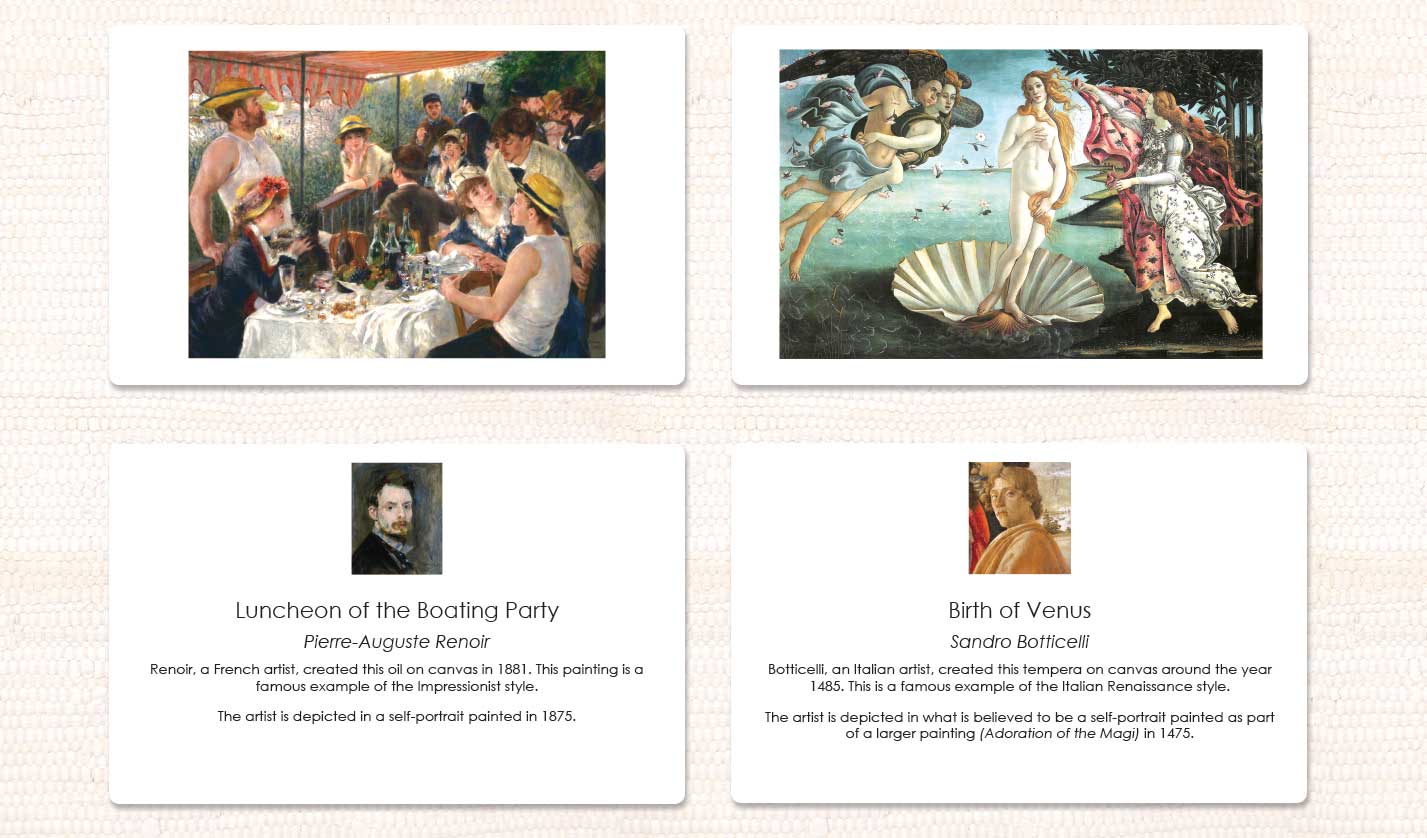
Our Fine Art Matching Variety Pack pairs two identical sets of famous artworks so students can practice naming the art they have come to love. It has 12 works of art from Europe, America, and around the world, with 24 cards in all. There is no text on the cards, so pre-readers can work independently.
These cards are larger than our traditional matching cards, so students can look closely at the details of each piece. Use them after students know the art from our Fine Art Display Cards. Students can match side by side, match across a distance, and play memory games.
What's included
- 24 cards: two identical sets of 12 works of art
- A red or blue dot on the back of each card, so students can sort the two sets
- No text on the cards
- A printed reference key with the name and artist of each work
- Cards are approx. 4¼" x 5½"
- Rounded corners
- Sturdy, clear reclosable bag for teacher storage
- Lesson plan included
Add a 2-pocket cloth pouch for an elegant, student-accessible display. We like to use a teal pouch, but you can choose another color. Just add a note to your order.
Looking for more art, or for a set that will stay in stock? See our Fine Art Matching Cards, available in six series.
Created by a Montessori teacher. Eco-printed in our rural New England office.
Made in the USA. CPSIA compliant.
Note: Photos may change from those pictured.
Why do fine art matching cards matter for reading?
Interest drives learning. Montessori is a student-centered approach: the teacher observes what each student is curious about and offers materials that match. Students often form strong attachments to particular works of art, and they will choose those works again and again. Each time is more practice naming the art and discussing what they see. That practice builds vocabulary and background knowledge, two of the language comprehension strands of Scarborough's (2001) reading rope. A student who knows Van Gogh's The Starry Night now will understand more when they later meet it in a text.
How do you use the Fine Art Matching Variety Pack?
First, make sure students know the art. Use our Fine Art Display Cards, or teach the names with one set of these cards and the three-period lesson. Start with just a few works of art if 12 is too many, and add more as students are ready. Then:
- Sort: Students use the dots on the back to make a red pile and a blue pile.
- Match side by side: Students lay out one set and place each matching card next to its partner, naming the art as they go.
- Match at a distance: Students place one set across the room and carry each card over to find its match. This adds purposeful movement and a reason to repeat the work.
- Play memory: Students turn the cards face down in a grid and play a classic memory game.
What comes after fine art matching cards?
When students begin to write, invite them to write about their favorite art using the movable alphabet, a chalkboard, or pencil and paper. When they are reading non-phonetic words, move on to Fine Art 3-Part Reading and Artists 3-Part Reading. Finally, students can match each artwork with both its title and its artist using our Fine Art 4-Part Cards.
What ages is this for?
Typically ages 3 and up. The cards have no text, so they work for pre-readers. They also work for older students who love art, English learners, and students who need extra vocabulary support.
Choose options
Knowledge Bank
Recommended Articles


Download a PDF of our materials

Follow Us