
Digraph Decoding Kit
 Rooted in Neurodevelopment
 High quality materials
 Eco-Happy
 Fun & Engaging Activities
Common Core
Digraphs — two-letter combinations that represent a single sound, like ch, ee, sh, and th — are a core piece of systematic phonics instruction and the next step after basic phonetic decoding. This kit gives PreK-2 students self-correcting, structured practice moving from key sound digraphs to more advanced patterns, including silent e and multi-syllable words. It follows the Phonetic Decoding Kit.
What's Included:
-
Teacher Curriculum/Lesson Plans — step-by-step guidance for implementation.
-
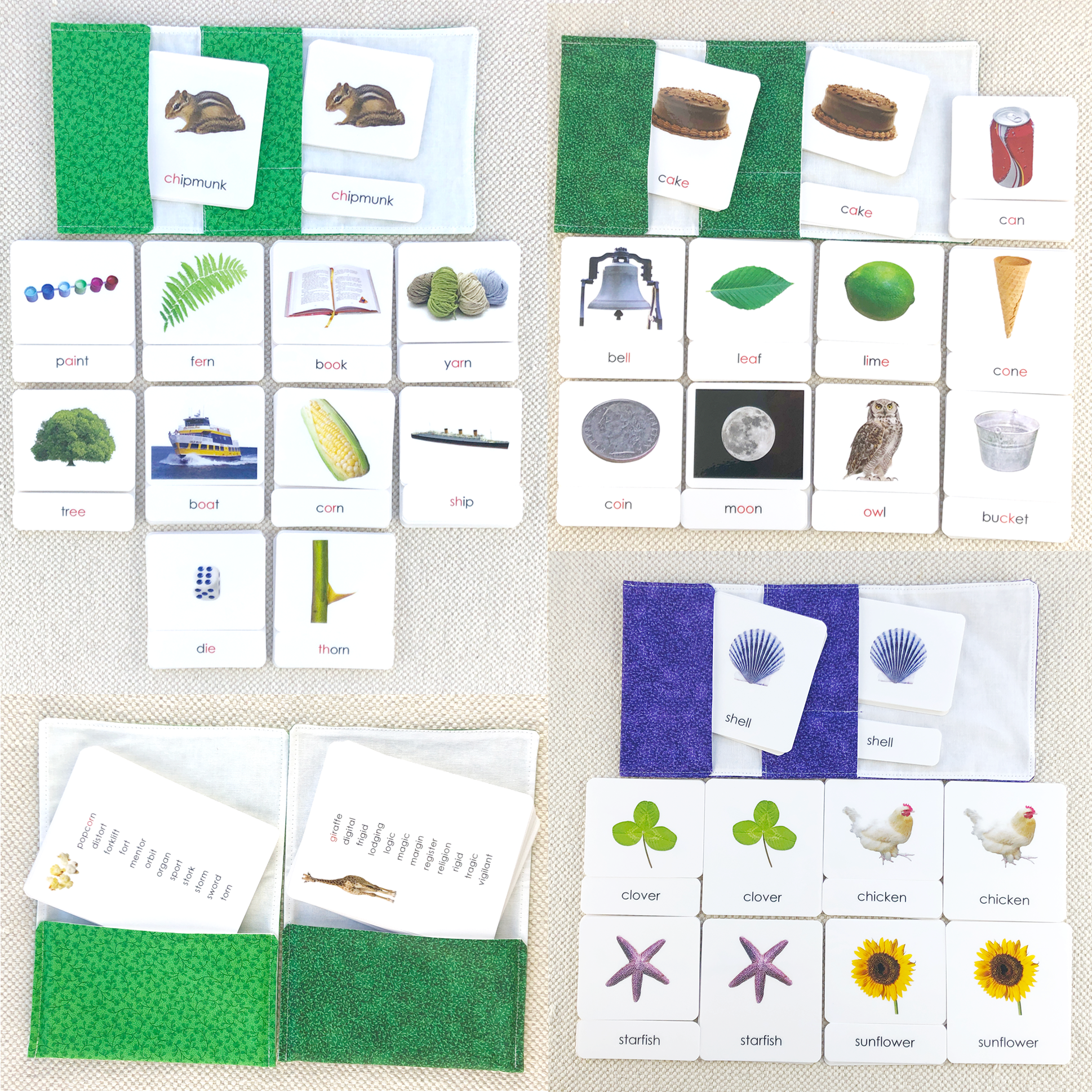
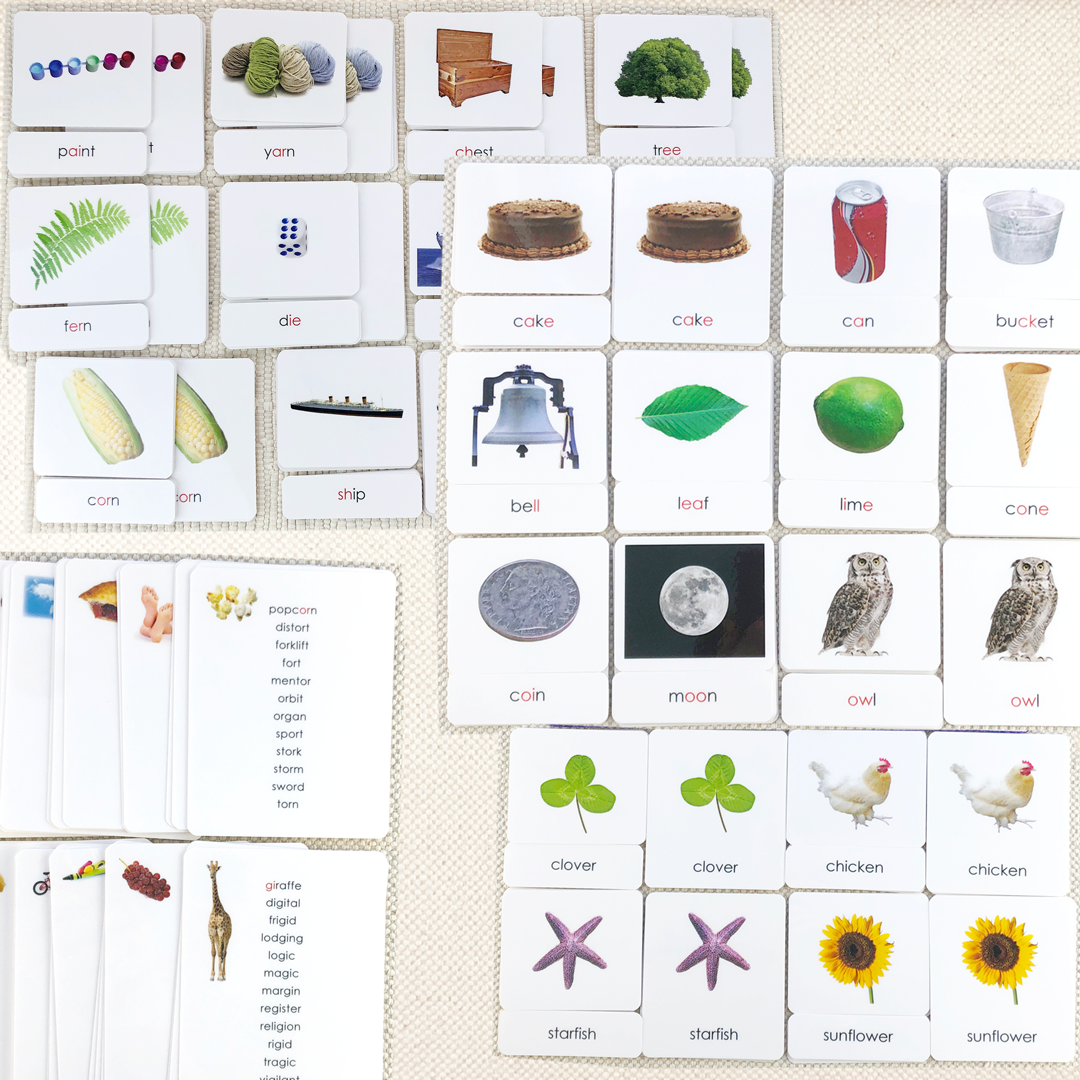
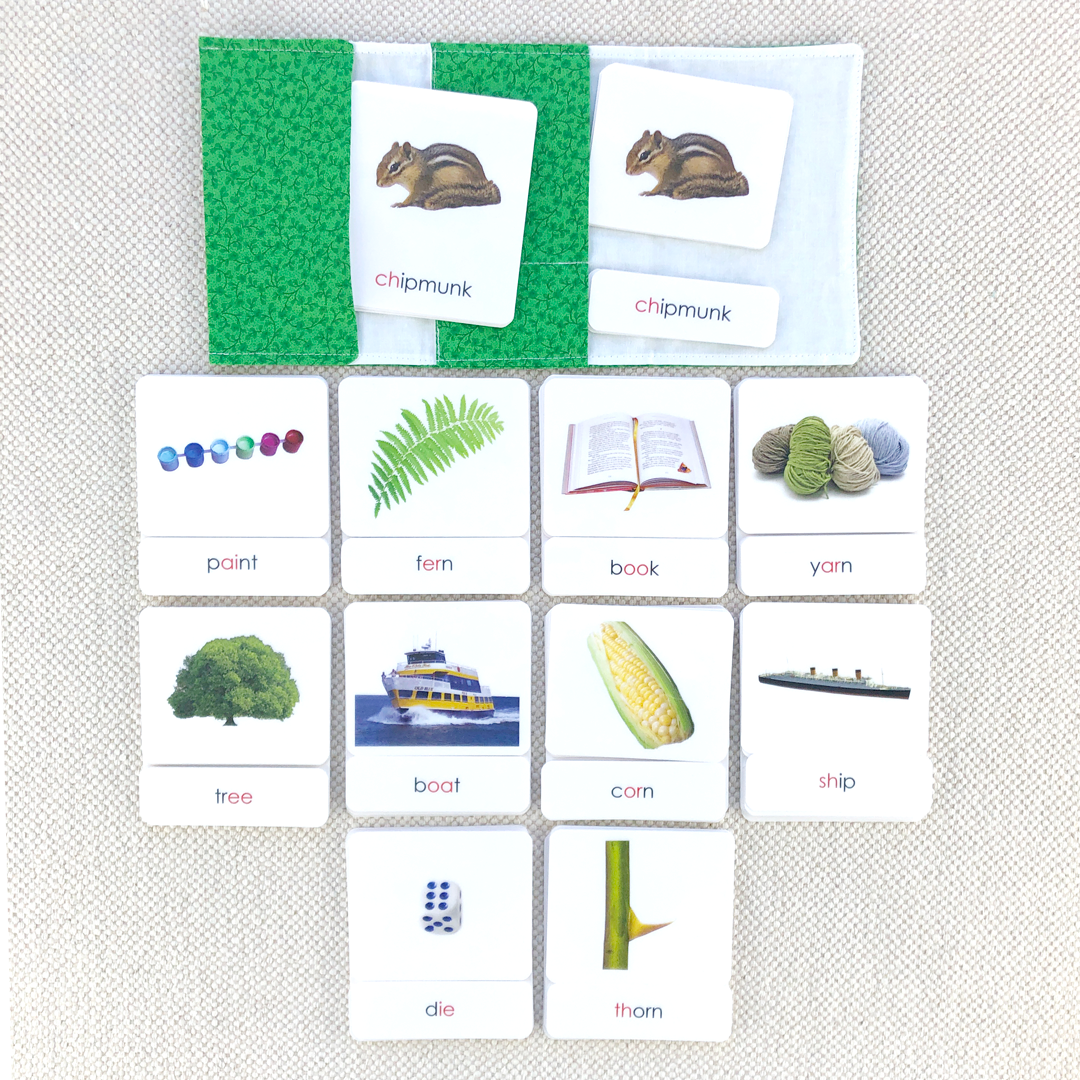
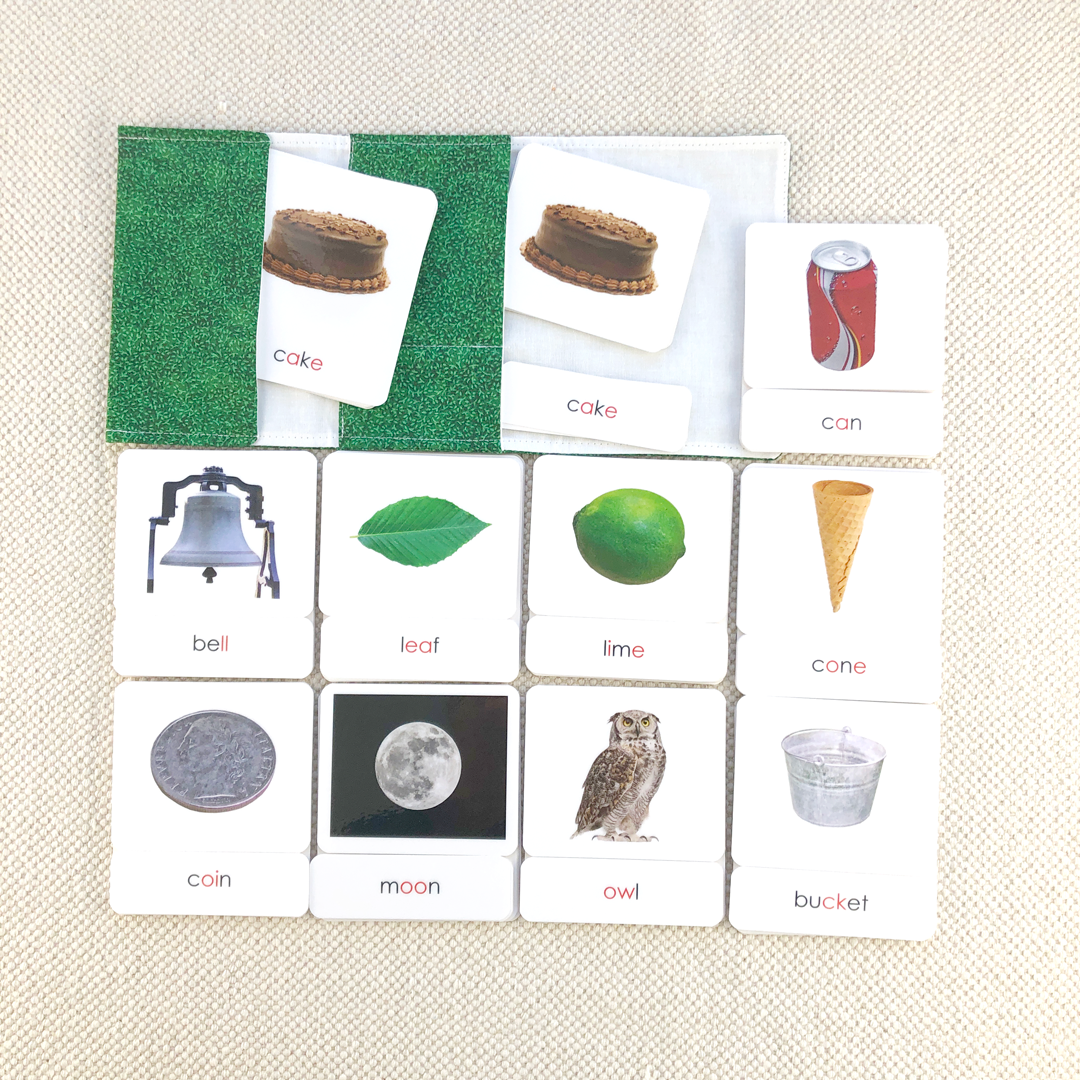
Traditional Digraph self-correcting 3-part cards (11 packets) — key sound digraphs with the digraph isolated in red: ai, ar, ch, ee, er, ie, oa, oo, or, sh, and th (Level 3, Group 1)
-
Other Common Digraphs and silent E self-correcting 3-part cards (10 packets) — more advanced patterns isolated in red: a silent e, nasal a, ck, ea, i silent e, o silent e, oi, moon oo, ow, and double letters (Level 3, Group 2)
-
Combined Digraphs self-correcting 3-part cards (5 packets) — words featuring multiple digraphs and complex phonograms (Level 4)
-
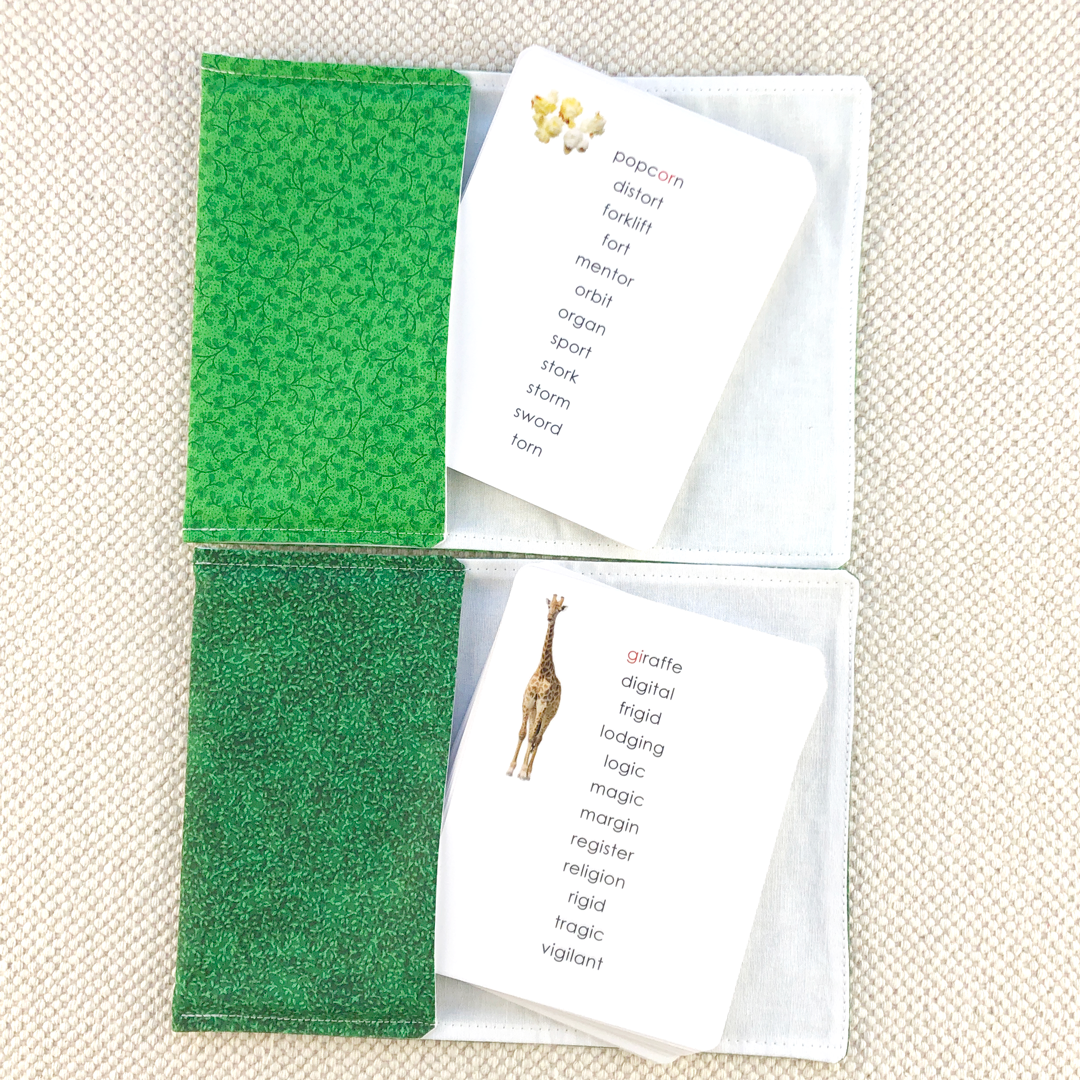
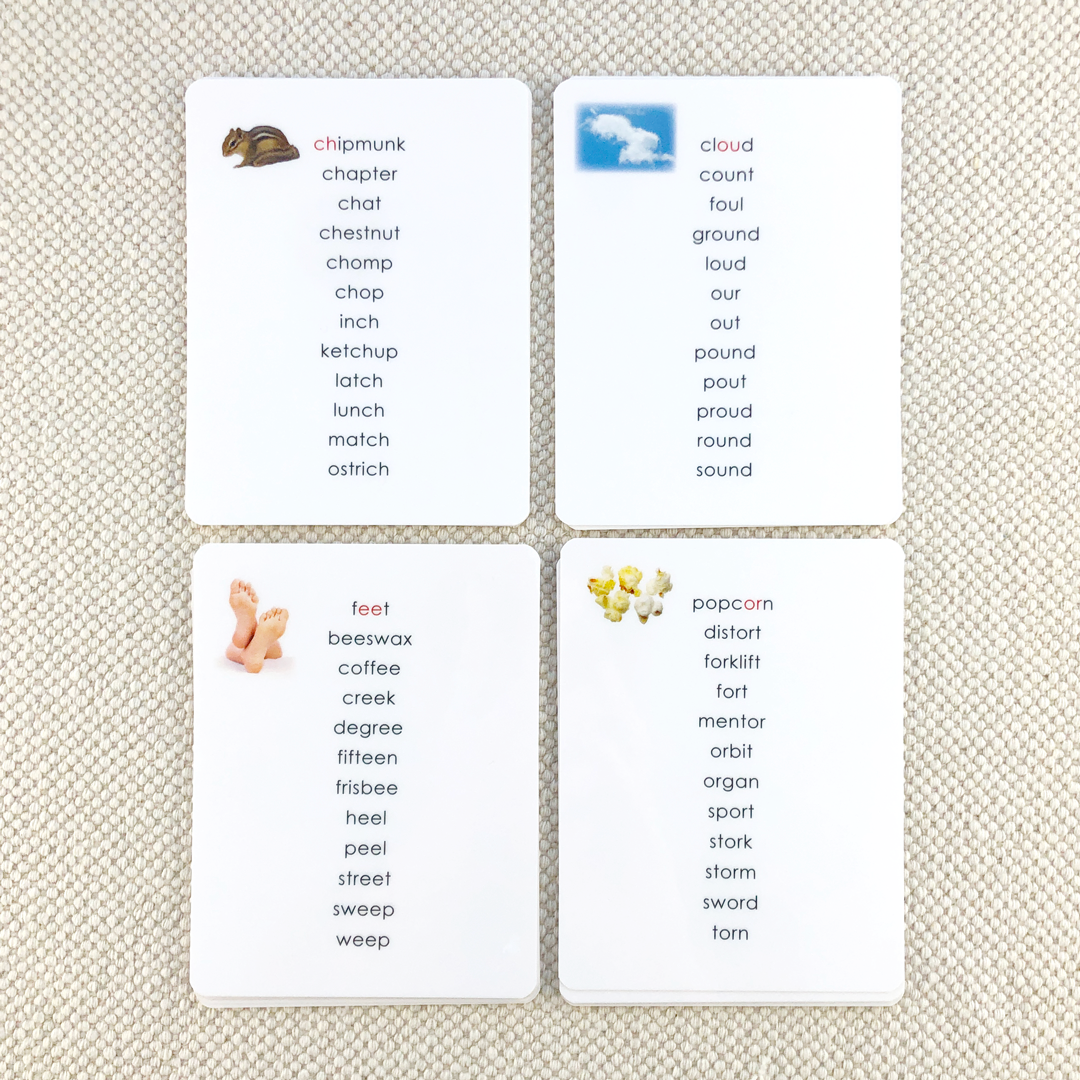
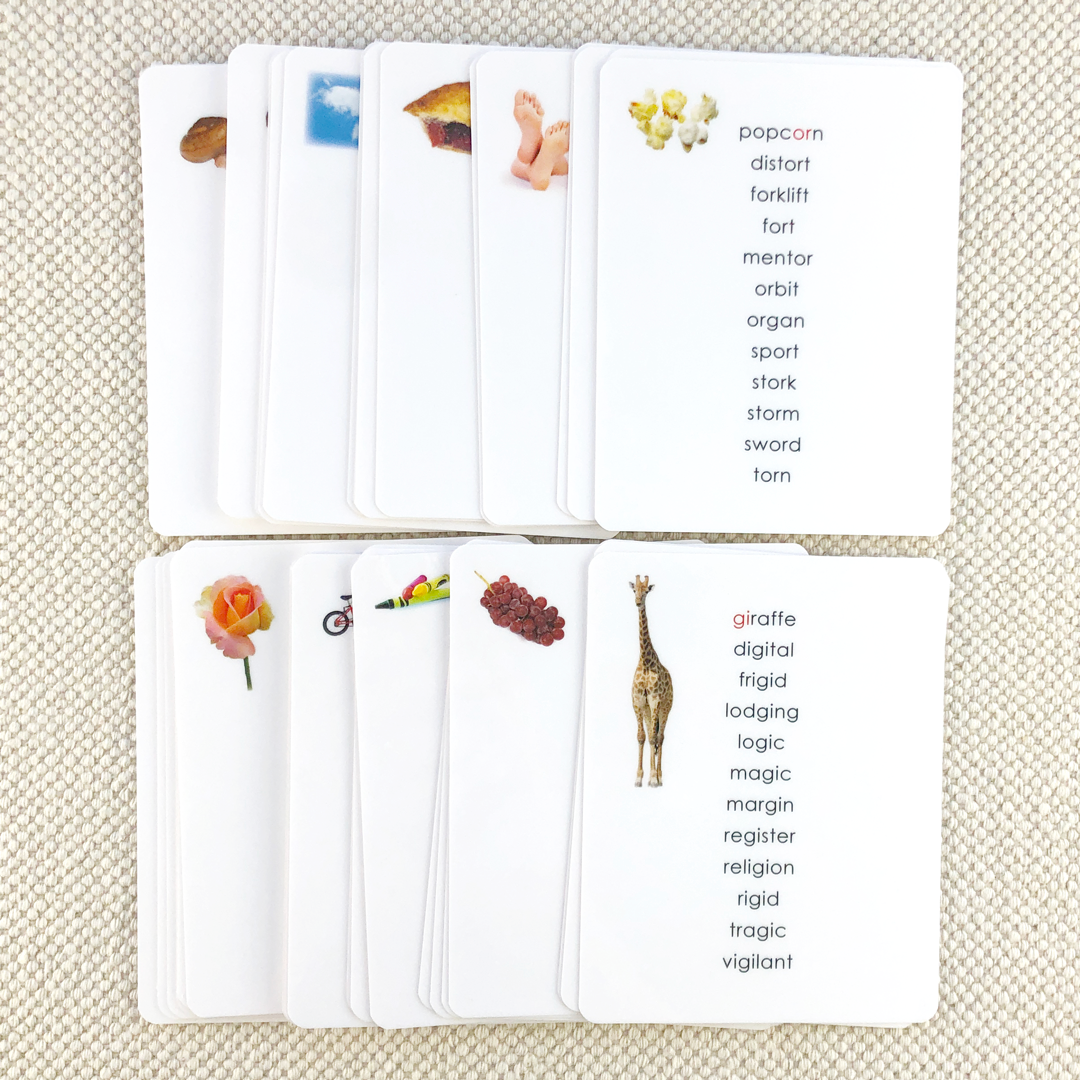
Phonogram Word Lists (2 packets) — reference lists covering every digraph and phonogram in the kit.
Add-on Cloth Pouches
-
Add-on five color-coded pouches to support a rotation system — swapping card sets weekly to keep material fresh over months of use:
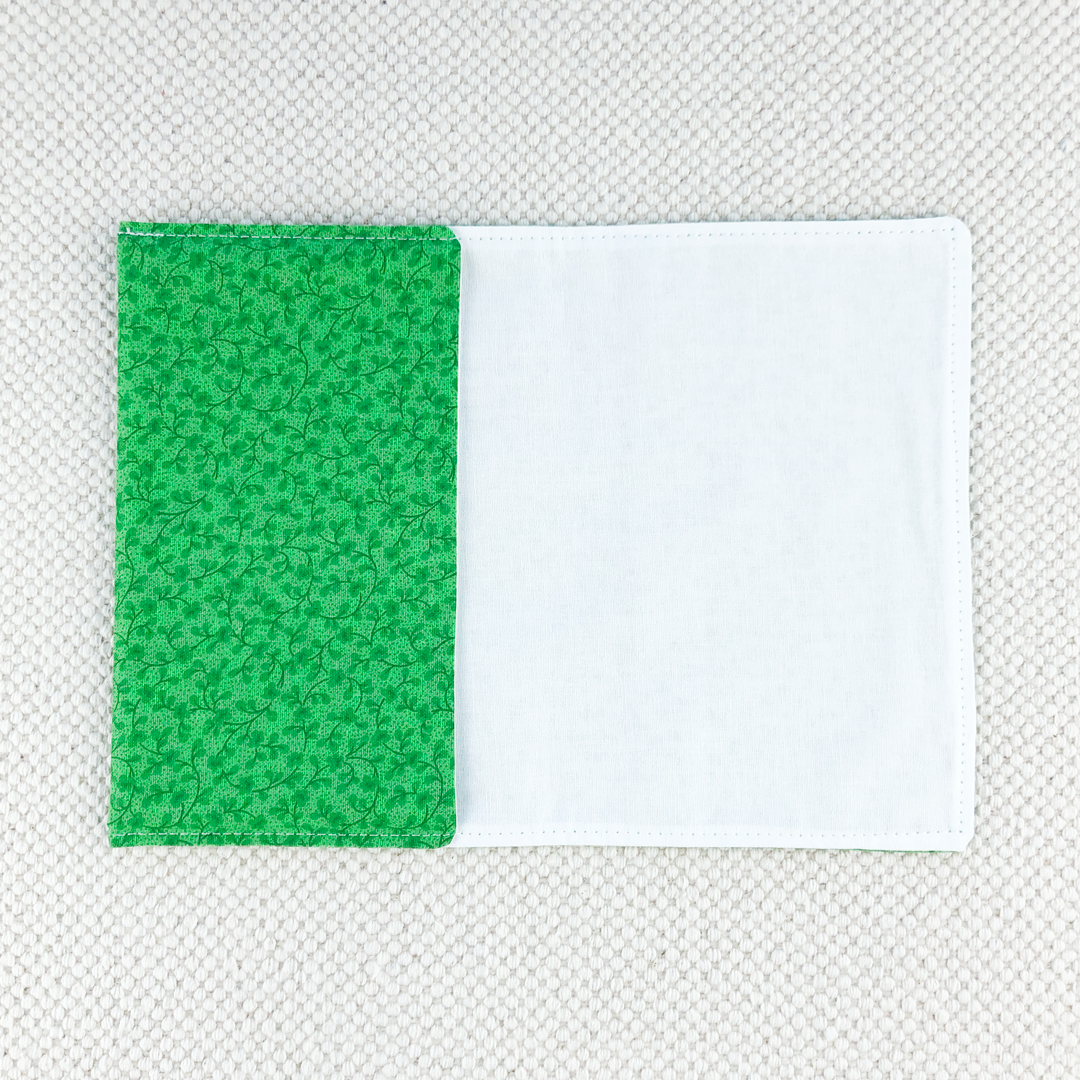
- One green 3-pocket pouch for phonetic level 3, group 1 cards
- One pine 3-pocket pouch for phonetic level 3, group 2 cards
- One purple 3-pocket pouch for phonetic level 4 cards
- One green chart-sized pouch for phonetic lists, group 1
- One pine chart-sized pouch for phonetic lists, group 2
How the kit builds skills:
-
Step 1 — Level 3, group 1: Students independently read traditional digraph words, match them to photos, and self-check with the control card.
-
Step 2 — Level 3, group 2: Students repeat the process with other common digraphs and silent e patterns.
-
Step 3 — Level 4: Students read combined digraph words, applying skills from steps 1 and 2.
-
Step 4 — Students work alone or in pairs reading digraph word lists. Extend the work by playing dictation games where they try to correctly write down/spell the words the other child reads to them. The List acts as a built-in control of error so students can check their own work.
-
Step 5: Repeat step 4 for other charts. Build in a self-assessment by asking students to choose a chart they haven't read yet.
The self-correcting 3-part card design lets students identify their own errors without teacher intervention.
What is the Science of Reading?
The Science of Reading is the interdisciplinary body of research — from cognitive psychology, linguistics, and neuroscience — explaining how children learn to read. It identifies two foundational components of skilled reading: language comprehension (understanding language) and word recognition (decoding), which lead towards reading comprehension (Gough & Tunmer, 1986).
What is Scarborough's Reading Rope?
Scarborough's Reading Rope is a model depicting skilled reading as several strands — including vocabulary, phonological awareness, and decoding — that weave together as a child develops literacy (Scarborough, 2001). The Digraph Decoding Kit targets strands from both the Language Comprehension and Word Recognition sides of the rope.
What ages is this kit designed for?
Ages 3–9. This range aligns with Montessori's sensitive period for language, when children are especially receptive to vocabulary acquisition and the alphabetic code.
How is this kit Montessori-aligned?
These materials are found in most Montessori language albums; they use self-correcting, hands-on cards that isolate one skill at a time, allow independent work, and follow the concrete-to-abstract sequence Montessori education is built on.
Product Details
A Note to Teachers
Choose options
Included In This Bundle
Cards + One Green 3-Pocket Pouch
Cards + one Pine 3-Pocket Pouch

Cards + One Purple 3-Pocket Pouch
Phonogram List Set: All 38 Phonogram Lists / Cards Only
Green
Knowledge Bank
Recommended Articles

Download a PDF of our materials

Follow Us