Toddler Collection
 Rooted in Neurodevelopment
-

See the Guided Lesson Plan
 High quality materials
 Eco-Happy
 Fun & Engaging Activities

Ages/Stages
Common Core
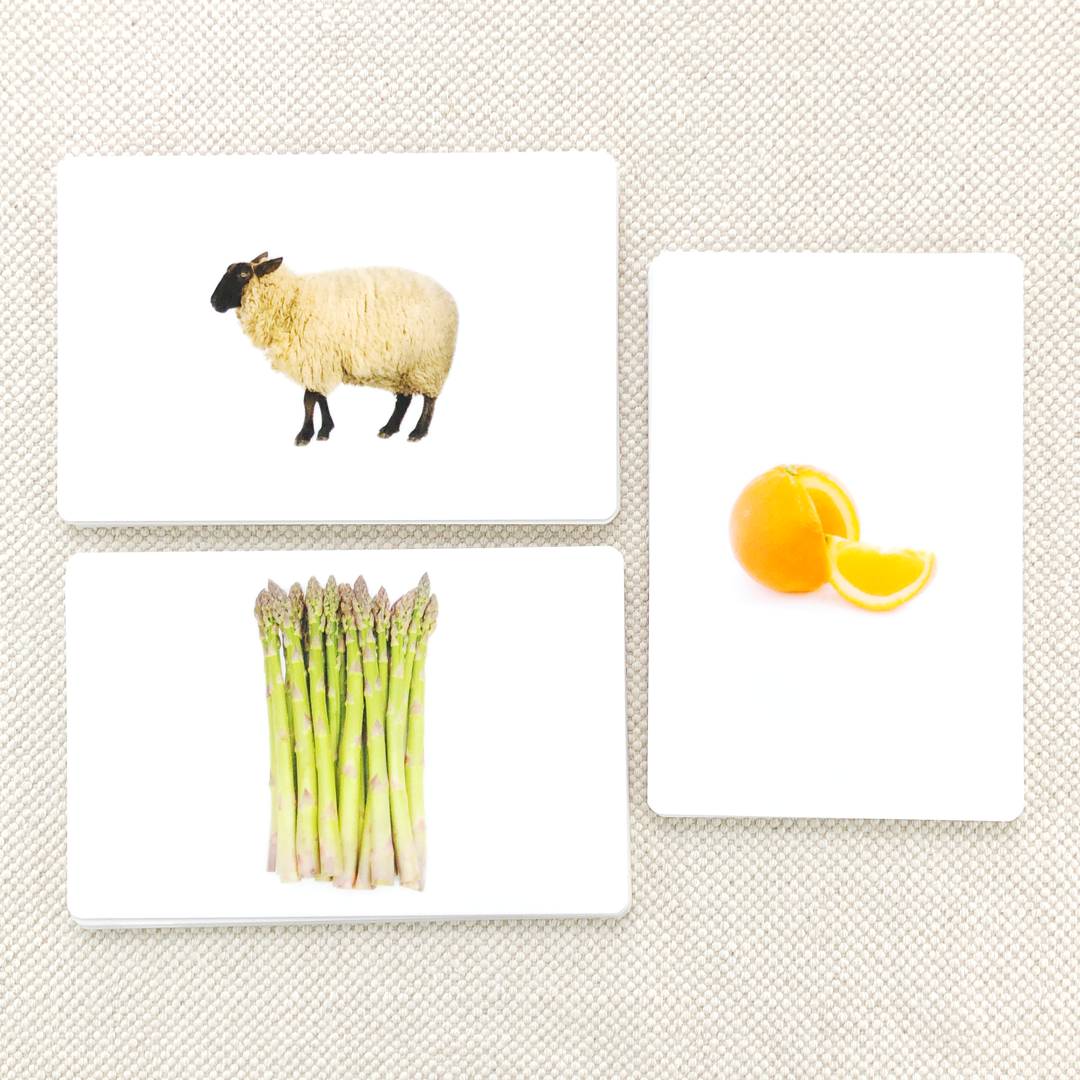
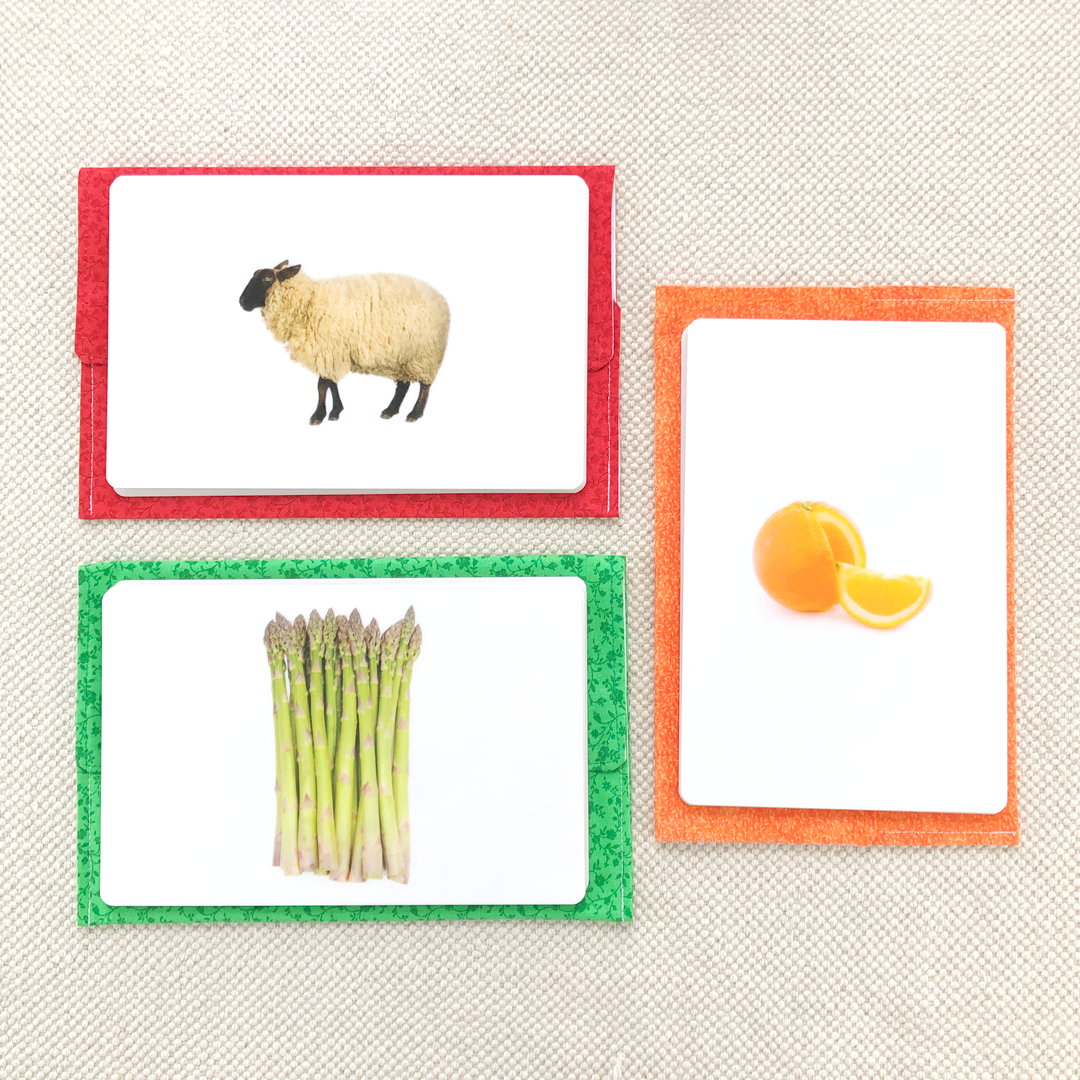
Our Toddler Collection brings together all three of our Montessori toddler vocabulary card packets: Farm Animal, Fruit, and Vegetables. That's 36 real, background-free photographs of familiar things on large cards. The objects are shown in proportion to each other, so toddlers see realistic relative sizes (the cow is larger than the chicken; the peach is smaller than the pineapple).
Use the cards for vocabulary lessons, for conversation, for matching to figurines or real objects, and before or after visits to a farm, orchard, or market. Rotating the three topics on the shelf keeps the work fresh as a toddler's interests change.
What's included
- Three packets of 12 cards each (36 cards total): Farm Animal Toddler Cards, Fruit Toddler Cards, and Vegetables Toddler Cards
- One real photograph per card, with no background (see photos for list)
- Name printed on the back for the adult
- Objects shown in sizes proportionate to each other
- Cards are approx. 5½" x 8½"
- Extra-sturdy 8 mil food-grade laminate with rounded corners
- Each packet comes in a sturdy, clear reclosable bag for adult storage
- Lesson plan included
You can add on extra-large cloth pouches to display the cards beautifully. Toddlers love taking the cards in and out of the pouch!
Created by a Montessori teacher. Eco-printed in our rural New England office.
Made in the USA. CPSIA compliant.
Note: Photos may change from those pictured.
Why do toddler vocabulary cards matter?
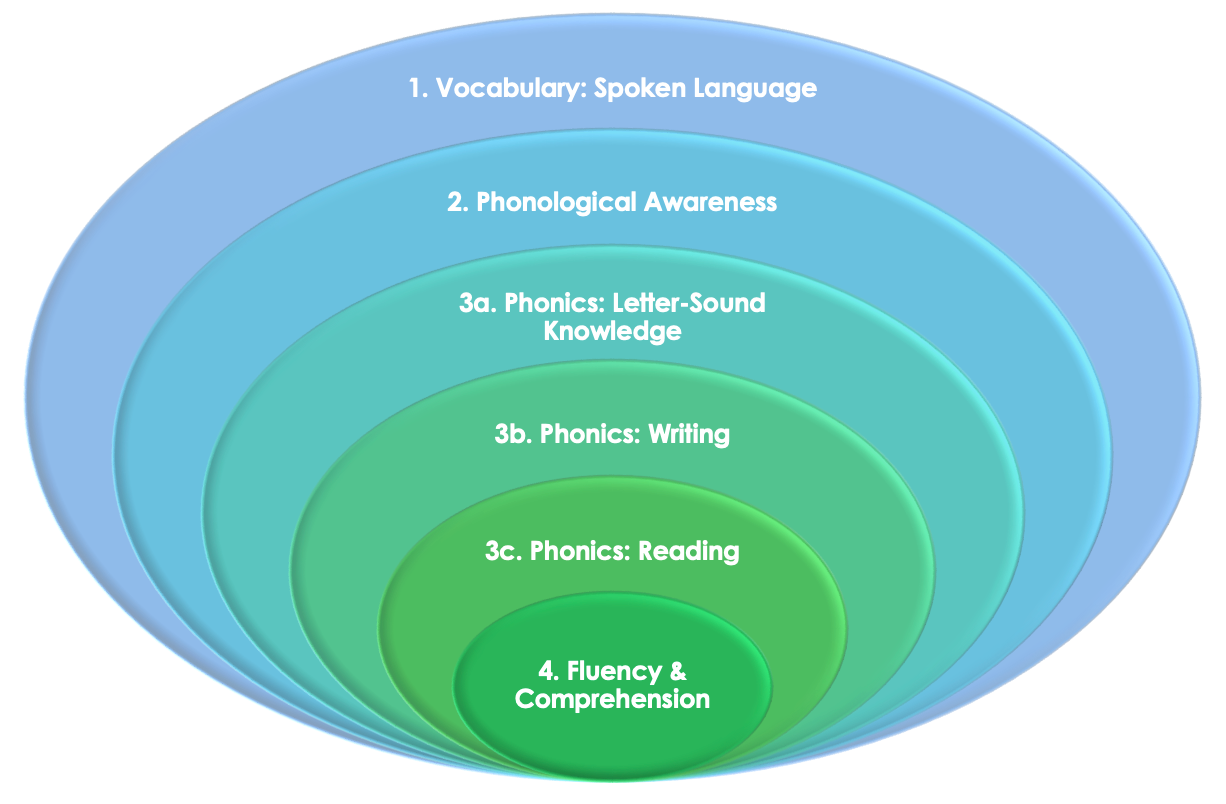
The vocabulary a young child builds becomes one of the strands that supports later reading comprehension (Scarborough, 2001). A toddler learns a word by experiencing the thing it names while hearing someone name it. Vocabulary cards extend that exposure beyond the objects in the room, and they help a toddler understand that a three-dimensional object can be represented in two dimensions. The cards develop and enrich vocabulary, directly prepare the child for conversation and self-expression, and indirectly prepare the child for reading and writing.
How do you use toddler vocabulary cards?
Start with one packet and choose 3 to 8 cards the child already knows as real objects. Sit at the child's eye level and speak clearly so the child can see your mouth move. First, name each card while the child touches, holds, or places it. Then ask the child to do something with each card while you repeat its name: "Can you put the lettuce on the mat?" "Will you hand me the carrot?" With toddlers, we typically give only these first two periods of the three-period lesson and save the third ("What is this?") until the child is ready to succeed. Keep the lesson going only as long as the child is interested, and add new cards and packets as the child's vocabulary grows.
Why are the photos shown in proportion?
Toddlers take things literally. Most picture cards show every object at the same size, so a chicken looks as big as a cow. Our photos keep objects in proportion to each other within a packet, so the cards match what the toddler sees in real life and, thus, makes more sens to them. This makes it easier to connect each picture to the real thing, and it gives you natural openings for conversation about big and small.
What ages is this for?
Typically 18 months to 3 years, from first words through the toddler years of rapid vocabulary growth. The cards also work well for older children who need oral vocabulary support and in intervention settings.
Choose options
Knowledge Bank
Recommended Articles
Download a PDF of our materials

Follow Us