
Spelling & Decoding Kit
 Rooted in Neurodevelopment
 High quality materials
 Eco-Happy
 Fun & Engaging Activities
Ages/Stages
Common Core
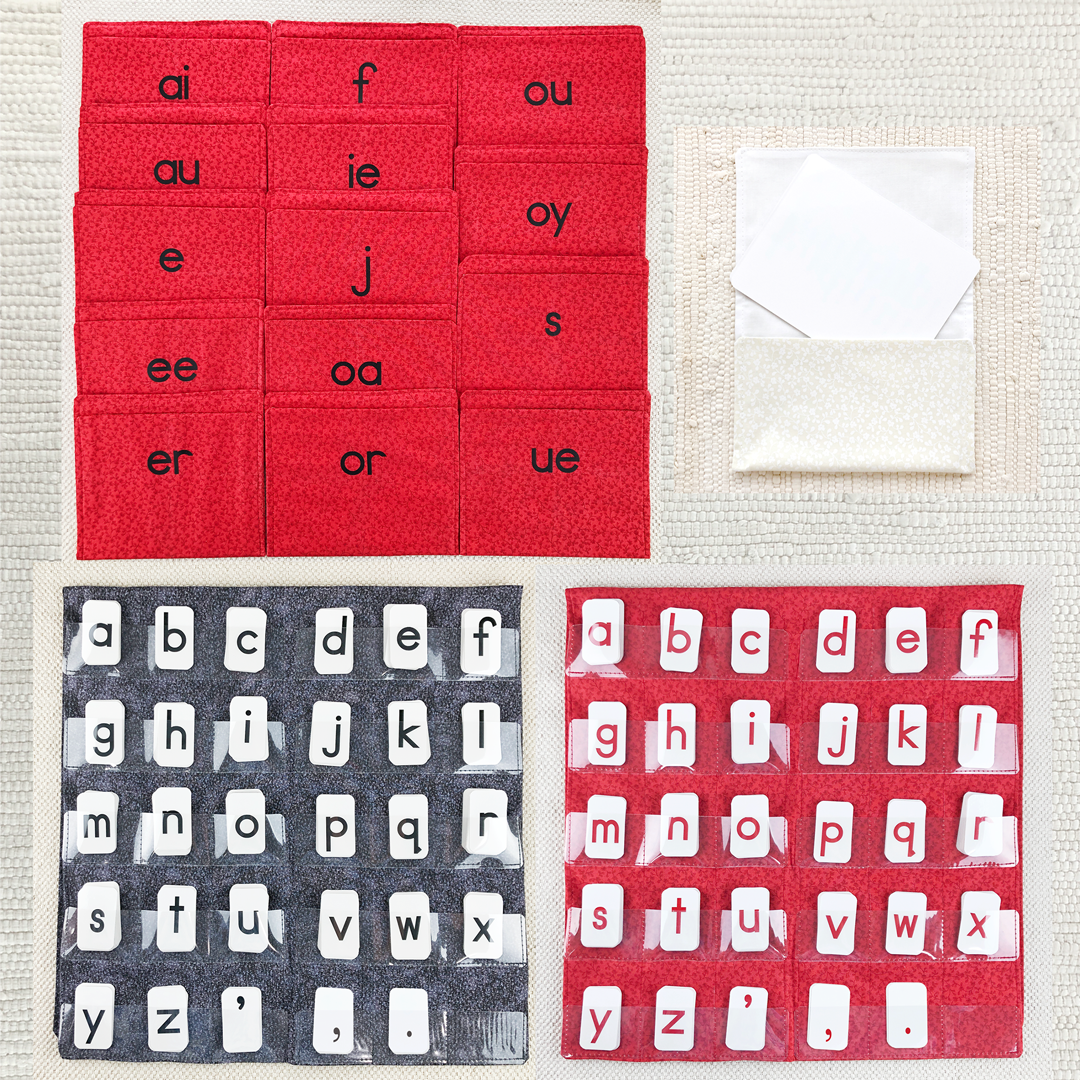
Once a child starts asking how a word is spelled, they're ready to move beyond phonetic spelling toward accurate, conventional spelling. The Spelling & Decoding Kit brings together four core Montessori spelling materials to guide children from phonetic to conventional spelling.
How the kit works:
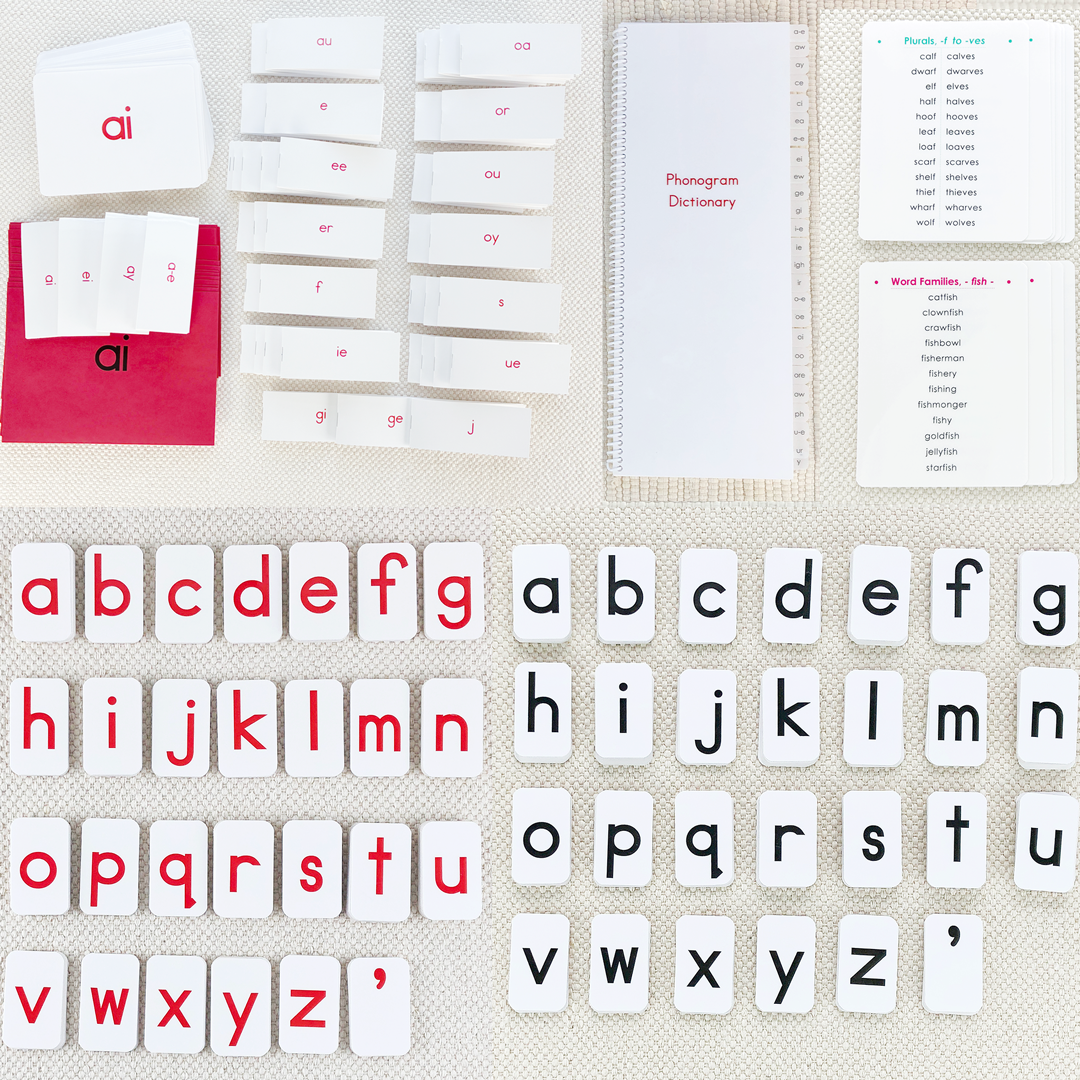
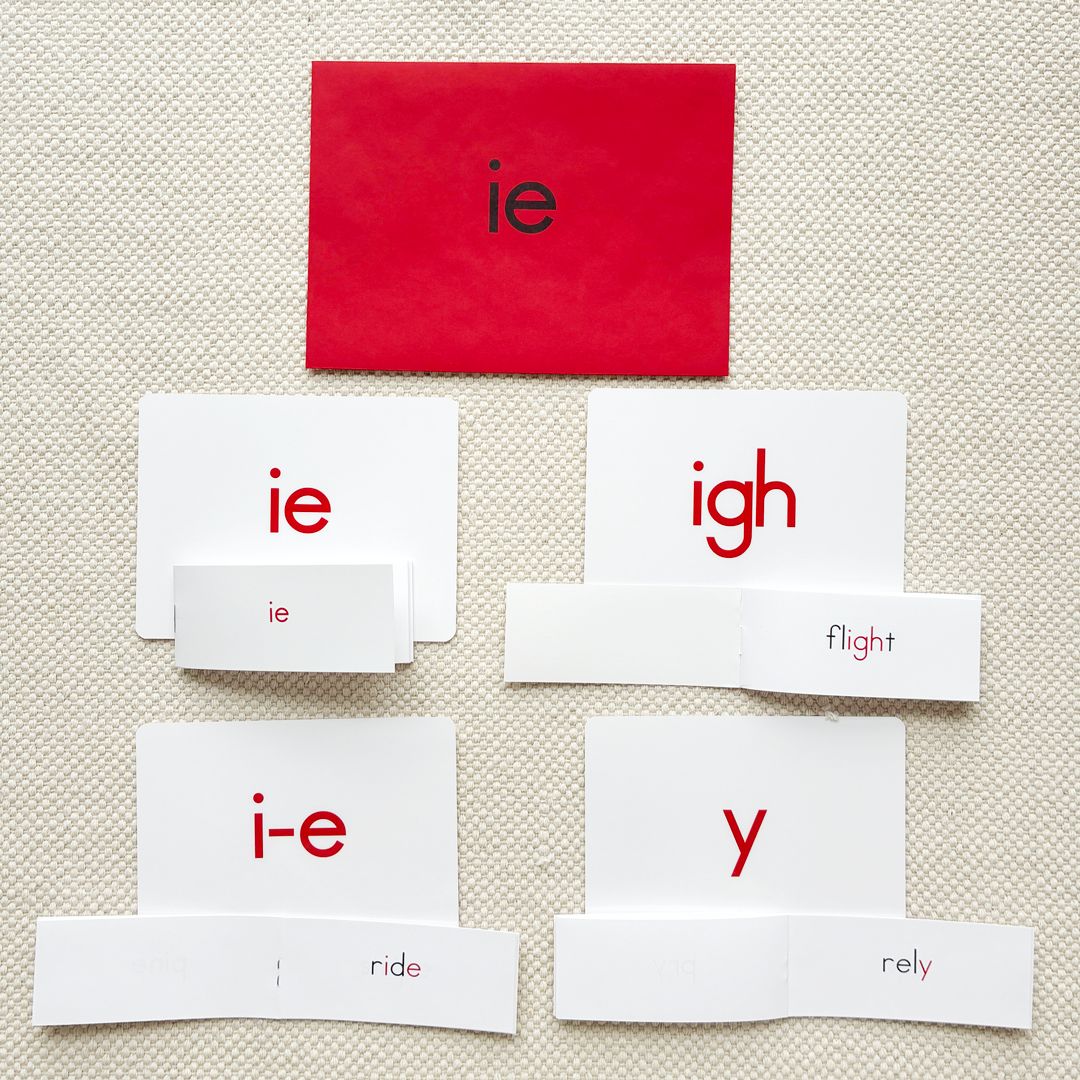
Start with the Dwyer Phonogram Spelling Folders. These cards and booklets take a logical and sequential approach to helping beginning readers learn about common spelling variations.
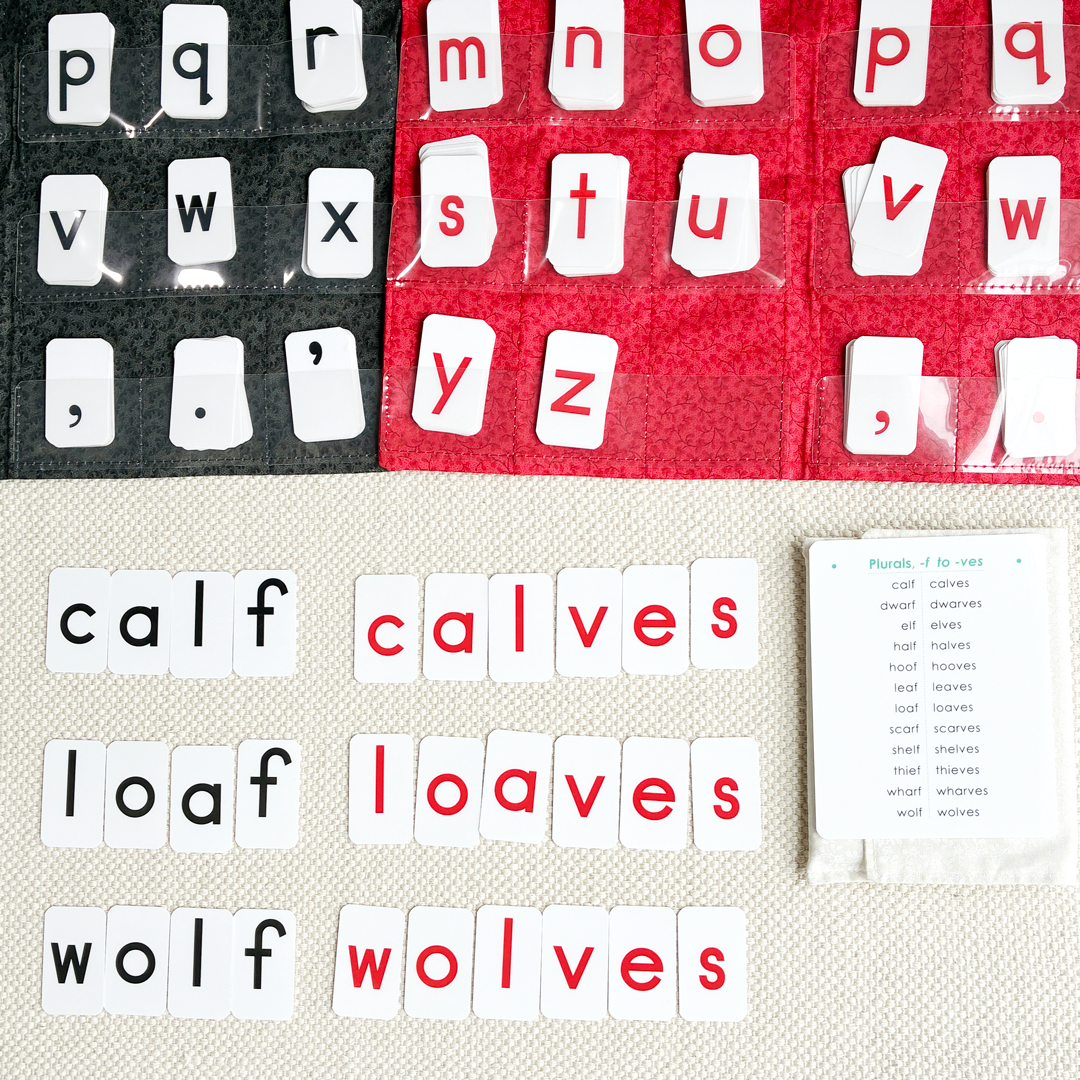
Then, use the Solid Color Alphabets (red and black) to build and isolate phonograms, prefixes, suffixes, and all other aspects of words. Because the letters are moved and rearranged rather than written by hand, children can freely test out a spelling, see that it doesn't look right, and simply move the letters again — without the frustration of crossing out or erasing on paper. The Word Study Spelling charts are the perfect compliment to these alphabets for spelling dictation games.
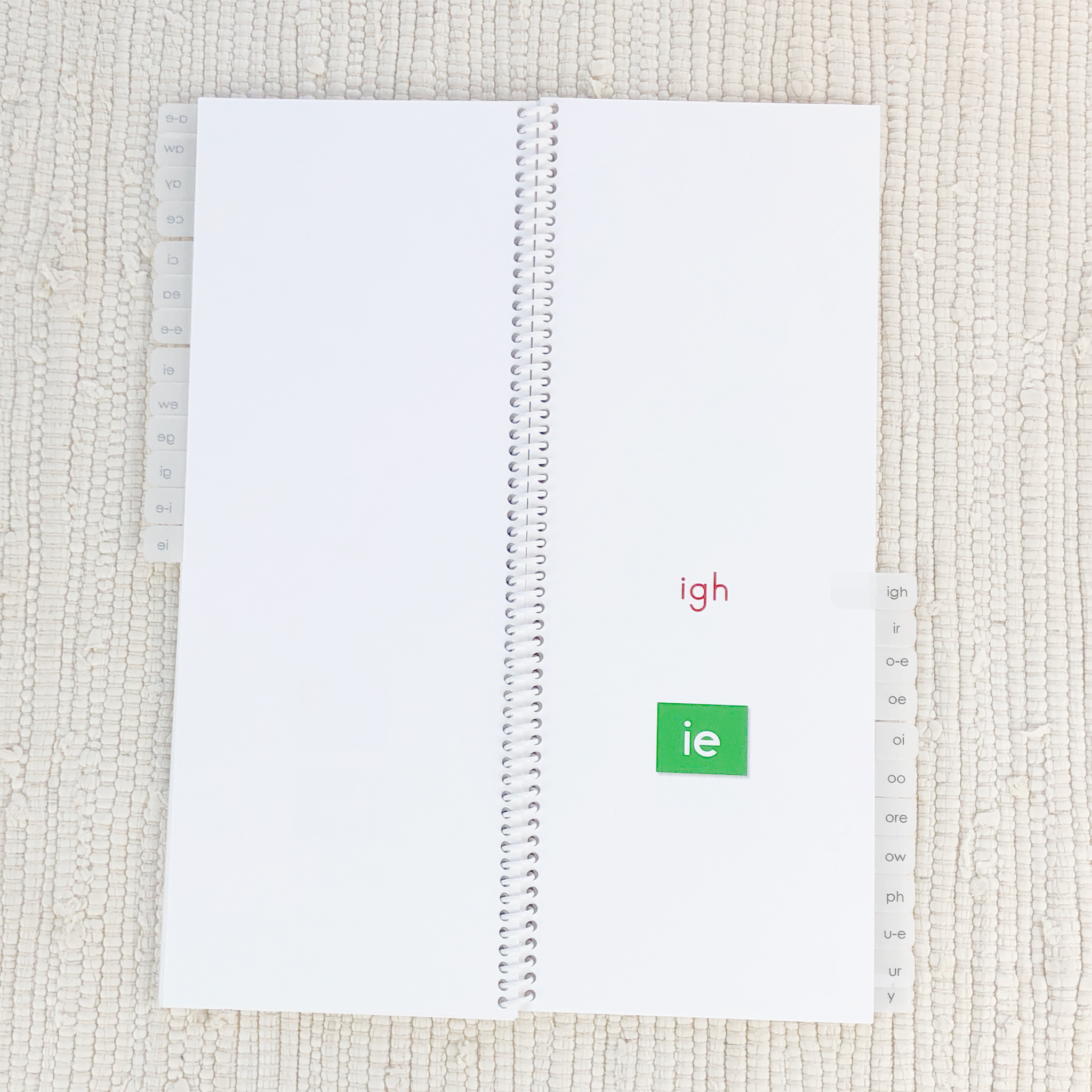
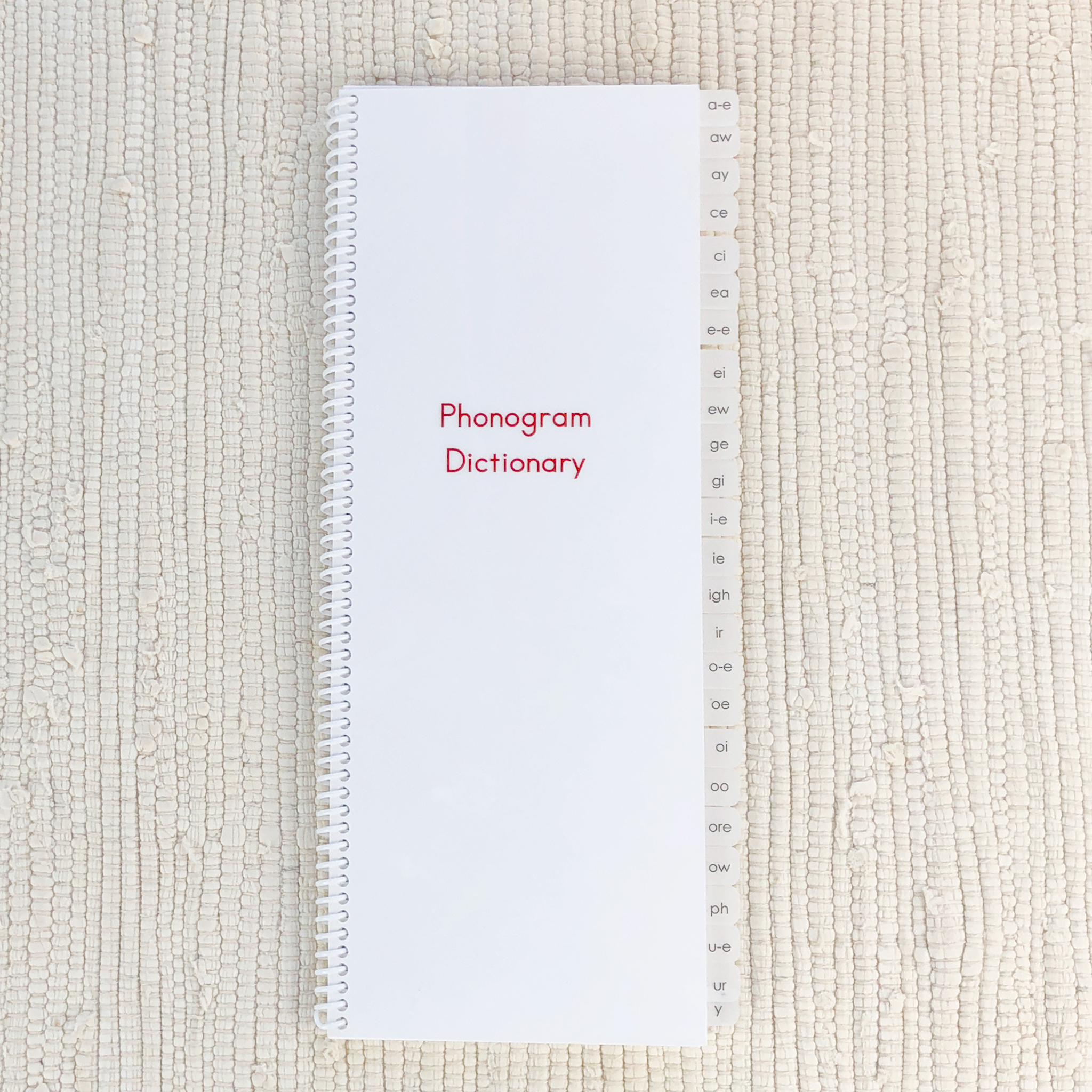
Use the Phonogram Dictionary to help young readers as they find unexpected spellings in their texts. They look up the spelling variation and can refer back to its key sound root and, thus, decipher the word of interest.
What's included:
- Phonogram Spelling Folders: 42 cards, 42 booklets (stapled), and 42 paper envelopes
- Phonogram Dictionary (print font indexed alphabetically)
- Red Movable Alphabet
- Black Movable Alphabet
- Word Study Spelling Charts
Add-on cloth pouches to beautifully display these cards so they are easy to use and keep organized:
- Upgrade to cloth pouches for the Phonogram Spelling Folders
- Red Alphabet Pocket Chart
- Black Alphabet Pocket Chart
- Red cloth pouch for word study charts
Why spelling matters for reading
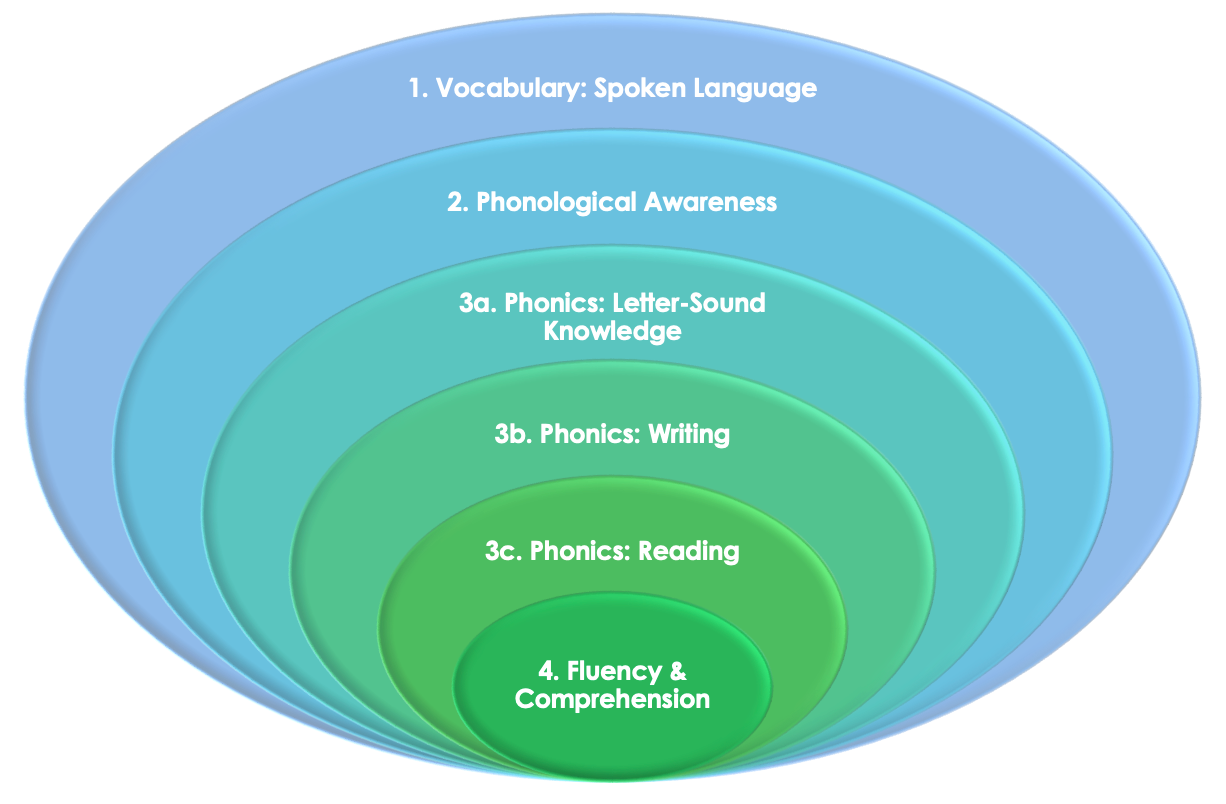
Scarborough's Reading Rope groups decoding and sight recognition into the Word Recognition strand alongside phonological awareness (Scarborough, 2001). Spelling instruction reinforces this same strand from the encoding side: forming a word's spelling in memory — a process called orthographic mapping — is what allows a child to later recognize that word instantly by sight instead of sounding it out each time (Ehri, 2014). A meta-analysis of 53 studies and over 6,000 K–12 students found that direct, systematic spelling instruction produced lasting gains in spelling, phonological awareness, reading, and writing (Graham & Santangelo, 2014). The Dwyer Phonogram Spelling Folders are built for exactly this kind of explicit, sequential instruction.
What is the Science of Reading?
The Science of Reading is the interdisciplinary body of research — from cognitive psychology, linguistics, and neuroscience — explaining how children learn to read. It identifies two foundational components of skilled reading: language comprehension and word recognition (decoding), which combine to produce reading comprehension (Gough & Tunmer, 1986).
What is Scarborough's Reading Rope?
Scarborough's Reading Rope is a model depicting skilled reading as several strands — including vocabulary, phonological awareness, and decoding — that weave together as a child develops literacy (Scarborough, 2001). The Spelling & Decoding Kit targets the Word Recognition side of the rope, building the phonological awareness and decoding/encoding skills that support automatic word reading.
What ages is this kit designed for?
This kit is designed for children ages 5–9 (grades K–2+) who have mastered basic phonetic decoding and are ready to learn conventional spelling patterns.
How is this kit Montessori-aligned?
These materials are found in AMI Montessori language albums that follow the London/Dwyer approach. They isolate one skill at a time, allow for independent or small group work, and follow the concrete-to-abstract sequence Montessori education is built on.
Product Details
Choose options
Included In This Bundle

Print / Alphabetical

Black + Red / Alphabet Cards Only
No cloth pouches / Word Study Spelling Charts


Download a PDF of our materials

Follow Us