Reptiles Vocabulary
 Rooted in Neurodevelopment
-

See the Guided Lesson Plan
 High quality materials
 Eco-Happy
 Fun & Engaging Activities
Ages/Stages
Common Core
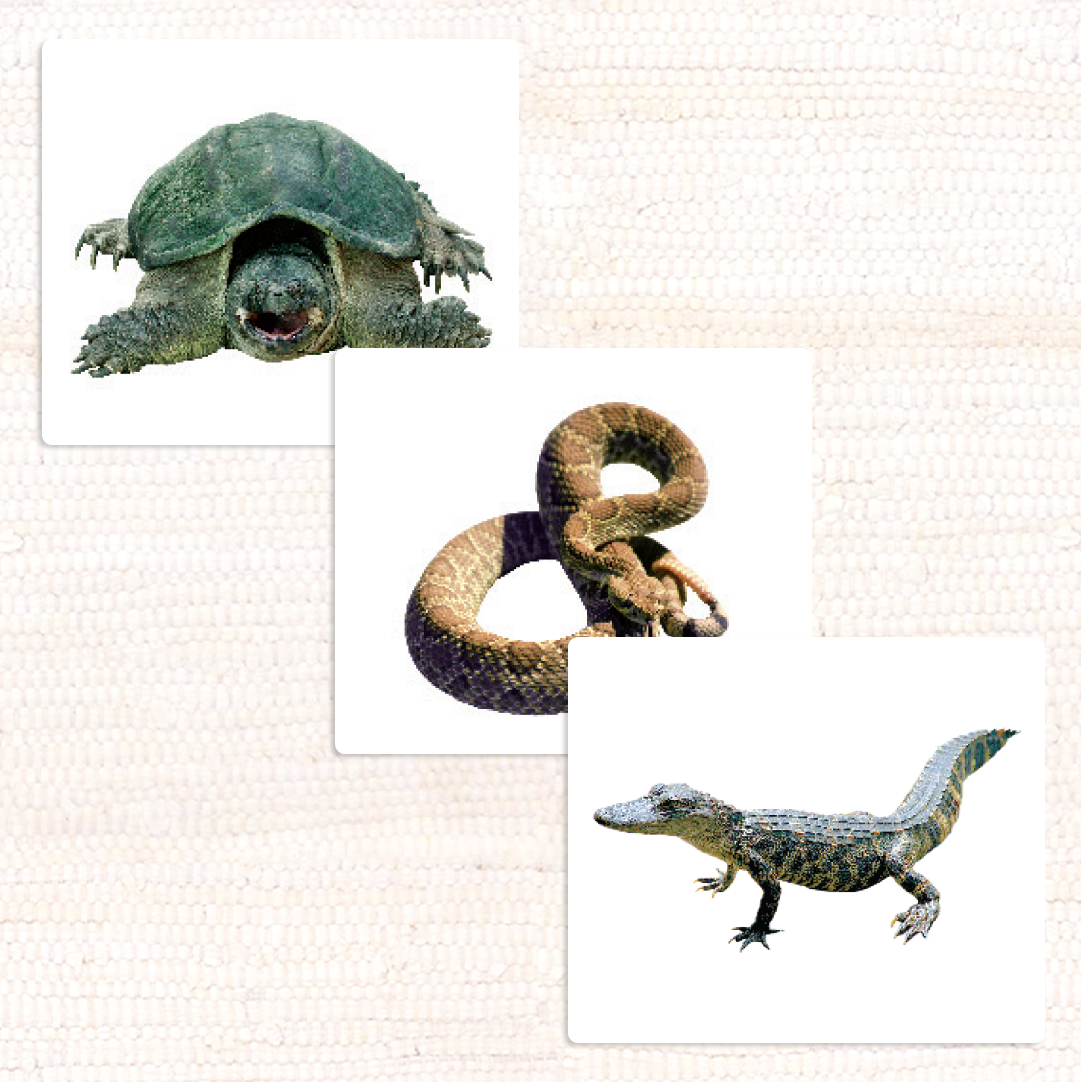
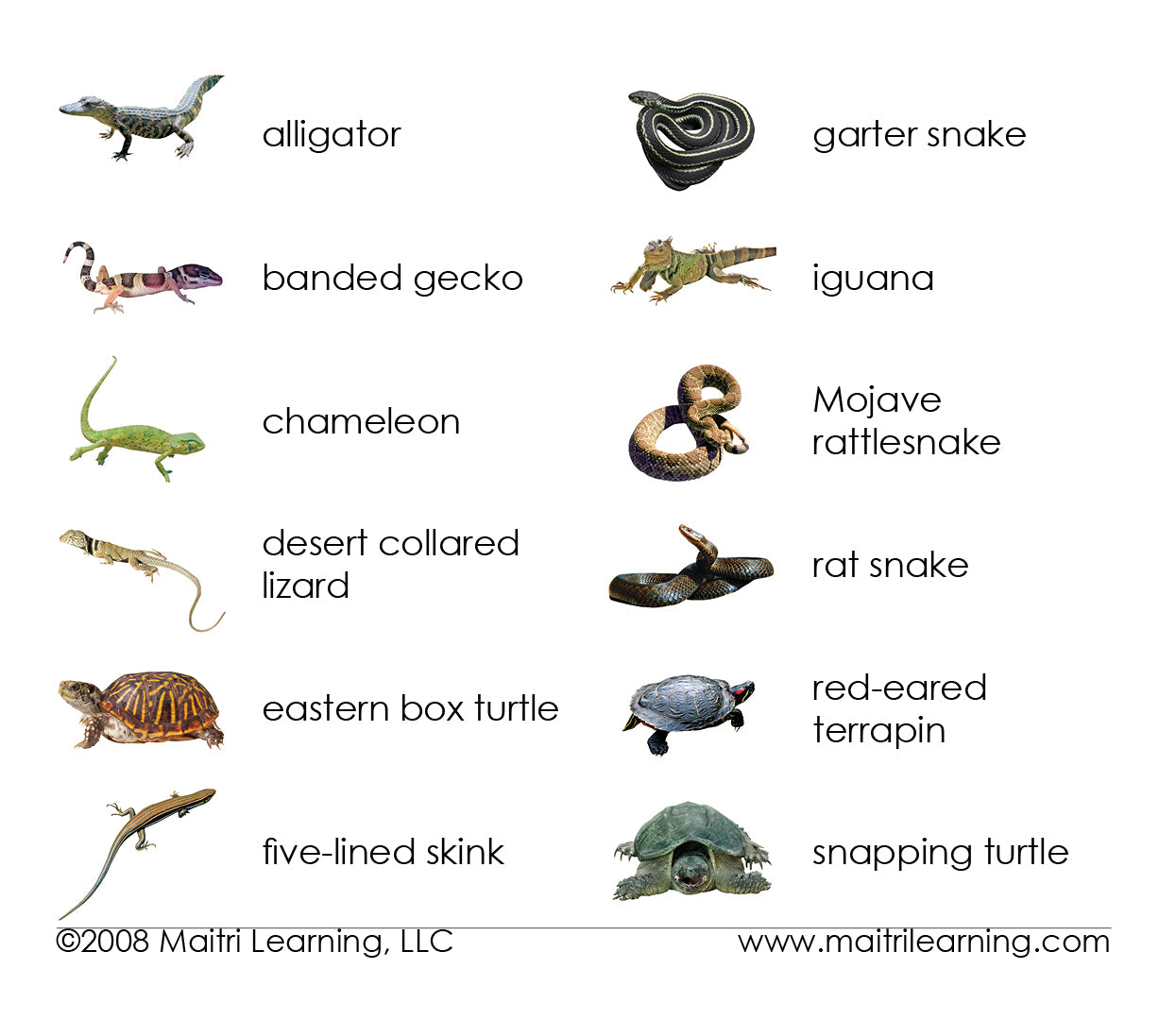
Our Reptiles Vocabulary cards are text-free picture cards with 12 real photographs of reptiles, from snakes to turtles. Students learn the precise name of each reptile through the three-period lesson, building spoken vocabulary before they read. They are designed for Montessori primary classrooms, homeschools, English learners, and intervention settings.
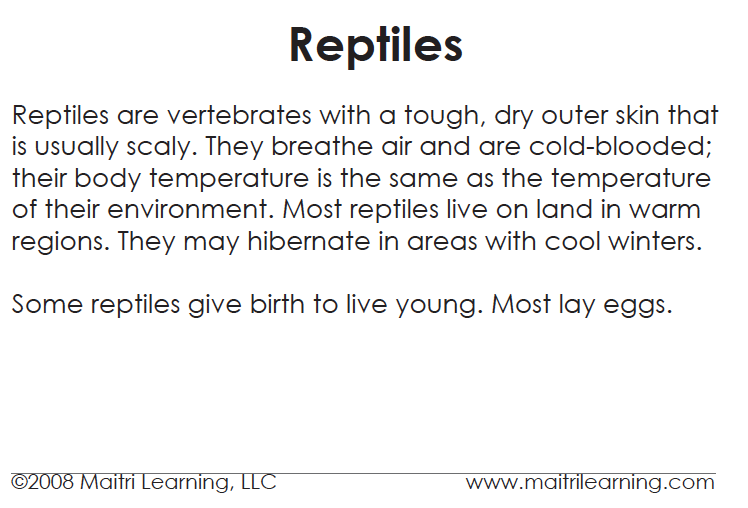
Reptiles are vertebrates with dry, scaly skin, and they are remarkably diverse. Snakes have no legs at all, and a turtle's shell is part of its skeleton, built partly from its ribs and backbone. Students who are reading can meet these same reptiles again in our Reptiles 3-Part Reading Cards.
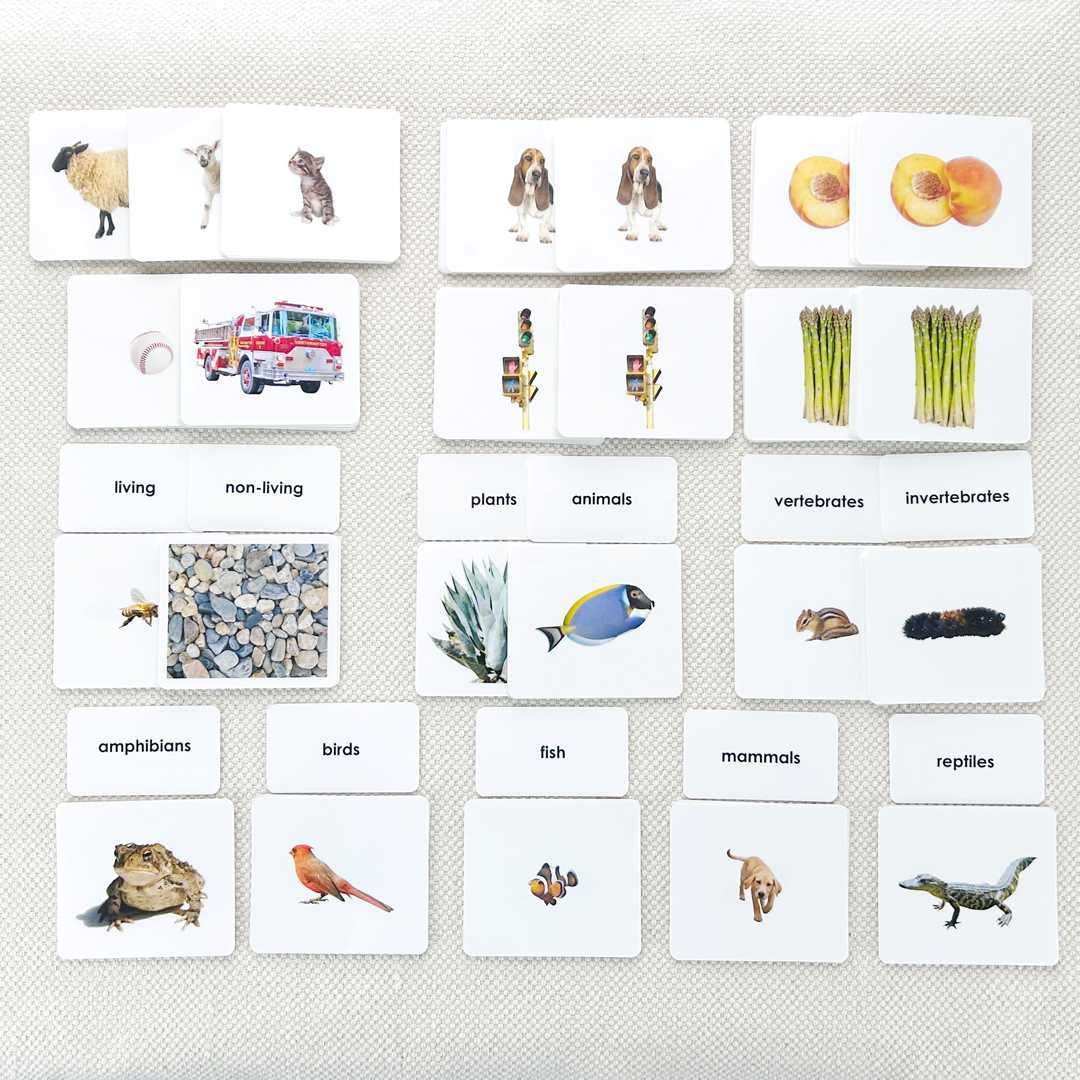
Because the cards have no printed words, pre-readers can focus on the photo and its name. Later, students can sort the cards by kind, or combine them with other animal packets to compare groups.
What's included
- 12 cards, each showing one real photograph of a reptile species, with no text; species represent the diversity of the zoological group (see photo for list)
- Cards are approx. 4¼" x 3¾"
- Eco-laminated with a food-grade laminate, with rounded corners
- Sturdy, clear reclosable bag for storage
- Lesson plan included
Display these cards in our medium cloth pouches (sold separately).
Created by a Montessori teacher and a zoologist. Eco-printed in our rural New England office.
Made in the USA. CPSIA compliant.
Note: Photos may change from those pictured.
Why do vocabulary cards matter for reading?
Interest drives learning. Montessori is a student-centered approach: the teacher observes what each student is curious about and offers materials that match. A student fascinated by reptiles will choose these cards again and again, and each time is more practice naming, discussing, and sorting. That practice builds vocabulary, part of the language comprehension side of reading in both Gough and Tunmer's (1986) simple view of reading and Scarborough's (2001) reading rope. By learning what a snapping turtle is now, a student will understand it when they later encounter it in text.
How do you use reptile vocabulary cards?
First, spark student curiosity by saying you're going to do some work with reptiles. Discuss where they might see these animals, such as a garden, a pond, or a zoo, and what it means to be a reptile. Then, choose a few cards at a time and use the three-period lesson to name each reptile. Once students know the names, use the cards for sorting games, such as sorting reptiles from dogs (easier) or amphibians (challenging). When students are reading, move on to the Reptiles 3-Part Reading Cards.
What ages is this for?
Typically ages 3 and up. The cards work well for pre-readers, English learners, and students in intervention settings, as well as older students with a special interest in reptiles.
Choose options
Knowledge Bank
Recommended Articles

Download a PDF of our materials

Follow Us