


Reading Comprehension Kit: Build-a-Book Definitions in Stages
 Rooted in Neurodevelopment
-

See the Guided Lesson Plan
 High quality materials
 Eco-Happy
 Fun & Engaging Activities
Ages/Stages
Common Core
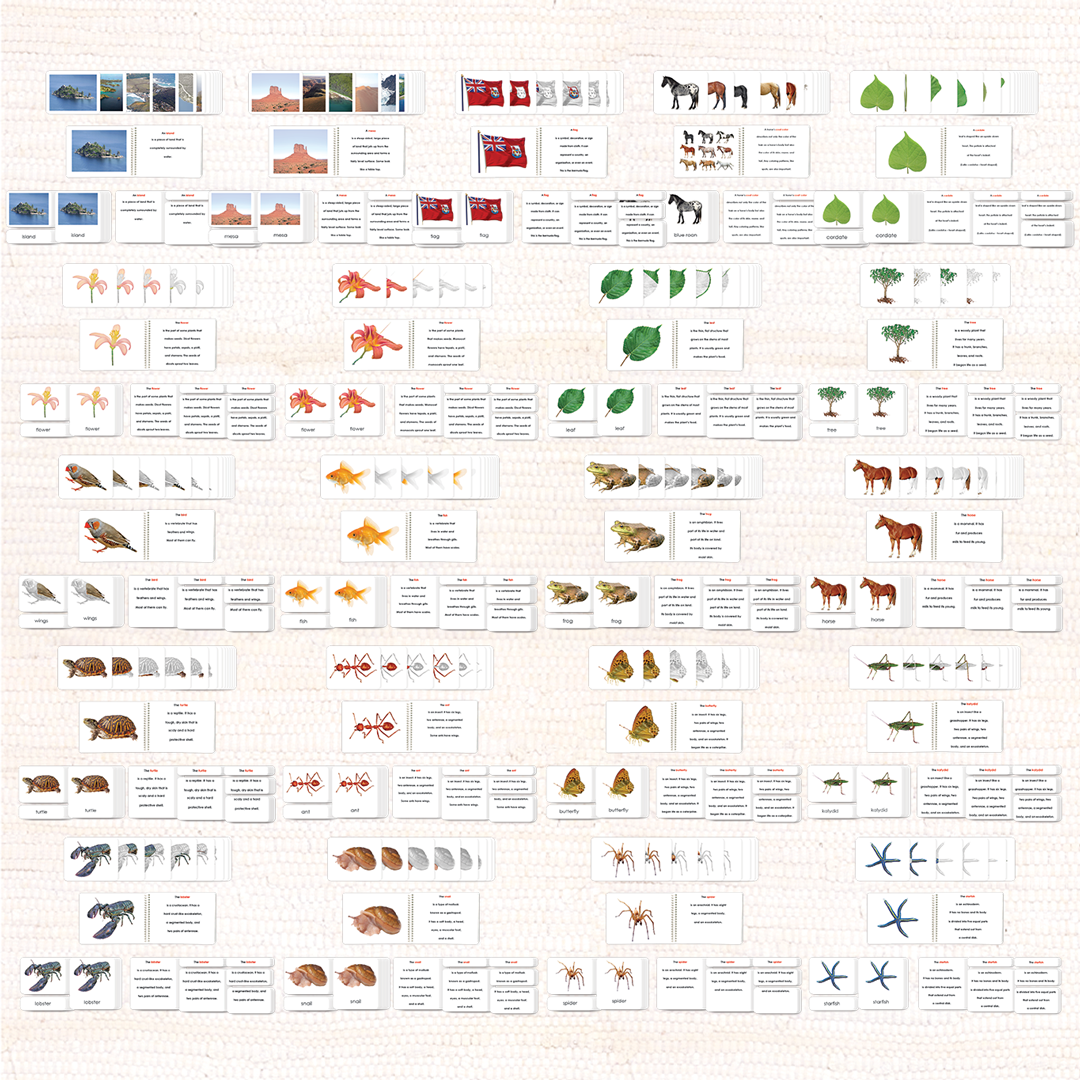
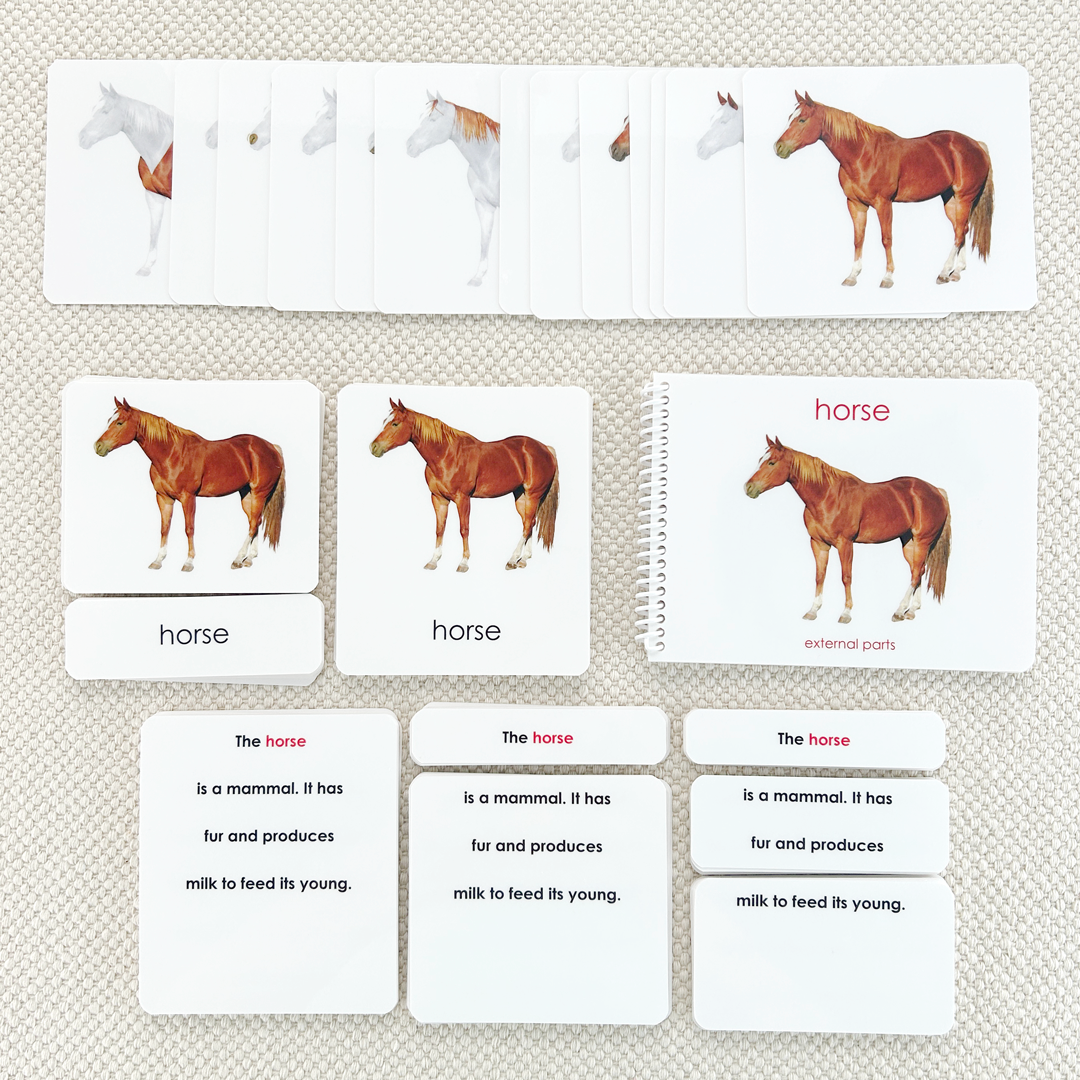
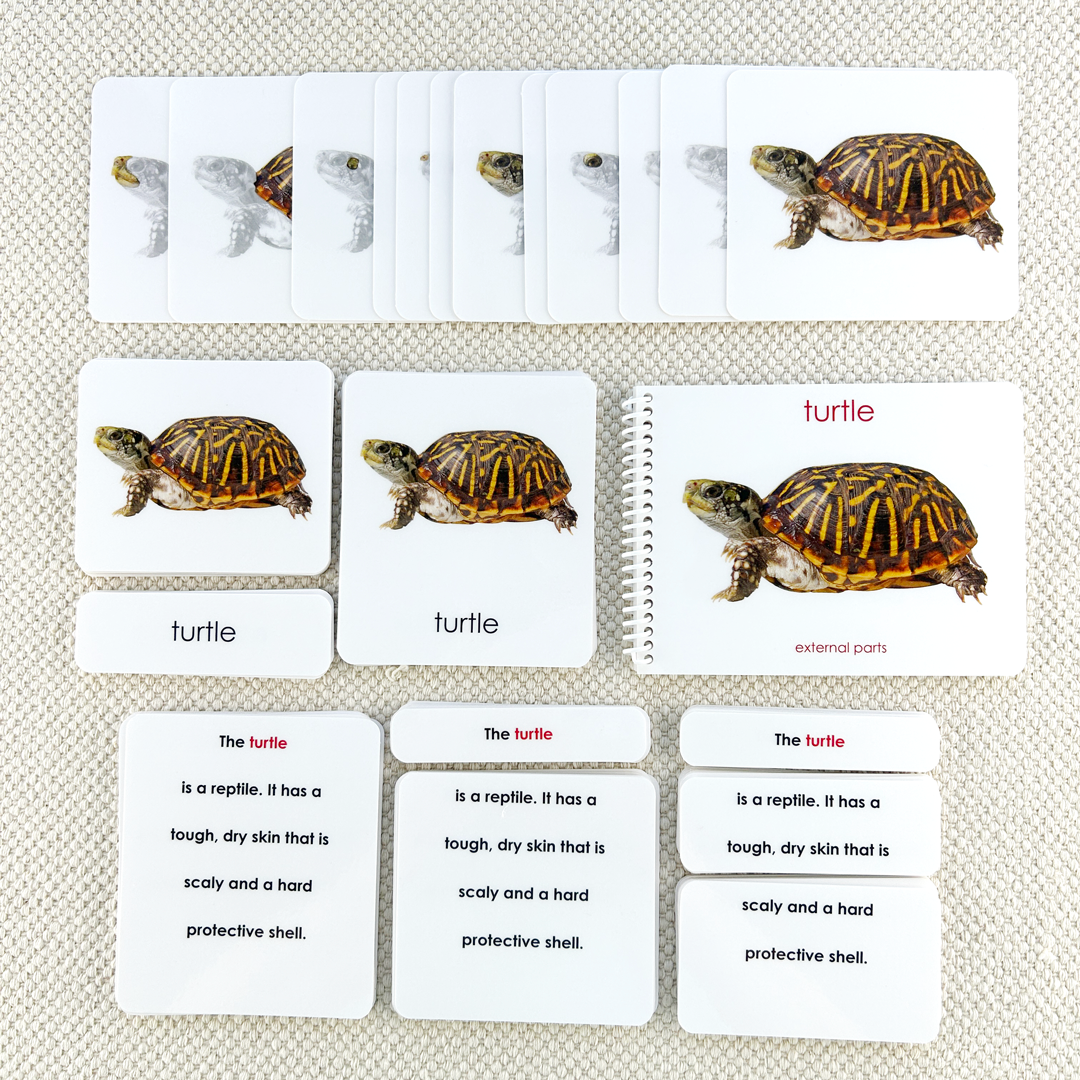
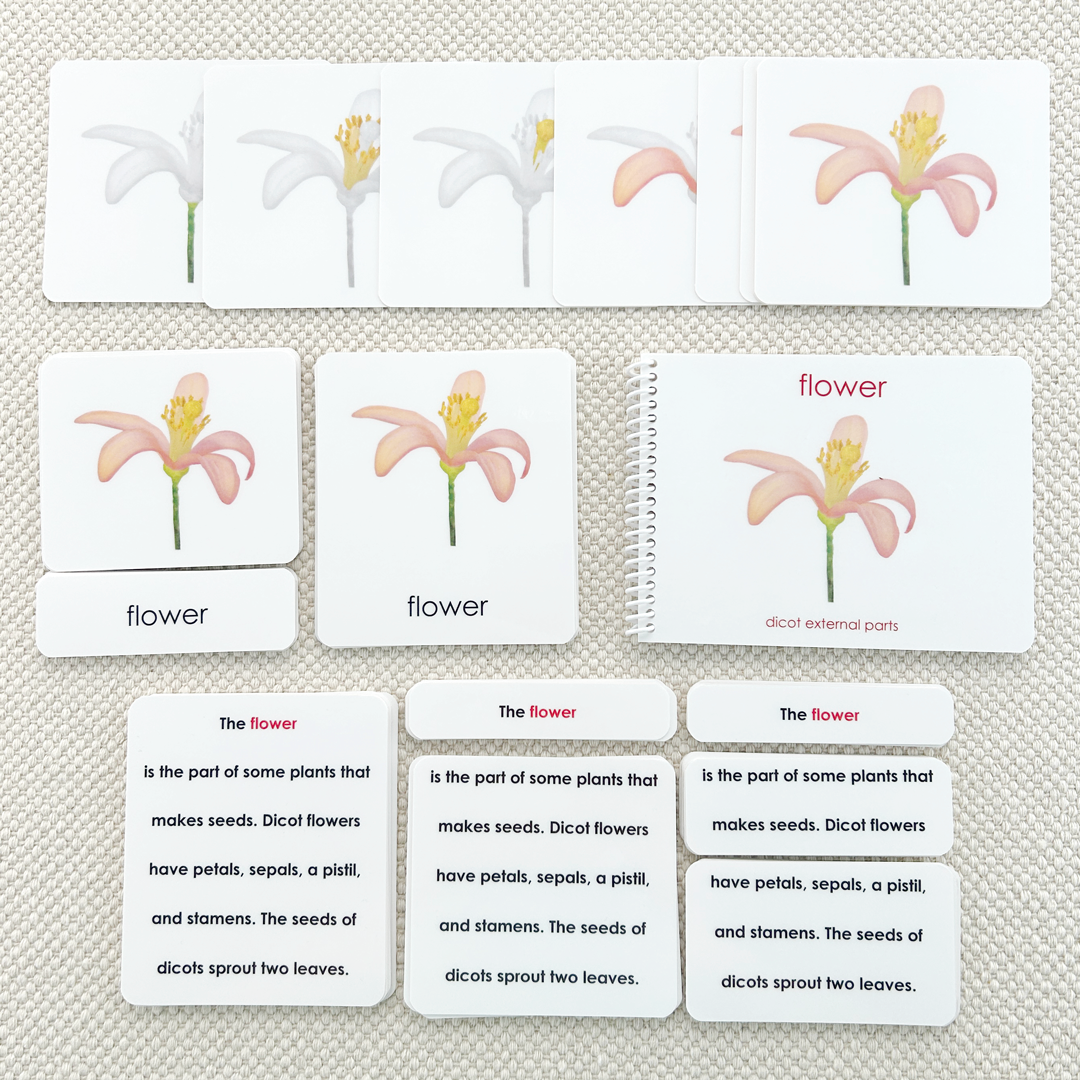
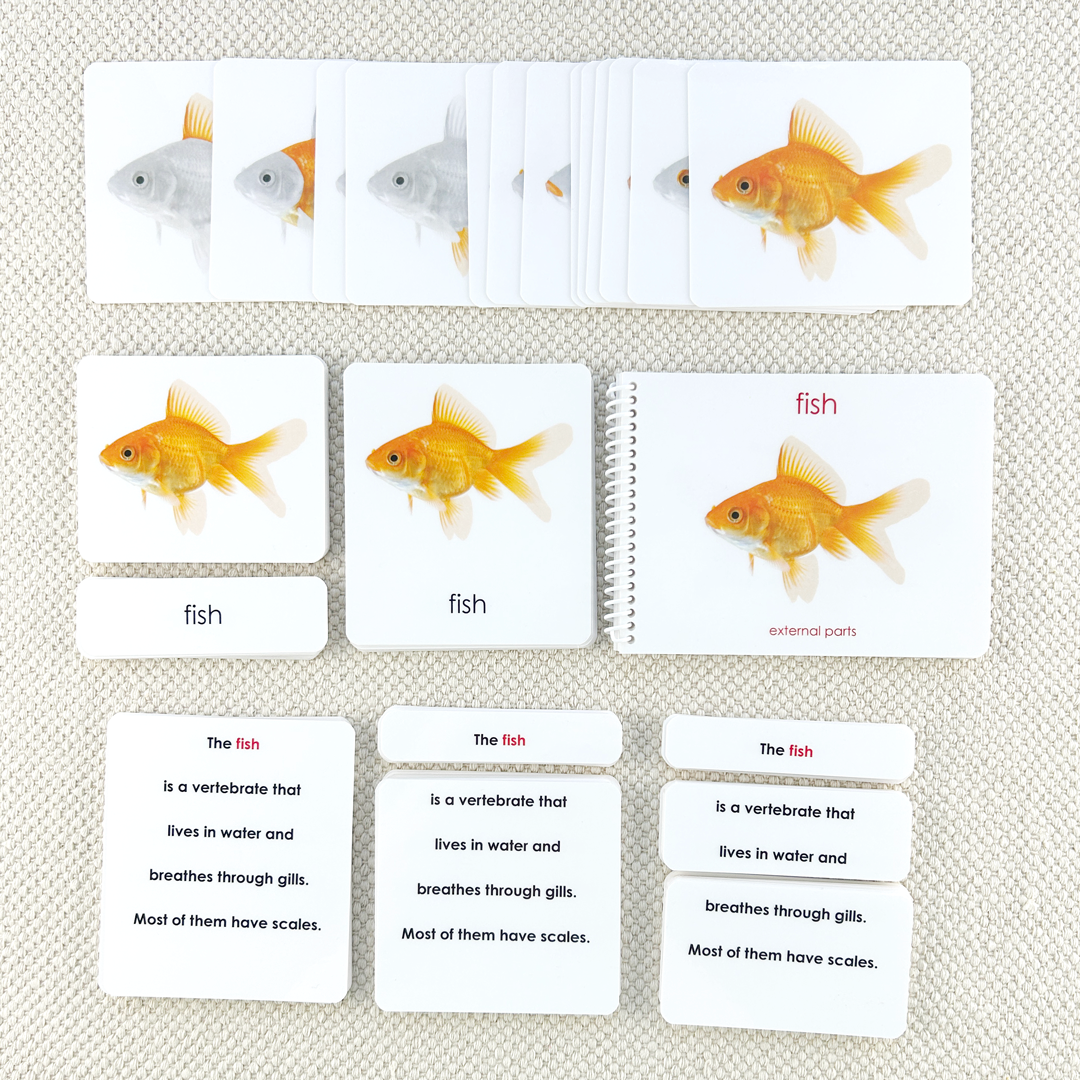
The Reading Comprehension Kit is a complete Montessori scaffold for 21 topics — spanning invertebrates, vertebrates, botany, and geography — that carries a child from first vocabulary exposure through to genuine reading comprehension. Each of the 21 topics includes an Advanced Vocabulary Card packet, a Definition Book, a 3-Part Reading Card packet, and staged Definition Cards, so the same subject matter deepens in difficulty as a child's reading develops.
How these materials work
The end goal of these materials is to be able to "build a book" from scratch by matching photos and advanced, technical definitions. Here are the steps we follow to guide children to succeed with this culminating feat.
- Introduce the vocabulary cards in 3-period vocabulary lessons.
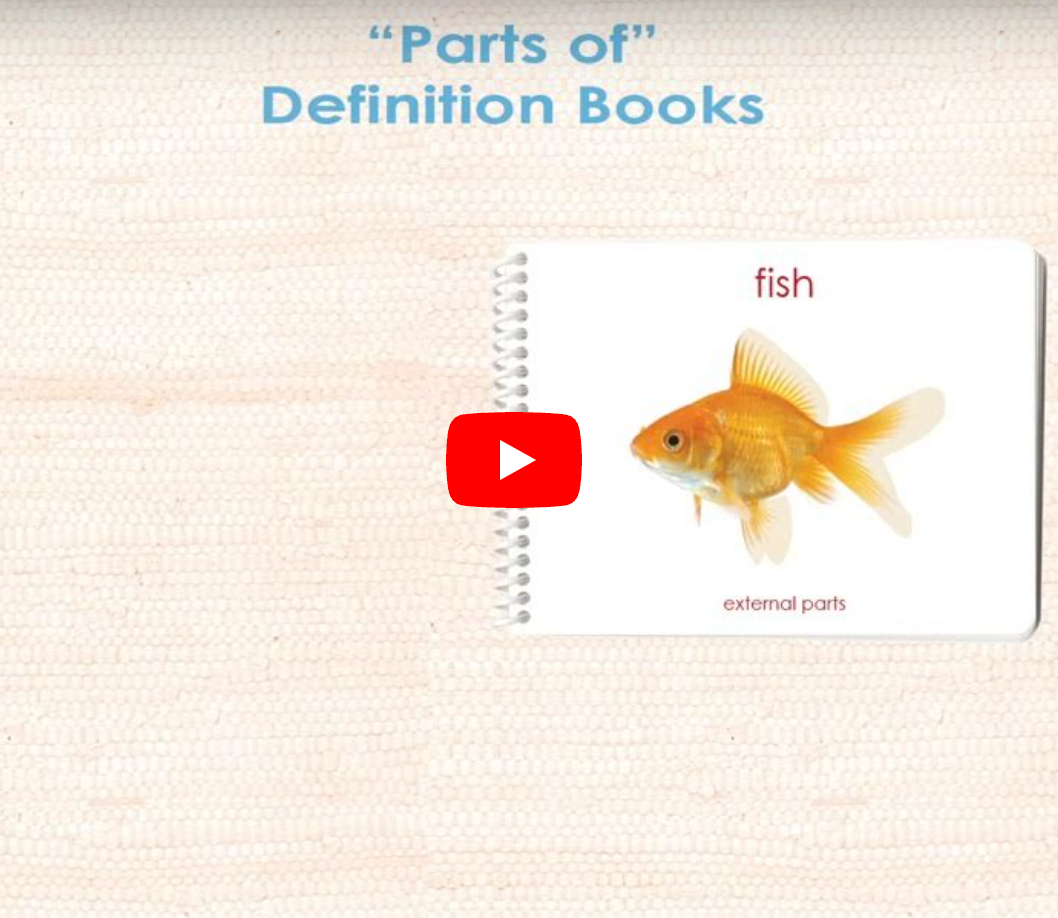
- Read the book together.
- Once children are reading non-phonetic words, introduce the 3-part cards for independent reading practice.
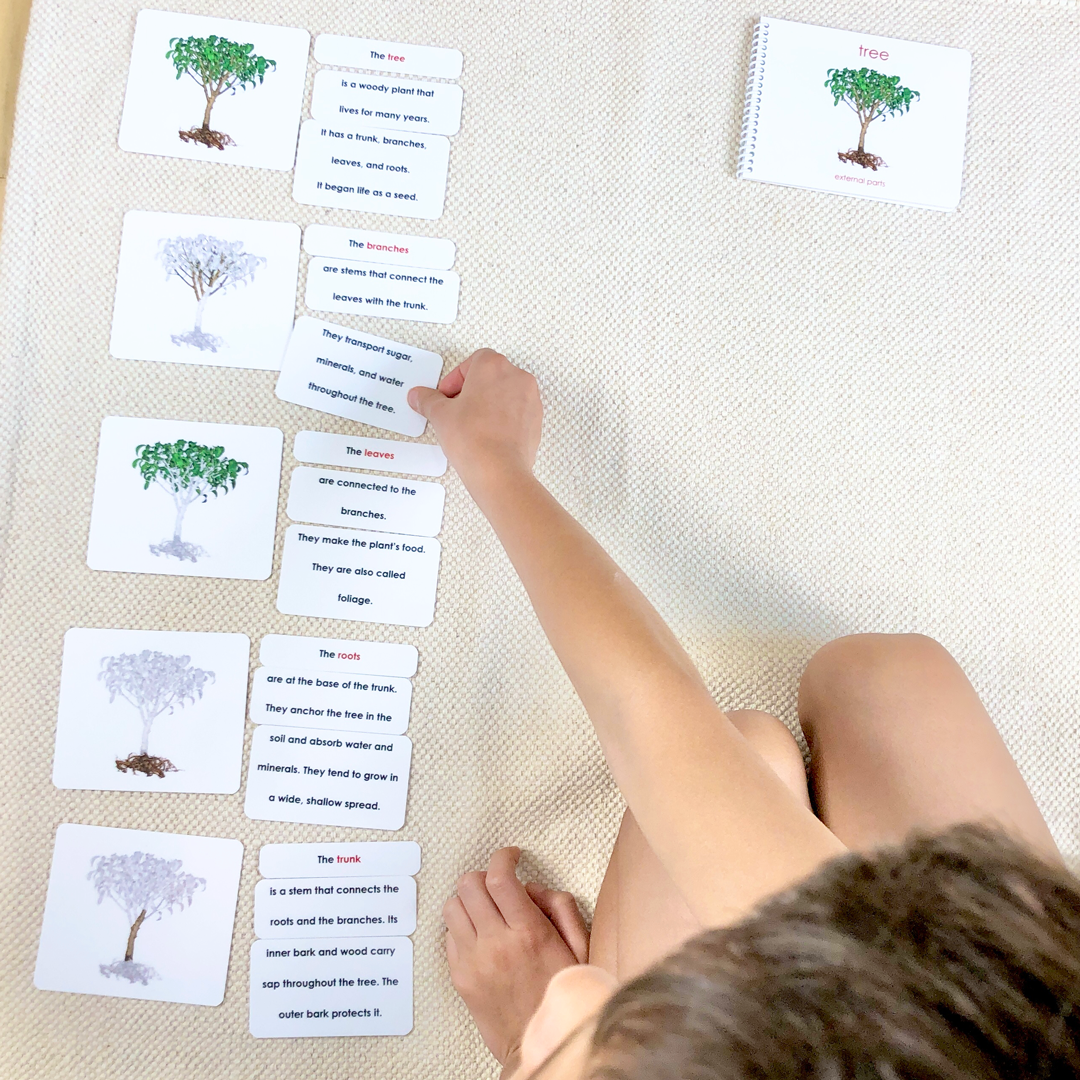
- As reading grows more fluent, add the definition cards in three stages: first matching pictures to full definitions, then matching terms to definitions, and finally reconstructing definitions split into two halves.


What's included
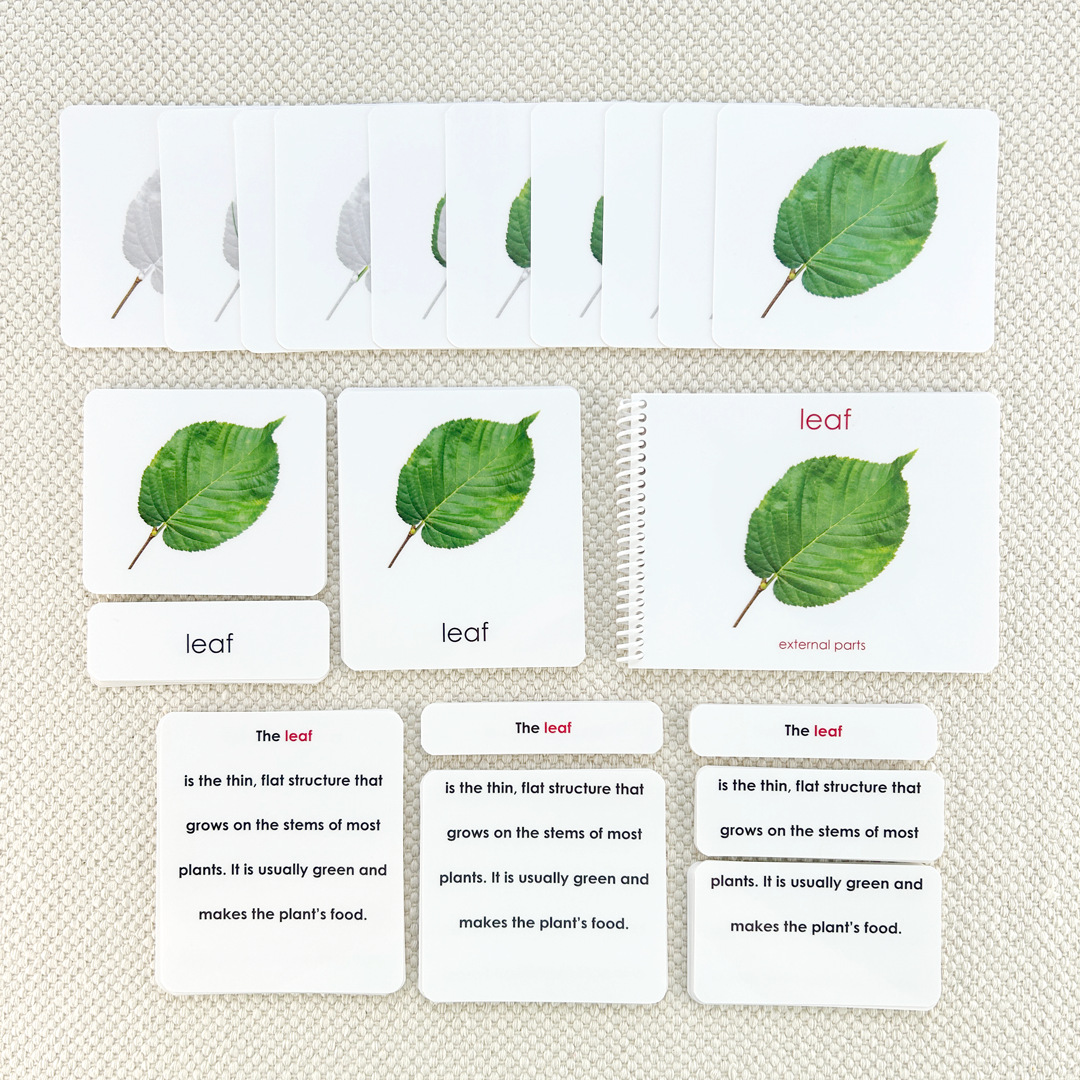
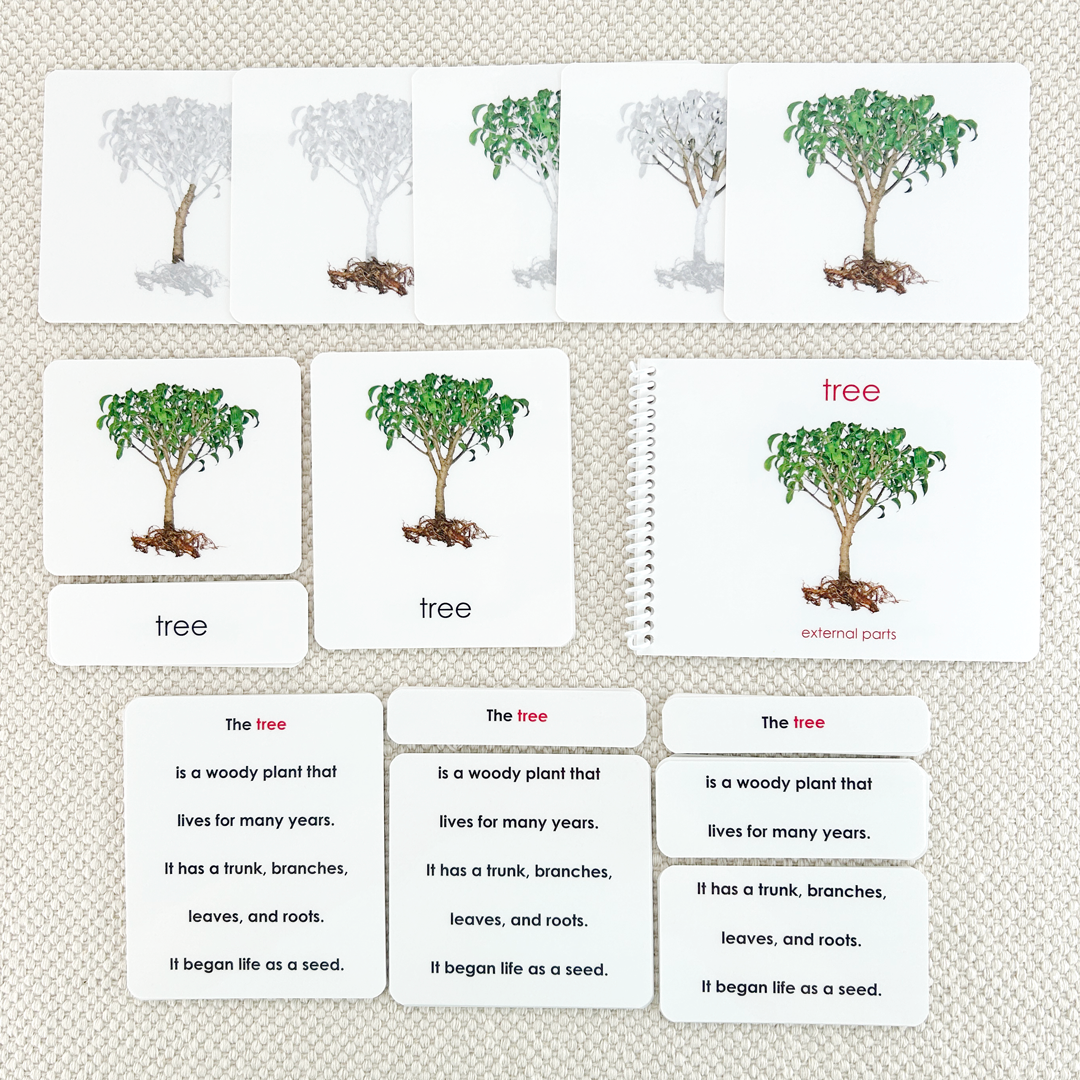
The kit includes one Advanced Vocabulary Card packet, one Definition Book, one 3-Part Card packet, and one set of staged Definition Cards for each of the following 21 topics:
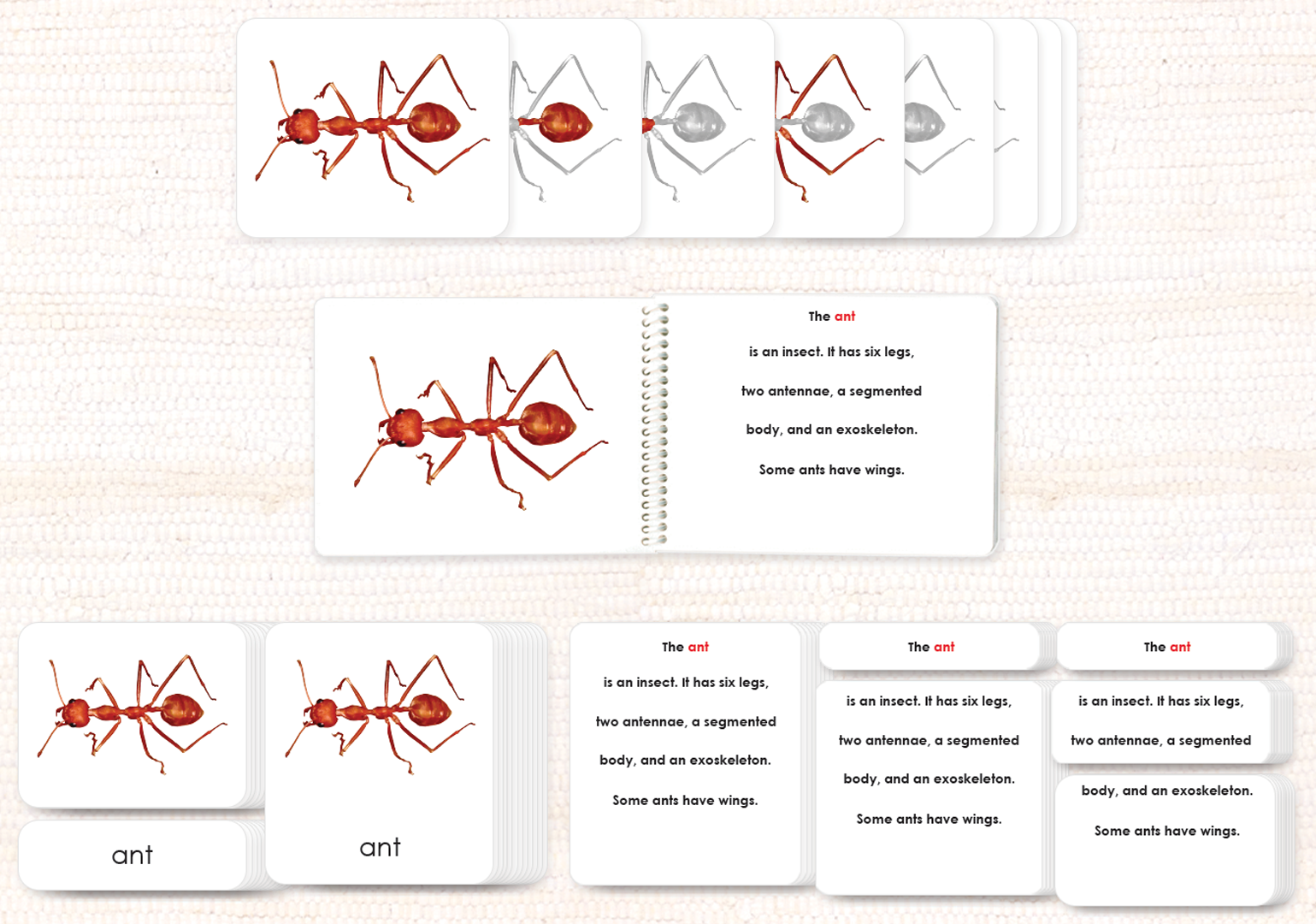
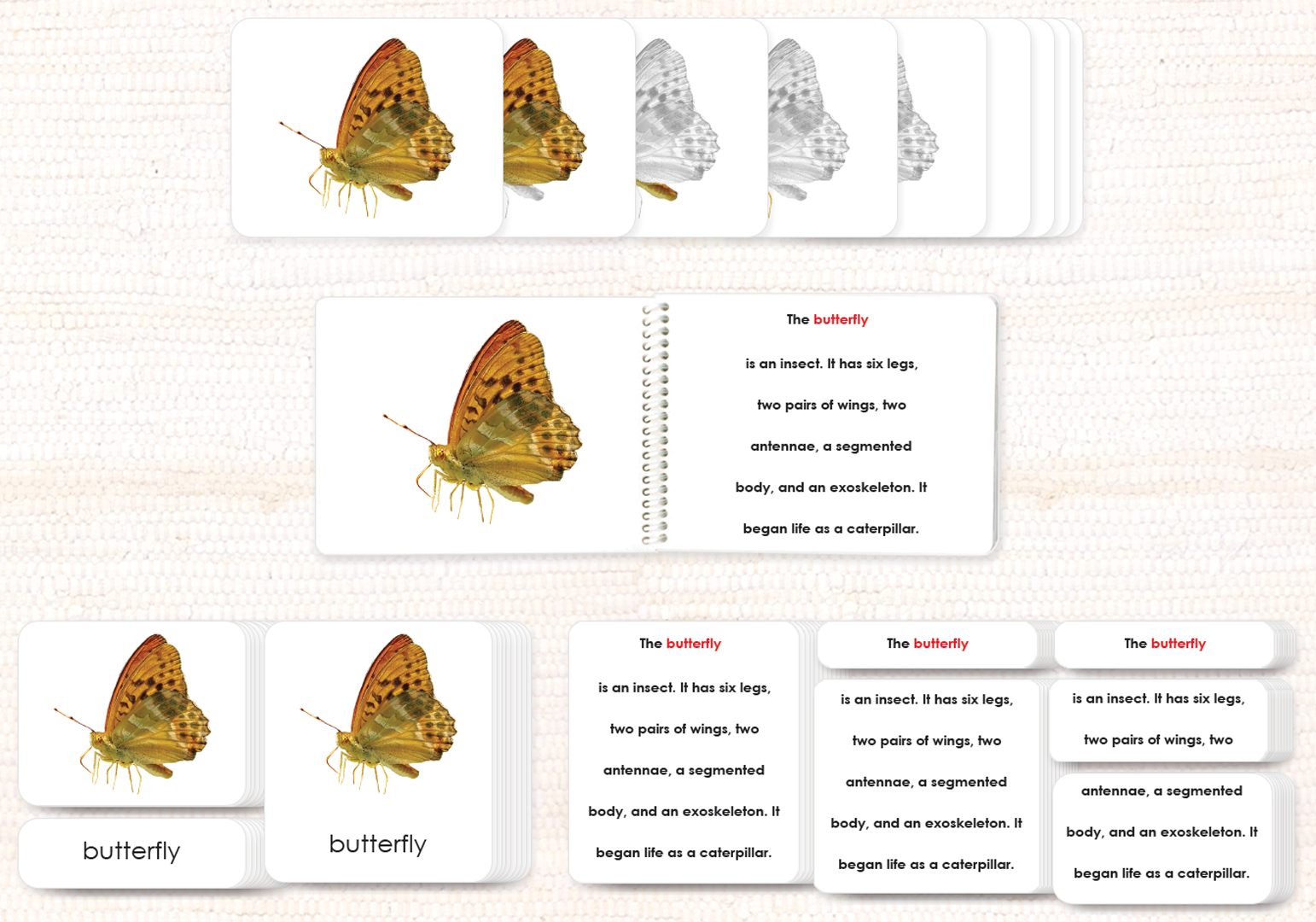
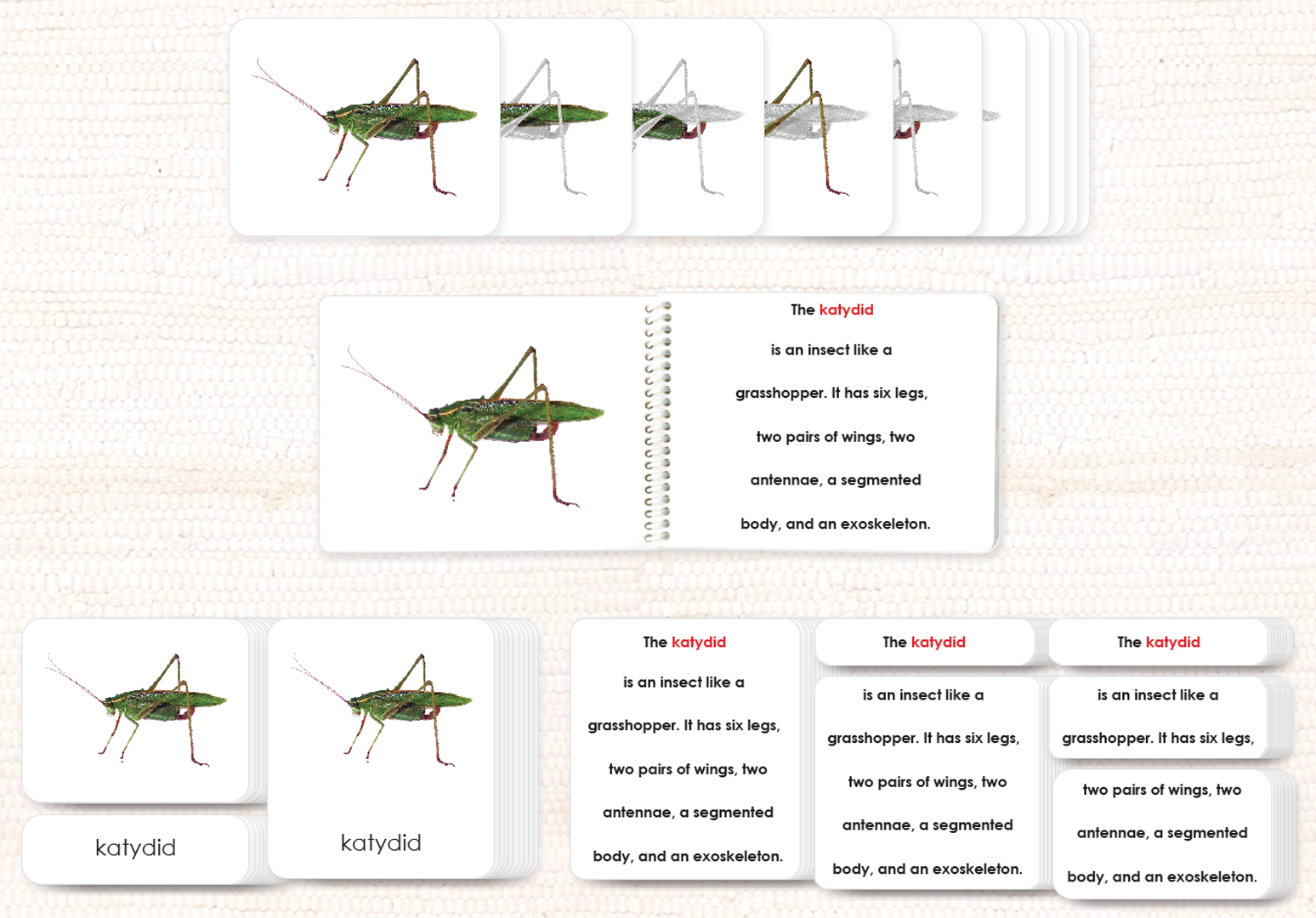
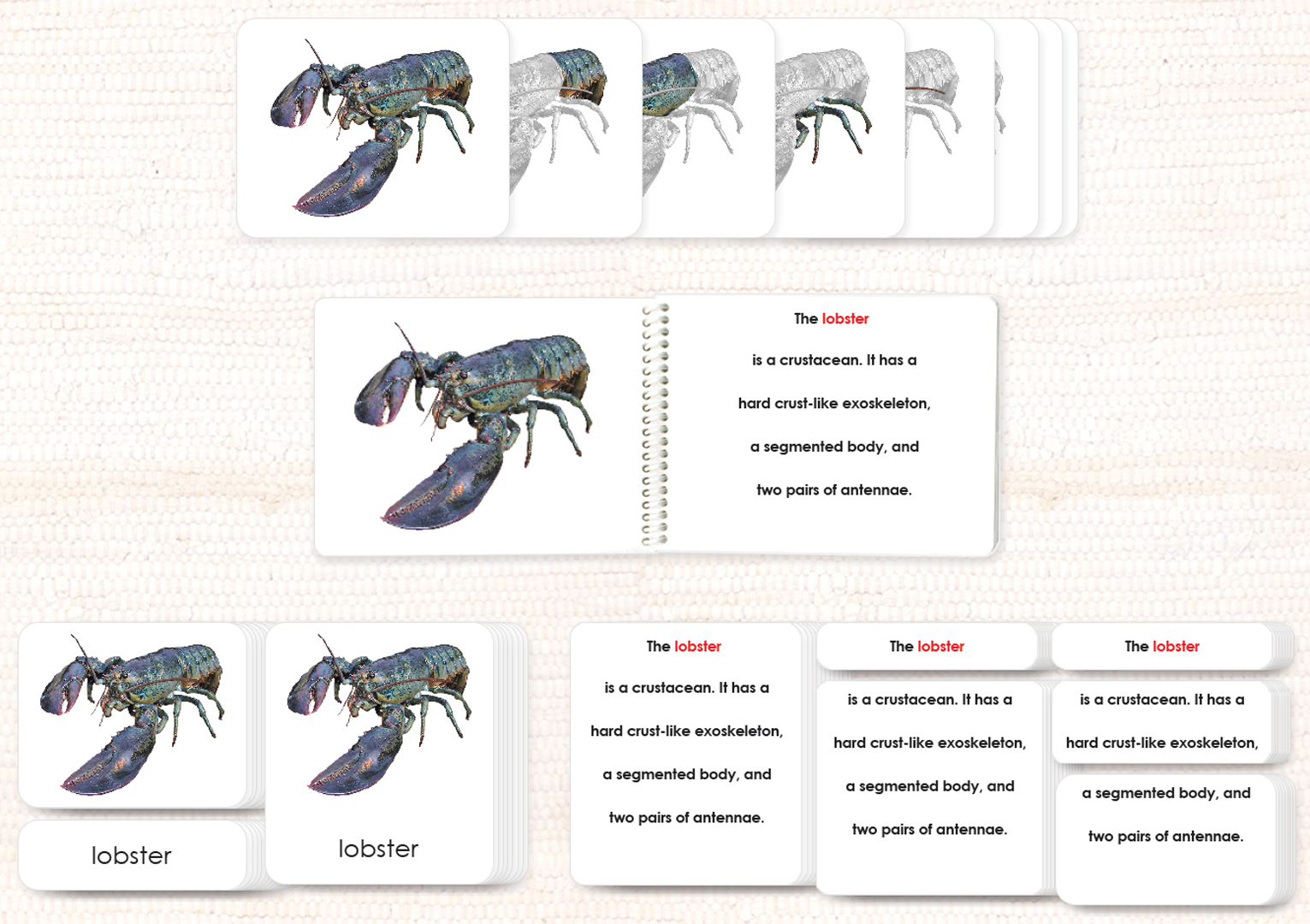
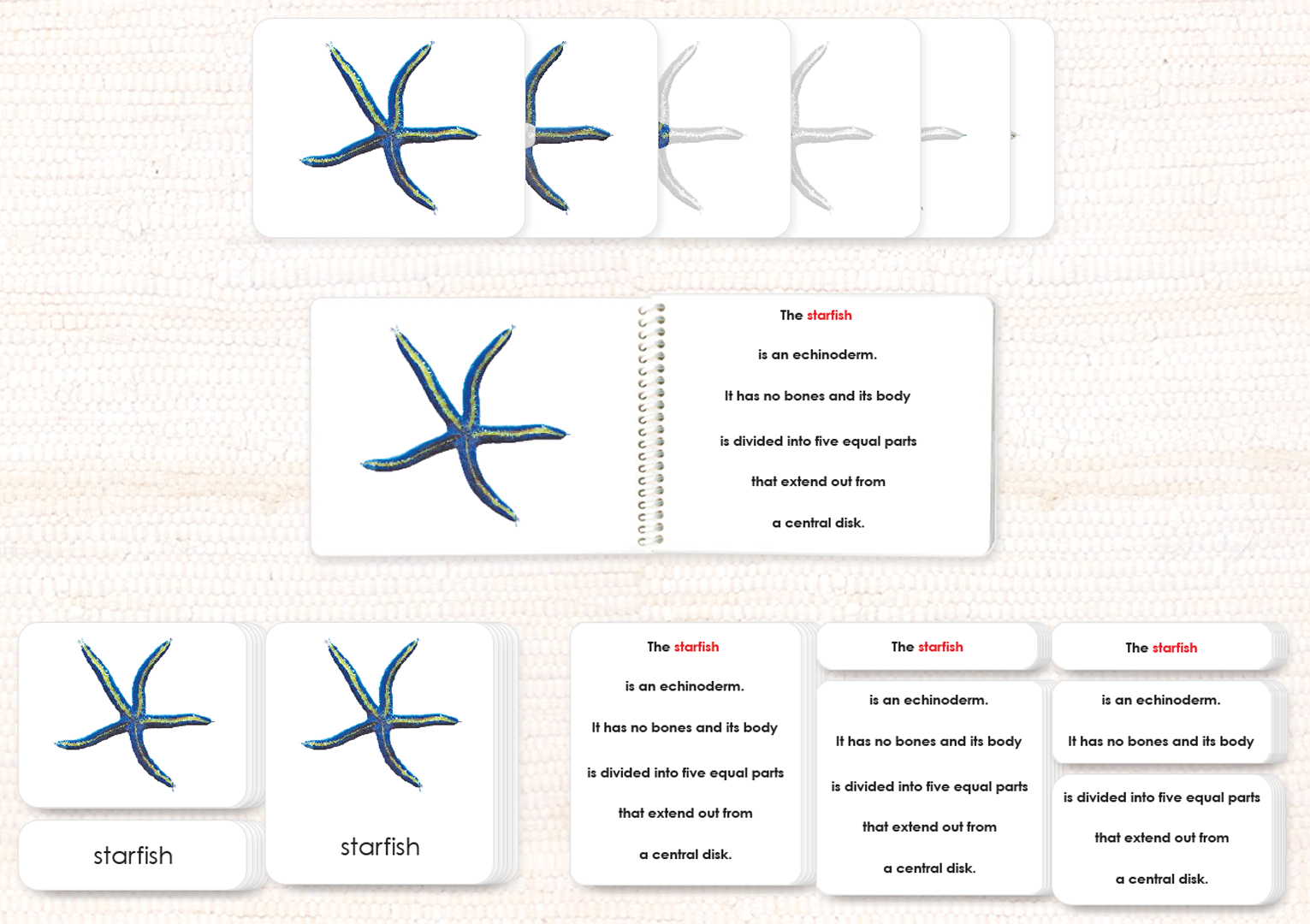
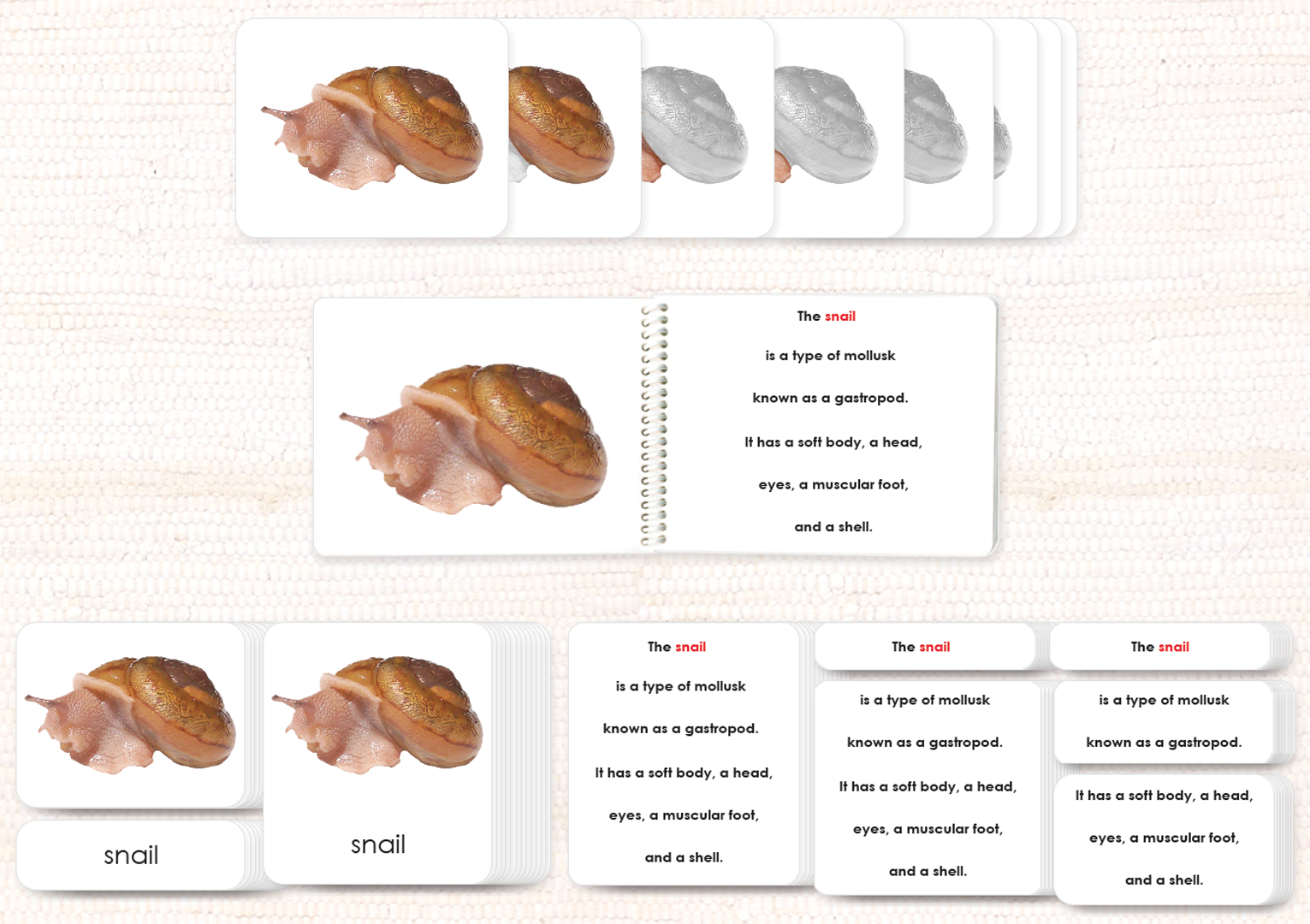
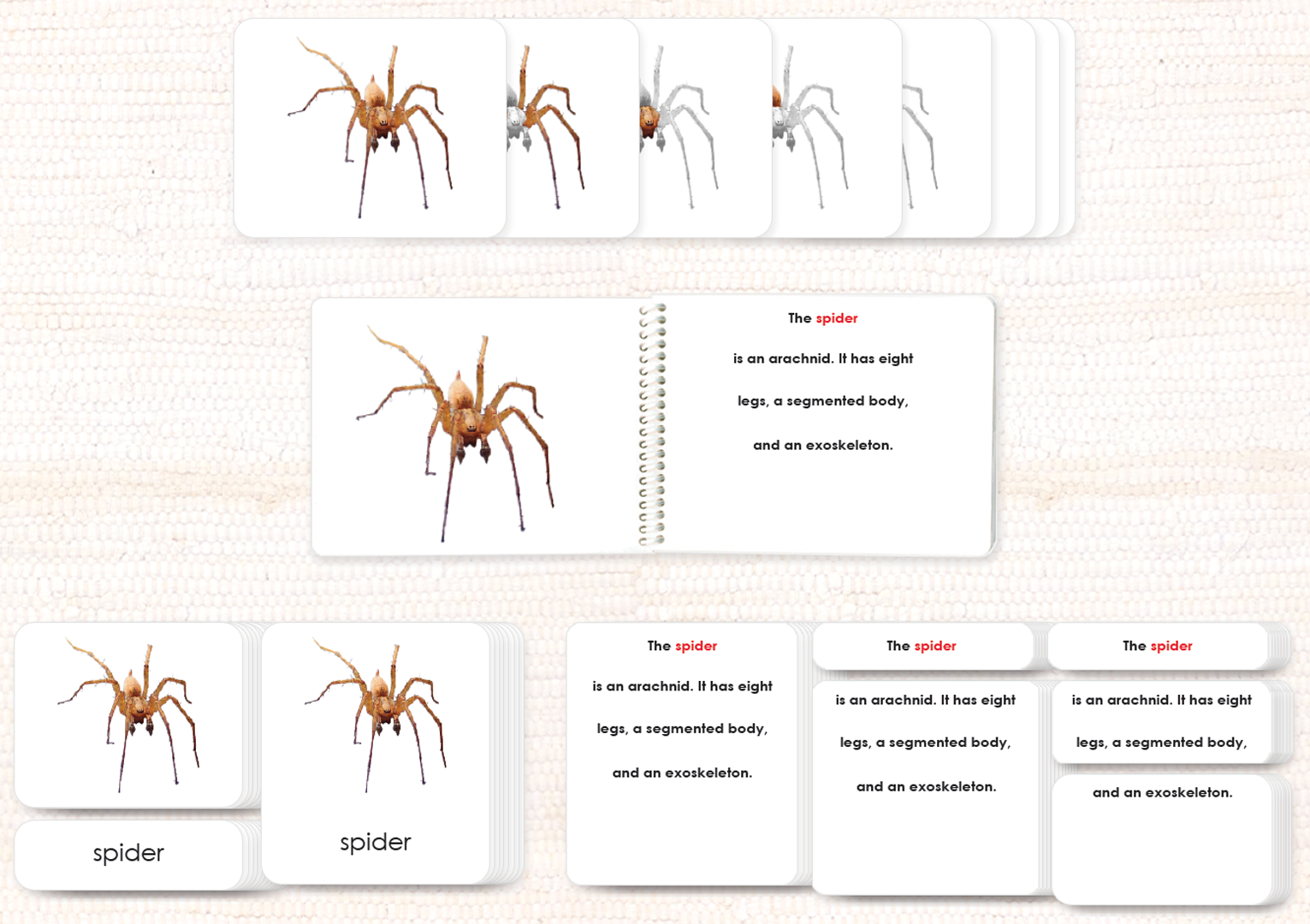
- Invertebrates (7): Parts of the Ant, Butterfly, Katydid, Lobster, Snail, Spider, and Sea Star
- Vertebrates (5): Parts of the Bird, Fish, Frog, Horse, and Turtle
- Botany (4): Parts of the Flower (Dicot and Monocot), Leaf, and Tree
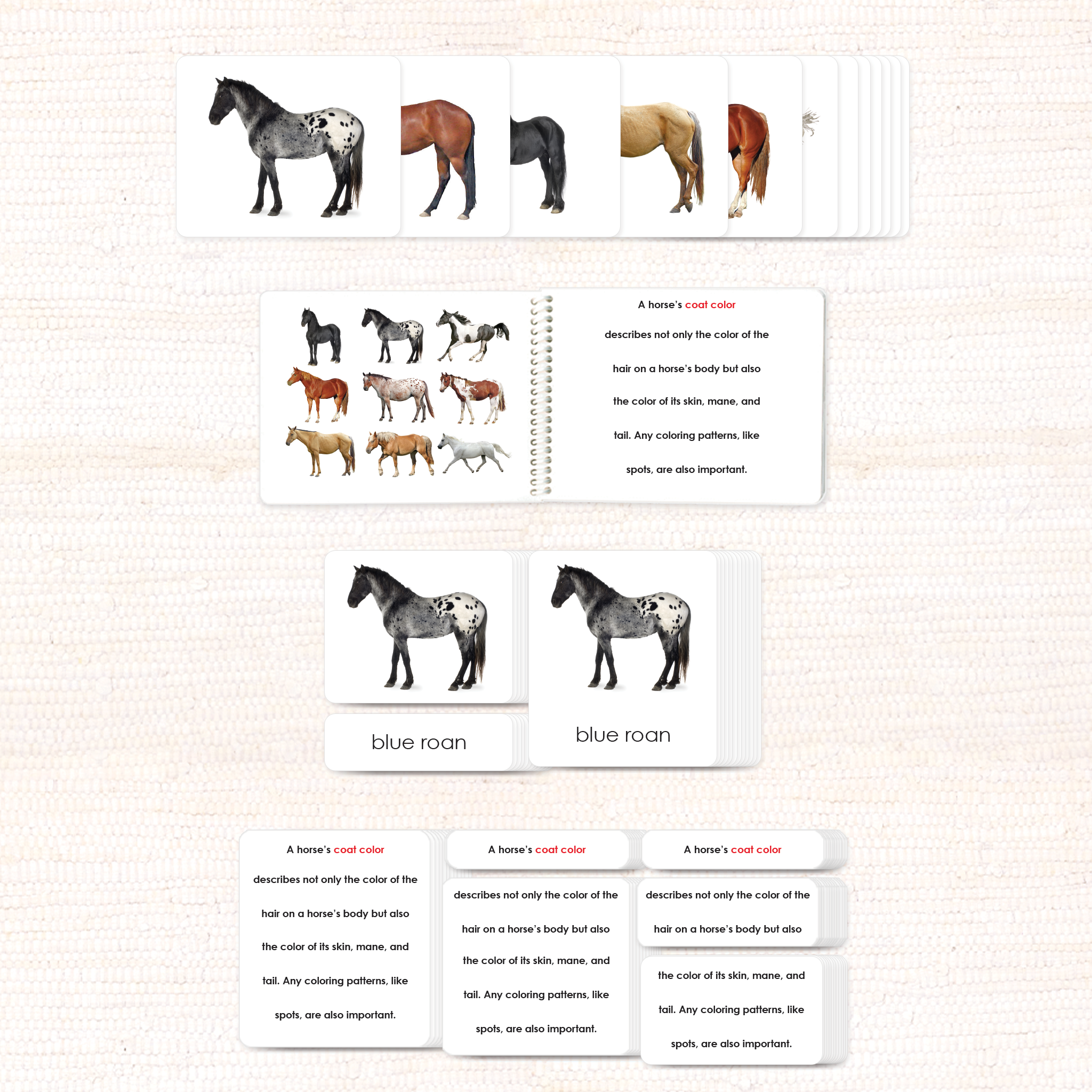
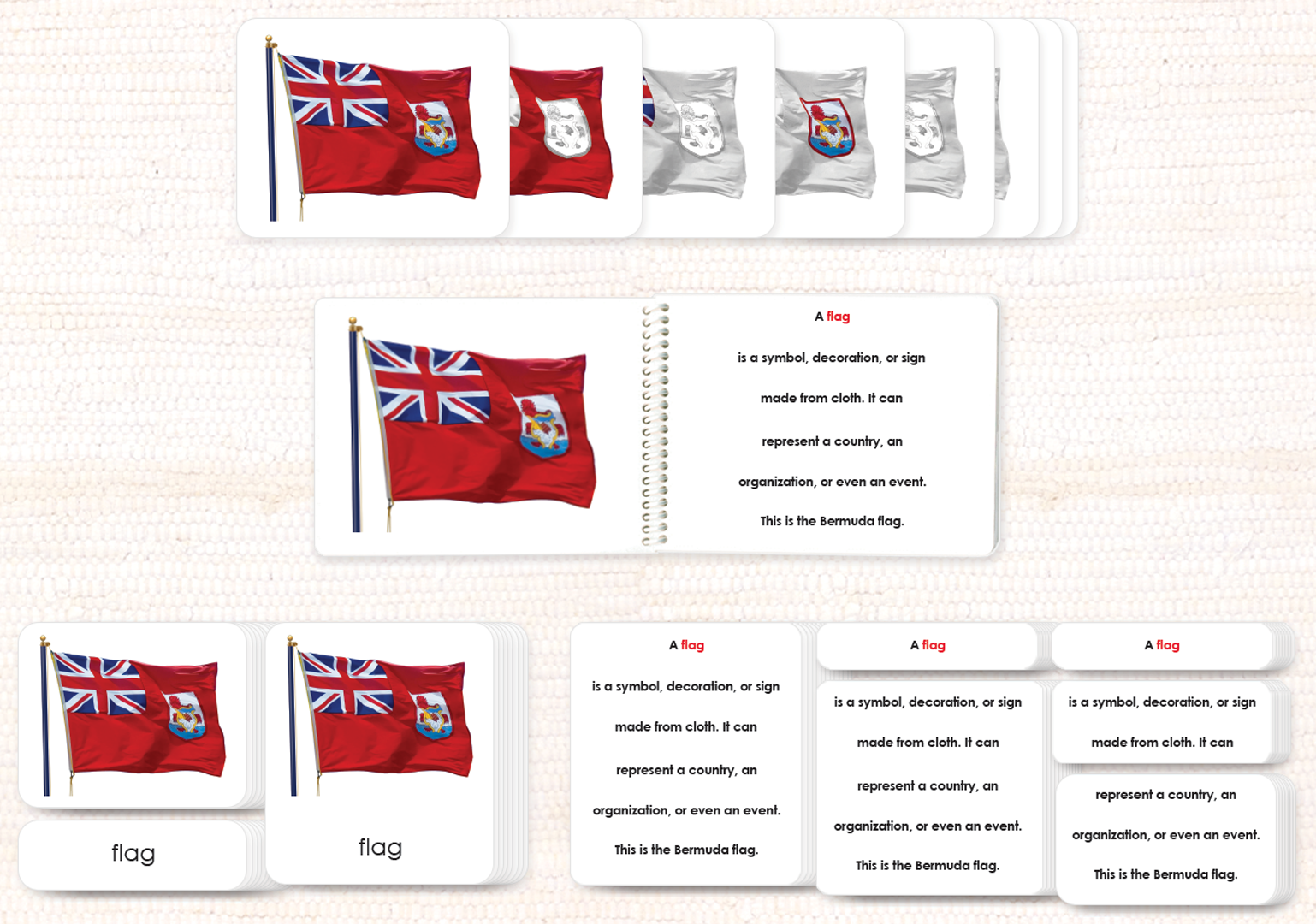
- Additional topics (5): Leaf Shapes, Land & Water 1, Land & Water 2, Horses: Coat Colors, and Parts of the Flag
All materials are fully eco-laminated and ready for use. A detailed lesson plan is included.
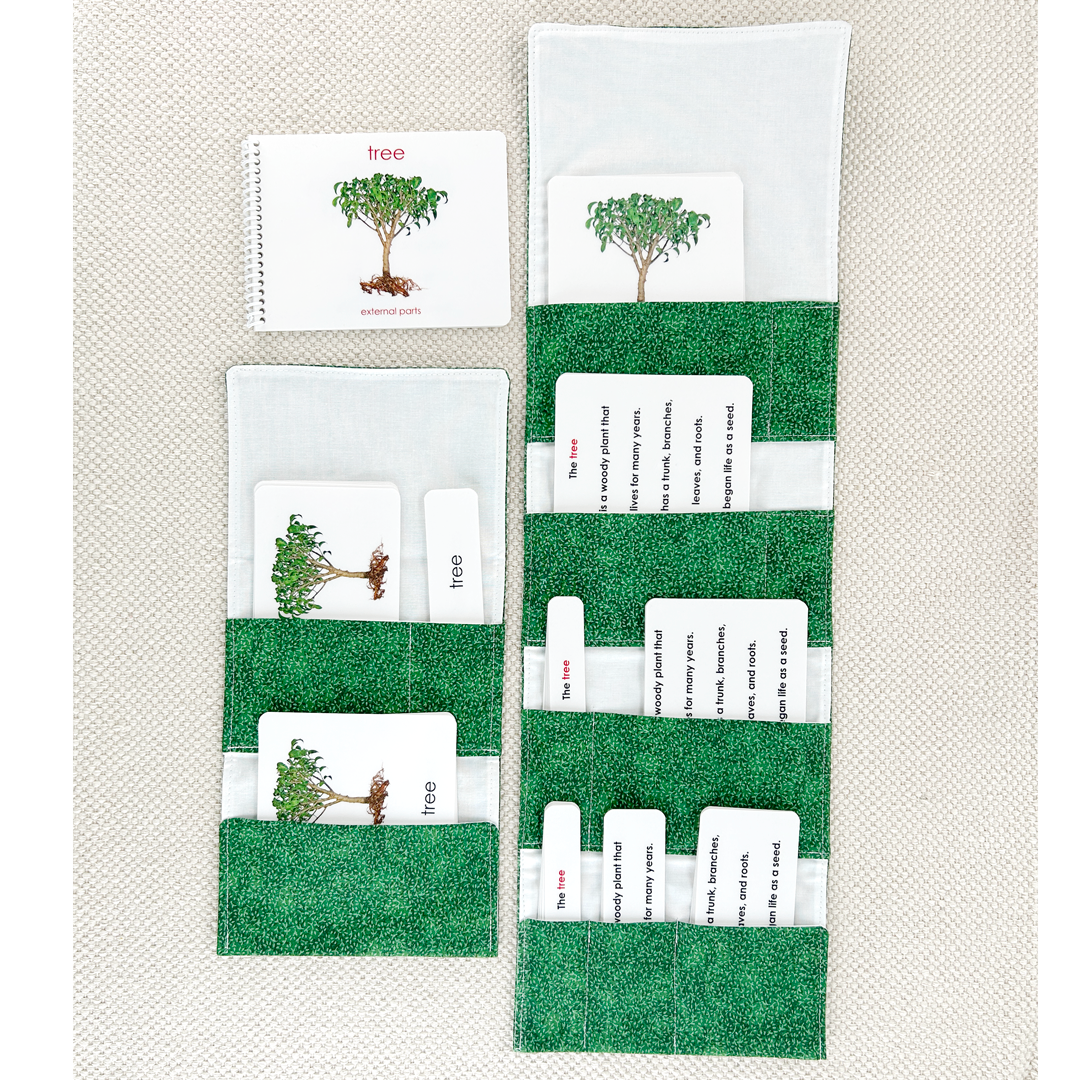
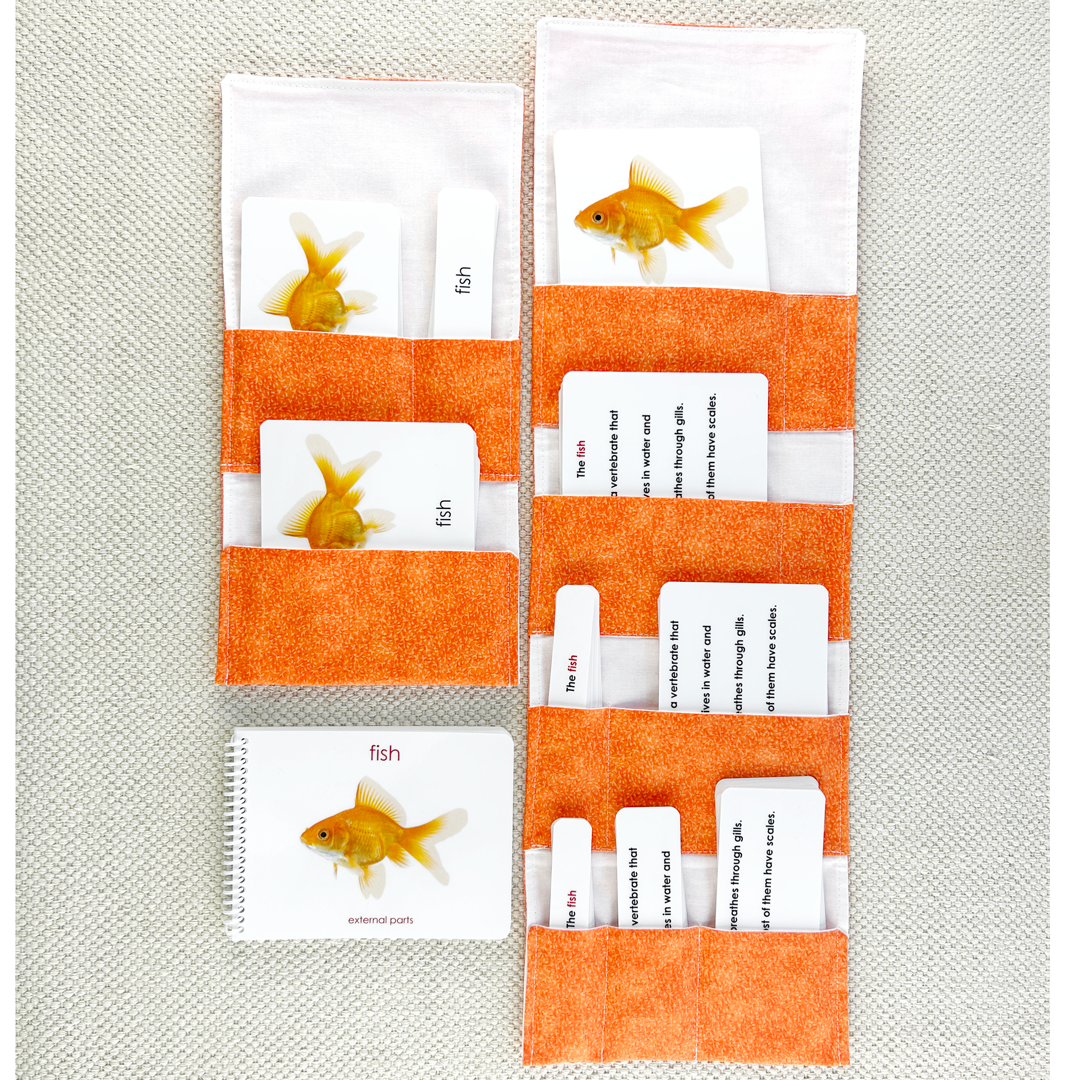
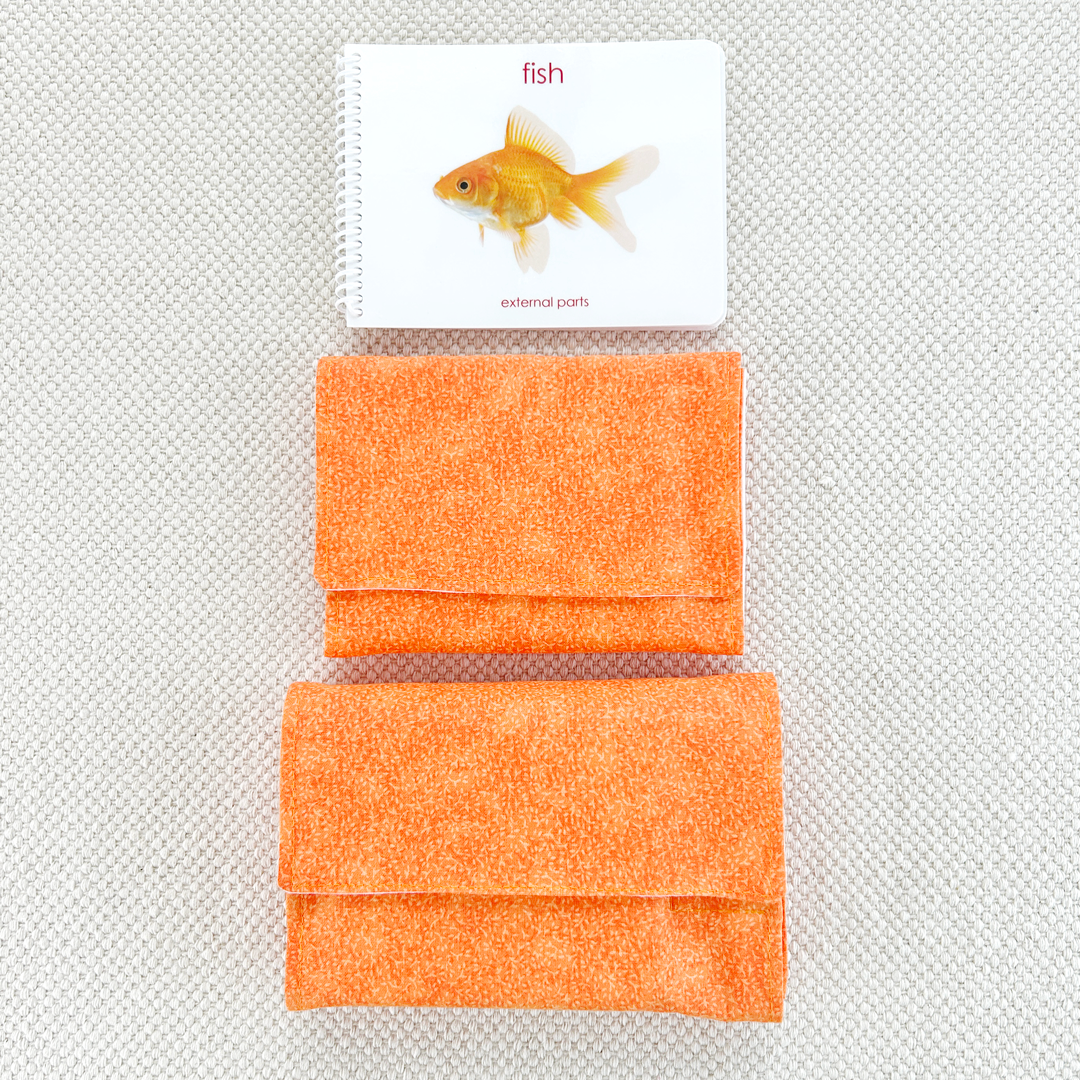
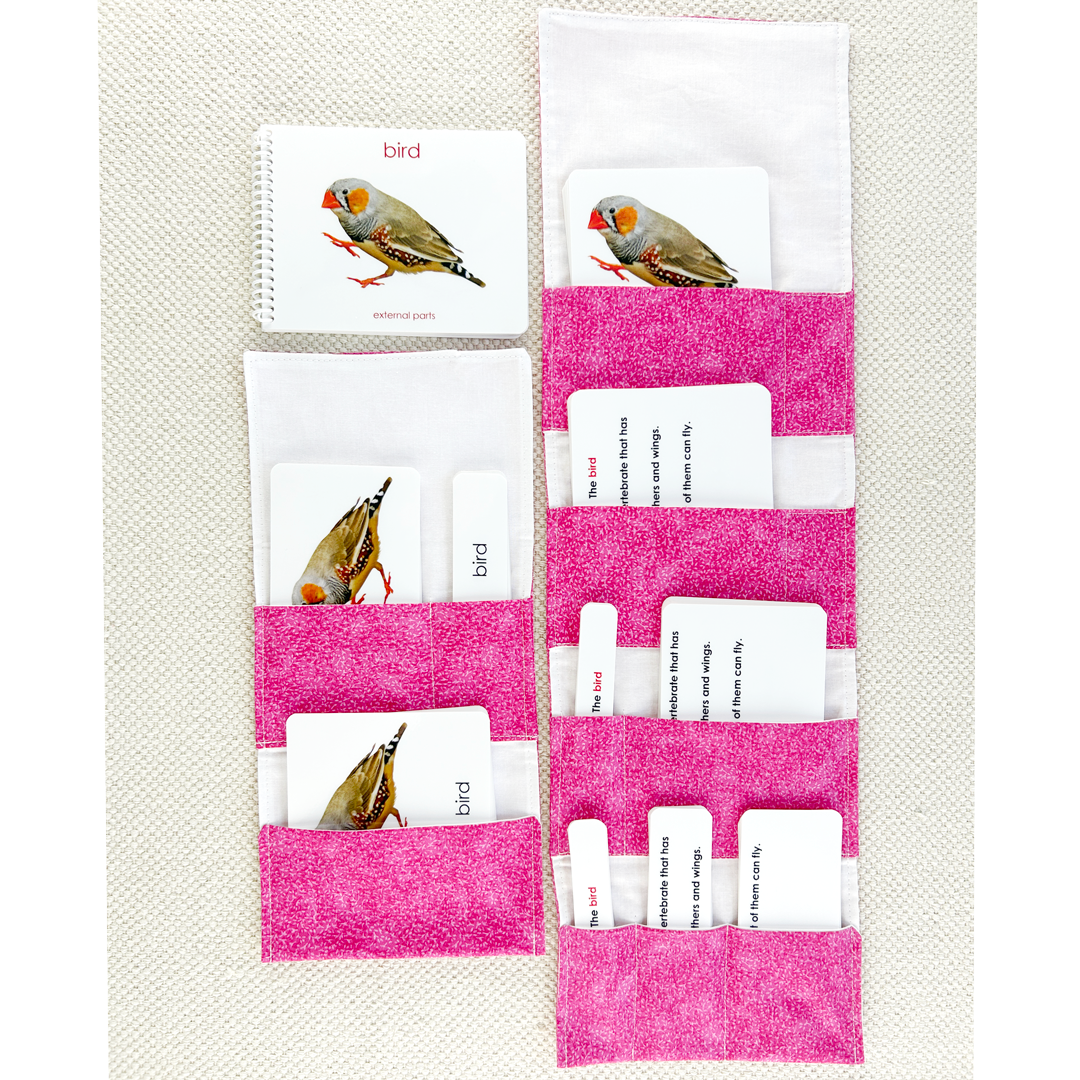
Add-on a set of 10 cloth pouches for a beautiful way to organize and display these cards (choose your colors):
- Five cloth pouches for 3-part cards
- Five matching cloth pouches for vocabulary plus definition cards
Why reading comprehension matters
The Simple View of Reading defines reading comprehension as decoding multiplied by language comprehension — strong word recognition alone isn't enough if a child doesn't also understand the vocabulary and concepts behind the words (Gough & Tunmer, 1986). This kit is built around that formula directly: the 3-Part Cards build decoding and sight-word recognition, while the Vocabulary Cards, Definition Books, and staged Definition Cards build the language comprehension side — word meaning, definitions, and the ability to reconstruct a concept from its parts. Practicing both sides on the same 21 topics, rather than in isolation, is what turns accurate word reading into genuine understanding.
What is the Science of Reading?
The Science of Reading is the interdisciplinary body of research — from cognitive psychology, linguistics, and neuroscience — explaining how children learn to read. It identifies two foundational components of skilled reading: language comprehension and word recognition (decoding), which combine to produce reading comprehension (Gough & Tunmer, 1986).
What is the Simple View of Reading?
The Simple View of Reading is a formula stating that reading comprehension equals decoding multiplied by language comprehension (Gough & Tunmer, 1986). A child can read every word accurately and still fail to understand a text if they don't know what the words mean — which is why this kit pairs word-recognition practice (3-part cards) with vocabulary and definition work on the same topics, rather than treating decoding and comprehension as separate skills.
What ages is this kit designed for?
Ages 5–11+ (grades K–5). Children begin with the vocabulary cards and books as soon as they're ready for oral vocabulary work, then move into the 3-part cards and definition stages as their independent reading develops.
How is this kit Montessori-aligned?
This kit follows the traditional Montessori progression from concrete to abstract: children first handle vocabulary cards and picture-based definitions, then move to independent reading with self-correcting 3-part cards, and finally work with increasingly abstract definition stages — all built around materials the child can verify and correct without adult intervention.
Product Details
A Note to Montessorians
A Note to Teachers
Choose options
Included In This Bundle


Knowledge Bank
Recommended Articles
Download a PDF of our materials

Follow Us