

Parts of the Sea Star (Starfish) 3-Part Reading
 Rooted in Neurodevelopment
-

See the Guided Lesson Plan
 High quality materials
 Eco-Happy
 Fun & Engaging Activities
Ages/Stages
Common Core
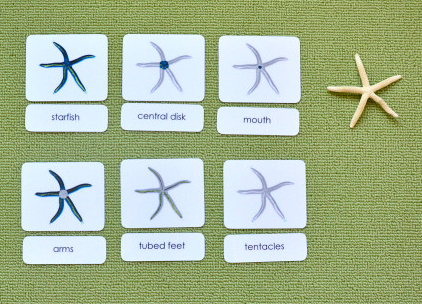
Our Parts of the Sea Star (Starfish) 3-Part Reading Cards pair real photographs of a Caribbean starfish and its key external parts with matching word labels. Students read science words like central disk and tube feet, match them to the photos, and check their own work with the control cards. This repeated, self-correcting practice builds reading fluency and connects new words to both their spelling and their meaning. Ages 5+.
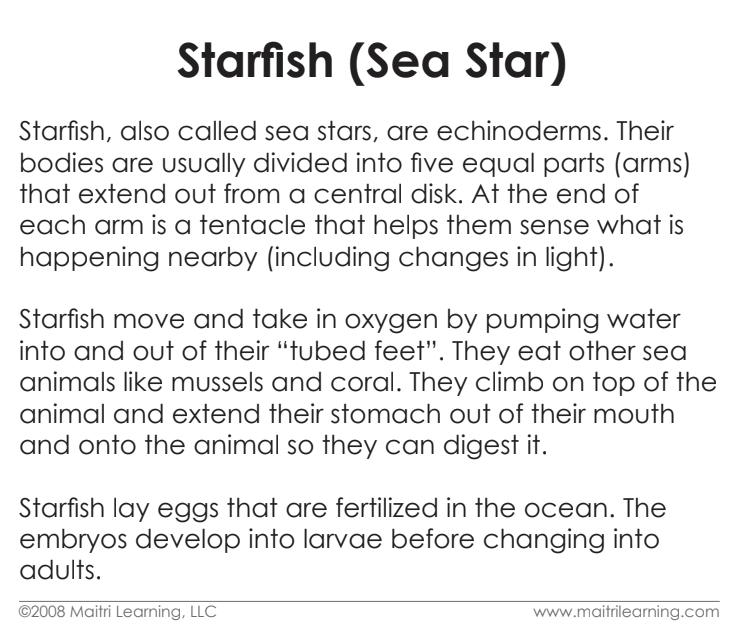
Sea stars aren't fish at all, which is why scientists prefer the name "sea star" to "starfish." They are echinoderms, a name that means "spiny skin." A sea star's arms meet at its central disk, and hundreds of tiny tube feet underneath help it move and grip rocks. Echinoderms are one of the five invertebrate groups in our Invertebrates "Parts of" 3-Part Set, along with insects (butterfly), crustaceans (lobster), mollusks (snail), and arachnids (spider). Laying the five side by side helps students see how differently invertebrate bodies can be built.
The 3-part format is built for independent reading. Students lay out the photo cards, read and match the word labels, then use the control cards to check their work. These cards are also part of our Parts of the Sea Star Book & Card Set, an interactive build-a-book reading comprehension activity.
What's included
- Real photos of the whole sea star and its key external parts in a 3-part format (see photo for list); 18 cards in all
- Eco-laminated with a food-grade laminate and rounded corners
- Cards are approx. 3¾" x 4¼" control cards, 3¾" x 3" photo cards, and 3¾" x 1¼" word cards
- Sturdy, clear reclosable bag for storage
- Lesson plan included
Add on our 3-pocket cloth pouches for an elegant, child-accessible display solution.
Created by a Montessori teacher and a zoologist. Eco-printed in our rural New England office.
Made in the USA. CPSIA compliant.
Note: Photos may change from those pictured.
Why do 3-part cards matter for reading?
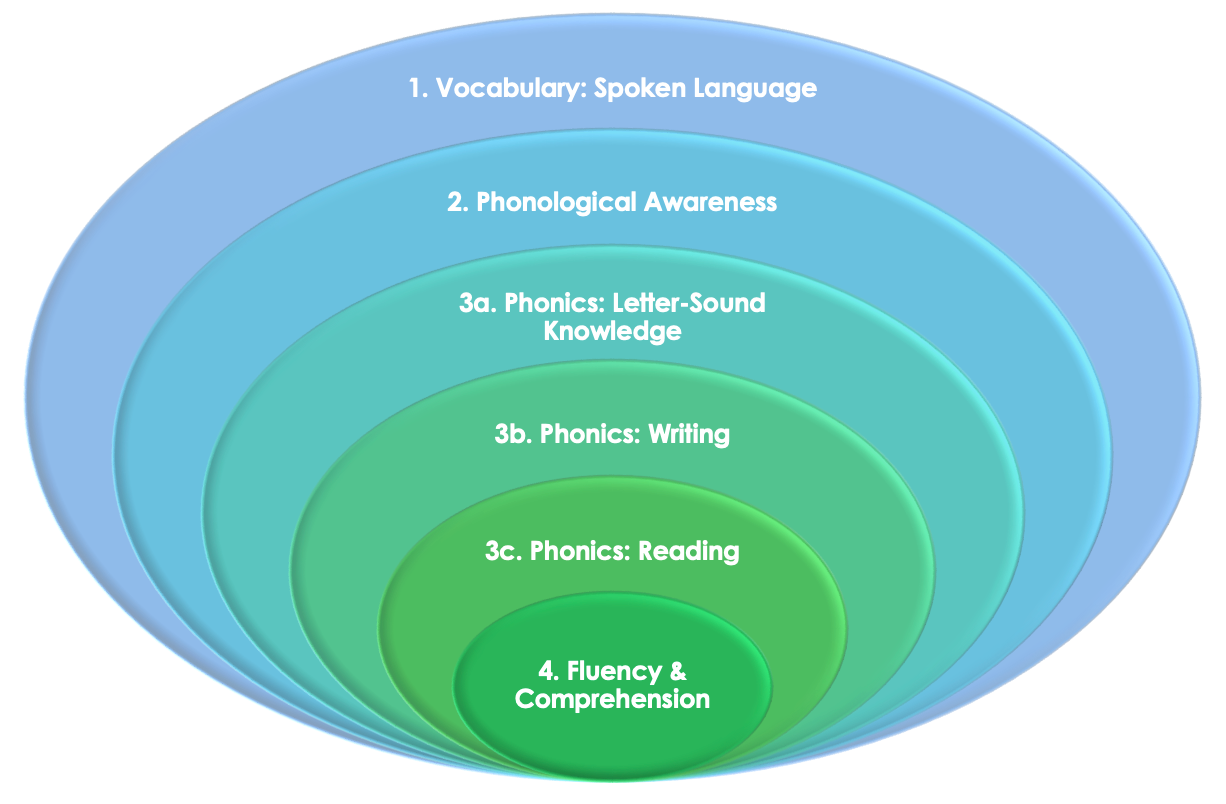
Three-part cards make reading practice independent. The control card lets students find and fix their own errors, which is how humans learn best, with no teacher correction required. Beyond that, remember that interest drives learning. Students who are interested in ocean animals will choose these cards again and again, and that curiosity can carry even a reluctant reader through repeated reading practice. The cards also build vocabulary, part of the language comprehension side of reading in both Gough and Tunmer's (1986) simple view of reading and Scarborough's (2001) reading rope. By reading the words tentacles now, a student will recognize and understand them when they later meet them in a science text.
How do you use Parts of the Sea Star 3-Part Cards?
Begin by using the photo-only cards to teach the names of the parts (via the three-period lesson), starting with the whole sea star. Our Parts of the Sea Star Vocabulary Cards also work well for this step. When students are stretching past phonetic reading, use all three parts: lay out the photo cards, read and match the word labels to the photos, and use the control cards to check for accuracy independently (no teacher help required). For a complete learning experience, add the Parts of the Sea Star Book and Definition Cards, or get everything together in the Book & Card Set.
What ages is this for?
Typically Kindergarten (ages 5–6) and above. However, students of any age can benefit from these cards if they:
- Can read phonetically
- Are interested in sea stars, echinoderms, or ocean animals
- Need practice reading
- Prefer self-correcting activities to teacher correction
A Note to Teachers
Choose options
Knowledge Bank
Recommended Articles

Download a PDF of our materials

Follow Us