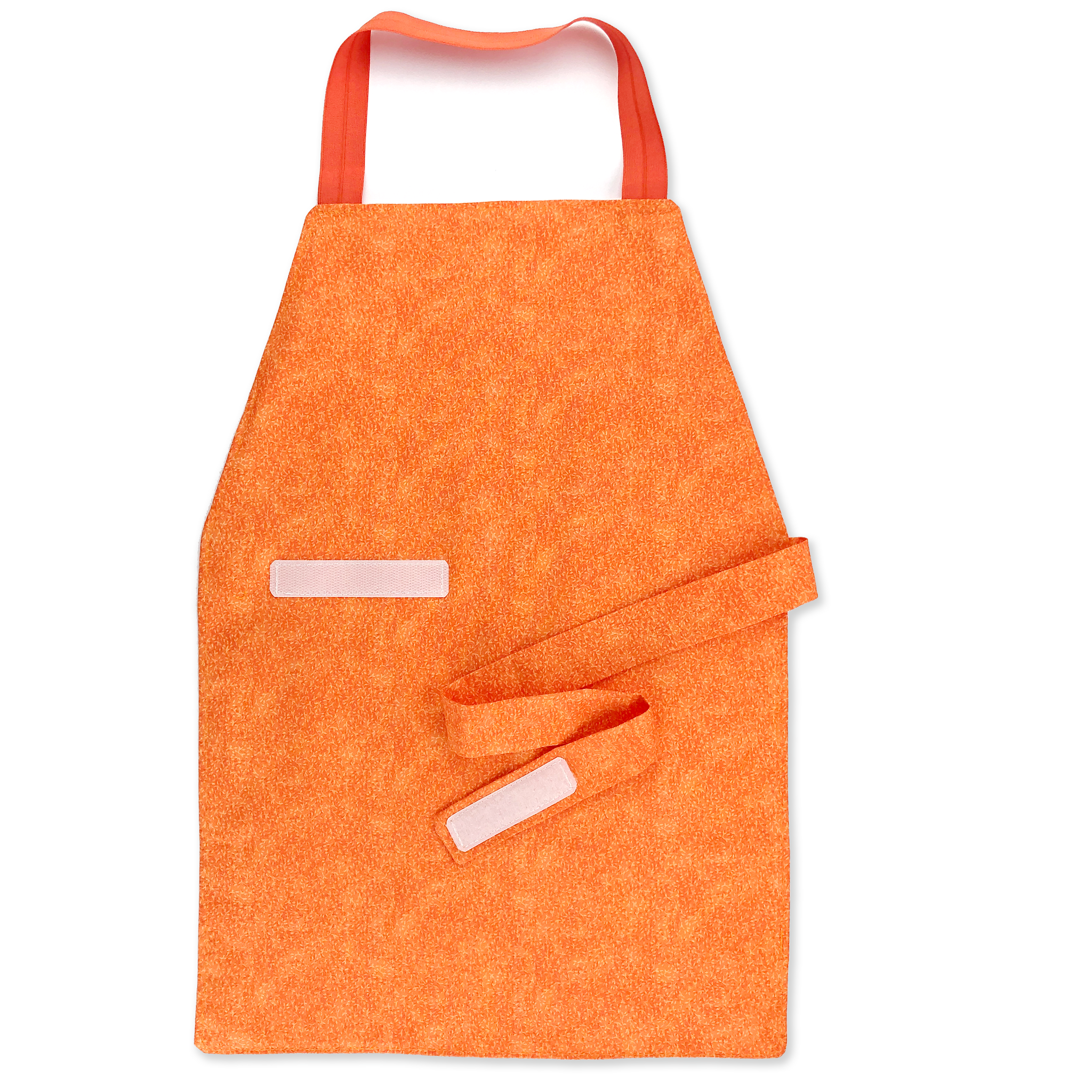
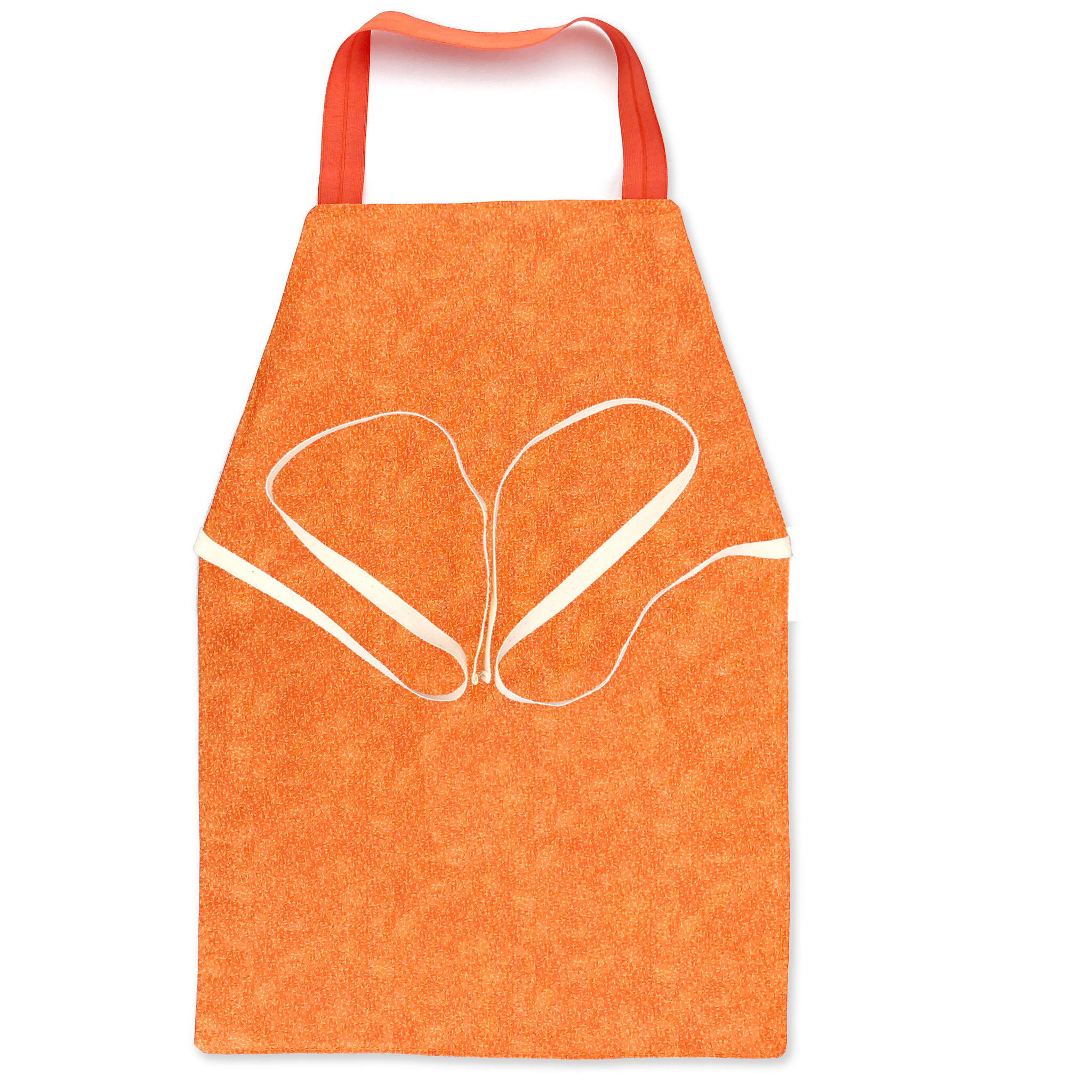
Orange Cloth Apron
 Rooted in Neurodevelopment
 High quality materials
 Eco-Happy
 Fun & Engaging Activities
Ages/Stages
Common Core
These 100% cotton aprons protect children's clothing during activities involving water, food, polishing, art, and more. The apron itself is part of the Montessori work. Putting an apron on, tying or fastening it, and later removing, rolling or folding, and caring for it is its own practical life sequence, not just a preparatory step before "the real lesson."
Made from 100% cotton and fully lined, each apron is available in Small/Primary (ages 3–6) and Medium/Elementary (ages 6–9) sizing, with a choice of hook/loop (velcro) or tie waist closure — so the closure itself can match a child's current dressing ability or add a needed challenge.
Here are a few things you'll love about these aprons:
- Soft, flexible neck elastic that fits comfortably over heads and hairstyles of all sizes
- Waist design that is easy for children to use (centered velcro or long ties)
- 100% cotton for water absorption
- Hand-crafted in the USA at our rural New England office.
What's Included
This single apron is available in two sizes and waist styles so you can match the apron to the children's age and dressing ability.
- Choose your size:
- Small/Primary apron (ages 3 to 6): approx. 17.75" L x 12.5" W
- Medium/Elementary apron (ages 6 to 9): approx. 22" L x 15.5" W
- Small/Primary apron (ages 3 to 6): approx. 17.75" L x 12.5" W
- Choose your waist style:
- Hook/loop (velcro) waist
- Tie waist
Add on a matching work mat for a complete activity:
- Small work mat (approx. 11" x 17")
- Medium work mat (approx. 15" x 20")
Why Practical Life Aprons Matter for Independence
Practical life activities help children develop concentration, a sense of order, pride in completing a task, independence, and motor skills — including the coordination that supports more complex work later on. An apron fits naturally into that.
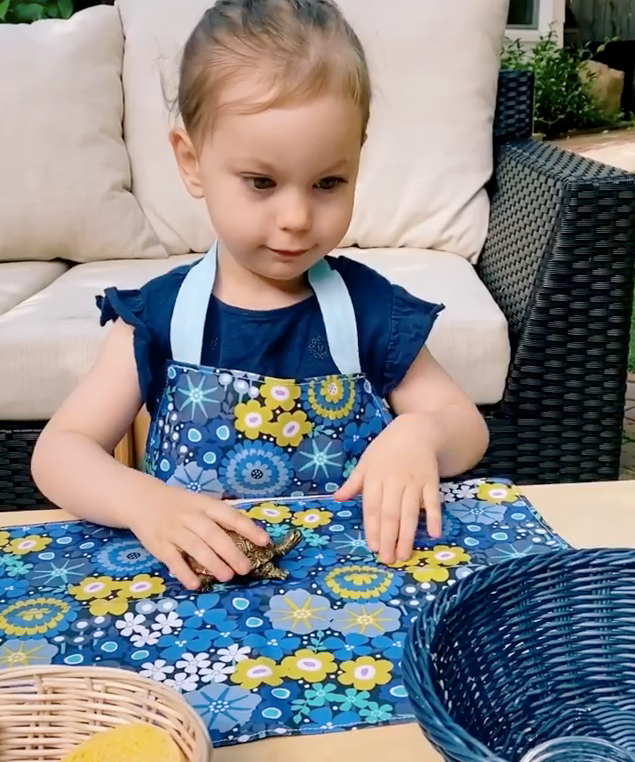
The aprons also protect a child's clothing. Many children are perfectionists and will not engage in an activity if they are concerned about getting their clothes wet or dirty. A soft, absorbent cotton apron allows them to engage while adding a wonderful sense of style and "uniform" to each activity in your environment.
Why Color-Coding Matters
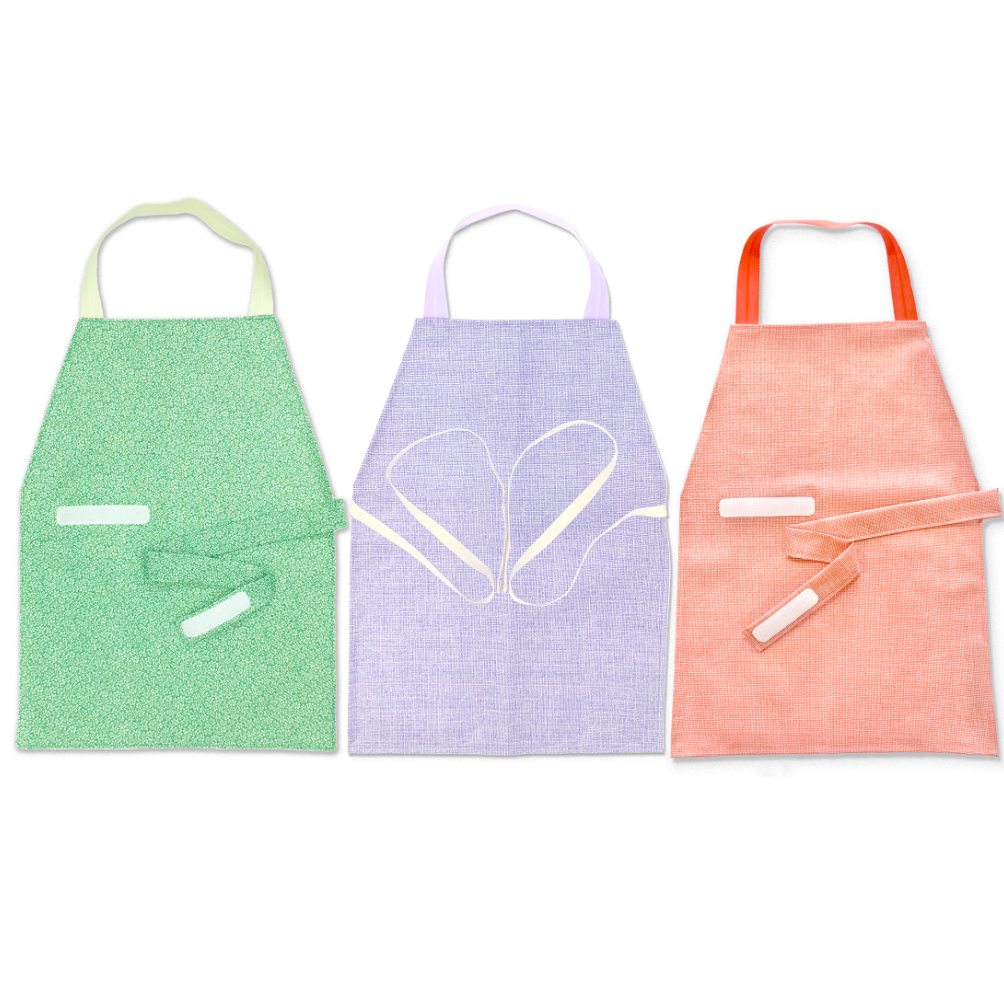
Color is one of the ways a Montessori environment stays organized. When an apron's fabric matches its table or floor mat and the color of the materials in the activity, a child can see at a glance which apron belongs with which activity. This seemingly small design choice supports the child's developing sense of order, their independence, and their ability to find and return materials on their own.
Here's what we recommend.

Should I choose hook/loop or tie-waist?
Hook/loop (velcro) is a good starting point for younger children or anyone still building the fine motor sequencing for bow-tying. Also, the rounded-corners on the velro mean it won't poke small fingers.
Tie waists suit children who are practicing or have mastered tying and want the extra independence of dressing themselves fully. Many classrooms stock both and often pair tie-waist aprons with more advanced activities.
Fabric Care
Hand-wash and hang to dry for best results and long-lasting quality. Machine washing is fine in a pinch — just be sure to secure the hook/loop closure firmly first (or it will catch on other items in the wash) and wash in cold to avoid shrinkage.
Note: Sometimes, we may need to use a slightly different fabric/trim than pictured.
Product Details
A Note to Montessorians
Choose options
Knowledge Bank
Recommended Articles
Download a PDF of our materials

Follow Us