Land and Water
"This materials make me feel like I can be a successful homeschooler."

 Teacher Favorite
 Rooted in Neurodevelopment
See the Guided Lesson Plan
 High quality materials
 Eco-Happy
 Fun & Engaging Activities
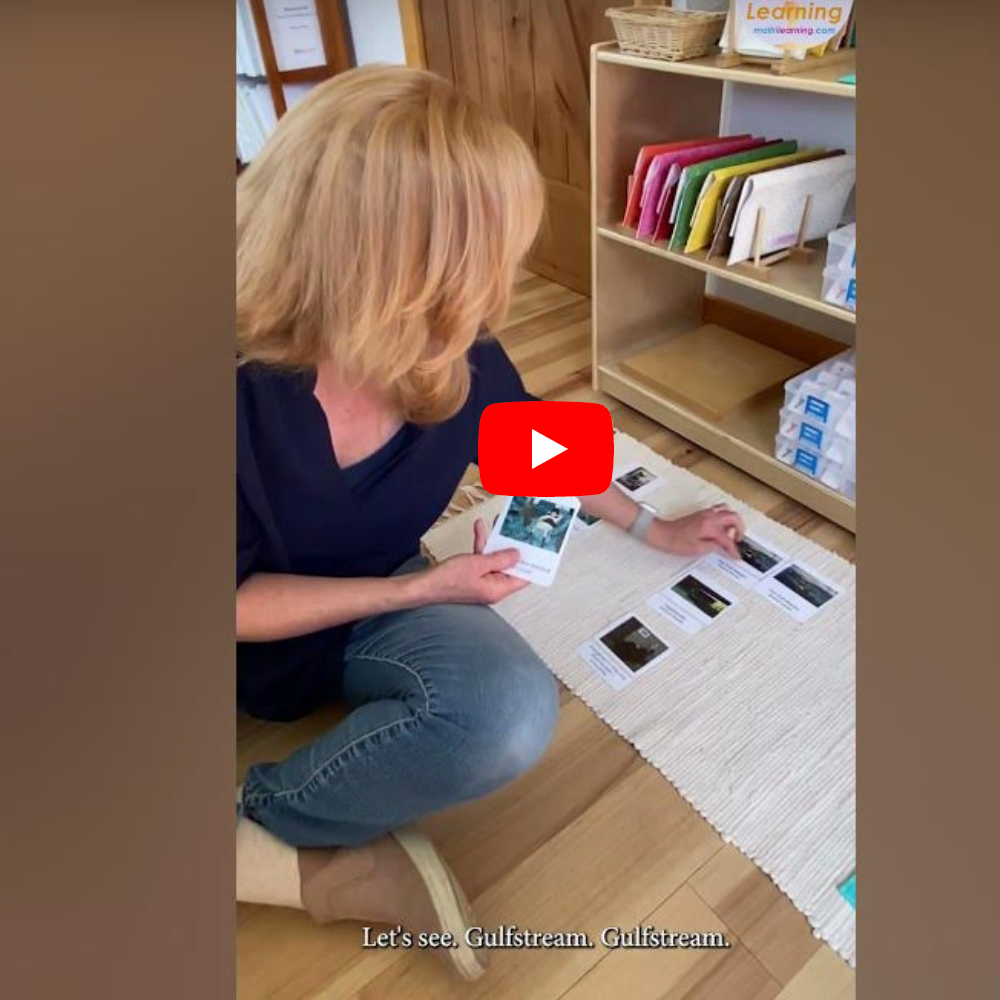
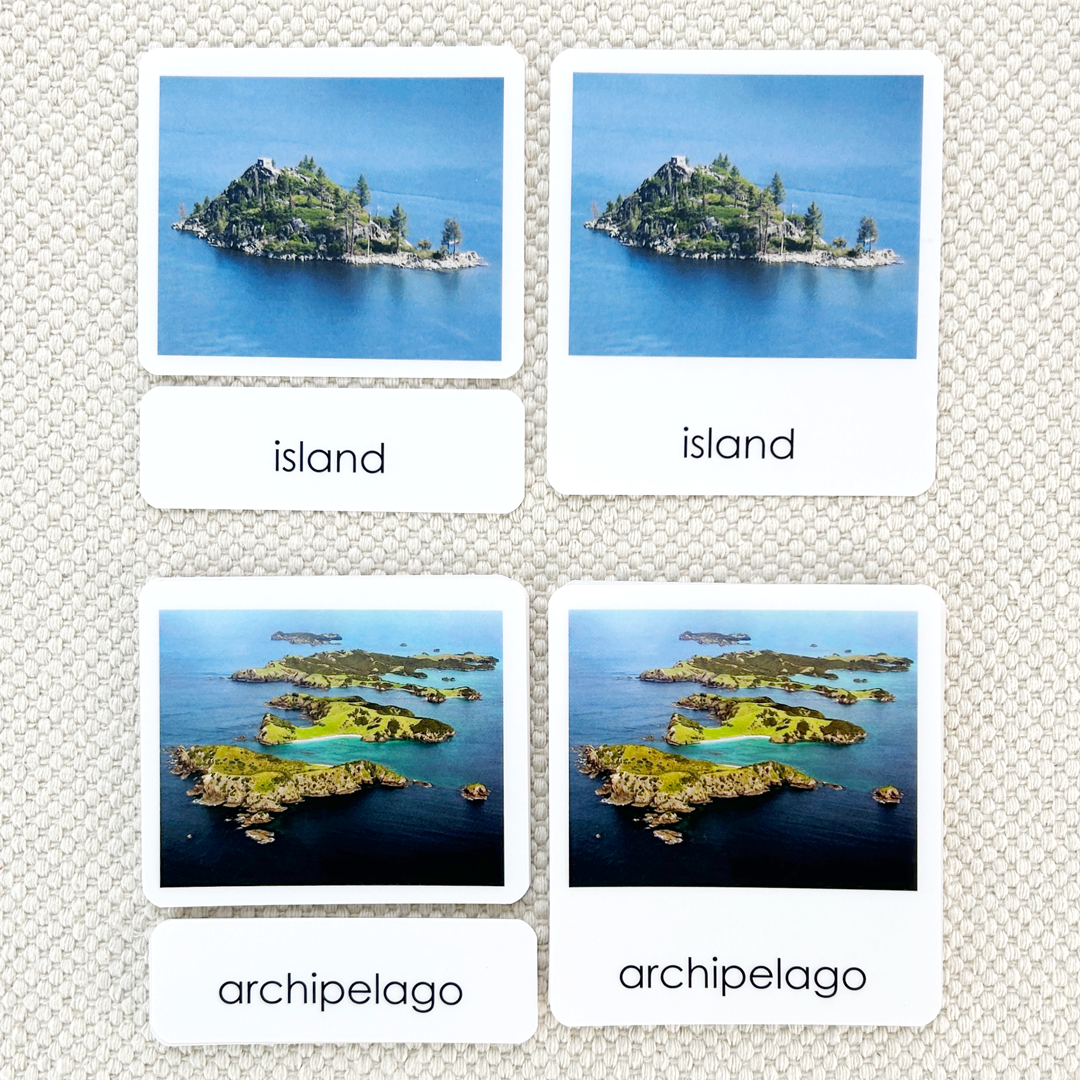
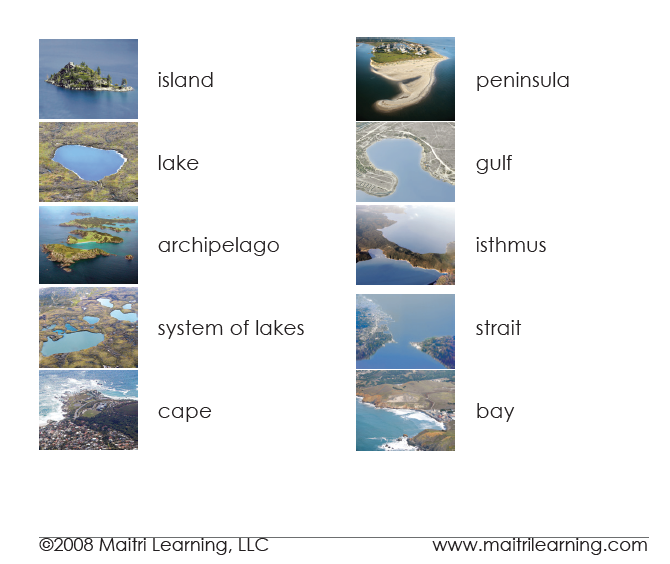
These Land & Water 1 3-Part Reading Cards use real photographs of actual locations to clearly depict the 10 basic land and water geographic formations of island, lake, archipelago, system of lakes, cape, bay, peninsula, gulf, isthmus, and strait.
Aligned with Science of Reading principles, these cards build reading fluency through repeated, self-correcting practice — strengthening orthographic mapping and vocabulary acquisition at the word level.
The 3-part format is designed for independent reading. Students lay out the photo card, read and match the word labels to the photo cards, and then use the control cards to check their own work.
Add-on our 3-pocket cloth pouches for an elegant, child-accessible display solution.
All cards are eco-made in the USA, are laminated with a food-grade laminate, have rounded corners, and are ready to use right out of the package. CPSIA compliant.
Note: Photos may change from those pictured.
Interest drives learning; if students are curious about the natural world or hiking, even reluctant readers may persist with these self-correcting cards. Reading fluency depends on repeated, self-correcting practice that strengthens orthographic mapping — the process by which readers connect written words to their pronunciations and meanings. A student's interest can carry a reluctant reader through the repetition that fluency requires.
Begin by using the photo-only cards to teach vocabulary (via the 3-period lesson). Then, use the photo-only cards from this and other packets for sorting work. Add-in the sorting labels for children who are reading. Finally, when students are stretching past phonetic reading, use all three parts: lay out the photo cards, read and match the word labels to the photos, and use the control cards to check for accuracy independently (no teacher help required).
Typically Kindergarten (ages 5–6) and above. Students of any age can benefit if they:
Choose options
Knowledge Bank
Overall rating: 5.0 / 5 from 1 reviews.
Review topics: [].
"This materials make me feel like I can be a successful homeschooler."
Download a PDF of our materials