Carnivores, Herbivores & Omnivores
 Rooted in Neurodevelopment
-

See the Guided Lesson Plan
 High quality materials
 Eco-Happy
 Fun & Engaging Activities
Ages/Stages
Common Core
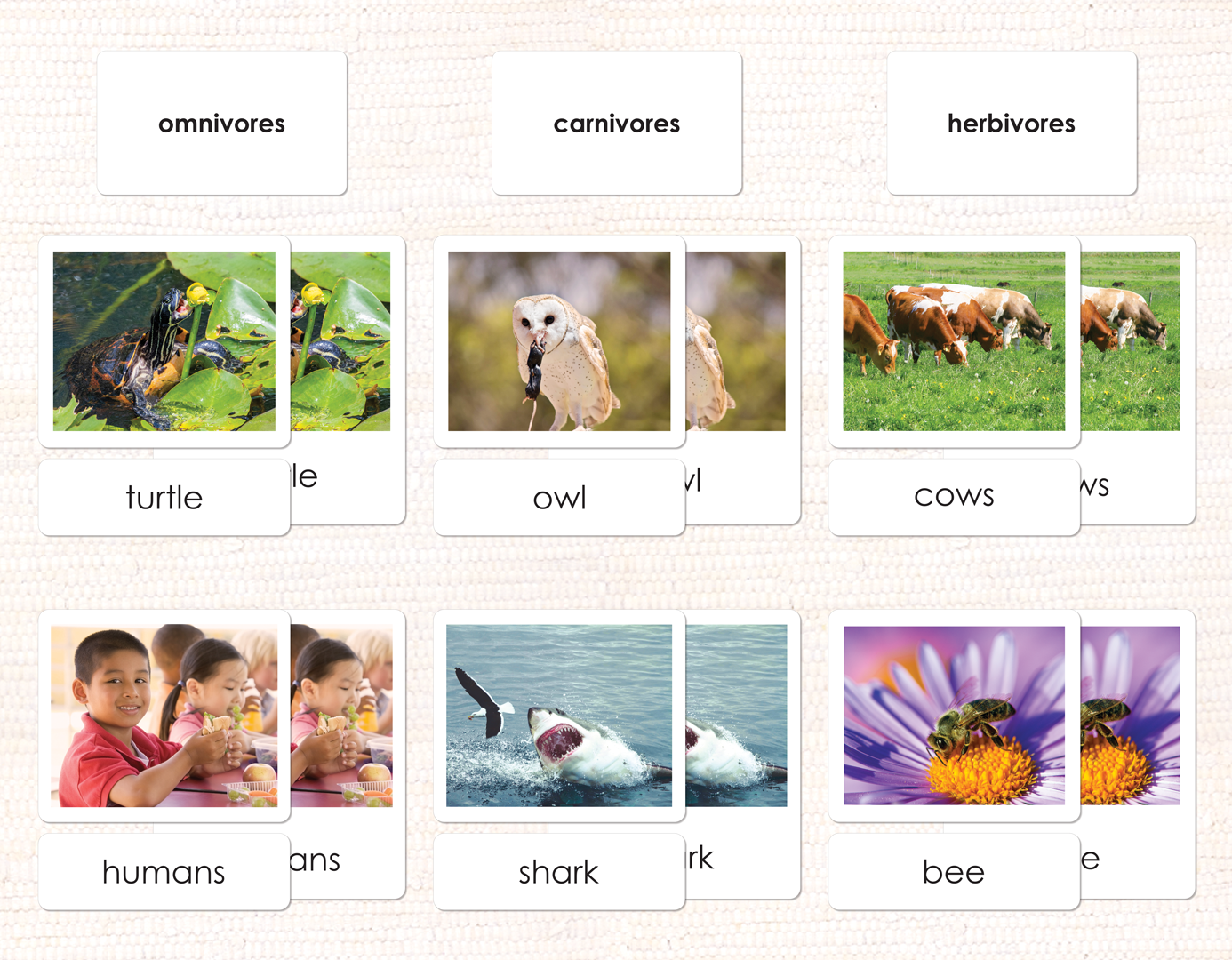
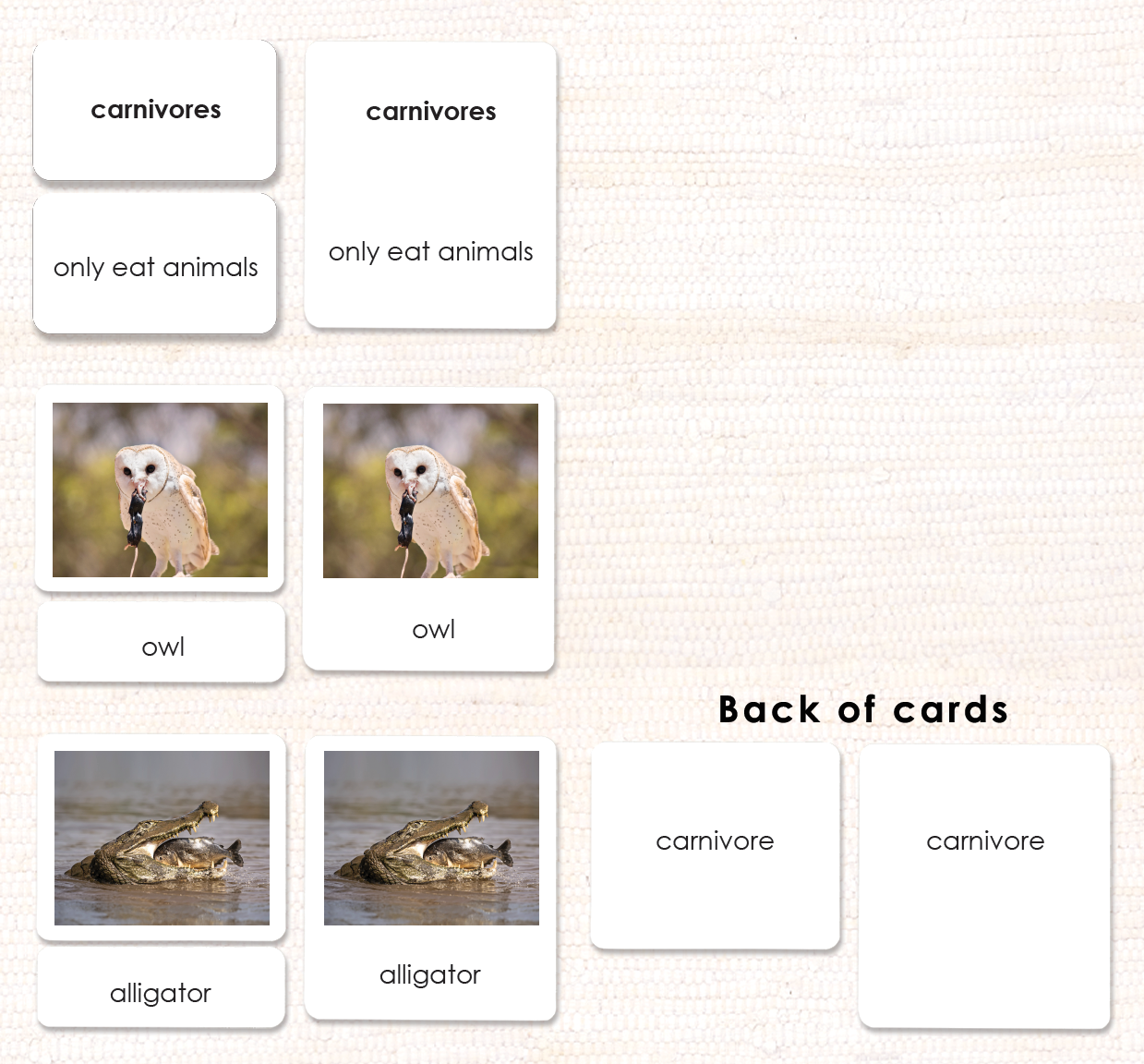
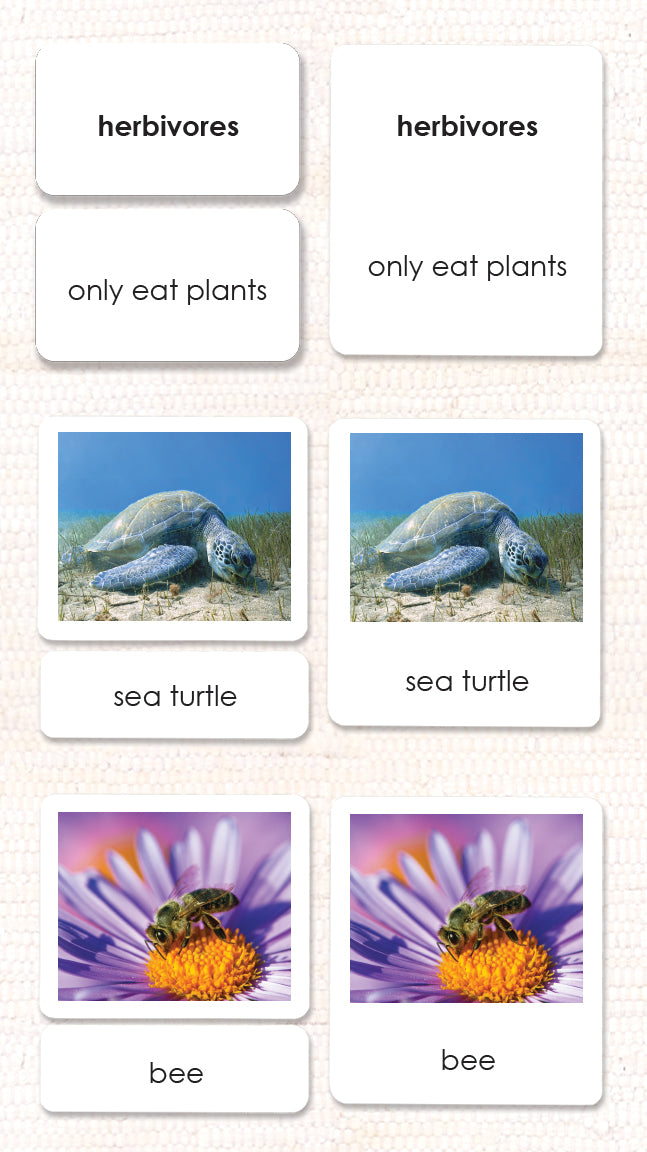
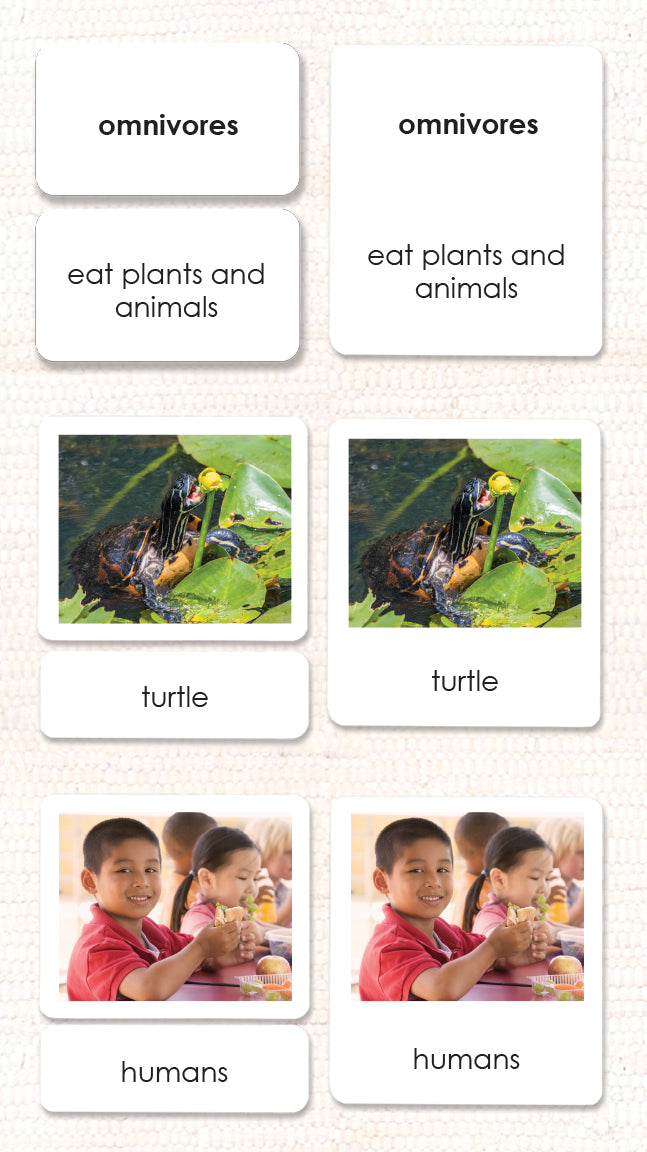
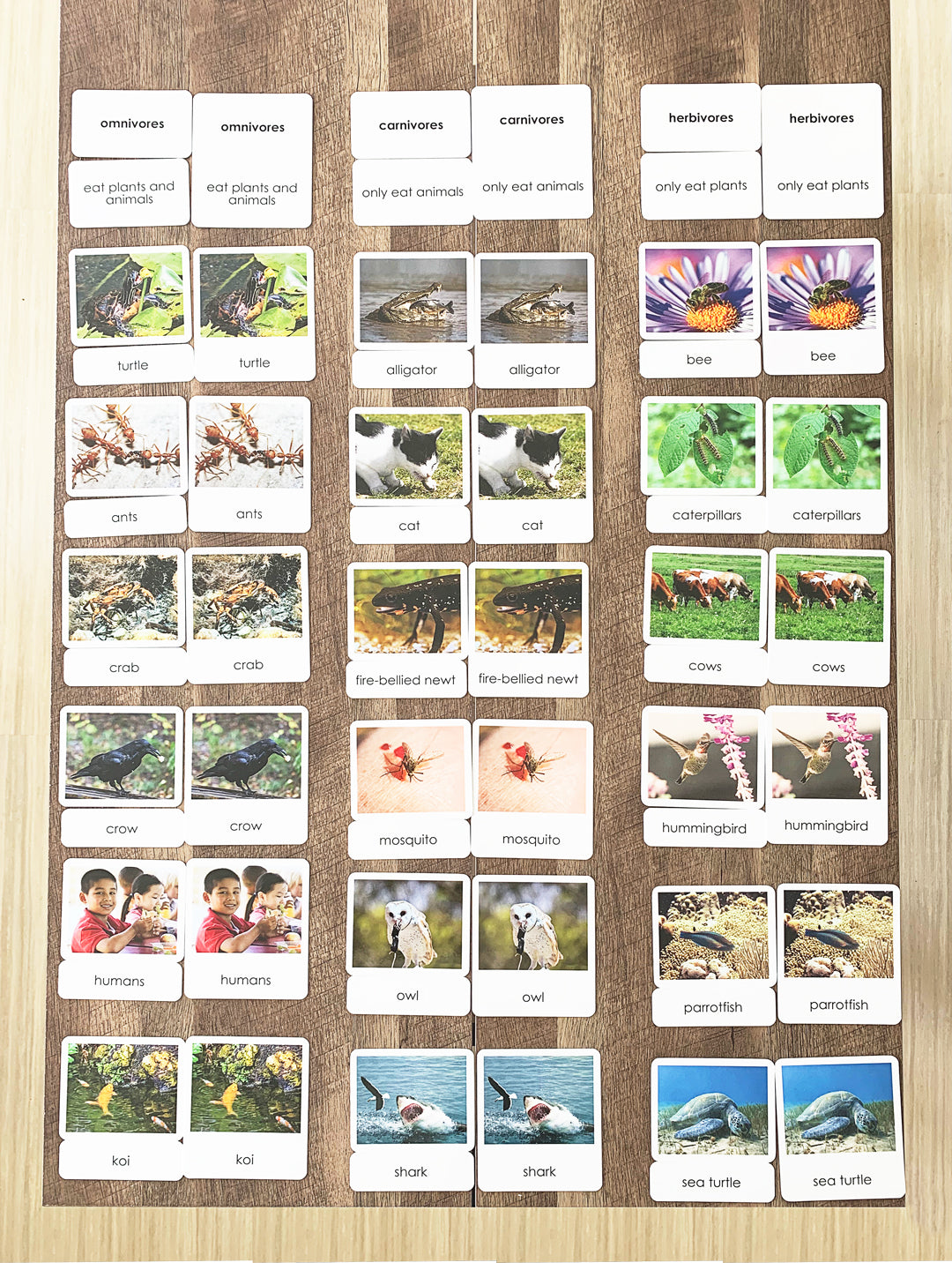
Carnivores, Herbivores & Omnivores 3-Part Reading Cards teach animal diet classification using photographs of 18 species. Aligned with Science of Reading principles, these cards build reading fluency through repeated, self-correcting practice — strengthening orthographic mapping and vocabulary acquisition at the word level. Designed for Ages 5+
This activity introduces the children to the terms carnivore, omnivore, and herbivore and shows them six animals that represent each group. We chose animals that represent the five main vertebrate classes along with invertebrates to provide zoological balance. Each photo displays the subject in its natural environment with the food it eats. These beautiful photos make finding out what different animals eat a fun lesson that can open many discussions about the diversity of species.
The 3-part format is built for independent reading. Students lay out the photo card, read and match the word labels to the photo cards, and then use the control cards to check their own work.
What's included:
- Real photos of 18 animals representing the five main vertebrate classes plus invertebrates, each shown eating its natural food
- Sorting labels with definition control cards
- 63 cards in all
- All cards are eco-laminated (food-grade) with rounded corners
- Lesson plan included
Add-on our cloth pouches for an elegant display/storage solution.
Why does this type of reading practice matter?
Figuring out what an animal eats from its teeth and habitat is the kind of puzzle that draws students in, and that curiosity can inspire a reluctant reader to persist. This practice strengthens orthographic mapping and word-level vocabulary acquisition — key mechanisms in building reading fluency. Vocabulary is also one of the language comprehension strands in Scarborough's (2001) reading rope, and Gough and Tunmer's (1986) simple view of reading. These cards combine student curiosity with vocabulary and self-correcting work.
How do you use 3-part cards?
Begin by using the photo-only cards to teach vocabulary (via the 3-period lesson). Then, use the photo-only cards for sorting work. Add in the sorting labels for children who are reading. Finally, when students are stretching past phonetic reading, use all three parts: lay out the photo cards, read and match the word labels to the photos, and use the control cards to check for accuracy independently (no teacher help required). Once students know the species by name, add the sorting labels. Then, try matching the terms to their definitions using the control definition cards to check your own work. There are many, many activities in this one packet of cards.
What ages and grade levels are these cards designed for?
Typically Kindergarten (ages 5–6) and above. However, students of any age can benefit from these cards if they:
- Can read phonetically
- Are curious about animal diets and behavior
- Need practice reading
- Prefer self-correcting activities to teacher correction
Product Details
Choose options
Knowledge Bank
Recommended Articles
Download a PDF of our materials

Follow Us