



3-Part Letter Sound Cards
 Rooted in Neurodevelopment
-

See the Guided Lesson Plan
 High quality materials
 Eco-Happy
 Fun & Engaging Activities
Ages/Stages
Common Core
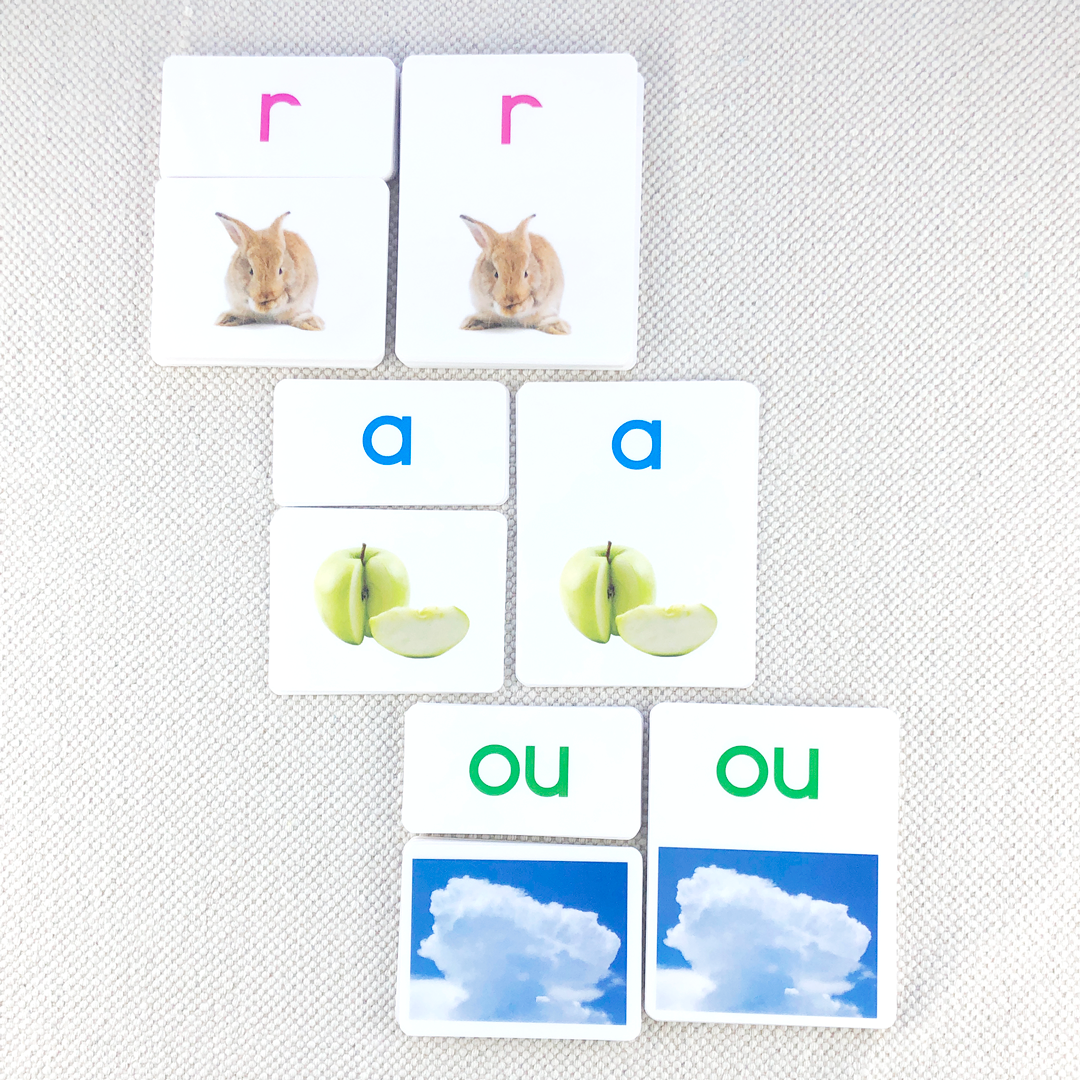
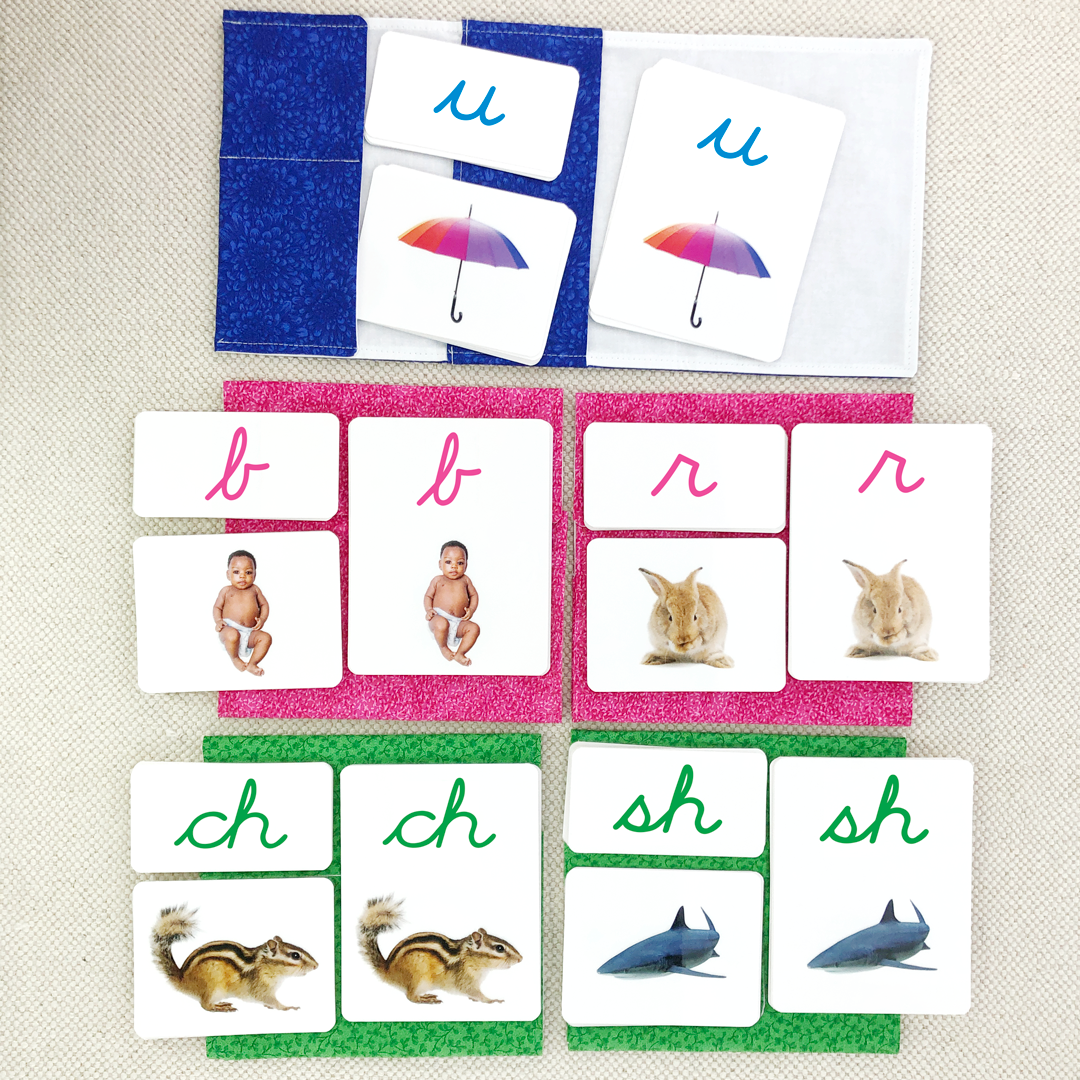
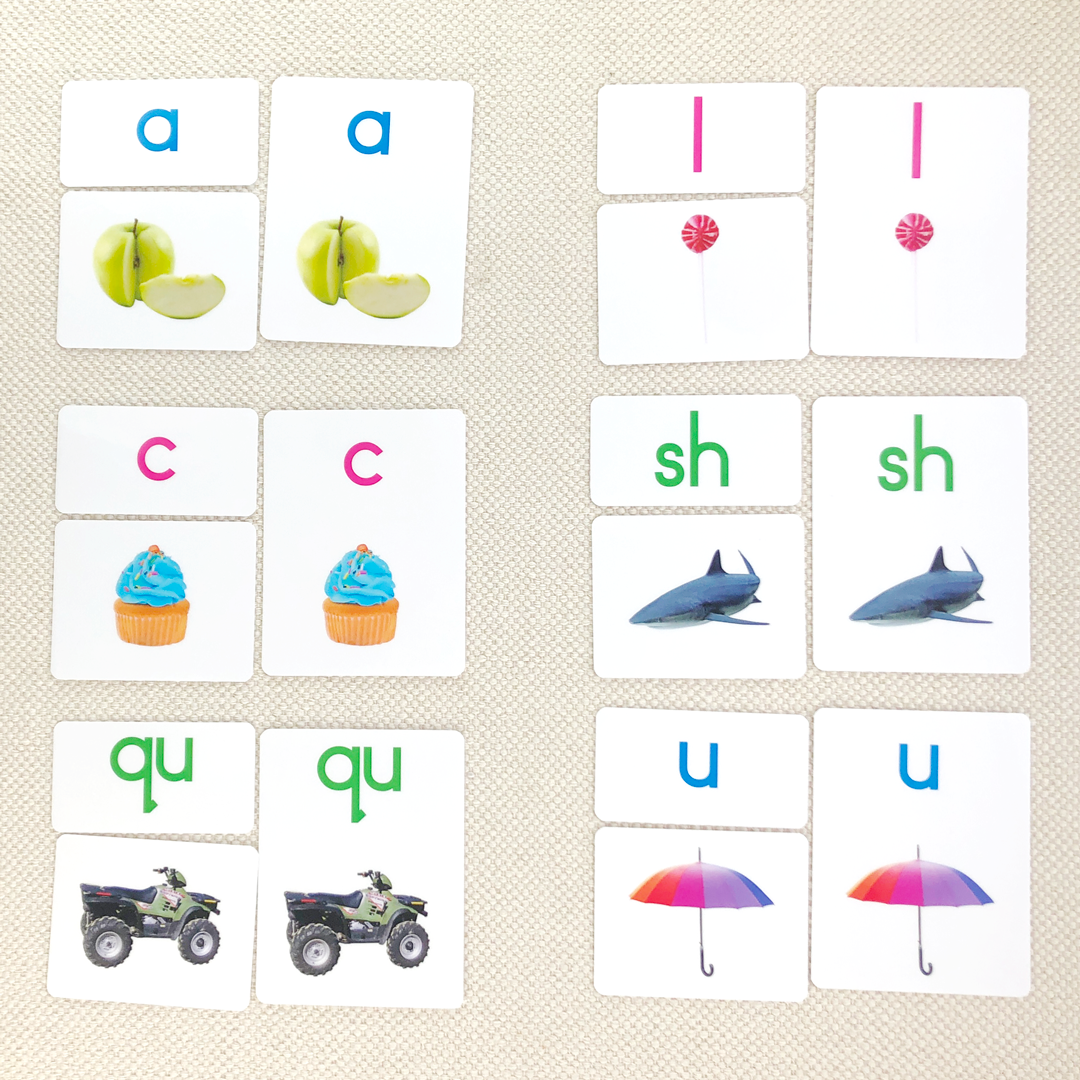
Our 3-Part Letter Sound Cards are a self-correcting way for students to practice the 43 key sounds of English: one sound for each of the 26 letters, plus 17 common digraphs like sh, ch, and ee. Students match each letter card to a picture whose name features its key sound. Then they check their own work with the control card, which shows the letter and picture together.
Because the control card does the correcting, students can practice on their own, as often as they like. That repeated, independent practice builds letter sound fluency: seeing a letter and saying its sound quickly and accurately, without stopping to think. With these key sounds, a student can spell any English word phonetically (though not always correctly) using a movable alphabet.
We start with one sound for each letter or digraph on purpose. It isolates the big idea that spoken language can be written down reliably with letters. Spelling variations come later, with our phonogram materials. Read more about the key sounds of English.
Which sounds are included?
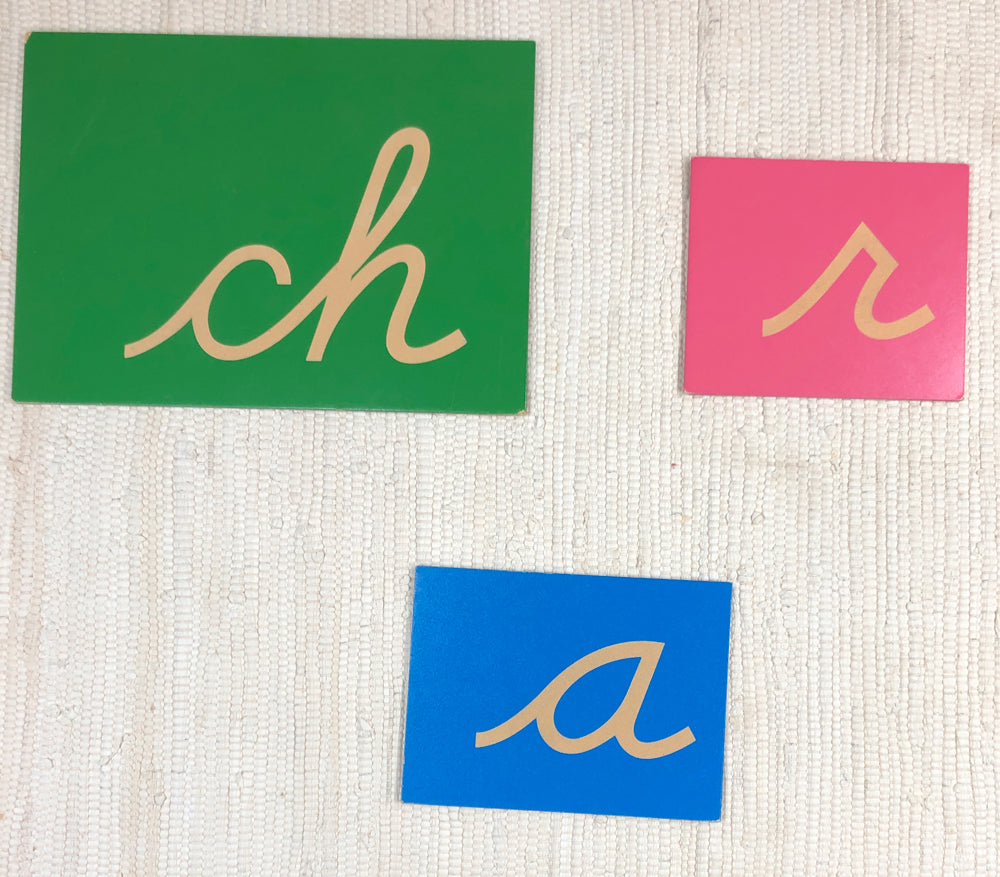
Choose print or cursive for the letters.
Letters (26)
| Sound | Word | Sound | Word | Sound | Word |
| a | apple | j | jump | s | sun |
| b | bat | k | kick | t | top |
| c | cat | l | love | u | up |
| d | dog | m | mom | v | van |
| e | egg | n | next | w | winter |
| f | fun | o | off | x | fax |
| g | gum | p | pot | y | yes |
| h | hug | q | quick | z | zebra |
| i | igloo | r | run |
Digraphs (17)
| Sound | Word | Sound | Word | Sound | Word |
| ai | rain | ie | pie | oy | boy |
| ar | yarn | ng | ring | qu | queen |
| au | Paul | oa | boat | sh | ship |
| ch | chip | oo | book | th | thorn |
| ee | tree | or | corn | ue | blue |
| er | fern | ou | cloud |
What's included
- 129 cards for 43 key sounds (26 letters and 17 digraphs): 43 control cards, 43 letter cards, and 43 picture cards
- Control cards show the letter and picture together and are approx. 4¼" x 5½"
- Letter cards are approx. 2¼" x 4¼"; picture cards are approx. 3¼" x 4¼"
- Color-coded for easy organization
- Eco-laminated with a food-grade laminate and rounded corners; students can trace the letters with a dry-erase marker
- Lesson plan included
Add a set of five color-coded chart-sized cloth pouches for student-accessible classroom organization.
Created by a Montessori teacher. Eco-printed in our rural New England office.
Made in the USA. CPSIA compliant.
Note: Photos may change from those pictured.
Why do 3-part letter sound cards matter for reading?
To read a word, a student turns each letter into its sound and blends the sounds together. When letter sounds are slow or uncertain, all of the student's attention goes to remembering each sound, and there is little left for blending or meaning. When the sounds are automatic, reading gets easier. In Scarborough's (2001) reading rope, this is the word-recognition side of reading, which becomes more automatic with practice. The 3-part format makes that practice independent. The control card lets students find and fix their own errors, which is how humans learn best, with no teacher correction required.
How do you use 3-part letter sound cards?
Use these after a student has been introduced to the sounds, with sound games and our Letter Sound Charts or sandpaper letters. Choose a handful of familiar sounds to start. Lay out the letter cards in a column and say each letter's sound together. Next, the student matches each picture to its letter, saying the sound as they go. Finally, they place the control cards just to the right of each pair to check their work and fix any errors on their own. As more sounds become familiar, add more cards until the student can match all 43.
Should I choose cursive or print?
If you have a choice, we recommend cursive. If your school or district teaches print, choose print so the letters match what students write every day.
What ages are 3-part letter sound cards for?
Typically ages 3 to 6 (PreK and Kindergarten), once a student has been introduced to some letter sounds. They also work well for:
- First and second graders who need review
- Students in reading intervention
- English learners just learning the sounds of English
- Any student who prefers self-correcting work to teacher correction
What comes after 3-part letter sound cards?
Once students know their key sounds, they spell words with a movable alphabet (encoding before decoding), then read phonetic words with our Phonetic 3-Part Cards. When they are ready for spelling variations, move on to our Phonogram 3-Part Cards.
Choose options
Knowledge Bank
Recommended Articles

Download a PDF of our materials

Follow Us