
Article: What Is the Montessori Key Sound Approach? (Muriel Dwyer's Method)
What Is the Montessori Key Sound Approach? (Muriel Dwyer's Method)
The Montessori key sound approach, developed by AMI teacher trainer Muriel Dwyer, gives every letter of the alphabet one reliable "key" sound. It then adds a set of common digraphs (like sh and ch) to cover the other sounds of English. With these key sounds, students can spell any word phonetically, long before they know every spelling rule. They are the first letter sounds we teach.
Why start with key sounds?
English is only partially phonetic. Some letters are very predictable (for example, 'm' almost always says mmm). Others are not (think of the 'e' in egg and the 'e' in Pete). We don't want to overwhelm beginners with all of that unpredictability at once. Instead, we teach the reliable parts of English first to build confidence and get students started. Then we slowly add in spelling variations.
Where did the key sound approach come from?
Muriel Dwyer figured this out decades ago, and you can read all about it in her book. She was teaching the Montessori approach to language in both English and Swahili. Dr. Montessori's original Italian comes close to one letter, one sound. English and Swahili do not. So Dwyer had to find a logical way to handle all the sounds that single letters can't cover.
The result was the key sound approach. (The green sandpaper letters you see in Montessori classrooms are a direct result of her work.) The chart below gives an example of the key sound for each letter of the alphabet (yes, some are redundant, like c and k) and the 17 additional digraphs students need.

How do you teach a key sound?
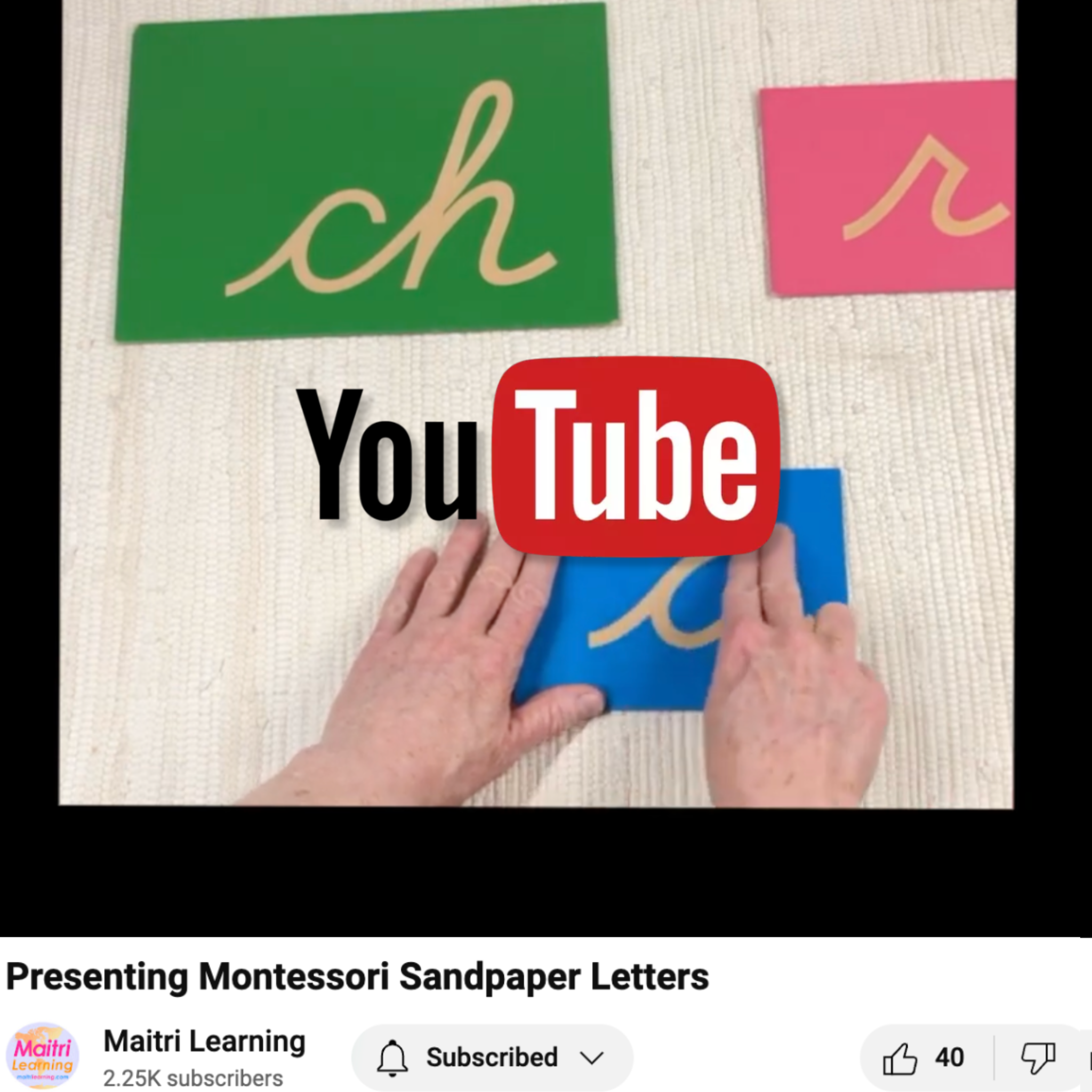
- Show the student the letter 'a.'
- Say, "This says aaa, like apple, map, Africa."
- Invite the student to trace the letter while repeating its sound and saying words that feature the sound.
- Repeat with two or three other key sounds (letters or digraphs).
Why teach digraphs from the start?
We don't limit this to the 26 letters of the alphabet. If we did, students would be missing many of the sounds of English. Think about 'sh.' How would a student who only learned the 26 letters spell ship? That's why we teach digraphs too.
And there's no real reason to hold digraphs back for later, especially with young children. Their brains are just learning to recognize letters and connect them to sounds. They are in a sensitive period that makes this easier. So why limit them to only part of what they need to succeed with English?
What about letter names?
The key sound approach focuses on letter sounds, but that doesn't mean we leave out letter names. We can simply say, "This is the letter 'a.' It says aaa, like apple." It's an effortless way to introduce both the name and the sound. Both are important for literacy.
From key sounds to writing
The beauty of this approach is that once students learn the key sounds with sandpaper letters, letter-sound charts, and/or 3-part letter sound cards, they are immediately ready to start writing words phonetically with the movable alphabet. Students spell words before they easily read them. This is the encoding-before-decoding sequence at the heart of the Montessori Science of Reading.
Yes, students will misspell some words at first (writing 'kat' instead of 'cat,' for example). You might worry that those misspellings will get locked in through repetition. But that isn't what we see. Once students start reading, they begin to discover how words are actually spelled. They start to question their own spellings. That is the moment to branch out into the less predictable parts of English. Muriel Dwyer's phonogram spelling folders are a logical place to begin.
The hidden gift of the key sound approach
In sum, the key sound approach lets students work with all of the sounds of English right away, so they can begin to express themselves. The key sounds prepare them to put their thoughts and ideas into writing. They learn that they have something to say, that they can write it, and that their voice matters. This is the great hidden gift of Dwyer's key sound approach. It's not just about learning literacy skills. It's about helping each human reach their full potential, and the key sound approach makes that an easier road to follow.
Frequently asked questions
What is a key sound?
A key sound is the one sound we first teach for a letter or digraph. It's the most common, reliable sound that letter or digraph makes in English. Other spellings and sounds come later, once students are reading.
How many key sounds are there?
There is one key sound for each of the 26 letters, plus 17 digraphs (like sh, ch, and th) for the sounds single letters can't spell. Together, they let students spell any English word phonetically.
Is the key sound approach aligned with the Science of Reading?
Yes. It teaches letter-sound correspondences explicitly and systematically, starting with the most reliable ones. It also moves students into encoding (spelling words with the movable alphabet) before decoding. Learn more about the Montessori Science of Reading.
Do students learn letter names too?
Yes. The focus is on sounds, but it's easy to introduce the name at the same time: "This is the letter 'a.' It says aaa, like apple." Both letter names and letter sounds matter for literacy.
Why these 17 digraphs?
Linguists don't fully agree on how many sounds there are in English. Estimates usually fall somewhere around 40 to 45, and the exact number depends on how you count and whose accent you're counting. The sounds also vary from region to region. Muriel Dwyer was British, so some of her key sounds will naturally be a little different from American English. (Think of how differently "car" sounds in London and in Boston!) Try not to get caught up in this. The goal isn't a perfect list. It's giving students a reliable set of sounds so they can start writing right away.



Leave a comment
This site is protected by hCaptcha and the hCaptcha Privacy Policy and Terms of Service apply.