Literacy Foundations Kit
 Rooted in Neurodevelopment
 High quality materials
 Eco-Happy
 Fun & Engaging Activities
Ages/Stages
Common Core
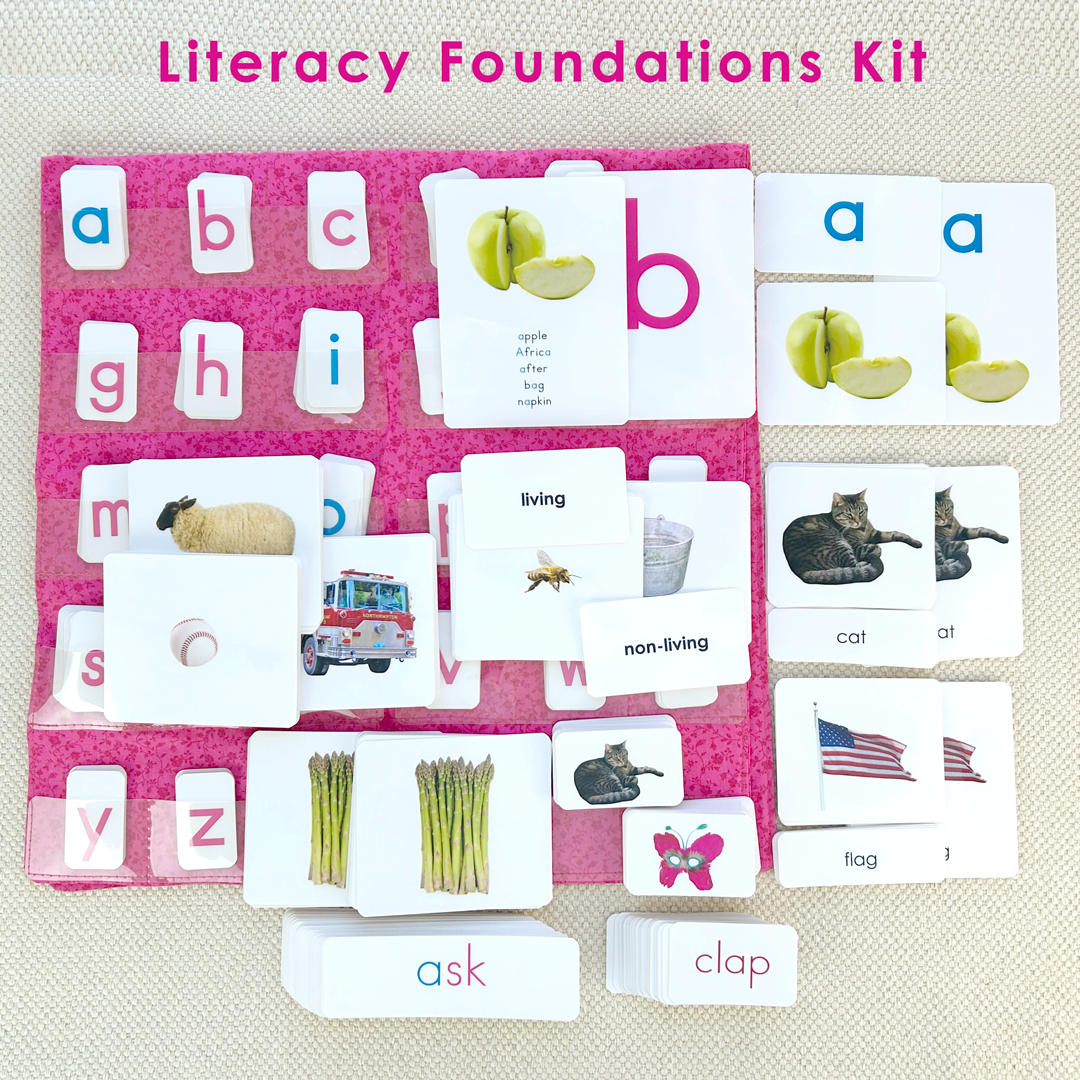
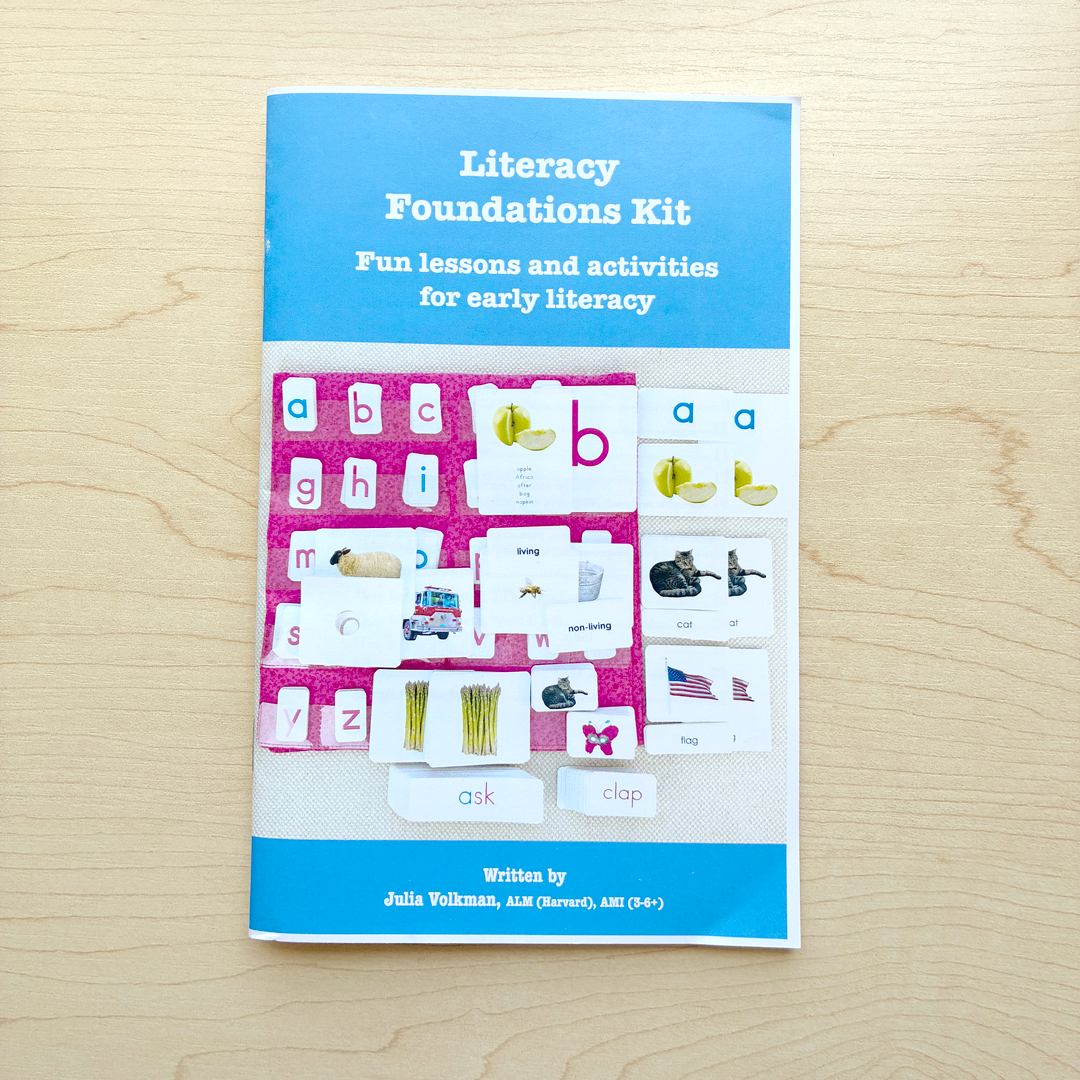
The Literacy Foundations Kit is a three-step Montessori system for ages 3–5 that builds both components identified in the Simple View of Reading: language comprehension and word recognition (Gough & Tunmer, 1986) as identified in the Science of Reading. Step 1 develops vocabulary and verbal reasoning, two beginning strands of Scarborough's Reading Rope (Scarborough, 2001). Steps 2 and 3 build letter-sound knowledge and phonetic decoding — the word recognition side of the rope that lead to skilled reading. Comes with a clear, easy-to-use lesson plan booklet explaining how to use everything in the kit.
Step 1: Vocabulary (Language Comprehension strand)
The first step to literacy is helping children develop strong vocabularies. Vocabulary, sorting, and matching cards are hands-on, playful ways of building student vocabularies.
-
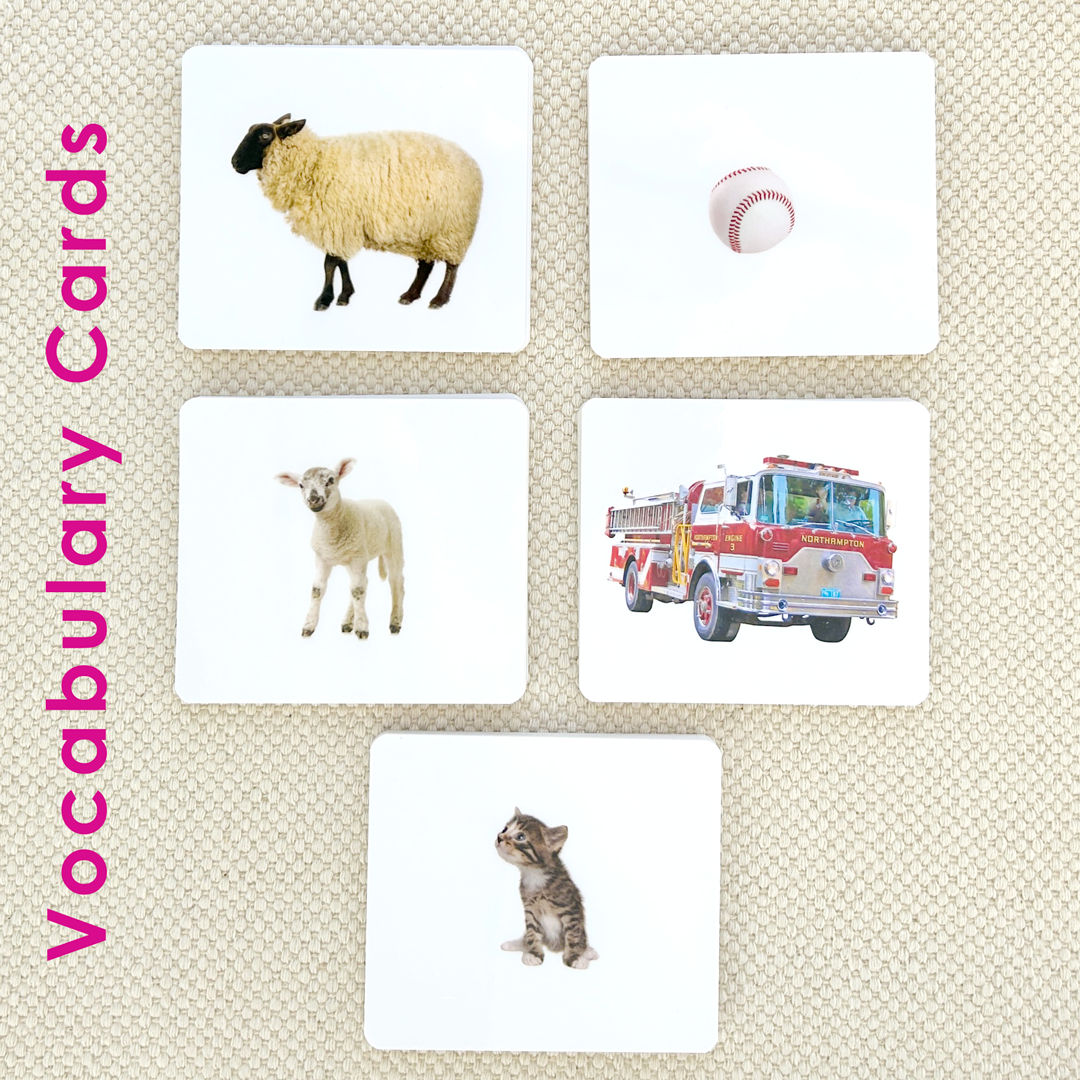
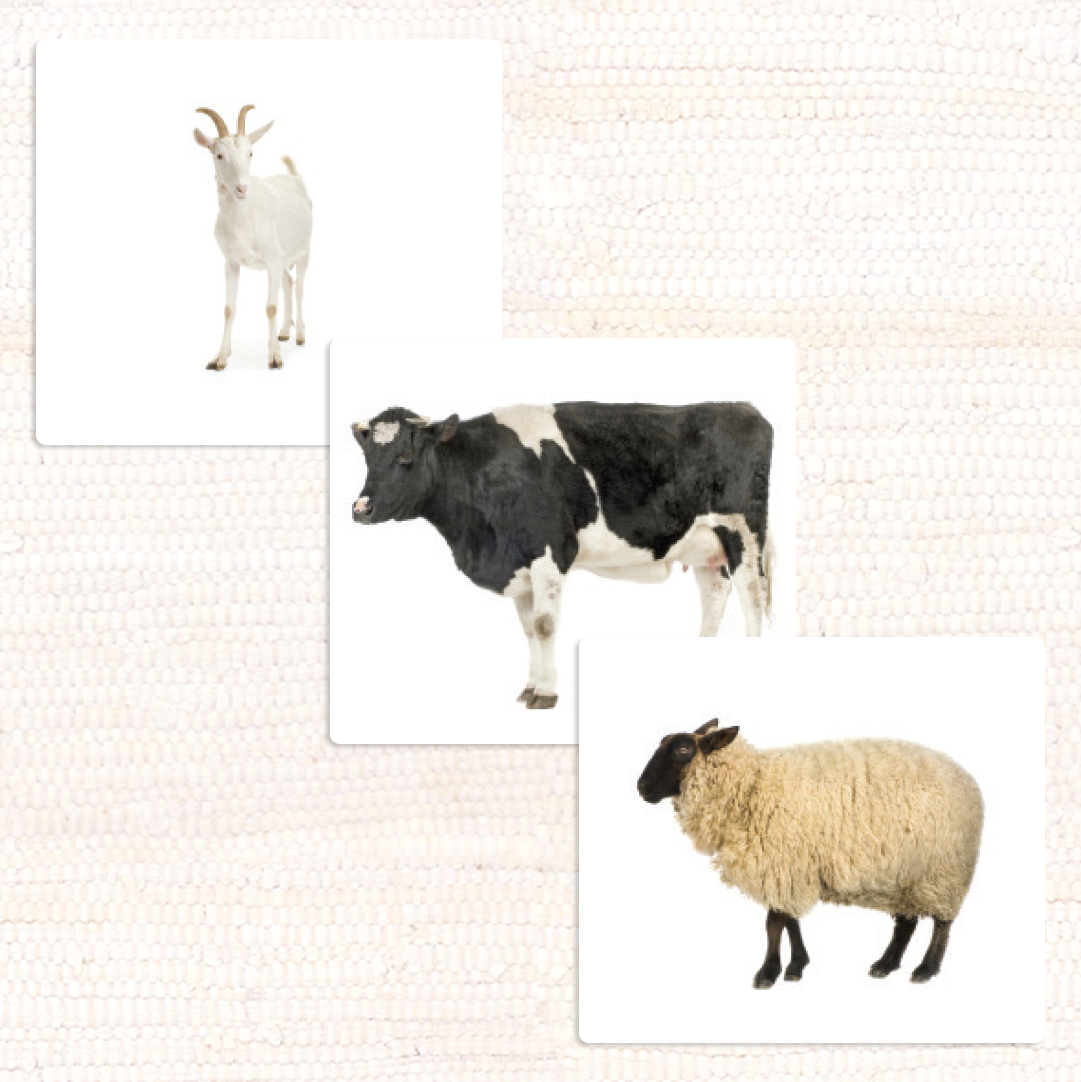
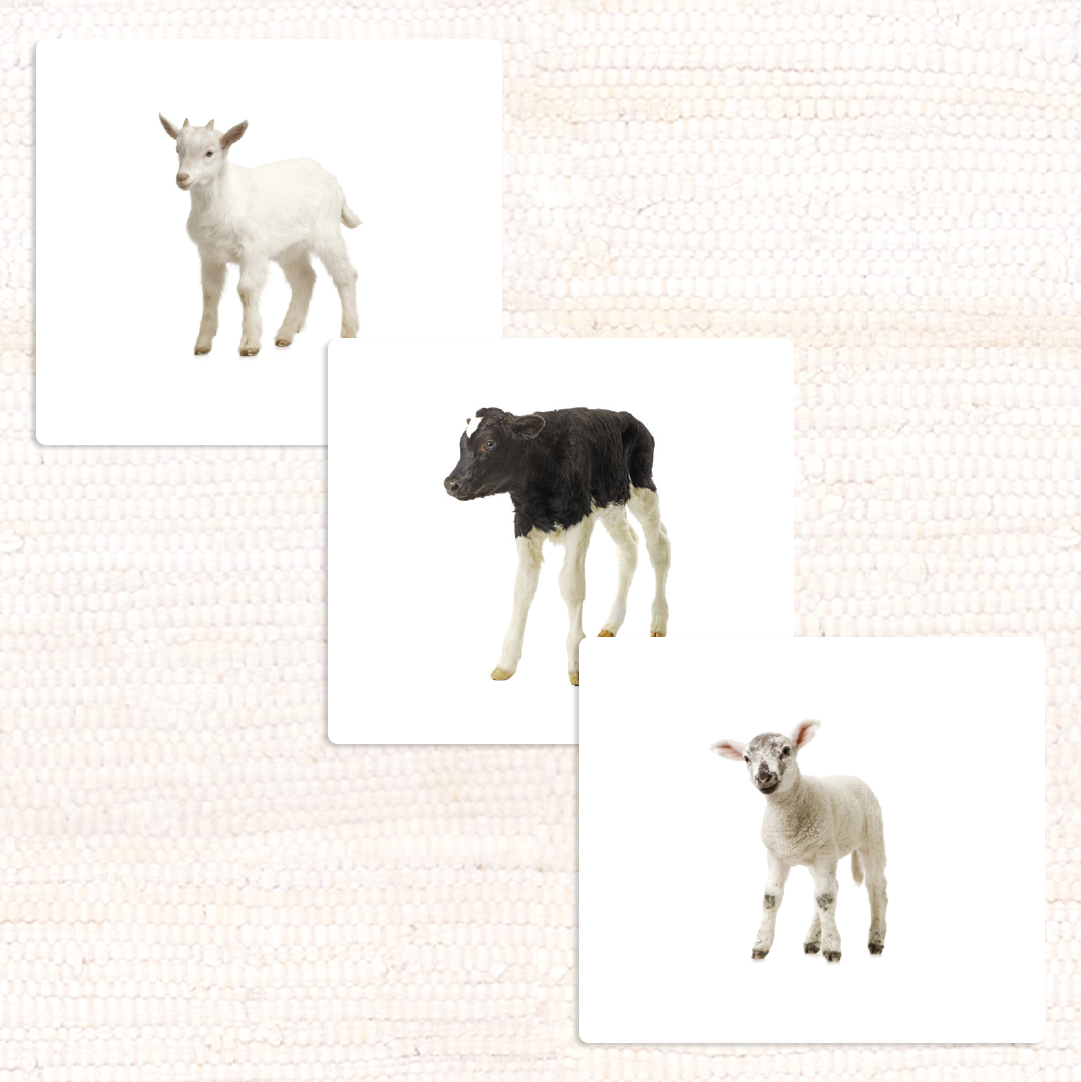
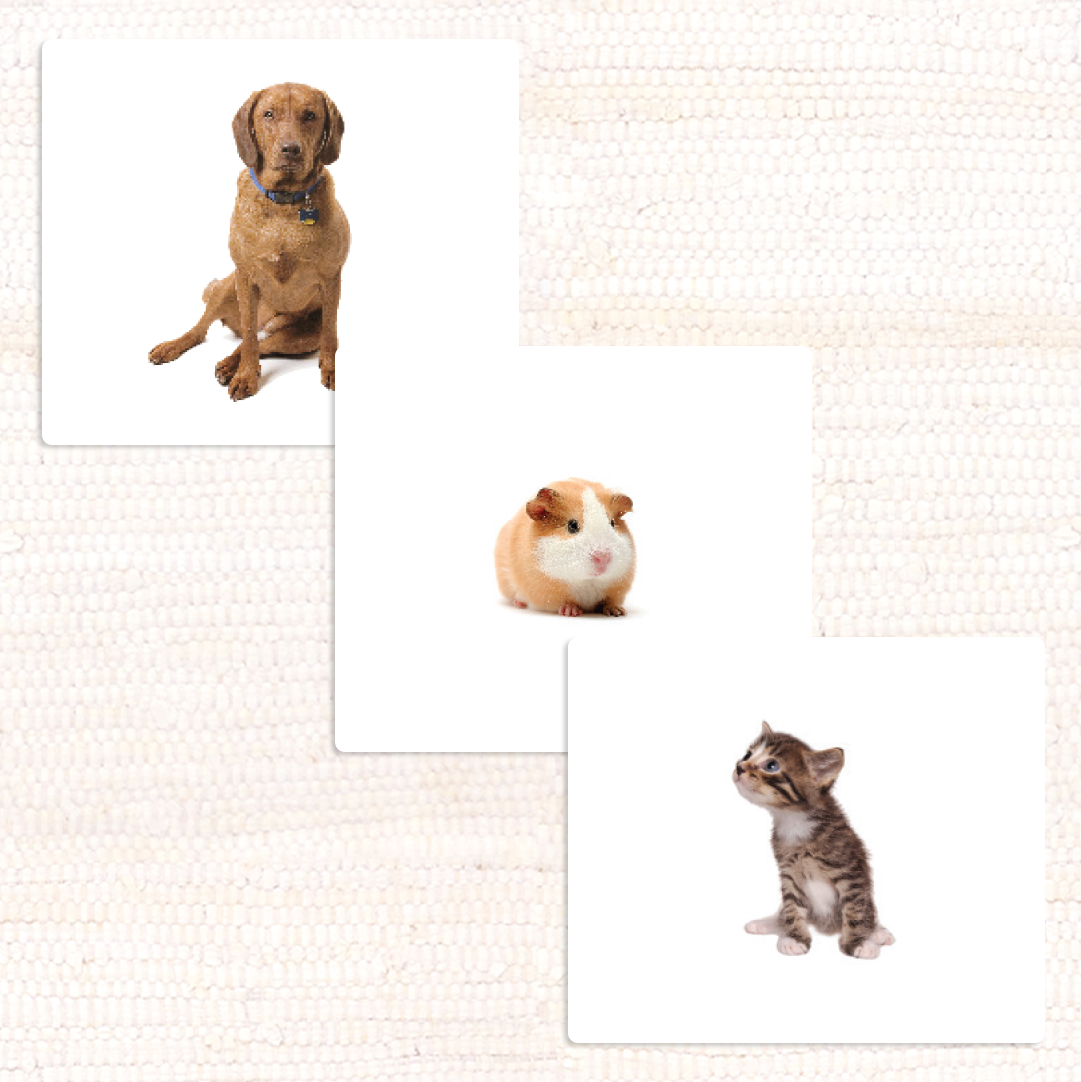
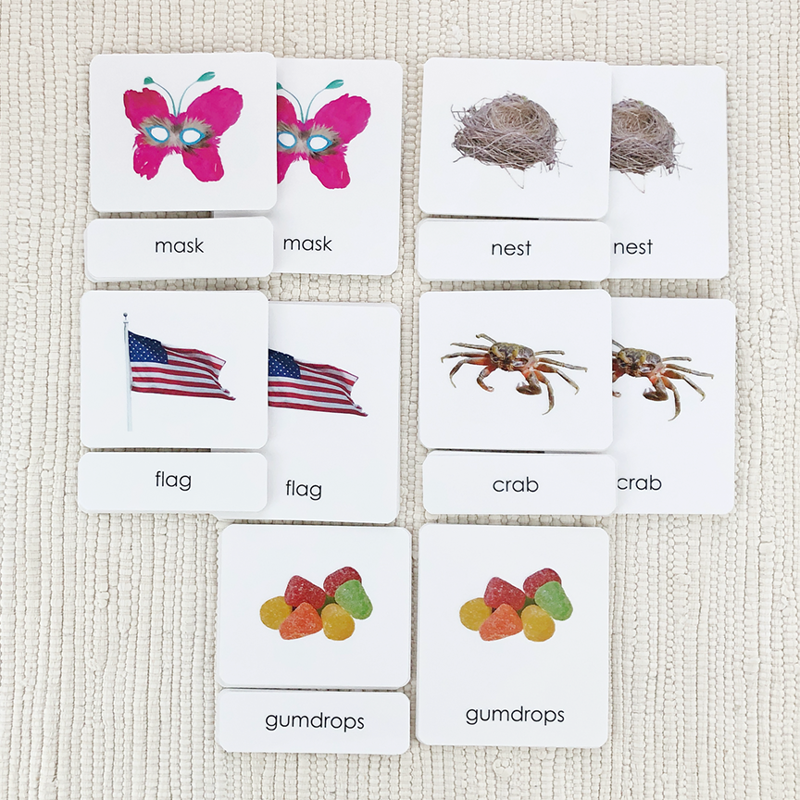
Vocabulary Cards: Teach them the words they are interested in. We like:
- Farm Animals (Adults & Juvenile)
- Pets
- Sports Equipment
- Transportation
-
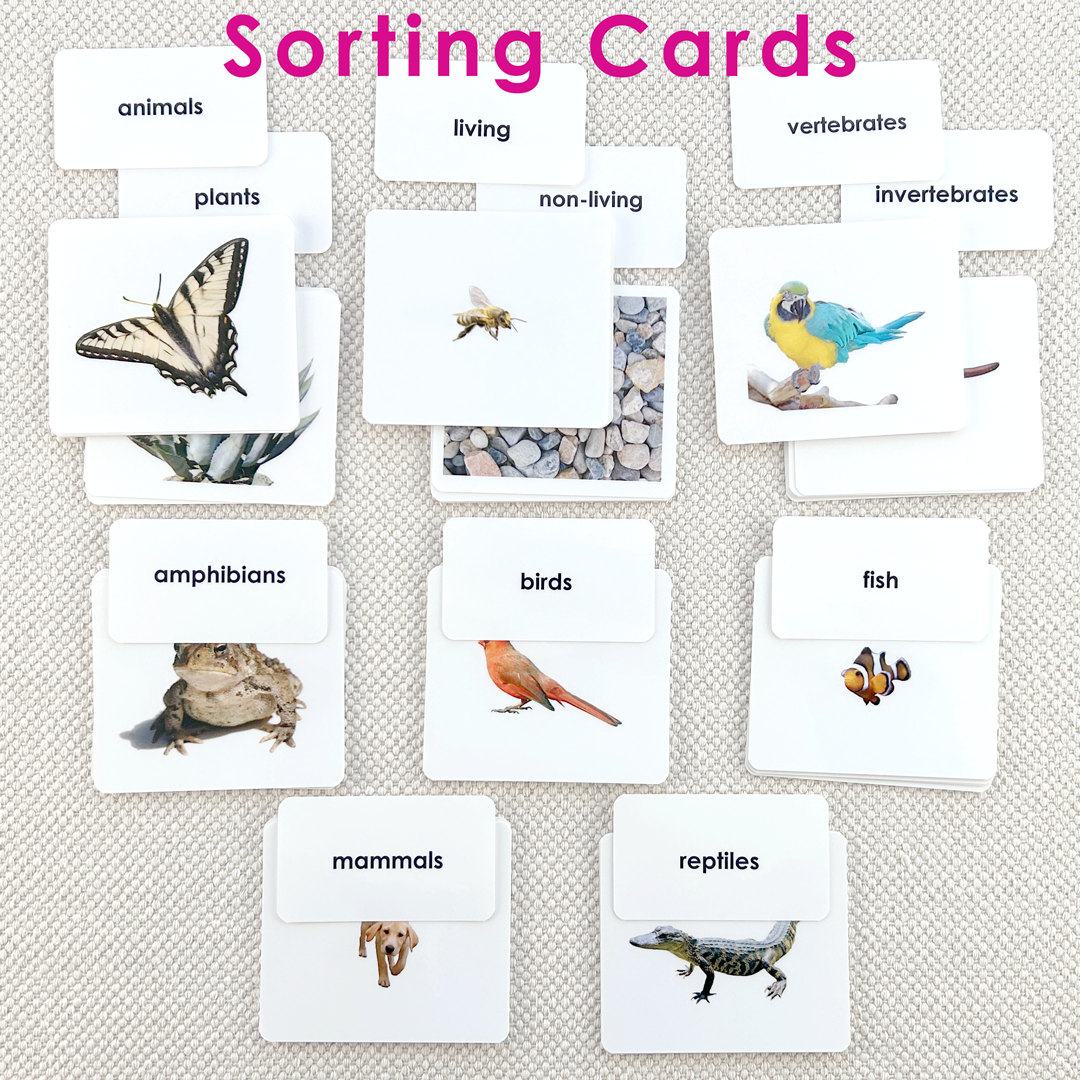
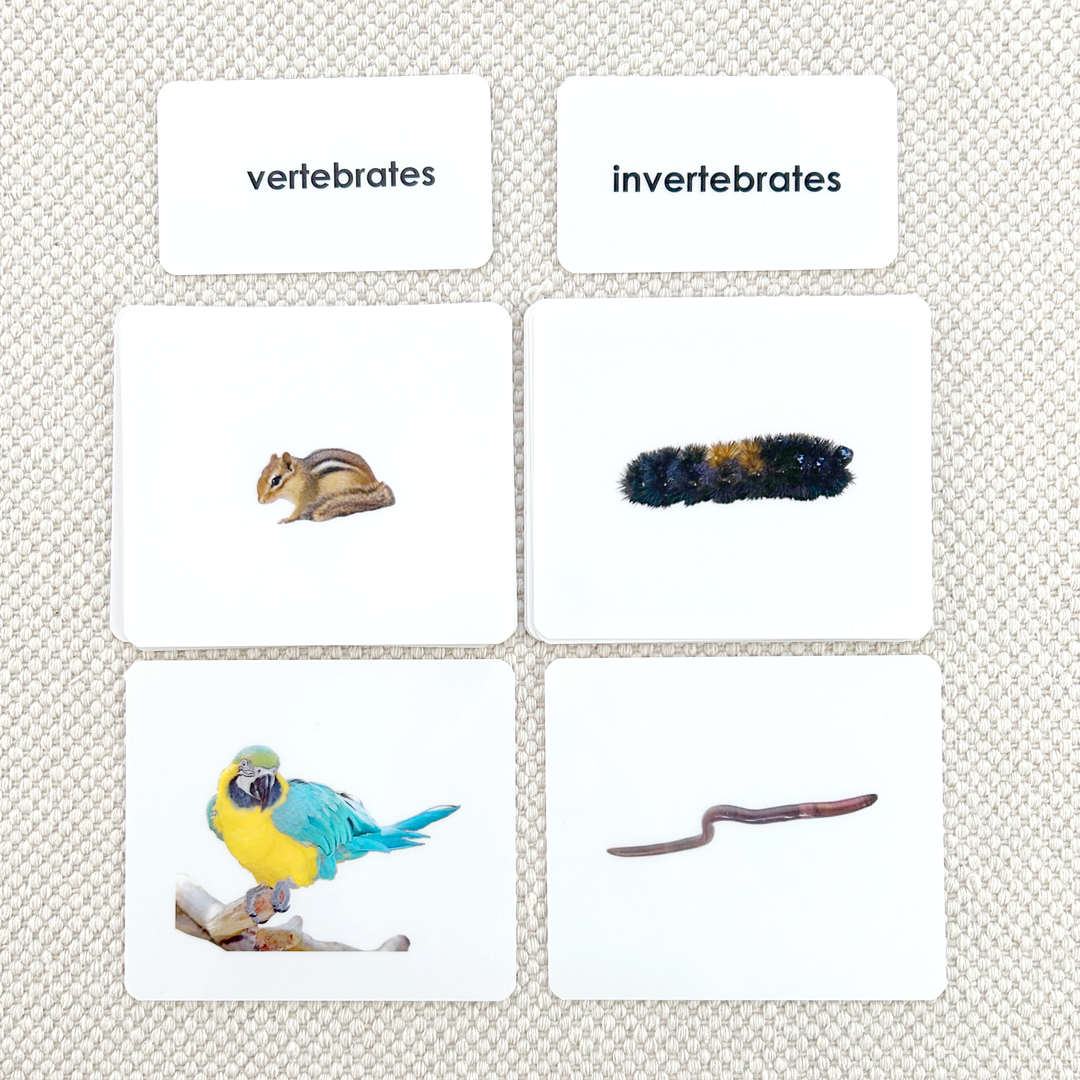
Sorting Cards: Let children practice sorting the words they know into groups. Start with these four titles:
-
- Living/Non-living
- Plant/Animal
- Vertebrate/Invertebrate
- Vertebrate Classes/5
-
-
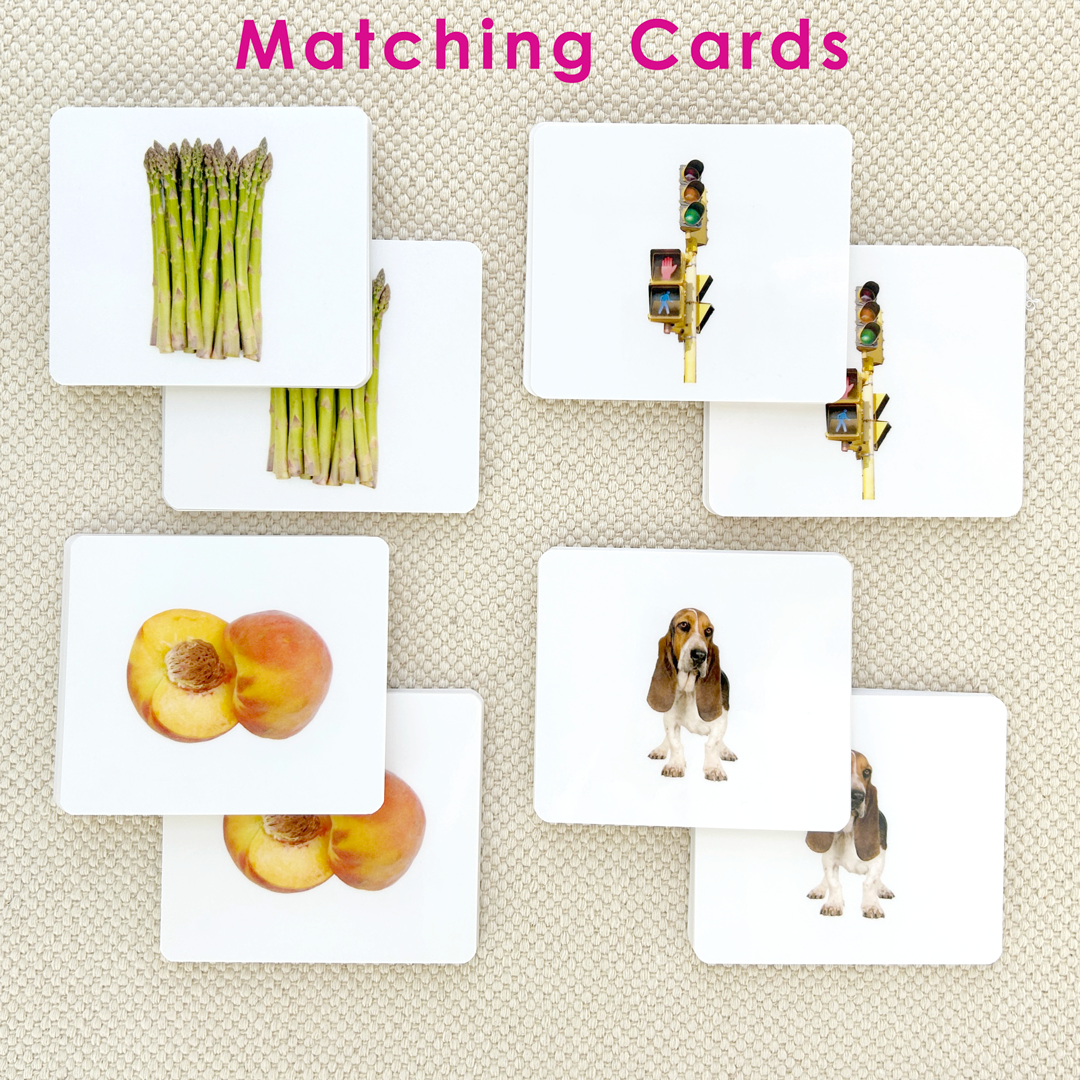
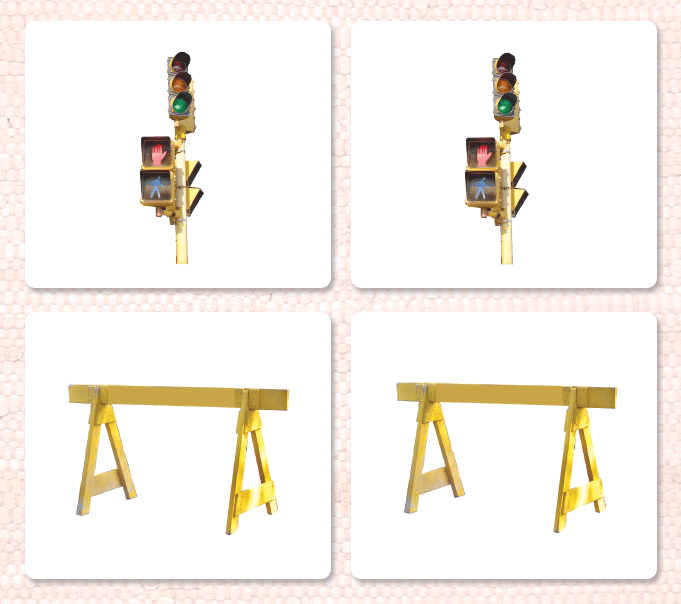
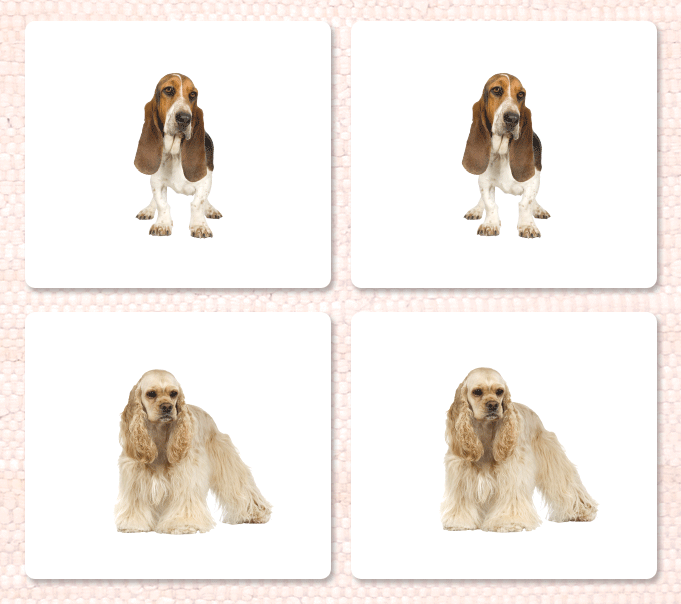
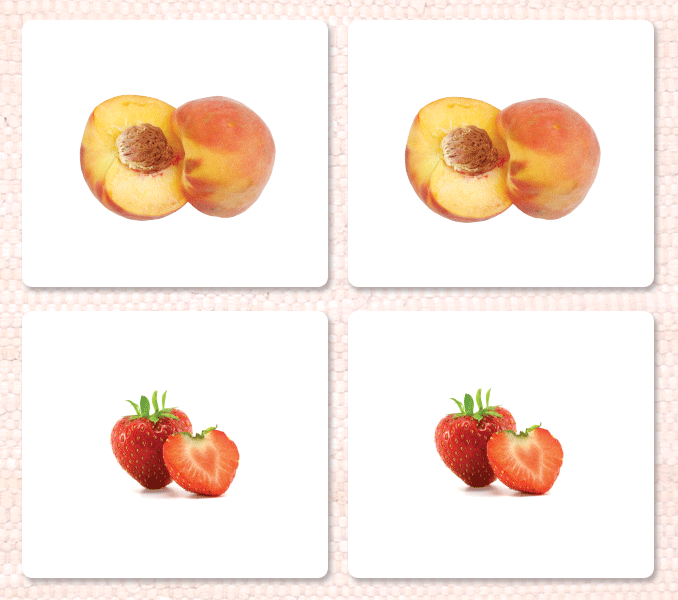
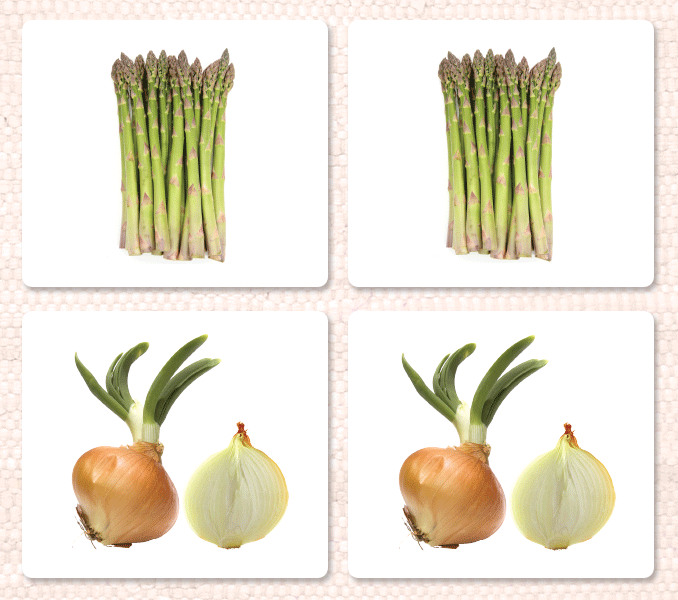
Matching Cards: Practice using new vocabulary in classic matching games. Use these first for vocabulary building and then for matching and sorting.
- Fruit
- Vegetables
- Around Town
- Dogs
We recommend having one or two topics out at a time. The vocabulary and matching cards have 12 subjects each so you may wish to divide these into 6 subjects that you put out at any one time. Then, swap out for different subjects or packets every week or two to keep the same type of material interesting and alive throughout the year.
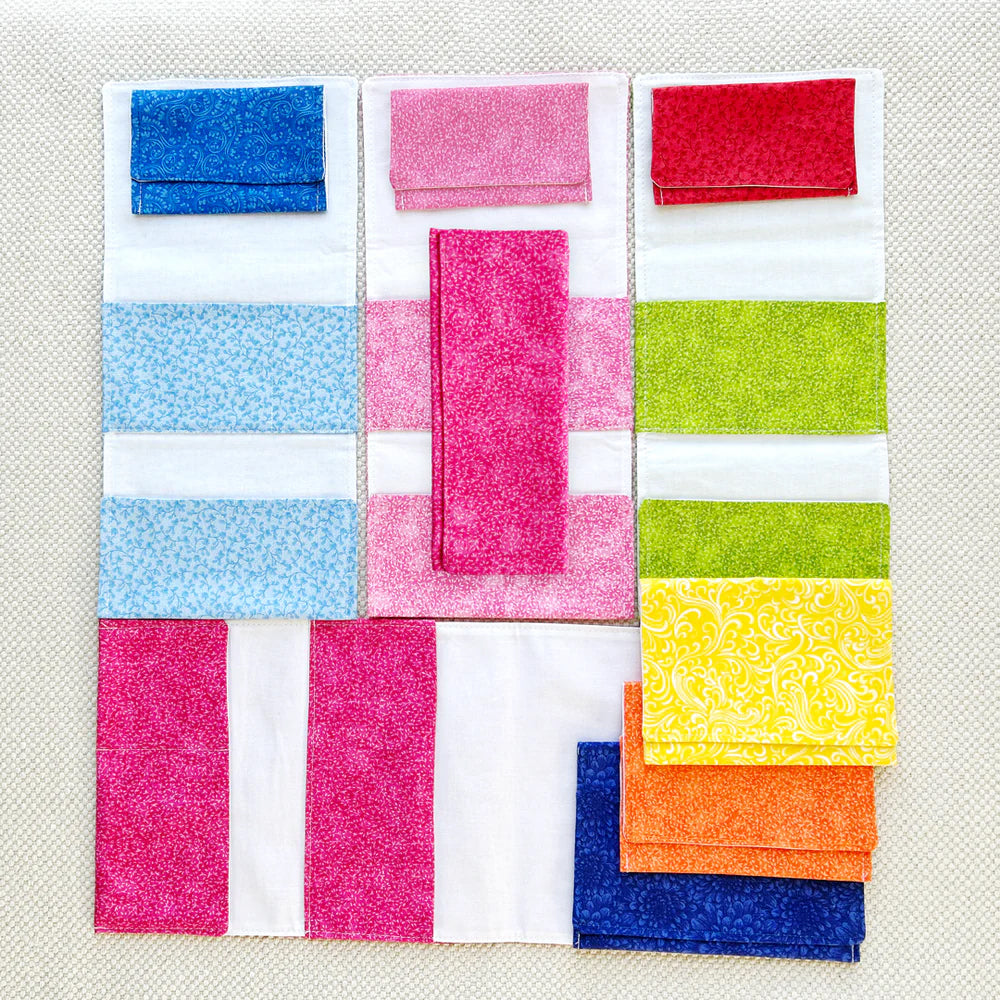
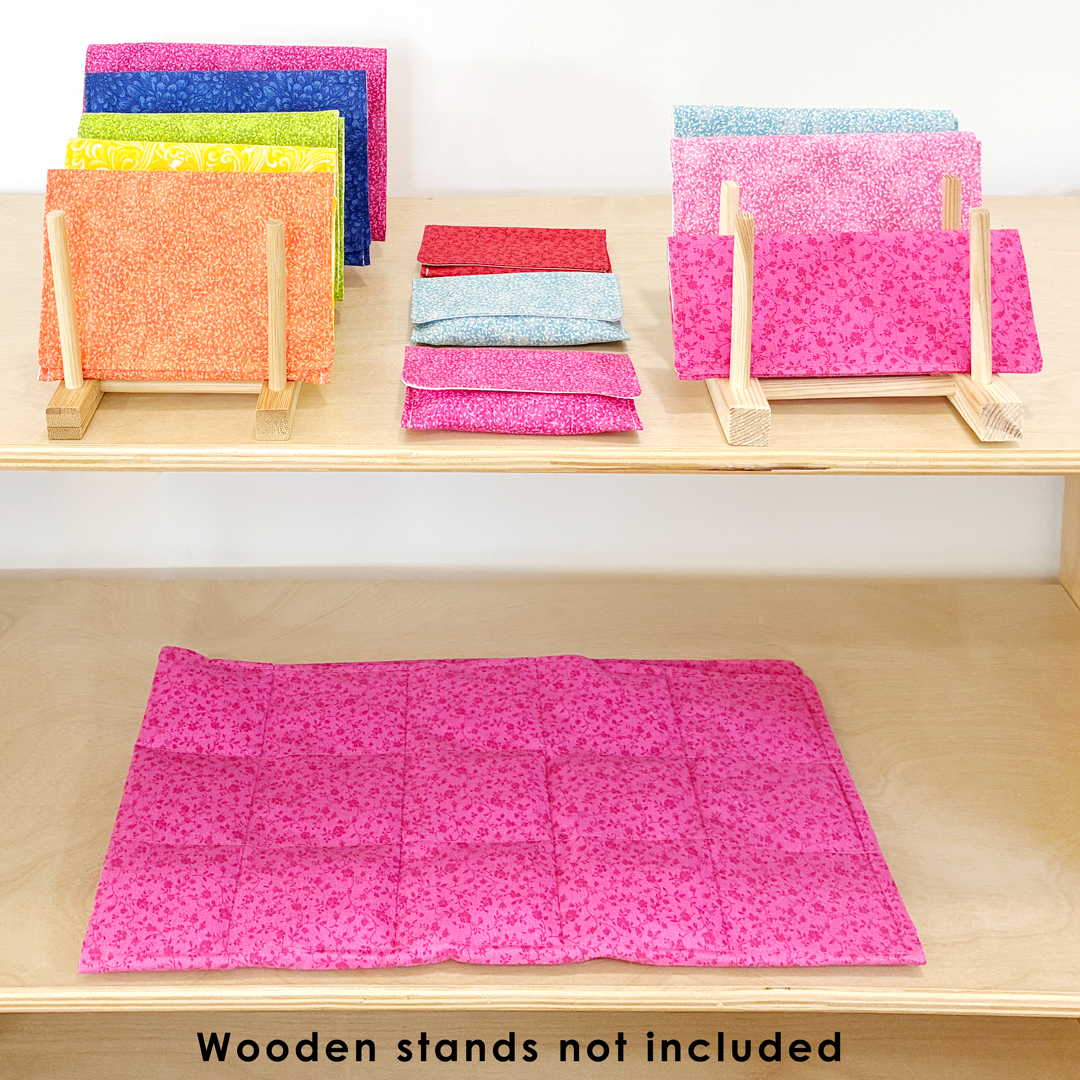
Add-on cloth pouches to beautifully display these cards so they are easy to use and keep organized:
- Two medium one-pocket pouches for vocabulary and sorting cards (lemon and orange)
- One two-pocket pouch for matching cards (chartreuse)
Step 2: Letter-Sound Knowledge/Encoding (Word Recognition strand — Phonological Awareness)
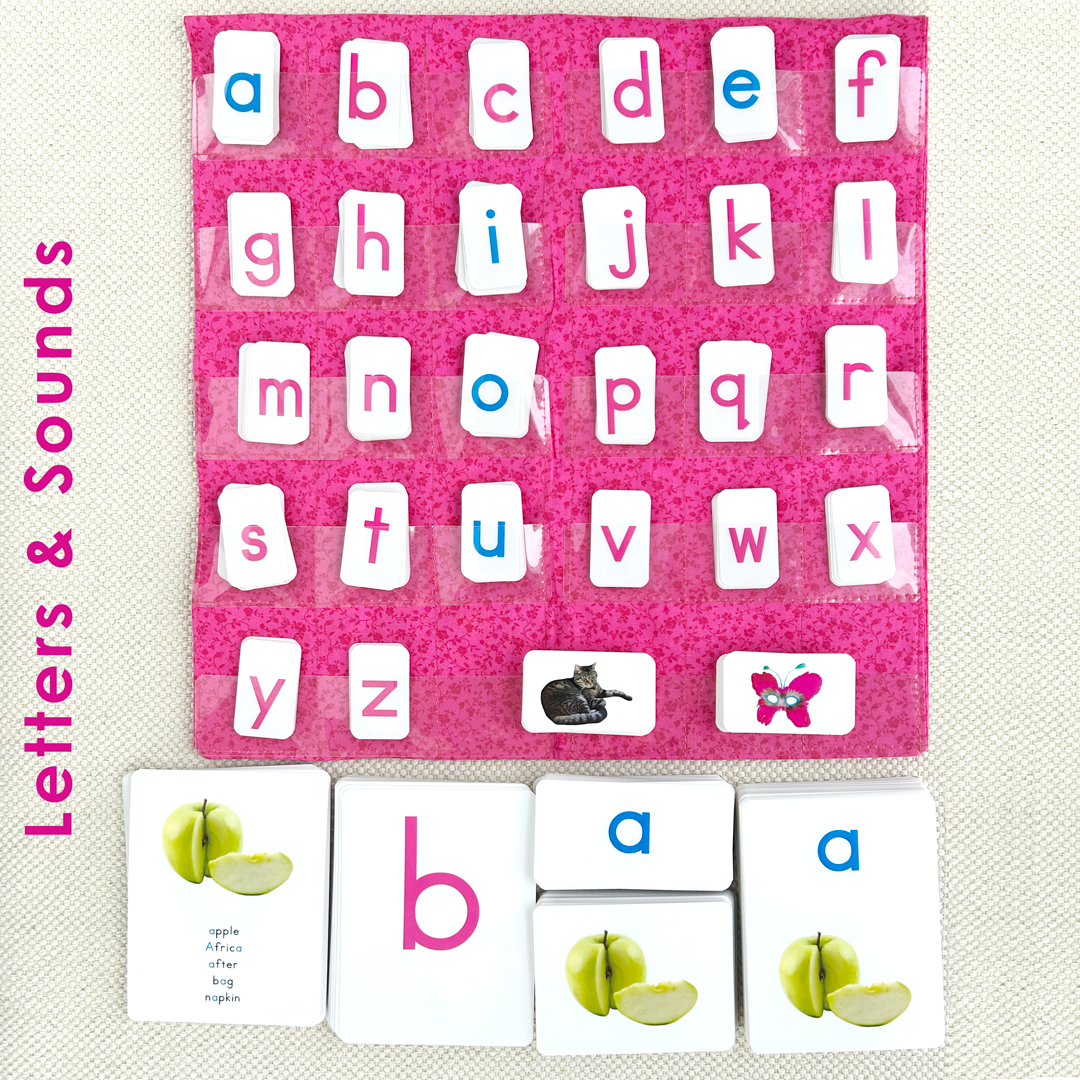
Before they can read, children need to be able to understand that letters make sounds. Here are effective, creative, and fun ways to help children crack the alphabetic code.
- Letter-Sound Charts
- 3-Part Letter-Sound Cards
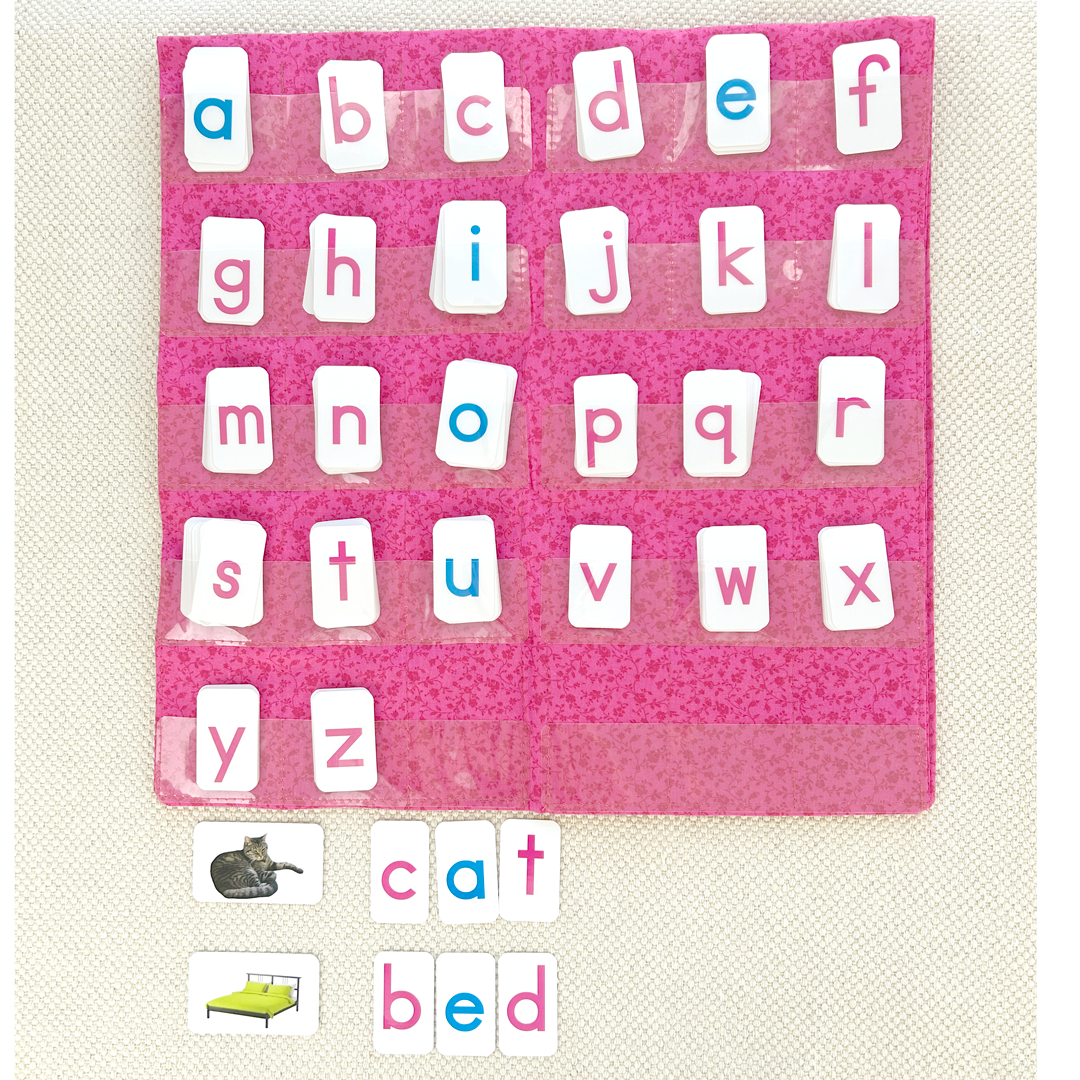
- Traditional Movable Alphabet plus pocket chart
- Phonetic Picture Cards (CVC and Consonant Blends)
Add-on cloth pouches to beautifully display these cards so they are easy to use and keep organized:
- One chart-sized one-pocket pouch for letter-sound charts (cerulean blue)
- One chart-sized 3-pocket pouch for 3-part letter-sound cards (berry)
- Two small cloth pouches for phonetic picture cards (pink berry and light blue)
Step 3: Phonetic Reading (Word Recognition strand — Decoding)
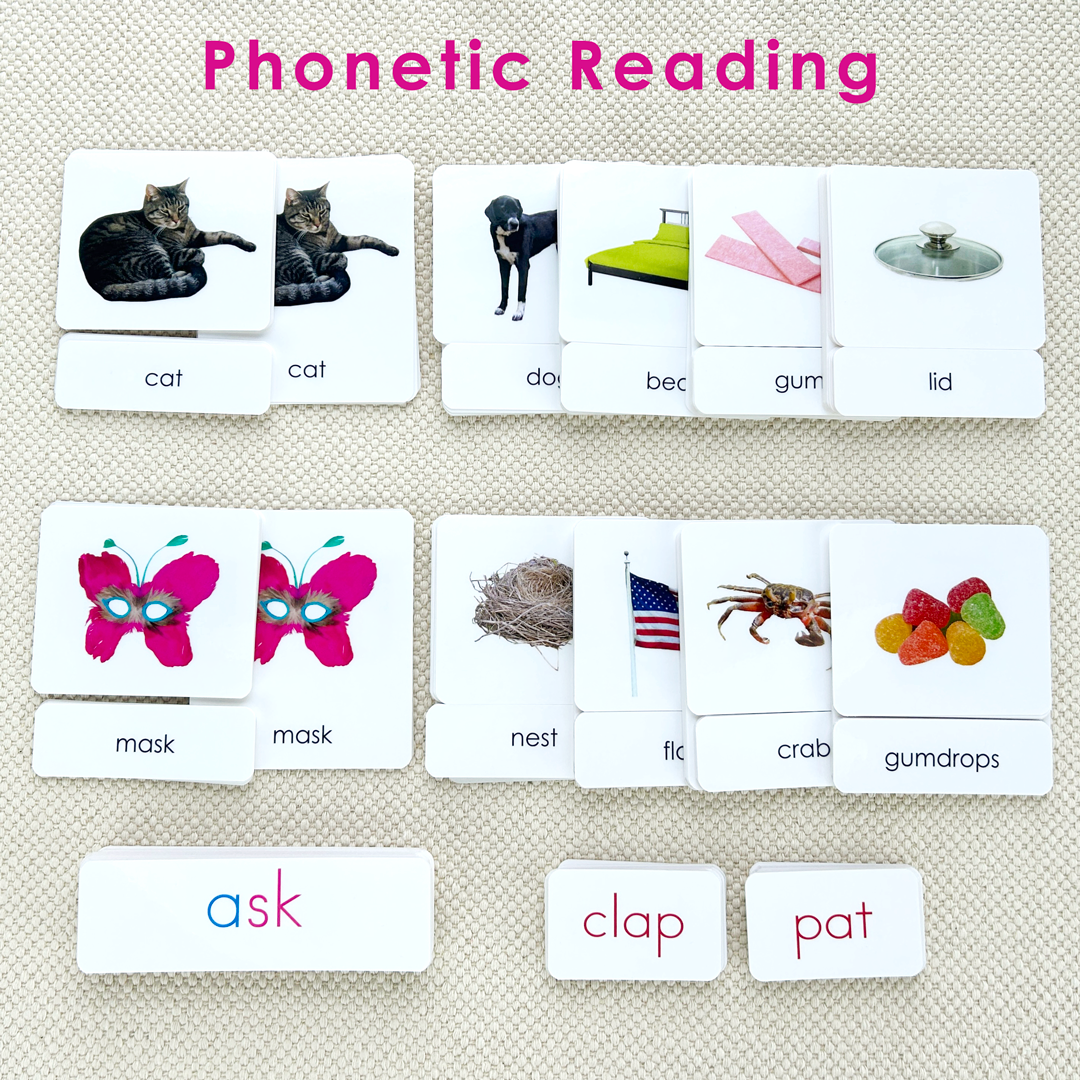
Once they know their letter-sounds, children are ready to start decoding those sounds into words: reading! Use these self-correcting, phonetic 3-part cards to get them started and build reading confidence.
- Level 1: CVC Words (5 packets)
- Level 2: Consonant Blends (5 packets)
- Phonetic Activity Cards (play phonetic charades!)
- Phonetic Word Cards
Add-on cloth pouches to beautifully display these cards so they are easy to use and keep organized:
- Two 3-pocket pouches for phonetic 3-part cards (pink and light blue)
- One small pouch for phonetic activity cards (red)
- One long pouch for phonetic word cards (berry)
What is the Science of Reading?
The Science of Reading is the interdisciplinary body of research — from cognitive psychology, linguistics, and neuroscience — explaining how children learn to read. It identifies two foundational components of skilled reading: language comprehension (understanding language) and word recognition (decoding), which lead towards reading comprehension (Gough & Tunmer, 1986).
What is Scarborough's Reading Rope?
Scarborough's Reading Rope is a model depicting skilled reading as several strands — including vocabulary, phonological awareness, and decoding — that weave together as a child develops literacy (Scarborough, 2001). The Literacy Foundations Kit targets strands from both the Language Comprehension and Word Recognition sides of the rope.
What ages is this kit designed for?
Ages 3–7. This range aligns with Montessori's sensitive period for language, when children are especially receptive to vocabulary acquisition and the alphabetic code.
How is this kit Montessori-aligned?
These materials are found in most Montessori language albums; they use self-correcting, hands-on cards that isolate one skill at a time, allow independent work, and follow the concrete-to-abstract sequence Montessori education is built on.
Product Details
Choose options
Included In This Bundle



English

English
English
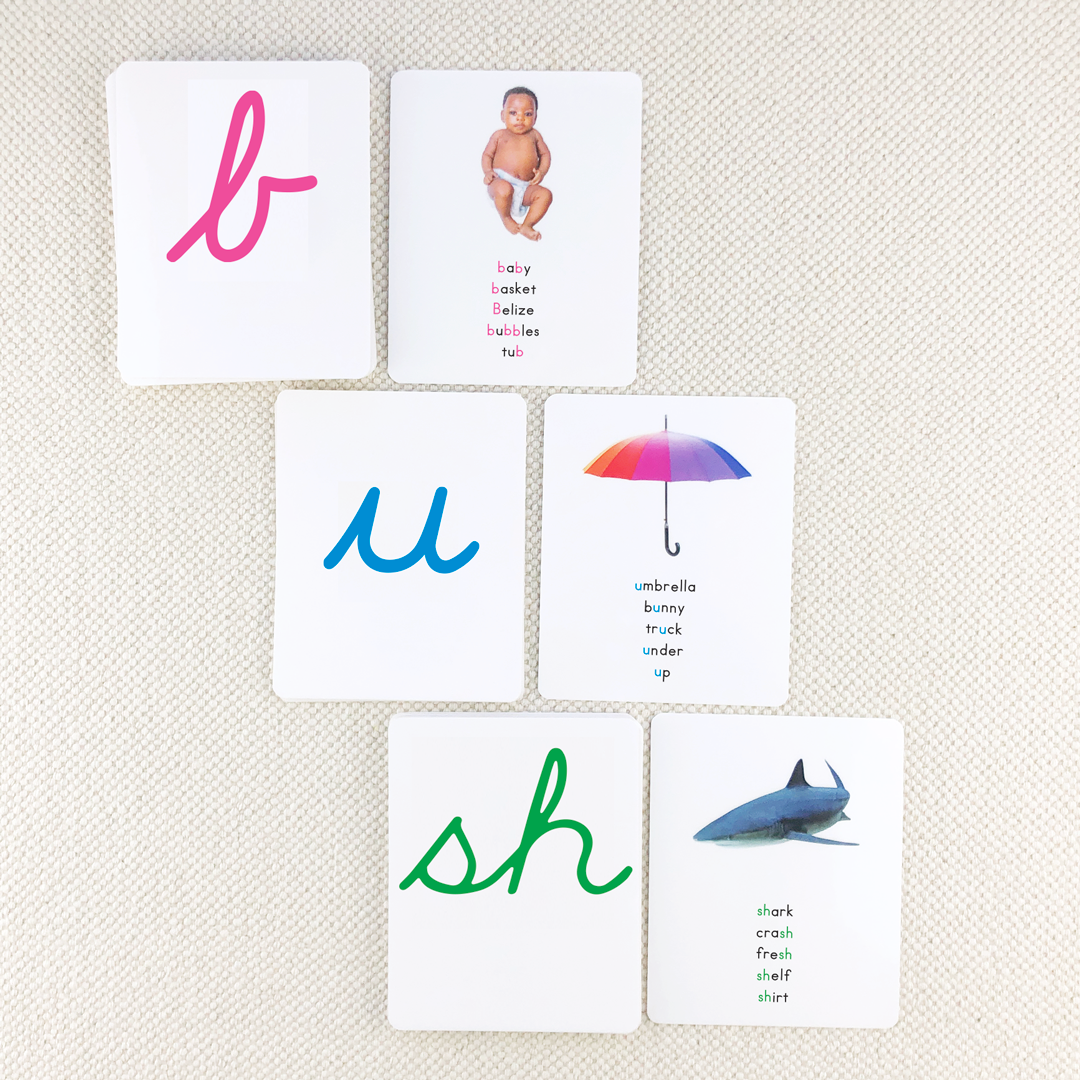
Charts Only / Cursive
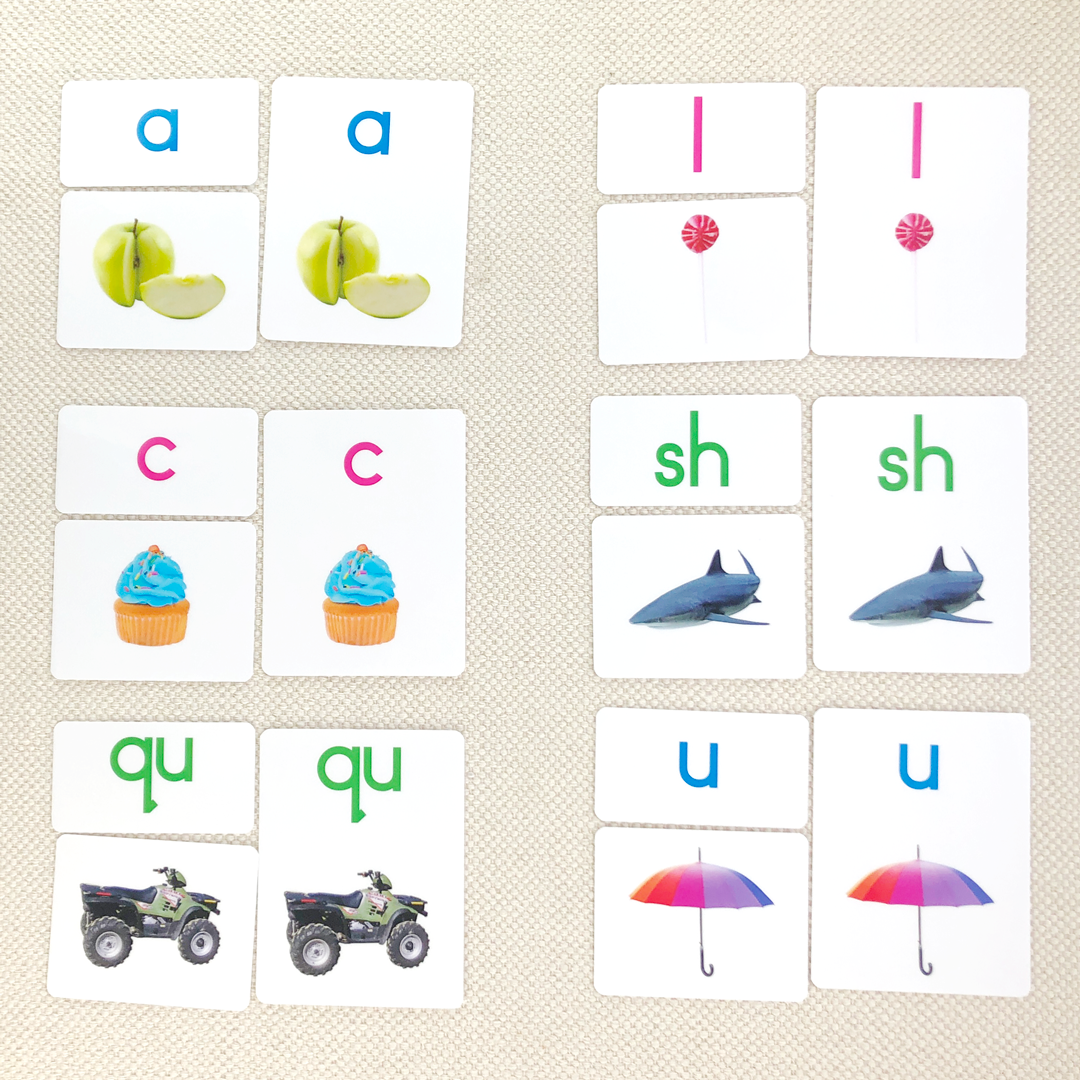
Cards Only / Print
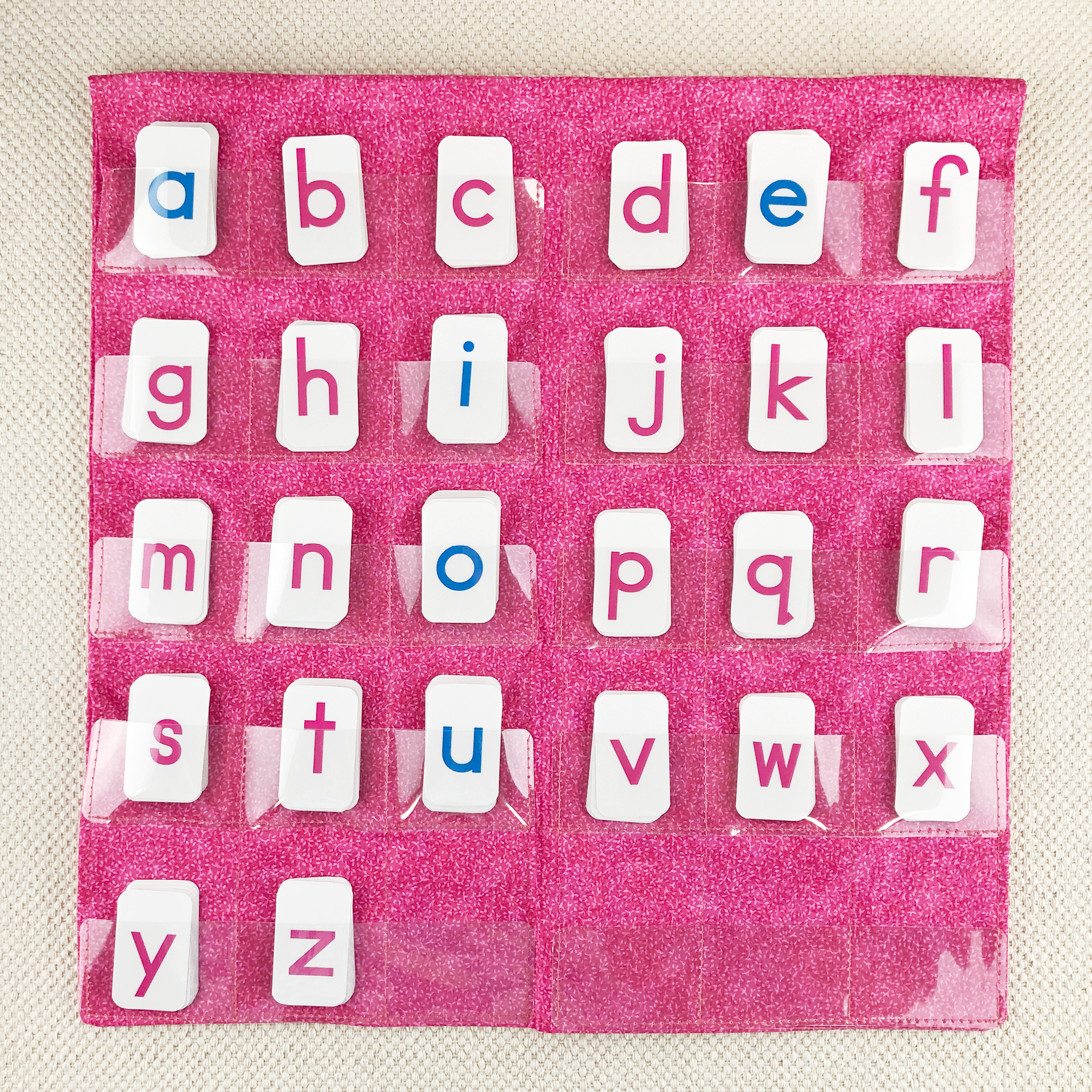
Cards Only

Cards

Cards

English
Knowledge Bank
Recommended Articles
Download a PDF of our materials

Follow Us